Natural loofahs have scrubbed dishes clean for over 3,000 years, yet most modern users never learn the proper techniques to maximize their effectiveness. Understanding how to prepare a loofah for kitchen use correctly can triple its useful lifespan and dramatically improve cleaning results. This knowledge gap costs households money and leaves businesses selling underperforming products to frustrated customers.
The global shift toward sustainable living has renewed interest in natural cleaning alternatives. Market analysts report that demand for plant-based kitchen products has grown by 23 percent annually since 2020, with natural loofahs leading the category. Consumers want products that work effectively without contributing to plastic pollution, while retailers seek merchandise that delivers genuine value and generates repeat purchases.
Egyptian loofahs stand apart as the premium choice for kitchen applications. Cultivated in the fertile Nile Delta region where growing conditions produce exceptionally dense fiber networks, these loofahs outperform varieties from any other origin. Suppliers like Egexo, operating with 25 years of expertise, have refined cultivation and processing techniques that deliver consistent, superior quality.
This tutorial provides everything needed to prepare a loofah for kitchen use successfully. Home users will gain practical skills for transforming raw loofahs into effective cleaning tools. Retailers and distributors will understand preparation requirements that inform product development and customer education strategies. The techniques described here represent best practices developed through decades of industry experience.
Those interested in sourcing premium Egyptian loofahs can explore options at Egexo’s online shop or browse the kitchen loofah category for specialized products.
Understanding Loofah Anatomy for Kitchen Applications
The Internal Fiber Matrix
A loofah is not simply a dried sponge but rather a complex network of vascular plant fibers arranged in a specific pattern. The mature luffa aegyptiaca fruit develops an internal skeleton of cellulose fibers that, when dried, creates thousands of interconnected chambers. This architecture makes loofahs uniquely suited for kitchen cleaning tasks.
The fiber matrix operates on three functional levels. Primary fibers run lengthwise through the loofah, providing structural integrity and determining overall durability. Secondary fibers branch laterally, creating the scrubbing surface that contacts dishes and cookware. Tertiary fibers form microscopic bridges between chambers, trapping particles while allowing water flow.
Egyptian loofahs develop denser fiber networks due to extended maturation periods. Where loofahs from tropical regions may mature in 120 days, Egyptian varieties require 180 to 200 days. This extended growth produces approximately 30 percent more fiber density per cubic centimeter, directly translating to superior scrubbing performance and longer service life.
Selecting Kitchen Appropriate Specimens
Not every loofah suits kitchen use equally. The selection process determines ultimate performance regardless of subsequent preparation quality. Examining physical characteristics before purchase or processing prevents disappointment and ensures customer satisfaction for retail operations.
Ideal kitchen loofahs measure between 20 and 35 centimeters in length with uniform diameter throughout. Avoid specimens with significant taper, as thinner sections wear quickly and create uneven performance. The exterior should appear uniformly tan to light brown without dark patches indicating mold exposure or improper drying.
Testing fiber density requires gentle compression. Quality kitchen loofahs resist compression and spring back immediately when released. Specimens that compress easily or retain indentation lack sufficient fiber density for demanding kitchen tasks. The following characteristics guide selection:
| Selection Criteria | Ideal Characteristics | Avoid |
|---|---|---|
| Length | 20 to 35 cm uniform | Under 15 cm or heavily tapered |
| Color | Tan to light brown, even | Dark spots, green patches, grey areas |
| Compression Response | Springs back immediately | Stays compressed, feels hollow |
| Weight | Feels substantial for size | Unusually light, feels empty |
| Fiber Visibility | Dense, tight pattern visible | Sparse fibers, large gaps |
| Scent | Neutral, slightly earthy | Musty, moldy, chemical odors |
| Surface | Intact outer membrane or clean removal | Torn fibers, excessive damage |
Wholesale buyers should request samples from suppliers before committing to large orders. Egexo offers sample programs allowing quality evaluation across different grades. This investment prevents costly inventory mistakes and ensures product-market fit.
Preparation Methods Compared and Explained
Method One: Standard Hot Water Preparation
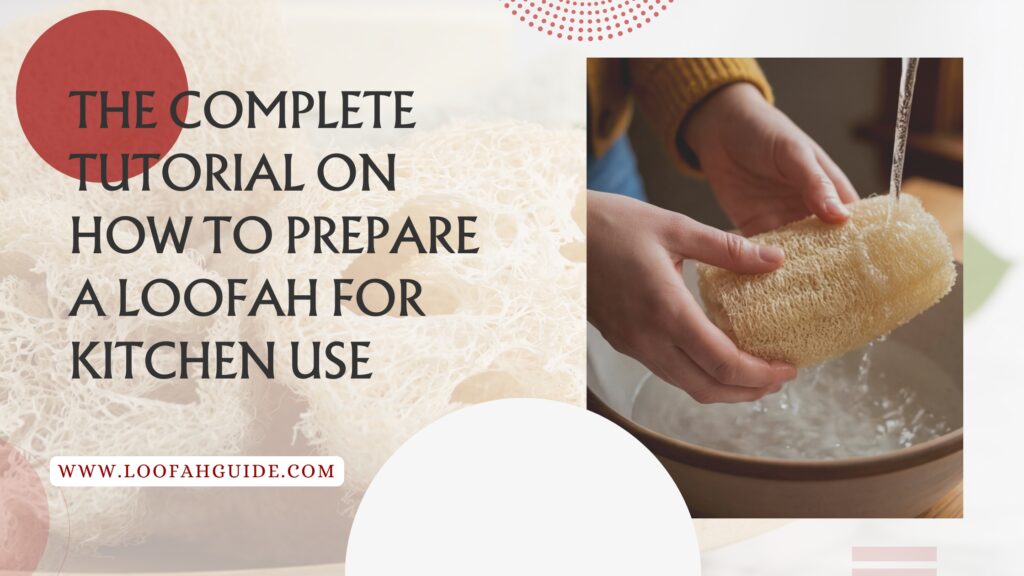
The standard hot water method represents the most common approach to prepare a loofah for kitchen use. This technique balances speed with fiber preservation, making it suitable for both individual users and small-scale commercial preparation.
Begin by filling a basin or sink with water heated to 65 to 70 degrees Celsius. Water temperature matters significantly as temperatures below 55 degrees fail to adequately soften pectin bonds while temperatures above 80 degrees can damage fiber structure. A kitchen thermometer ensures accuracy, though water that is uncomfortable but not painful to touch briefly approximates the correct range.
Submerge the loofah completely, using a plate or bowl to keep it underwater if necessary. Dry loofahs float initially due to trapped air. Allow soaking for 15 to 20 minutes, agitating occasionally to ensure water penetrates the entire fiber network. The loofah will gradually sink as air escapes and fibers absorb water.
After soaking, remove the loofah and squeeze firmly to expel absorbed water. The fibers should feel pliable and soft, bending easily without cracking or resistance. If stiffness remains, return to the hot water for an additional 10 minutes. Properly softened loofahs feel similar to a wet natural sponge.
Method Two: Enzyme-Assisted Preparation
Advanced preparation using natural enzymes produces exceptionally soft loofahs ideal for delicate dishware and non-stick cookware. This method requires more time but delivers superior results for premium product lines.
Create an enzyme bath by adding two tablespoons of raw honey or fresh pineapple juice per liter of warm water at 40 to 45 degrees Celsius. These natural sources contain enzymes that break down pectin and cellulose bonds more gently than heat alone. Submerge the loofah and maintain temperature for 2 to 4 hours.
The enzyme treatment produces noticeably softer fibers without compromising structural integrity. Loofahs prepared this way feel almost fabric-like when wet while retaining effective scrubbing texture. Rinse thoroughly after treatment to remove enzyme residue that might otherwise attract bacteria.
Retailers targeting premium markets should consider enzyme-prepared loofahs as a differentiated product offering. The additional preparation cost is minimal while perceived value increases substantially. Custom product design services from Egexo can incorporate specialized preparation into private label programs.
Method Three: Steam Preparation for Commercial Operations
Steam preparation offers advantages for businesses processing multiple loofahs simultaneously. This method provides consistent results across large batches while minimizing water usage and preparation time per unit.
Commercial steamers or large covered pots can process 10 to 20 loofahs simultaneously. Arrange loofahs on steamer racks without overlapping, ensuring steam contacts all surfaces. Steam at 100 degrees Celsius for 12 to 15 minutes, then allow loofahs to rest covered for an additional 5 minutes as residual heat completes the softening process.
Steam-prepared loofahs require less drying time before use or packaging since they absorb less water than soaked specimens. This efficiency matters for commercial operations where processing speed affects profitability. The method also provides excellent sanitization, eliminating concerns about bacterial contamination in finished products.
| Preparation Method | Time Required | Best Application | Skill Level | Batch Capability |
|---|---|---|---|---|
| Standard Hot Water | 15 to 20 minutes | Home use, small batches | Beginner | 1 to 5 units |
| Enzyme Assisted | 2 to 4 hours | Premium products, delicate use | Intermediate | 1 to 10 units |
| Steam Treatment | 15 to 20 minutes | Commercial processing | Advanced | 10 to 50 units |
| Pressure Cooking | 5 to 8 minutes | Industrial scale | Professional | 20 to 100 units |
Cutting and Shaping Techniques for Kitchen Use
Determining Optimal Size for Different Tasks
Kitchen loofah size significantly impacts both usability and longevity. Larger pieces retain more water and dry slowly, increasing bacterial growth risk. Smaller pieces dry quickly but may feel awkward during use and wear out faster from concentrated pressure.
Research into user preferences indicates optimal kitchen loofah dimensions of 7 to 10 centimeters in length and 5 to 8 centimeters in diameter. This size fits comfortably in most hands, allows effective scrubbing motion, and dries within 2 to 3 hours under normal conditions. A standard 30-centimeter loofah yields three to four pieces of ideal kitchen size.
Different kitchen tasks benefit from size variations. Pot and pan scrubbing works best with slightly larger pieces providing more surface contact. Detail work around faucets and fixtures benefits from smaller pieces offering greater maneuverability. Consider cutting varied sizes from a single loofah to create a complete kitchen cleaning set.
Cutting Tools and Techniques
Sharp tools produce clean cuts that preserve fiber integrity at edges. Dull blades crush and tear fibers, creating weak points where deterioration begins. Recommended cutting implements include:
Sharp kitchen scissors work well for softened loofahs. Cut with the loofah slightly compressed to prevent fiber separation. Make cuts perpendicular to the length for standard pieces or at angles for ergonomic shapes that fit hand contours.
Serrated bread knives excel for precise cuts on larger or firmer loofahs. The sawing motion separates fibers cleanly without crushing. Support the loofah firmly and cut with steady pressure rather than forcing through.
Rotary cutters provide the cleanest edges for commercial production. These tools slice through fibers without compression, producing professional-quality cuts suitable for retail packaging. Investment in proper cutting equipment pays dividends through improved product presentation and reduced waste.
Shape Variations for Specialized Uses
Beyond basic cylindrical sections, creative shaping produces specialized kitchen tools with enhanced functionality. These variations offer differentiation opportunities for retailers and practical benefits for users.
Wedge Cuts create triangular cross-sections perfect for cleaning corners, grout lines, and inside narrow containers like vases or bottles. Cut lengthwise at 45-degree angles to produce wedges from cylindrical sections.
Flat Pads result from cutting cylindrical pieces in half lengthwise. The flat surface provides stable contact for scrubbing large flat areas like cutting boards, baking sheets, and countertops. The curved exterior fits naturally in the palm.
Handle Shapes leave one end of a longer section intact while cutting the working end to desired size. This configuration provides a grip area that stays drier during use, improving comfort and control.
| Shape | Best Uses | Cutting Technique | Retail Appeal |
|---|---|---|---|
| Standard Cylinder | General dish washing | Perpendicular cuts | High, familiar format |
| Wedge | Corners, narrow spaces, grout | 45 degree lengthwise cuts | Medium, specialty use |
| Flat Pad | Counters, cutting boards, pans | Lengthwise half cut | High, versatile |
| Handle Shape | Extended scrubbing, pots | Partial cuts leaving grip | Medium, ergonomic benefit |
| Mini Rounds | Detail work, small items | Thin perpendicular slices | Medium, novelty factor |
Information about various loofah product formats is available at Wholesale Loofah for businesses exploring product development options.
Conditioning and First Use Protocol
Why Conditioning Matters
Conditioning prepares loofah fibers to interact optimally with dish soap and water. Unconditioned loofahs may repel soap initially due to natural plant oils and waxy compounds remaining in the fiber structure. These residues can also transfer subtle tastes or odors to dishes during initial uses.
The conditioning process accomplishes three objectives. First, it flushes natural plant compounds from the fiber network. Second, it allows dish soap to penetrate deep into the fiber structure where it enhances cleaning action. Third, it mechanically works fibers to maximum flexibility, completing the softening process.
Step by Step Conditioning Process
Follow this sequence to condition a newly prepared kitchen loofah properly:
Step One: Wet the loofah thoroughly under warm running water. Ensure water penetrates through the entire thickness by squeezing and releasing repeatedly while under the stream.
Step Two: Apply a generous amount of dish soap directly to the loofah surface. Use approximately twice the amount you would for normal dish washing.
Step Three: Work the soap through the fiber network by squeezing the loofah repeatedly for 30 to 60 seconds. Focus on compressing all areas evenly to ensure complete penetration.
Step Four: Rinse under warm water while continuing to squeeze until no soap bubbles emerge. This may require 2 to 3 minutes of continuous rinsing.
Step Five: Perform a smell test by bringing the rinsed loofah near your nose. Any plant or earthy odors indicate incomplete conditioning. Repeat steps two through four if odors persist.
Step Six: Final rinse with hot water to open fibers fully, then squeeze firmly and shake to remove excess water.
The conditioned loofah is now ready for kitchen use. First-time performance may still be slightly different from subsequent uses as fibers continue settling into optimal configuration over the first few washing sessions.
Maintenance Practices That Extend Loofah Life
Daily Care Requirements
Proper daily care determines whether a kitchen loofah lasts 4 weeks or 12 weeks. The primary enemy is retained moisture that enables bacterial and fungal growth. Every daily care practice aims to minimize moisture retention between uses.
After each use, rinse the loofah thoroughly under hot running water for 15 to 20 seconds. Hot water removes soap residue and food particles more effectively than cold. Squeeze firmly multiple times during rinsing to flush the interior fiber network where debris accumulates.
Shake the loofah vigorously after squeezing to dislodge water clinging to fiber surfaces. This simple step removes 15 to 20 percent more water than squeezing alone. Then place in a location with good air circulation, ideally hanging or propped to allow airflow around all surfaces.
Weekly Sanitization Schedule
Weekly sanitization eliminates bacterial colonies before they establish permanently in the fiber structure. Choose from these proven methods based on available materials and preferences:
Vinegar Soak: Submerge in undiluted white vinegar for 15 to 20 minutes. Vinegar’s acidity kills most bacteria and dissolves mineral deposits from hard water. Rinse thoroughly afterward as vinegar odor can transfer to dishes.
Hydrogen Peroxide Treatment: Soak in 3 percent hydrogen peroxide solution for 10 to 15 minutes. This method provides powerful sanitization without odor concerns. Rinse well before next use.
Microwave Method: Wet the loofah thoroughly and microwave on high for 90 seconds to 2 minutes. The heat kills bacteria throughout the fiber structure. Allow cooling before handling as the loofah will be extremely hot.
Boiling Water Refresh: Submerge in boiling water for 3 to 5 minutes weekly. This method combines sanitization with fiber refreshing, temporarily restoring softness that may have diminished.
| Sanitization Method | Time Required | Effectiveness | Best For |
|---|---|---|---|
| Vinegar Soak | 15 to 20 minutes | 95 percent bacteria elimination | Regular maintenance |
| Hydrogen Peroxide | 10 to 15 minutes | 98 percent bacteria elimination | Deep cleaning |
| Microwave | 2 minutes | 99 percent bacteria elimination | Quick sanitization |
| Boiling Water | 3 to 5 minutes | 99 percent bacteria elimination | Weekly refresh |
Detailed care guides are available through resources at Loofah Guide for users seeking additional maintenance information.
Recognizing Quality Differences in Kitchen Loofahs
Grade Classifications Explained
Understanding grade classifications helps consumers make informed purchases and enables retailers to position products appropriately. The grading system evaluates multiple characteristics to assign quality levels that correlate with performance and durability.
Premium Grade loofahs exhibit the highest fiber density, most uniform structure, and longest expected lifespan. These specimens come from optimal growing conditions and careful harvesting at peak maturity. Premium grade kitchen loofahs typically last 10 to 12 weeks with proper care. Retail positioning targets quality-conscious consumers willing to pay more for superior performance.
Grade A loofahs meet excellent quality standards with minor variations that do not significantly impact performance. Slightly less uniform fiber density or small cosmetic imperfections distinguish these from premium grade. Expected lifespan runs 8 to 10 weeks. This grade offers the best value balance for most consumers and retailers.
Grade B loofahs are functional but show more variation in fiber density and structure. Performance remains good for light to moderate kitchen tasks. Lifespan averages 6 to 8 weeks. Price-sensitive markets respond well to this grade when positioned as economical options.
Grade C loofahs suit non-kitchen applications better than demanding dish scrubbing. Craft projects, garden use, and pet grooming represent appropriate applications. Some retailers successfully market these as introductory products allowing consumers to experience natural loofahs affordably.
Egexo’s quality standards page provides detailed specifications for each grade, helping wholesale buyers make informed sourcing decisions.
Evaluating Supplier Quality
Supplier selection significantly impacts product quality consistency. Reliable suppliers maintain quality control throughout cultivation, harvesting, and processing. Key evaluation criteria include:
Growing Region: Egyptian loofahs from the Nile Delta consistently outperform other origins. Suppliers should clearly identify loofah origin and ideally provide cultivation information.
Processing Methods: Inquire about cleaning, drying, and any treatments applied. Quality suppliers like Egexo document their farm to export process transparently.
Grading Consistency: Request samples across advertised grades to verify classification accuracy. Inconsistent grading indicates quality control problems.
Certifications: Relevant certifications demonstrate commitment to quality standards and sustainable practices.
Communication: Responsive suppliers who answer questions thoroughly typically maintain better operations overall.
Wholesale buyers should request quotations from multiple suppliers to compare offerings before committing to partnerships.
Troubleshooting Common Kitchen Loofah Problems
Problem: Loofah Develops Odor Quickly
Rapid odor development typically indicates insufficient drying between uses. Bacteria thrive in moist environments, producing characteristic musty or sour smells within days if conditions favor growth.
Solutions: Improve storage location to ensure better airflow. Consider cutting the loofah into smaller pieces that dry faster. Increase sanitization frequency from weekly to twice weekly. If odor persists despite improvements, the fiber structure may be compromised and replacement is advisable.
Problem: Fibers Separate During Use
Fiber separation suggests either low-quality material or preparation damage. Heat shock from water that was too hot during preparation can weaken fiber bonds. Cutting with dull tools also creates weak points where separation begins.
Solutions: For new loofahs, reduce preparation water temperature and ensure tools are sharp. For in-use loofahs showing separation, trim affected areas to prevent spreading. Consider the loofah near end of life if separation continues progressing.
Problem: Loofah Feels Too Harsh
Excessive harshness results from inadequate softening during preparation or premature drying before conditioning completes. Some loofah grades naturally have coarser texture as well.
Solutions: Re-soak in warm water for 15 to 20 minutes to restore softness. For persistent harshness, try the enzyme preparation method which produces gentler fiber texture. Select Grade B loofahs for delicate applications requiring softer touch.
Problem: Loofah Does Not Clean Effectively
Poor cleaning performance indicates either fiber degradation reducing scrubbing ability or preparation issues preventing proper soap interaction.
Solutions: If the loofah is new, repeat the conditioning process to ensure soap penetrates the fiber structure. If older, fiber wear may necessitate replacement. Check that you are using adequate dish soap as loofahs require slightly more soap than synthetic sponges initially.
Expert Insight from Egexo
Professional Guidance from Egyptian Loofah Specialists
Preparing a loofah for kitchen use seems straightforward, but subtle technique differences dramatically impact results. Our team at Egexo has processed millions of loofahs over 25 years, and we consistently observe that patience during preparation produces the best outcomes. Rushing the softening process by using excessively hot water or cutting soak times short creates loofahs that underperform throughout their lifespan. We recommend allowing full recommended soak times even when the loofah appears soft earlier. The internal fiber network requires complete saturation for optimal flexibility. Additionally, many users underestimate the importance of thorough conditioning with dish soap before first use. This step transforms a prepared loofah into a truly effective cleaning tool. When you invest the extra few minutes in proper preparation, Egyptian loofahs deliver cleaning performance that surprises even skeptical first-time users.
Explore the complete range of kitchen-ready loofahs in the Egexo product catalog.
Frequently Asked Questions
Q1: How do I prepare a loofah for kitchen use if I only have cold water available?
A: Cold water preparation requires extended soaking time of 8 to 12 hours to achieve adequate softening. Fill a container with room temperature water, add two tablespoons of white vinegar per liter to inhibit bacterial growth during the long soak, and submerge the loofah completely. Weight it down if necessary to keep it underwater. This method actually preserves fiber integrity better than hot water, producing a slightly longer-lasting loofah despite the time investment.
Q2: Can kitchen loofahs be used in commercial dishwashing operations?
A: Kitchen loofahs can supplement commercial dishwashing for specific applications like scrubbing baked-on residue before machine washing or cleaning items unsuitable for commercial machines. However, health code requirements vary by jurisdiction regarding natural fiber cleaning tools in commercial food service. Consult local regulations before implementing. For commercial sourcing, Egexo offers wholesale quantities with documentation supporting food-contact safety.
Q3: What causes some loofahs to fall apart quickly while others last months?
A: Loofah durability depends primarily on three factors: fiber density determined by growing conditions, harvest timing capturing optimal maturity, and preparation technique preserving fiber integrity. Egyptian loofahs grown in the Nile Delta develop the densest fibers. Loofahs harvested too early lack mature fiber bonds while those harvested late become brittle. Preparation using water above 80 degrees Celsius damages fibers, as does cutting with dull tools that crush rather than slice.
Q4: Is it necessary to remove all seeds before kitchen use?
A: Yes, removing seeds before kitchen use is important for hygiene and performance. Seeds lodged in the fiber network create pockets where bacteria can accumulate, protected from routine cleaning. They can also dislodge during use, potentially contaminating dishes or clogging drains. Quality suppliers pre-remove most seeds during processing. Inspect new loofahs and remove any remaining seeds by shaking vigorously and using compressed air or long tweezers.
Q5: How many kitchen loofah pieces can retailers expect from wholesale raw loofahs?
A: Yield depends on raw loofah size and desired finished piece dimensions. Standard 30-centimeter raw loofahs produce three to four kitchen pieces of 7 to 10 centimeters each. Larger 40-centimeter specimens yield five to six pieces. Account for approximately 10 percent waste from end trimming and quality rejection. Retailers purchasing processed, cut loofahs eliminate yield variability but typically pay premium pricing reflecting the additional processing.
Q6: Do kitchen loofahs work effectively with all types of dish soap?
A: Kitchen loofahs work with all common dish soap formulations including standard detergents, eco-friendly plant-based soaps, and concentrated formulas. The fiber structure holds soap effectively regardless of formula type. However, loofahs may require slightly more soap than synthetic sponges initially since natural fibers absorb some soap into the matrix. After several uses, the fiber network becomes saturated and soap requirements normalize.
Q7: What is the environmental impact comparison between loofahs and plastic sponges?
A: Natural loofahs present dramatically lower environmental impact than plastic sponges across all lifecycle stages. Growing loofahs absorbs carbon dioxide while plastic production releases greenhouse gases. Loofahs biodegrade completely within 30 to 60 days while plastic sponges persist for centuries. No microplastic pollution results from loofah use whereas synthetic sponges shed microplastics continuously. A household switching to natural loofahs prevents 24 to 36 plastic sponges from entering landfills annually.
Conclusion
Mastering how to prepare a loofah for kitchen use unlocks the full potential of these remarkable natural cleaning tools. The preparation process, while simple, requires attention to technique that separates mediocre results from exceptional performance. From selecting quality specimens to proper softening, cutting, and conditioning, each step contributes to the finished product effectiveness.
Egyptian loofahs represent the pinnacle of natural scrubber quality, developed through ideal growing conditions and generations of cultivation expertise. Suppliers like Egexo, with over 25 years of experience, deliver consistently superior products that satisfy both individual consumers and demanding wholesale buyers. The investment in quality sourcing pays dividends through extended product lifespan and enhanced user satisfaction.
Whether preparing loofahs for personal kitchen use or developing product lines for retail, the techniques in this guide ensure optimal results. Natural loofahs offer genuine environmental benefits without sacrificing cleaning performance, answering growing consumer demand for sustainable alternatives to disposable plastic products.
Key Takeaways:
- Proper preparation can triple kitchen loofah lifespan from 4 weeks to 12 weeks
- Water temperature between 65 and 70 degrees Celsius provides optimal softening
- Cutting kitchen loofahs to 7 to 10 centimeters creates ideal balance of usability and drying speed
- Weekly sanitization eliminates bacterial growth before it becomes problematic
- Egyptian loofahs from the Nile Delta offer 30 percent higher fiber density than other origins
Ready to source premium kitchen loofahs?
- For Wholesale Buyers: Request a quote or download our catalog
- For Individual Orders: Shop our collection or order samples