The Surprising Truth About Growing Your Own Natural Sponges
Most people never realize they can grow and harvest their loofah right in their own backyard. That bathroom sponge you use daily actually starts as a tropical gourd on a climbing vine, and with the right knowledge, anyone in a warm climate can cultivate these remarkable plants. The natural loofah industry has expanded by 31 percent since 2020 as environmentally conscious consumers abandon plastic mesh poufs in favor of biodegradable alternatives that work better and last longer.
Whether you are a home gardener curious about this unusual crop or a business owner researching natural product sourcing, understanding loofah cultivation reveals why quality varies so dramatically between products. A loofah grown in ideal conditions with proper harvesting techniques outperforms inferior specimens by months of useful life. The difference between a three-week sponge and one lasting six months comes down to cultivation knowledge.
This guide walks you through every stage of the loofah growing journey. You will learn optimal planting conditions, vine management techniques, precise harvest timing indicators, and professional processing methods. We also explore how commercial cultivation in regions like Egypt’s Nile Delta produces the premium quality that sets industry benchmarks, helping you understand what distinguishes exceptional loofahs whether you grow them yourself or purchase from suppliers.
Ready to harvest your loofah gourds at home with confidence? Let us begin with the fundamentals.
Loofah Botany: What Every Grower Needs to Know
The loofah plant confuses many newcomers who expect something resembling a sea sponge. In reality, Luffa belongs to the gourd family Cucurbitaceae, sharing ancestry with cucumbers, melons, and squash. Two species dominate commercial and home cultivation, each with distinct characteristics affecting final product quality.
Comparing Luffa Species for Home Growing
Understanding species differences helps you select the right variety for your goals and growing conditions.
| Characteristic | Luffa aegyptiaca | Luffa acutangula |
|---|---|---|
| Common Names | Smooth loofah, Egyptian loofah, sponge gourd | Ridged loofah, angled luffa, Chinese okra |
| Fruit Shape | Cylindrical, smooth exterior | Prominently ridged lengthwise |
| Mature Length | 30 to 75 cm typical | 20 to 45 cm typical |
| Fiber Texture | Fine, dense, uniform | Coarser, less consistent |
| Primary Use | Body care sponges, premium applications | Culinary when young, utility scrubbing |
| Growing Difficulty | Moderate | Moderate to easy |
| Days to Maturity | 150 to 200 | 120 to 150 |
For body care applications, Luffa aegyptiaca delivers superior results. This species originated in the Nile Valley where cultivation continues producing the world’s finest specimens. Egyptian growers have refined techniques over thousands of years, achieving fiber density ratings that home growers in less ideal climates rarely match.
The Anatomy of a Loofah Gourd
Understanding internal structure helps you recognize maturity and process harvested gourds effectively. A developing loofah contains several distinct components.
The outer skin starts dark green, gradually yellowing as the gourd matures. Beneath this protective layer, the fibrous network develops from vascular tissue, creating the sponge structure. Seeds form in chambers throughout the length, eventually loosening as the gourd dries. The internal pulp, present in immature fruits, gradually dessicates as fibers strengthen.
Premium commercial loofahs like those from Egexo achieve fiber density between 85 and 95 percent, meaning nearly the entire internal volume consists of useful sponge material. Home grown specimens typically range from 55 to 75 percent depending on growing conditions and harvest timing.
Planning Your Loofah Garden: Location and Timing
Successful loofah cultivation requires thoughtful planning before a single seed enters the soil. Location selection and timing determine whether you harvest abundant quality gourds or face disappointment.
Evaluating Your Growing Zone
Loofah demands extended warm weather, making climate assessment essential. The following guidelines help determine your approach.
Climate Suitability Assessment
| Your Climate | Recommended Strategy | Expected Yield Potential |
|---|---|---|
| Frost-free year-round | Direct sow anytime during warm months | Excellent, multiple harvests possible |
| 180 plus frost-free days | Direct sow after soil warms | Very good, full vine maturity |
| 150 to 180 frost-free days | Start indoors 6 to 8 weeks early | Good with careful timing |
| 120 to 150 frost-free days | Indoor start plus season extension | Moderate, smaller gourds likely |
| Under 120 frost-free days | Greenhouse cultivation required | Limited without controlled environment |
Gardeners in marginal climates can extend their season using black plastic mulch to warm soil, floating row covers for frost protection, and south-facing walls that radiate heat. These techniques add 2 to 4 weeks on each end of the growing season.
Site Selection Criteria
Choose your planting location based on these essential factors.
Sun Exposure: Loofah requires minimum 6 to 8 hours of direct sunlight daily. Southern exposure maximizes light in northern hemisphere gardens. Inadequate sun produces weak vines and few fruits.
Vertical Space: Plan for vines reaching 20 to 30 feet in length. Sturdy trellises, fences, or arbors provide necessary support. Horizontal growing wastes garden space and produces curved, unmarketable gourds.
Soil Drainage: Standing water kills loofah roots within days. Raised beds or mounded rows improve drainage in heavy clay soils. Sandy loam with organic matter amendments creates ideal conditions.
Wind Protection: While mature vines tolerate moderate wind, young plants and developing fruits benefit from wind breaks. Strong winds damage flowers, reducing fruit set.
Commercial operations in Egypt’s Nile Delta benefit from naturally ideal conditions including consistent warmth, mineral-rich alluvial soils, and generations of regional growing expertise. This combination produces the premium raw loofah that establishes quality benchmarks for the global industry.
From Seed to Sprout: Starting Your Loofah Plants
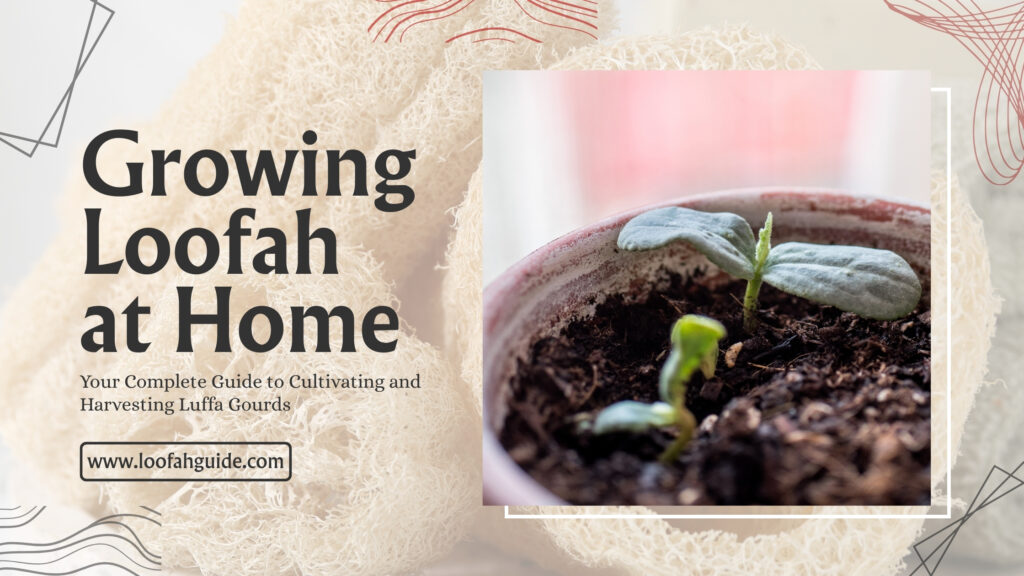
Germinating loofah seeds successfully sets the foundation for healthy vines and abundant harvests. These seeds feature hard outer coats requiring special treatment for reliable sprouting.
Seed Preparation Techniques
Before planting, prepare seeds to improve germination rates dramatically.
Scarification Method: Gently nick the seed coat with a file or sandpaper on the rounded end, avoiding the pointed tip where the root emerges. This creates entry points for water absorption.
Soaking Protocol: Submerge scarified seeds in room temperature water for 24 to 48 hours. Seeds should swell noticeably. Discard any that float after 24 hours as these typically lack viable embryos.
Pre-sprouting Option: Wrap soaked seeds in damp paper towels inside a plastic bag. Place in a warm location around 25 to 30 degrees Celsius. Check daily and plant immediately when white root tips emerge, usually within 5 to 10 days.
Indoor Starting Process
For regions requiring head starts, follow this timeline and procedure.
Indoor Starting Schedule
| Week | Activity | Details |
|---|---|---|
| 8 weeks before transplant | Begin seed preparation | Scarify and soak seeds |
| 7 to 8 weeks before | Plant in containers | Use 4 inch biodegradable pots |
| 6 to 7 weeks before | Maintain warmth | Keep soil 21 to 27 degrees Celsius |
| 5 to 6 weeks before | Germination occurs | Expect sprouts within 7 to 14 days |
| 4 to 5 weeks before | Provide strong light | South window or grow lights 14 to 16 hours |
| 2 to 3 weeks before | Begin hardening off | Gradual outdoor exposure |
| 1 week before | Final hardening | Full days outdoors in protected spot |
| Transplant day | Move to garden | After all frost danger passes |
Use biodegradable pots that plant directly into the ground, as loofah roots resent disturbance. Peat pots, coir pots, or newspaper pots all work well. Avoid plastic containers requiring root-disturbing transplanting.
Direct Sowing for Warm Climates
Gardeners blessed with long growing seasons can skip indoor starting entirely. Wait until soil temperatures consistently measure 18 degrees Celsius or higher at 4 inch depth. Plant seeds 1 inch deep, 2 to 3 seeds per hole, spacing holes 6 to 8 feet apart. Thin to strongest seedling once plants establish.
Nurturing Vigorous Vines: Care Throughout the Growing Season
Between planting and harvest, consistent care determines both quantity and quality of your loofah crop. Attention to watering, feeding, and pest management produces the robust vines that support heavy fruit loads.
Watering Requirements by Growth Stage
Loofah water needs vary significantly through the season. This schedule optimizes growth without encouraging disease.
| Growth Stage | Weekly Water Needs | Frequency | Notes |
|---|---|---|---|
| Seedling establishment | 0.5 to 1 inch | Light, frequent | Keep consistently moist |
| Vegetative growth | 1 to 1.5 inches | Every 3 to 4 days | Deep soaking preferred |
| Flowering | 1.5 to 2 inches | Every 2 to 3 days | Critical for fruit set |
| Fruit development | 2 to 2.5 inches | Every 2 to 3 days | Maximum water uptake period |
| Maturation and drying | Reduce gradually | Weekly or less | Excess moisture delays drying |
Water at soil level using drip irrigation or careful hand watering. Wet foliage promotes fungal diseases including powdery mildew and downy mildew. Morning watering allows any splashed leaves to dry before evening.
Fertilization Program
Heavy-feeding loofah vines deplete soil nutrients quickly. A balanced feeding program maintains vigor throughout the long growing season.
Pre-planting: Incorporate 3 to 4 inches of aged compost and balanced granular fertilizer into planting area.
Early Growth: Apply nitrogen-rich fertilizer every 2 to 3 weeks to support leaf and vine development. Fish emulsion, blood meal, or balanced synthetic fertilizers all work effectively.
Flowering Transition: Switch to phosphorus-heavy fertilizer when first flowers appear. This encourages abundant blooms and strong fruit set. Bone meal or bloom-boosting formulas support this stage.
Fruit Development: Continue phosphorus feeding with added potassium for fiber development. Reduce nitrogen to prevent excessive foliage at fruit expense.
Pollination Management
Loofah produces separate male and female flowers on the same vine. Male flowers appear first, often causing concern among new growers who see blooms but no fruit. Female flowers follow 1 to 2 weeks later, identifiable by the miniature gourd swelling at their base.
Natural Pollination: Bees and other pollinators transfer pollen effectively when populations are healthy. Encourage pollinators by avoiding pesticides during morning flowering hours and planting companion flowers nearby.
Hand Pollination: In areas with limited pollinators or for greenhouse growing, hand pollination ensures fruit set. Using a small brush or cotton swab, collect pollen from freshly opened male flowers and transfer to the sticky stigma of female flowers. Pollinate in early morning when pollen is most viable.
For wholesale buyers evaluating loofah sources, pollination success rates directly impact supply consistency. Professional growers in Egypt maintain pollinator-friendly practices that ensure reliable harvests. Learn more about commercial cultivation standards through Egexo’s quality documentation.
Recognizing Maturity: When to Harvest Your Loofah Gourds at Home
Harvest timing separates excellent loofahs from mediocre ones. Pick too early and fibers remain weak and prone to disintegration. Wait too long in humid conditions and mold destroys your crop. Learning to read maturity indicators ensures you harvest your loofah gourds at home at the perfect moment.
Visual and Physical Maturity Indicators
Monitor developing gourds for these signs of readiness.
Color Changes: Maturing gourds transition from dark green through yellow-green to yellow and finally tan or brown. This progression indicates internal drying and fiber strengthening.
Weight Reduction: Mature gourds feel noticeably lighter than immature ones as water content decreases. A fully ready gourd feels almost hollow compared to its earlier heaviness.
Skin Texture: The smooth, taut skin of growing gourds becomes wrinkled and papery as they dry. You may see the fiber pattern showing through the thinning outer layer.
Stem Condition: The stem connecting gourd to vine yellows and begins drying as the plant naturally redirects resources away from mature fruit.
The Shake Test: Shake suspect gourds gently. Mature specimens produce a rattling sound from loose seeds inside. No sound indicates continued internal development.
Harvest Decision Matrix
Use this guide to determine appropriate action for gourds at various stages.
| Condition Observed | Recommended Action | Reasoning |
|---|---|---|
| Green skin, heavy, firm | Leave on vine | Still developing, fibers weak |
| Yellow-green, moderate weight | Monitor closely | Approaching readiness, check daily |
| Yellow, light, slight wrinkle | Harvest if frost threatens | Can finish drying off vine |
| Tan or brown, very light, papery | Harvest immediately | Optimal maturity reached |
| Brown with soft spots | Harvest and inspect | May have moisture damage |
| Mold visible | Remove and discard | Contamination ruins fiber |
Handling Frost Threats
If frost approaches before gourds fully mature, harvest all remaining fruits regardless of development stage. Partially mature gourds can continue drying indoors in warm, well-ventilated locations. Results will be inferior to vine-dried specimens but still usable for many purposes.
Commercial growers in Egypt’s Mediterranean climate never face frost concerns, allowing extended vine drying that produces superior fiber development. This climate advantage partially explains why Egyptian loofah consistently outperforms loofahs from regions with shorter growing seasons.
Processing Your Harvest: From Gourd to Usable Sponge
Harvesting marks the halfway point in creating usable loofah sponges. Proper processing removes unwanted material while preserving fiber integrity and appearance.
Peeling and Cleaning Methods
Several approaches work for removing the outer skin, each with advantages.
Dry Peeling Method
Fully dried gourds with papery skin peel most easily. Simply crack the skin and peel away in strips. This method works best for gourds dried completely on the vine and produces the cleanest fibers with minimal additional processing.
Soaking Method
Gourds with stubborn skin benefit from soaking in warm water for several hours to overnight. The skin softens and separates from underlying fibers. This method requires more follow-up rinsing but handles less-than-ideal specimens effectively.
Skin Removal Comparison
| Method | Best For | Time Required | Pros | Cons |
|---|---|---|---|---|
| Dry peeling | Fully mature gourds | 5 to 10 minutes | Clean fibers, minimal mess | Only works on dry specimens |
| Brief soak 1 to 2 hours | Mostly dry gourds | 2 to 3 hours total | Balances ease and quality | Requires drying time after |
| Extended soak overnight | Green-picked gourds | 12 to 24 hours | Handles immature specimens | Risk of fiber softening |
| Composting method | Any maturity | 1 to 2 weeks | Minimal effort | Weather dependent, variable results |
Seed Removal and Fiber Cleaning
After peeling, shake out loose seeds and save viable ones for future planting. Remaining seeds and pulp require flushing with running water. Squeeze and rinse repeatedly until water runs clear and no plant material remains trapped in fiber chambers.
Stubborn pulp residue indicates incomplete maturation. Extended soaking followed by vigorous rinsing usually removes remaining material. Persistent pulp may require light scrubbing with a brush, though this risks damaging fibers.
Optional Bleaching for Appearance
Natural loofah color ranges from cream to tan to brown depending on variety and processing. For uniform lighter color preferred in retail applications, bleach treatment lightens fibers.
Bleaching Protocol
| Step | Solution | Duration | Purpose |
|---|---|---|---|
| 1 | 10 percent household bleach | 30 to 60 minutes | Initial lightening |
| 2 | Fresh water rinse | 5 to 10 minutes | Remove bleach |
| 3 | Water plus 1 tablespoon vinegar per gallon | 10 to 15 minutes | Neutralize remaining bleach |
| 4 | Final fresh water rinse | 5 minutes | Remove vinegar |
| 5 | Complete drying | Until thoroughly dry | Prevent mold growth |
Some consumers prefer unbleached loofahs for perceived naturalness. Commercial suppliers typically offer both options. Wholesale buyers can specify preferences when ordering from quality suppliers.
Final Drying and Storage
Processed loofahs must dry completely before storage or use. Place in direct sunlight or warm, well-ventilated area for 3 to 7 days. Squeeze periodically to check for internal moisture. Any dampness invites mold growth that ruins the sponge.
Store dried loofahs in breathable containers or open shelving. Avoid plastic bags or sealed containers that trap humidity. Properly dried and stored loofahs maintain quality for 12 to 18 months.
Homegrown vs Commercial: Understanding Quality Differences
Growing your own loofah provides satisfaction and education, but honest assessment reveals quality differences compared to professionally cultivated products.
Factors Affecting Homegrown Quality
Several variables challenge home growers seeking premium results.
Climate Limitations: Most home growers face shorter seasons than optimal loofah regions. Reduced growing time means less fiber development and lower density.
Scale Efficiencies: Commercial operations select best specimens from thousands of plants. Home gardeners work with much smaller sample sizes, accepting greater variation.
Processing Expertise: Professional facilities maintain controlled conditions and standardized procedures. Home processing introduces more variables.
Variety Access: Commercial growers access carefully selected seed stocks bred for specific characteristics. Home gardeners typically use whatever seeds are available.
Quality Comparison Summary
| Quality Aspect | Typical Homegrown | Professional Egyptian |
|---|---|---|
| Fiber Density | 55 to 75 percent | 85 to 95 percent |
| Size Consistency | Highly variable | Graded uniformly |
| Color | Natural variation | Consistent within grades |
| Durability | 4 to 10 weeks use | 12 to 24 weeks use |
| Retail Suitability | Personal use, gifts | Full commercial use |
| Processing Cleanliness | Variable | Professional standard |
When to Grow vs When to Buy
Growing Makes Sense When:
- You enjoy gardening as a hobby
- You want the educational experience
- Personal use is your primary goal
- You live in an ideal growing climate
- You have space for vigorous vines
Purchasing Makes Sense When:
- Consistent quality matters for your needs
- You require specific sizes or quantities
- Business applications demand reliability
- Your climate limits growing success
- Time constraints prevent proper cultivation
For business applications including spa services, retail, and distribution, sourcing from established suppliers ensures consistent quality that supports customer satisfaction. Egexo’s product catalog showcases the range available through professional sourcing.
Diverse Applications for Your Loofah Harvest
Successfully grown and processed loofahs serve numerous purposes beyond the typical shower scrubber. Understanding applications helps you utilize your entire harvest and reveals market opportunities for larger scale growers.
Personal Care Uses
The primary application remains body exfoliation. Natural loofah fibers provide ideal texture for removing dead skin cells, improving circulation, and preparing skin for moisturizers. Different fiber densities suit varying skin sensitivities.
Loofahs also create excellent facial exfoliators when cut into small portions. The body loofah category demonstrates the variety of shapes and sizes available for personal care applications.
Household Cleaning Applications
Loofah excels at kitchen and general cleaning tasks. The slightly abrasive texture removes stuck food and grime without scratching most surfaces. Dishes, countertops, stovetops, and bathroom fixtures all benefit from loofah scrubbing.
Unlike synthetic sponges that harbor bacteria, loofahs dry quickly and resist microbial growth when properly maintained. The natural material also biodegrades completely at end of life. Kitchen loofah products represent a growing market segment.
Pet Care and Specialty Applications
Loofah works wonderfully for pet grooming, gently removing loose fur while distributing natural oils through the coat. The texture provides light massage that most animals enjoy. Pet and spa applications continue expanding as pet owners seek natural alternatives.
Craft and Decorative Uses
Creative applications include soap embedding, where loofah slices are incorporated into handmade soaps. Crafters use loofah in various projects, and the natural texture adds interest to decorative displays.
Commercial Product Development
Growers producing quantities beyond personal use can explore market opportunities. Private label manufacturing and custom product design services transform raw materials into branded products for various markets.
Expert Insight from Egexo
After more than 25 years cultivating loofahs in Egypt’s Nile Delta, we have observed countless growers make the same timing mistake. They harvest based on calendar dates rather than plant signals. A loofah that appears ready in September might need another three weeks, while another on the same vine could be perfect today.
Learn to read each individual gourd rather than treating them uniformly. Check daily during the maturation window. The effort invested in proper timing returns dividends in fiber quality that makes the difference between a sponge lasting weeks versus months. This attention to individual assessment defines quality cultivation whether in backyard gardens or commercial fields spanning hundreds of acres.
For those seeking guaranteed quality without cultivation challenges, our farm to export process ensures every loofah meets premium standards before shipping worldwide.
Frequently Asked Questions
What is the best time of year to plant loofah seeds?
Plant loofah seeds outdoors after your last frost date when soil temperatures consistently exceed 18 degrees Celsius. In most temperate regions, this means late spring planting between April and June depending on your location. Starting seeds indoors 6 to 8 weeks earlier extends your effective growing season in cooler climates.
How many loofah gourds can one plant produce?
A healthy loofah vine typically produces 5 to 15 gourds depending on growing conditions, variety, and care. Optimal conditions including full sun, consistent water, adequate fertilization, and sturdy trellising maximize production. Plants stressed by drought, nutrient deficiency, or disease produce fewer and smaller gourds.
Can I eat loofah gourds before they mature?
Yes, young loofah gourds are edible and popular in Asian cuisines. Harvest when 4 to 6 inches long and still tender. The flesh tastes similar to zucchini with a slightly sweet flavor. Once fibrous tissue develops, usually beyond 6 to 8 inches, gourds become too tough for culinary use.
Why are my loofah flowers falling off without producing fruit?
Flower drop typically indicates pollination failure. Early flowers are usually all male and naturally drop after releasing pollen. Female flowers appearing later require pollination to set fruit. Insufficient pollinator activity, extreme heat during flowering, or nutrient imbalances cause female flower drop. Hand pollination resolves most fruit set problems.
How do wholesale buyers assess loofah quality before purchasing?
Professional buyers evaluate fiber density, color consistency, size uniformity, flexibility, and cleanliness. Sample orders allow hands-on assessment before bulk commitments. Reputable suppliers provide quality specifications and maintain standards documentation. Requesting quotations from multiple sources enables comparison.
What causes brown spots or discoloration on harvested loofahs?
Brown spots typically indicate moisture damage from rain, overhead watering, or insufficient drying after processing. Mold may follow discoloration if conditions persist. Minor spots can be trimmed away, but extensive discoloration suggests compromised fiber integrity. Prevention through proper drying and storage protects your harvest.
How long do homegrown loofahs last compared to commercial ones?
Homegrown loofahs typically provide 4 to 10 weeks of regular use depending on fiber density achieved. Premium commercial Egyptian loofahs often last 12 to 24 weeks under similar use patterns. The difference stems from fiber density variations, with professional growing conditions producing denser, more durable fibers.
Conclusion
Growing and harvesting loofah gourds at home connects you directly with one of nature’s most versatile plants. From the satisfaction of nurturing vines from seed to the accomplishment of processing your own natural sponges, home loofah cultivation rewards patient gardeners with sustainable products impossible to replicate with synthetic alternatives.
Success requires understanding your climate limitations, providing appropriate growing conditions, mastering harvest timing, and following proper processing steps. While homegrown results may not match premium commercial quality from ideal growing regions like Egypt, the personal satisfaction and environmental benefits make the effort worthwhile for many gardeners.
For those requiring consistent quality for business applications or preferring convenience over cultivation, professional sourcing provides reliable access to premium loofahs year-round.
Key Takeaways
- Loofah requires 150 to 200 frost-free days for optimal fiber development
- Luffa aegyptiaca produces superior body care sponges compared to ridged varieties
- Harvest timing based on physical indicators rather than calendar dates
- Complete drying before storage prevents mold and extends shelf life
- Professional cultivation achieves fiber density home growers rarely match
Explore Your Options
For Wholesale Inquiries: Request a quotation or browse the complete catalog
For Personal Orders: Shop premium loofahs or request samples
For More Wholesale Resources: Visit WholesaleLoofah.com