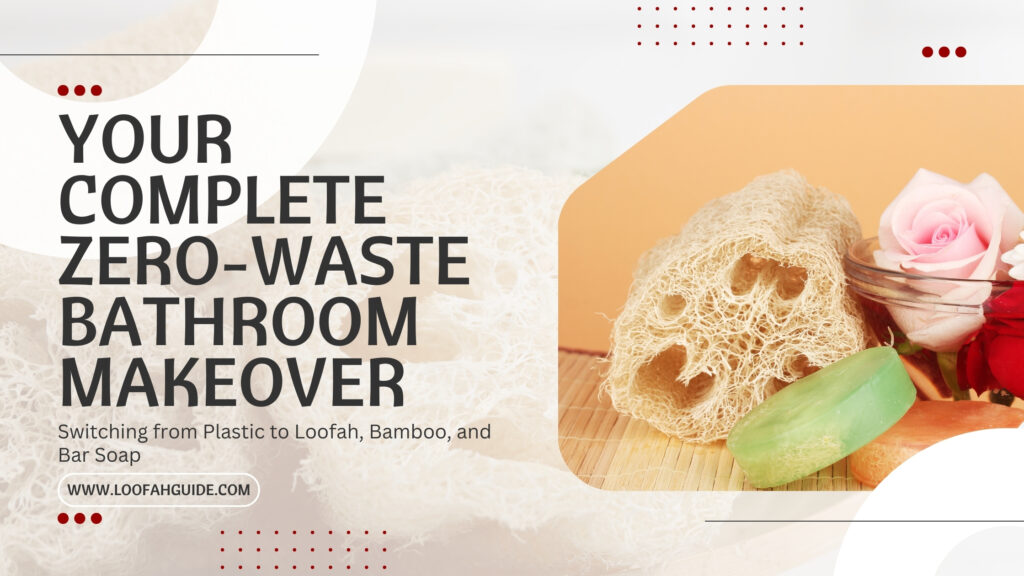
Every minute, one million plastic bottles are purchased worldwide, and a significant portion ends up in bathroom waste bins. The Ocean Conservancy reports that personal care packaging ranks among the top ten items collected during coastal cleanups. Building an ultimate zero-waste bathroom guide requires understanding not just which products to swap, but how natural alternatives like loofah perform in real daily use.
Natural loofahs have cleaned bodies for thousands of years before plastic existed. Today, they represent one of the simplest yet most effective ways to eliminate bathroom plastic. Replacing plastic with loofah and soap creates immediate environmental benefits while often improving your bathing experience. The naturally textured fibers provide exfoliation that synthetic materials simply cannot match.
This guide serves anyone seeking bathroom sustainability, from individuals taking first steps toward eco-friendly living to spa managers sourcing bulk inventory and retailers building green product lines. You will discover practical selection criteria, maintenance secrets that extend product life, and sourcing strategies that ensure consistent quality. Egyptian loofahs, particularly those from established cultivators like Egexo with over 25 years of expertise, set the standard for quality that both consumers and businesses can rely upon.
The Hidden Plastic Problem in Modern Bathrooms
Walk into any conventional bathroom and count the plastic items. Shampoo bottles, body wash containers, synthetic poufs, disposable razors, toothbrush handles, cotton swab stems, and countless other items accumulate over time. Most households cycle through hundreds of plastic bathroom items annually without realizing the cumulative impact.
Microplastic Contamination from Synthetic Scrubbers
Synthetic bath poufs and plastic scrubbers present particular concerns beyond simple waste. Research published in Environmental Science and Technology found that synthetic textiles release microfibers during use. These microscopic plastic particles wash down drains, pass through water treatment facilities, and enter waterways where they accumulate in marine life and eventually human food chains.
Natural loofahs release no microplastics. Their plant-based fibers break down completely in composting environments within weeks. This fundamental difference makes replacing plastic with loofah one of the most impactful bathroom changes available.
Consumer Awareness Driving Market Shifts
Public awareness of plastic pollution has surged dramatically. A 2024 Nielsen study found 73 percent of global consumers willing to change consumption habits to reduce environmental impact. This shift creates opportunities for retailers and spa owners to meet growing demand while building customer loyalty through sustainable offerings.
Businesses stocking natural alternatives position themselves ahead of regulatory trends. Several jurisdictions now restrict single-use plastics, with bathroom products increasingly falling under scrutiny. Forward-thinking retailers building relationships with quality suppliers like Egexo prepare their inventory for evolving market conditions.
Natural Loofah Fundamentals: What Every User Should Know
Understanding loofah origins and characteristics helps both consumers and buyers make informed decisions. Despite widespread use, many misconceptions persist about these remarkable natural products.
Botanical Origins and Growing Regions
Loofahs come from the Luffa plant, a member of the cucumber family. The mature fruit develops a dense fibrous interior perfect for scrubbing applications. While loofahs grow in tropical and subtropical regions worldwide, Egyptian cultivation produces notably superior results.
The Nile Delta provides ideal conditions including mineral-rich alluvial soil, consistent sunshine, and traditional farming knowledge refined over generations. Egyptian loofah quality standards reflect this heritage, with grading systems ensuring buyers receive products meeting specific criteria.
Anatomy of a Quality Loofah
Premium loofahs display several distinguishing characteristics that separate them from inferior products.
Loofah Quality Indicators Table
| Quality Marker | Premium Grade | Standard Grade | Low Grade |
|---|---|---|---|
| Fiber Density | Tight, uniform structure | Moderate density | Loose, uneven fibers |
| Color | Golden tan, consistent | Light brown, minor spots | Dark patches, discoloration |
| Flexibility | Springs back when pressed | Moderate rebound | Stiff or overly soft |
| Odor | Fresh, plant-like | Neutral | Musty or chemical smell |
| Interior Structure | Dense, even distribution | Some gaps present | Sparse, hollow sections |
| Seed Remnants | None visible | Minimal | Visible seeds or debris |
| Surface Texture | Smooth outer, textured inner | Generally smooth | Rough, damaged areas |
Consumers selecting loofahs for personal use benefit from examining these markers. Wholesale buyers should request samples demonstrating quality consistency before committing to larger orders. Order samples from Egexo to evaluate firsthand.
Types of Loofah Products Available
The loofah market offers diverse product configurations serving different needs and preferences.
Body Loofahs provide full coverage for torso and limb exfoliation. These range from whole natural loofahs to shaped sponges and mitts. Body loofah collections showcase the variety available.
Facial Loofahs feature softer textures appropriate for delicate skin. Thin slices or specially processed fibers reduce intensity while maintaining effectiveness.
Kitchen Loofahs utilize the scrubbing power for dishwashing and surface cleaning. Kitchen loofah products often feature denser fibers and reinforced construction.
Raw Loofahs appeal to crafters and DIY enthusiasts creating custom products. Raw loofah scrubbers provide material for soap embedding, decorative projects, and personalized configurations.
Specialty Loofahs serve niche applications including pet grooming, spa treatments, and industrial uses.
Comprehensive Bathroom Product Replacement Guide
Transitioning to zero-waste requires systematic replacement of plastic items. This section provides detailed guidance for common bathroom products.
Body Cleansing Products
The body cleansing category offers the most straightforward replacements with immediate benefits.
Body Cleansing Replacement Table
| Current Product | Sustainable Alternative | Benefits | Transition Difficulty |
|---|---|---|---|
| Plastic bath poof | Natural body loofah | Superior exfoliation, biodegradable | Easy |
| Bottled body wash | Bar soap | Zero packaging, longer lasting | Easy |
| Synthetic back scrubber | Loofah on rope | Natural fibers, compostable | Easy |
| Plastic shower caddy | Bamboo organizer | Renewable material, aesthetic | Moderate |
| Disposable razor | Safety razor with metal handle | Recyclable blades, cost savings | Moderate |
| Aerosol shaving cream | Shave soap bar | Plastic-free, gentler formula | Easy |
Facial Care Transitions
Facial products require more careful selection due to skin sensitivity considerations.
Facial Care Alternatives
| Plastic Product | Natural Alternative | Considerations |
|---|---|---|
| Synthetic face pad | Soft loofah slice | Start gently, increase pressure gradually |
| Exfoliating scrub in tube | Konjac sponge or soft loofah | Daily use appropriate |
| Makeup remover wipes | Reusable cloth pads | Machine washable |
| Toner in plastic bottle | DIY toner in glass spray | Simple recipes available |
| Plastic headband | Cotton or bamboo wrap | Comfortable, washable |
Hair Care Without Plastic
Hair care presents greater challenges but achievable solutions exist.
Solid shampoo bars have improved dramatically in recent years. Modern formulations lather effectively and rinse cleanly without residue concerns that plagued earlier products. Conditioner bars work well for many hair types, though those with very dry or processed hair may need adjustment periods.
Bamboo combs and brushes replace plastic alternatives while providing gentler detangling. Natural bristle brushes distribute oils effectively for healthier hair between washes.
Oral Care Solutions
Bamboo toothbrushes now match plastic alternatives in effectiveness while offering compostable handles. The bristles typically require removal before composting, but this represents minimal effort compared to completely plastic alternatives.
Toothpaste tablets eliminate tubes entirely. Users simply chew a tablet before brushing. While adjustment takes time, many converts report equivalent cleaning effectiveness.
Mastering Loofah Selection for Different Needs
Choosing the right loofah depends on intended use, skin type, and personal preferences. This guidance helps consumers find ideal products while assisting retailers in curating appropriate selections.
Matching Loofah Intensity to Skin Types
Skin Type and Loofah Pairing Guide
| Skin Type | Recommended Loofah | Usage Frequency | Special Considerations |
|---|---|---|---|
| Normal | Standard body loofah | Daily acceptable | Most versatile option |
| Oily | Dense fiber loofah | Daily recommended | Helps control excess oil |
| Dry | Soft processed loofah | 2 to 3 times weekly | Follow with moisturizer |
| Sensitive | Extra soft loofah slice | 1 to 2 times weekly | Patch test first |
| Combination | Medium density loofah | 3 to 4 times weekly | Vary pressure by area |
| Mature | Soft to medium loofah | 2 to 3 times weekly | Gentler approach needed |
| Acne-prone | Soft loofah, facial only | As tolerated | Avoid irritated areas |
Consumers should listen to their skin response and adjust accordingly. What works perfectly for one person may prove too intense or too gentle for another.
Evaluating Loofahs for Wholesale Purchase
Business buyers face different selection criteria focused on consistency, value, and customer satisfaction.
Wholesale Evaluation Criteria
| Factor | What to Assess | Why It Matters |
|---|---|---|
| Size Consistency | Measure sample variance | Affects packaging and display |
| Color Uniformity | Compare across batch | Customer expectations |
| Fiber Durability | Test wet strength | Returns and complaints |
| Processing Quality | Check for debris | Professional appearance |
| Packaging Options | Assess presentation | Retail appeal |
| Minimum Orders | Verify actual requirements | Cash flow management |
| Lead Times | Confirm realistic timelines | Inventory planning |
| Quality Documentation | Request certificates | Customer confidence |
Established suppliers provide detailed specifications enabling confident purchasing. Download the Egexo catalog for comprehensive product information including dimensions, weights, and quality grades.
The Art of Loofah Maintenance and Hygiene
Proper care dramatically extends loofah lifespan while maintaining hygienic conditions. These practices benefit individual users and inform the guidance retailers provide customers.
Daily Maintenance Protocol
Effective daily care takes under one minute but prevents most common loofah problems.
Step 1: Immediately after use, rinse thoroughly under running water. Work through the fibers to remove all soap residue and dead skin cells.
Step 2: Squeeze firmly to remove excess water. Multiple squeezes ensure thorough water removal.
Step 3: Shake vigorously to open fiber structure and promote airflow.
Step 4: Hang in well-ventilated location away from direct shower spray. Proper air circulation prevents bacterial growth.
Weekly Deep Cleaning Methods
Choose one of these methods for weekly sanitization.
Vinegar Soak Method
Combine equal parts white vinegar and warm water in a container. Submerge loofah completely for 15 to 20 minutes. Rinse thoroughly and dry as usual.
Boiling Water Method
Bring water to rolling boil. Remove from heat and submerge loofah for 5 minutes. Allow to cool before removing and drying.
Hydrogen Peroxide Method
Mix one part 3 percent hydrogen peroxide with three parts water. Soak loofah for 10 minutes. Rinse completely and dry.
Recognizing Replacement Time
Even well-maintained loofahs eventually require replacement. Watch for these indicators.
Loofah Replacement Indicators
| Warning Sign | What It Means | Action Required |
|---|---|---|
| Persistent odor after cleaning | Bacterial colonization | Replace immediately |
| Fiber shedding during use | Structural breakdown | Replace soon |
| Loss of scrubbing texture | Fiber compression | Replace when convenient |
| Dark discoloration | Mold or mildew growth | Replace immediately |
| Slimy feel when wet | Bacterial biofilm | Replace immediately |
| Holes or tears | Physical degradation | Replace when convenient |
Most body loofahs require replacement every four to six weeks with proper care. Some users extend this to eight weeks, while heavy daily use may necessitate more frequent replacement.
Building a Zero-Waste Bathroom Step by Step
Successful transitions happen gradually rather than overnight. This phased approach works for personal bathrooms and business inventory transitions.
Phase One: Immediate Swaps
Begin with the easiest replacements requiring minimal habit adjustment.
Replace synthetic scrubbers with natural loofahs. This swap delivers immediate benefits with virtually no learning curve. Shop body loofahs to explore options.
Switch from liquid body wash to bar soap. Modern bar soaps offer luxurious formulations matching or exceeding liquid alternatives.
Phase Two: Gradual Transitions
After establishing phase one habits, expand to moderate changes.
Transition shampoo and conditioner to bar alternatives. Allow adjustment time as hair adapts to different formulations.
Replace plastic dental care items with bamboo alternatives. Toothbrushes offer the easiest entry point.
Phase Three: Advanced Sustainability
Advanced transitions require more investment or adjustment but complete the zero-waste bathroom.
Implement reusable alternatives for disposable items. Cloth facial rounds, safety razors, and refillable containers reduce waste significantly.
Consider DIY products for items like toners, room sprays, and cleaning solutions.
Business Implementation Timeline
Retailers and spa owners benefit from similar phased approaches to inventory transitions.
Retail Transition Timeline
| Timeline | Action Items | Expected Outcomes |
|---|---|---|
| Month 1 | Source samples from multiple suppliers | Quality comparison data |
| Month 2 | Select preferred supplier, place small order | Initial inventory |
| Month 3 | Launch limited product selection | Customer feedback |
| Month 4 | Evaluate sales data and customer response | Informed expansion decisions |
| Month 5 | Expand product range based on demand | Broader selection |
| Month 6 | Establish reorder schedules | Consistent availability |
| Ongoing | Refine selection, explore private label | Competitive differentiation |
Request a wholesale quotation to begin exploring partnership possibilities with established Egyptian suppliers.
Wholesale Buying Strategies for Natural Bath Products
Business buyers require specific knowledge beyond consumer guidance. This section addresses procurement considerations for retailers, distributors, and spa operators.
Understanding Minimum Order Requirements
Minimum order quantities vary significantly across suppliers and product types. Understanding these requirements enables realistic planning.
Typical MOQ Ranges by Product Category
| Product Category | Small Supplier MOQ | Established Supplier MOQ | Container Volume |
|---|---|---|---|
| Body Loofah Sponges | 100 to 300 units | 500 to 1000 units | 15000 to 25000 units |
| Loofah Slices | 200 to 500 units | 1000 to 2000 units | 30000 to 50000 units |
| Raw Whole Loofahs | 50 to 100 units | 200 to 500 units | 5000 to 10000 units |
| Loofah Mitts | 100 to 200 units | 300 to 500 units | 8000 to 15000 units |
| Kitchen Loofahs | 200 to 400 units | 500 to 1000 units | 20000 to 35000 units |
Established suppliers like Egexo often accommodate smaller initial orders for new accounts while offering volume discounts for larger commitments.
Quality Assurance and Documentation
Professional suppliers provide documentation supporting quality claims and enabling regulatory compliance.
Essential documentation includes certificates of origin verifying Egyptian sourcing, phytosanitary certificates for international shipping, quality grade specifications, and batch tracking information.
Egexo quality standards documentation demonstrates the type of professional verification buyers should expect.
Private Label and Custom Manufacturing
Retailers seeking brand differentiation explore private label opportunities. Custom packaging, branded tags, and exclusive product configurations create market advantages.
Private label manufacturing services enable businesses to develop proprietary product lines. Custom product design options allow creation of unique configurations unavailable elsewhere.
Private label programs typically require higher minimum orders but deliver superior margins and brand building benefits.
Environmental Impact Analysis
Understanding the environmental mathematics behind product choices reinforces commitment and provides talking points for retailers educating customers.
Lifecycle Comparison
Natural loofahs demonstrate superior environmental performance across all lifecycle stages.
Environmental Impact Comparison
| Lifecycle Stage | Plastic Scrubber | Synthetic Sponge | Natural Loofah |
|---|---|---|---|
| Raw Materials | Petroleum extraction | Petroleum extraction | Renewable plant |
| Manufacturing | Energy intensive, emissions | Moderate energy | Minimal processing |
| Transportation | Lightweight but bulky | Lightweight | Lightweight, compressible |
| Use Phase | Microplastic shedding | Microplastic shedding | No microplastics |
| Disposal | Landfill, 400+ years | Landfill, 200+ years | Compost, 4 to 6 weeks |
| Ocean Impact | Contributes to pollution | Contributes to pollution | Biodegrades harmlessly |
Cumulative Impact Calculations
Individual choices aggregate into significant environmental impact over time.
A single person replacing synthetic scrubbers with natural loofahs eliminates approximately 6 to 12 plastic items annually, considering typical replacement frequencies. A family of four multiplies this to 24 to 48 items. A retailer serving 5000 customers who make this switch facilitates elimination of 30000 to 60000 plastic items annually.
These calculations motivate both individual commitment and business investment in sustainable inventory.
Expert Insight from Egexo
With over 25 years cultivating and exporting Egyptian loofahs, we have observed the zero-waste movement transform from niche interest to mainstream demand. The most successful bathroom transformations we have witnessed share common characteristics.
Patience proves essential. Natural products behave differently than synthetic alternatives, and bodies need time to adjust. Customers who persist through initial adjustment periods almost universally prefer natural loofahs once acclimated.
Quality matters enormously. Inferior loofahs create disappointing experiences that discourage continued sustainable choices. Investing in premium grade products, whether for personal use or retail inventory, pays dividends in satisfaction and loyalty.
For wholesale buyers considering Egyptian loofah sourcing, we recommend starting with sample evaluation before committing to larger orders. Quality varies significantly across suppliers, and direct product experience enables informed decisions. Our sample request program facilitates this evaluation process for serious business inquiries.
Visit WholesaleLoofah.com for additional business-focused resources and procurement guidance.
Frequently Asked Questions
Q: How does natural loofah exfoliation compare to synthetic alternatives?
A: Natural loofah provides superior exfoliation through its unique fiber structure. Unlike synthetic materials that simply scrub the surface, loofah fibers create micro-massage action that stimulates circulation while removing dead skin cells. Users typically report smoother skin texture within two weeks of switching from plastic alternatives. The natural variation in fiber density creates more effective exfoliation than uniform synthetic textures.
Q: What quantity discounts can wholesale buyers expect when ordering natural loofahs?
A: Volume discounts typically begin at orders exceeding 500 units, with 10 to 15 percent savings common at this level. Orders between 1000 and 5000 units generally qualify for 15 to 25 percent discounts. Large orders exceeding 5000 units often receive 25 to 40 percent reductions. Container load purchases negotiated individually may achieve even better pricing. Establishing ongoing relationships with suppliers frequently unlocks additional favorable terms.
Q: Can natural loofahs harbor bacteria if not properly maintained?
A: All bath products require proper maintenance for hygiene, and loofahs are no exception. However, natural loofah fibers dry more quickly than synthetic alternatives, actually reducing bacterial growth opportunity. Weekly sanitization using vinegar, hydrogen peroxide, or boiling water effectively eliminates bacteria. Replacing loofahs every four to six weeks maintains optimal hygiene. Proper ventilation between uses remains the single most important factor preventing bacterial problems.
Q: Why do experts recommend Egyptian loofahs over those from other growing regions?
A: Egyptian loofahs benefit from exceptional growing conditions along the Nile Delta. The combination of mineral-rich alluvial soil, consistent Mediterranean climate, and centuries of refined cultivation techniques produces remarkably dense fiber structures. Extended growing seasons allow complete plant maturation before harvest. Quality testing consistently shows Egyptian loofahs outperform alternatives in durability, texture consistency, and overall performance. Established Egyptian exporters maintain rigorous quality standards ensuring product consistency.
Q: What soap types work best with natural loofahs for zero-waste bathing?
A: Cold-process bar soaps pair excellently with natural loofahs. These soaps retain beneficial glycerin removed from commercial alternatives and contain natural oils that nourish skin during cleansing. Look for soaps featuring olive oil, coconut oil, shea butter, or similar natural ingredients. Avoid soaps with synthetic detergents or artificial fragrances that may irritate skin sensitized by exfoliation. Unpackaged or minimally packaged soaps complete the zero-waste approach.
Q: How should retailers educate customers about natural loofah benefits?
A: Effective customer education combines product knowledge with practical guidance. Display signage explaining environmental benefits appeals to eco-conscious shoppers. Care instruction cards included with purchases reduce returns and build satisfaction. Staff training enables confident recommendation and question answering. Some retailers offer in-store demonstrations showing proper loofah use and maintenance. Educational content linking to resources like LoofahGuide.com provides ongoing customer support.
Q: What certifications verify authentic Egyptian loofah sourcing?
A: Legitimate Egyptian loofah exporters provide certificates of origin issued by Egyptian authorities verifying product source. Phytosanitary certificates confirm products meet international agricultural shipping requirements. Quality grade certifications document specific product standards. Export licenses demonstrate legal authorization for international trade. Some suppliers offer additional certifications including organic verification for products meeting specific cultivation criteria. Request documentation samples before placing significant orders.
Conclusion
Building your ultimate zero-waste bathroom through replacing plastic with loofah, bamboo, and bar soap creates meaningful environmental impact while often improving your daily routine. Natural products offer sensory experiences and effectiveness that synthetic alternatives cannot match. This comprehensive guide has equipped you with knowledge spanning product selection through maintenance mastery.
Egyptian loofahs represent the gold standard for natural bath products, with established suppliers like Egexo providing consistent quality backed by over 25 years of cultivation expertise. Whether purchasing for personal use or sourcing wholesale inventory, quality Egyptian loofahs deliver satisfaction that builds lasting sustainable habits.
Key Takeaways:
- Natural loofahs eliminate microplastic pollution while providing superior exfoliation
- Proper maintenance extends loofah lifespan to four to eight weeks
- Egyptian growing conditions produce demonstrably superior fiber quality
- Phased transition approaches enable sustainable lifestyle changes without overwhelm
- Wholesale buyers benefit from sample evaluation before larger commitments
Ready to begin your zero-waste bathroom transformation?
For Wholesale Buyers: Request a quote or download the complete catalog for detailed specifications.
For Individual Shoppers: Browse the collection or request samples to experience quality firsthand.
Explore additional wholesale resources at WholesaleLoofah.com and consumer guides at Egexo Blog.