Most people pick up a loofah without a second thought. It sits in a shower caddy, does its job, and eventually gets tossed. What almost nobody considers is the chain of skilled human decisions that produced it — decisions made by workers who have spent years learning to read the structure of a plant and turn it into a product that performs consistently, day after day.
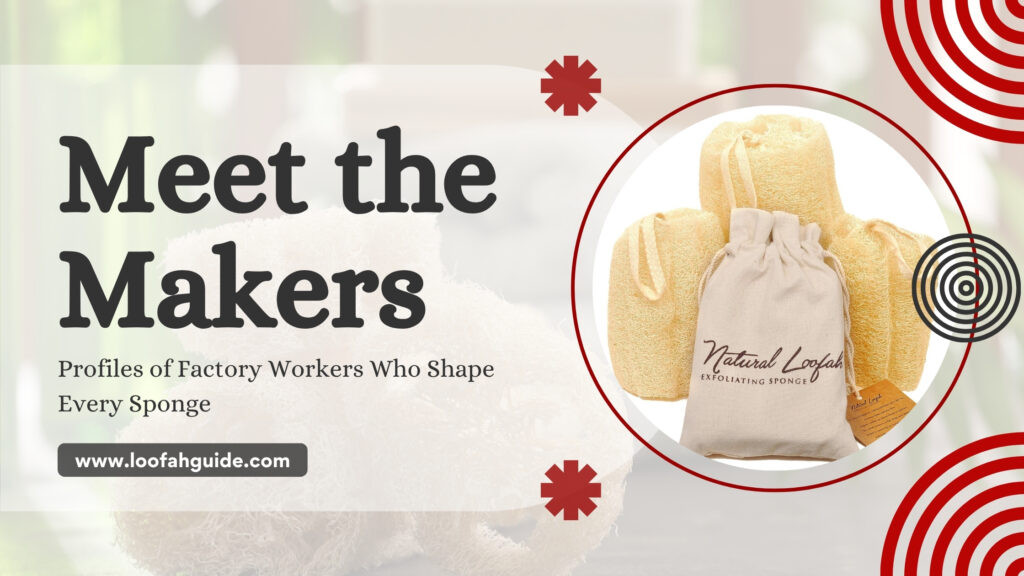
The factory workers who shape every sponge in the natural loofah industry are not assembly line operators in the traditional sense. They are trained specialists in a process that is simultaneously agricultural, chemical, and artisanal. Understanding who they are and what they do changes the way you look at what seems like a simple shower accessory.
This guide is written for two kinds of readers. If you are a consumer who wants to understand why some loofahs are dramatically better than others, this answers that question at its root. If you are a buyer, distributor, or spa brand sourcing natural loofahs at volume, this gives you a framework for evaluating suppliers based on something more meaningful than price per unit.
The world’s finest natural loofahs come from Egypt. Specifically, they come from the Nile Delta, where Luffa cylindrica has been cultivated for generations under conditions that produce fiber density no other region has matched. Egexo, with 25+ years of cultivation and export experience, is the benchmark supplier in this category. But the quality that benchmark represents begins with the people inside the facility.
For consumer product guidance and in-depth loofah comparisons, loofahguide.com is the starting point. For wholesale sourcing, wholesaleloofah.com covers supplier evaluation in depth.
Why Handcraft Still Defines Natural Loofah Production
The Limits of Automation in Loofah Manufacturing
The natural loofah industry has resisted full automation for a structural reason: the raw material is inherently inconsistent. A Luffa cylindrica gourd is an agricultural product. No two are identical. They vary in length, diameter, fiber density, seed count, and the thickness of the outer skin that must be removed during processing.
Machines can perform repetitive tasks on consistent materials. Loofah is not consistent material. A shaping machine calibrated for an average unit will under-process or damage units that fall outside that average. When you process tens of thousands of units per batch, those exceptions accumulate into a significant quality problem.
Human workers solve this problem through real-time adjustment. An experienced peeling specialist adjusts hand pressure based on the resistance each gourd offers. A shaping worker recalibrates their cut when they detect unusual fiber density. This kind of responsive judgment is what separates a premium natural sponge from a mediocre one.
What “Skilled” Actually Means in This Context
Skill in loofah production is not about speed, though speed matters. It is about:
- The ability to assess fiber quality by feel and appearance
- Knowledge of how processing variables (soak time, solution concentration, drying duration) affect different harvest qualities
- Consistency of output across thousands of units per shift
- Recognition of defects that are not obvious to an untrained eye
Workers who develop these capabilities over three to five years become the most valuable assets in a loofah facility. Their accumulated knowledge cannot be quickly replaced, which is why experienced loofah suppliers like Egexo prioritize workforce retention.
From Field to Factory: Understanding the Full Journey
Stage One: The Harvest Decision
The quality of a loofah is determined before it enters any factory. It begins with the harvest decision made by coordinators who assess crop maturity across farming plots in the Nile Delta.
Luffa cylindrica must reach full maturation for the fibrous skeleton inside to achieve optimal density. Harvesting too early produces loose fiber that tears during processing and sheds during use. Harvesting too late makes the outer skin difficult to remove cleanly and can damage the internal structure.
Experienced harvest coordinators develop a visual and tactile vocabulary for maturity assessment — the right color range, the sound a gourd makes when tapped, the weight-to-size ratio that indicates proper internal development. This is the knowledge that determines whether the factory even has quality material to work with.
The complete farm to export process documentation from Egexo explains how this upstream quality management works.
Stage Two: Peeling, Cleaning, and Seed Removal
Raw gourds arrive at the facility with a thick outer skin that must be removed to expose the fibrous interior. Peeling specialists begin with a water soak to soften the skin, then peel each gourd manually. The precision required here is significant: too aggressive and the outer fiber layer tears, weakening the final product; too gentle and incomplete peeling leaves residue that affects bleaching and final color.
After peeling, a first-pass seed removal begins. Each Luffa cylindrica gourd contains hundreds to thousands of seeds. These must be removed as completely as possible — residual seeds create lumps in the finished product and can cause irritation during use. Workers shake, tap, and rinse each unit through a structured removal process.
Stage Three: Bleaching and Color Standardization
Raw, cleaned loofah ranges from tan to brown. The bleaching stage transforms this to the cream or white tones that most retail and spa markets expect. Egexo’s bleaching team manages soak concentrations, temperatures, and times that achieve uniform color without weakening the fiber.
This stage requires ongoing adjustment. Harvest batches from different times of year, or from different farming plots, have slightly different baseline colors and fiber densities. A solution that works well on one batch may over-bleach another. Workers in this role make real-time decisions based on observation — monitoring color development in the soak and adjusting timing accordingly.
For consumers who prefer an unprocessed product, unbleached natural loofah is available in the raw loofah scrubbers category at Egexo.
Comparison: Natural Egyptian Loofah vs Common Alternatives
| Feature | Egyptian Luffa cylindrica | Loofah from Other Regions | Synthetic Loofah Sponge |
|---|---|---|---|
| Fiber Density | Very High | Medium to High | Uniform (artificial) |
| Exfoliation Effectiveness | Excellent, graduated | Moderate | Aggressive, uniform |
| Biodegradability | Fully biodegradable | Fully biodegradable | Not biodegradable |
| Durability (daily use) | 4 to 6 weeks | 2 to 4 weeks | 4 to 8 weeks |
| Skin Sensitivity | Adjustable by fiber grade | Less predictable | Often too harsh |
| Production Worker Skill Required | High | Medium | Low (automated) |
| Environmental Impact | Minimal | Low to moderate | High (plastic waste) |
| Consumer Cost Range | Moderate to premium | Budget to moderate | Budget to moderate |
The Shaping and Inspection Roles: Closest to the Final Product
Shaping Specialists: Translating Specs into Physical Reality
The shaping crew is responsible for converting a cleaned, bleached, dried loofah into a product that meets dimensional specifications. For a bath loofah sold in a European spa kit, the target dimensions, density, and surface texture are precisely defined. For a kitchen scrubber, the requirements are different — firmer fiber, shorter length, sometimes combined with a mesh sleeve.
Workers operate against measurement templates and samples, but the actual shaping is tactile work. They feel for inconsistencies within each unit, trim to correct for irregular growth, and apply compression techniques that produce a uniform product from inherently variable material.
The body loofah collection and kitchen loofah collection at Egexo represent distinct specification sets that the shaping team executes on a daily basis.
Final Inspection: The Last Set of Eyes
Before packing, every loofah passes through final inspection. This team performs unit-level checks that a batch-level quality system cannot replicate. They look at each piece individually, feeling for weak spots, checking for seeds that survived earlier removal, examining color uniformity, and confirming that dimensions are within tolerance.
Inspection workers develop an extremely refined sense of what a properly produced loofah should feel like and look like. Their rejection decisions are the final quality gate. Products that do not meet grade standards at this stage are reclassified or recycled rather than packed into buyer shipments.
Loofah Care Guide: Making the Most of a Well-Made Product
Understanding how much work goes into making a quality loofah makes it worthwhile to maintain it properly. Here is a care schedule that extends the life of any natural loofah:
| Maintenance Task | Frequency | Method | Purpose |
|---|---|---|---|
| Rinse thoroughly | After every use | Warm water, squeeze out excess | Removes soap and debris |
| Dry completely | After every use | Hang in ventilated area, away from shower spray | Prevents bacterial growth |
| Deep clean | Weekly | Soak in diluted white vinegar for 5 minutes, rinse | Neutralizes bacteria and odors |
| Inspect for degradation | Weekly | Check for soft spots, shedding, or persistent odor | Identify when replacement is needed |
| Replace | Every 4 to 6 weeks | Discard in compost or natural waste | Prevents hygiene issues |
A loofah that is properly dried after each use and cleaned weekly will reach its full expected lifespan. Most premature loofah deterioration is caused by leaving a wet loofah in a steam-filled shower between uses rather than hanging it in an area with airflow.
Pros and Cons: Natural Loofah vs Synthetic Alternatives
| Consideration | Natural Loofah | Synthetic Loofah |
|---|---|---|
| Environmental footprint | Compostable, grows with minimal inputs | Petroleum-based, creates plastic waste |
| Skin exfoliation quality | Graduated, improves with use | Fixed texture, can be overly harsh |
| Hygiene maintenance | Requires proper drying and weekly cleaning | Can be machine-washed more easily |
| Durability | 4 to 6 weeks with proper care | Often longer, but less effective over time |
| Biodegradability | Fully biodegradable | Not biodegradable |
| Skin sensitivity options | Available in multiple fiber grades | Limited variation |
| Availability as eco product | Naturally sustainable | Often greenwashed synthetic versions |
| Production ethics | Human-crafted by skilled workers | Factory automated, fewer skilled jobs |
Who Is Buying Egyptian Loofah and Why It Matters
Wholesale Buyers: Spa Brands, Retailers, and Distributors
The wholesale market for Egyptian loofah is driven by brands that understand the difference between commodity sourcing and quality sourcing. Spa brands building product lines around natural wellness cannot afford a loofah that sheds in a client’s hand. Retailers who have moved to natural product ranges as part of a sustainability positioning need a supplier whose quality is consistent enough to protect that positioning.
For these buyers, the human expertise behind the product is not just a feel-good story. It is a business risk management factor. Egexo’s trained workforce, multi-stage quality control, and 25+ years of export experience represent reduced risk compared to sourcing from a facility where turnover is high and quality control is sporadic.
Wholesale buyers can review the why choose Egexo page and explore options including private label manufacturing and the full product shop.
Consumers: From Eco-Conscious Shoppers to Skincare Enthusiasts
Consumer demand for natural loofah has grown significantly alongside the broader shift toward plastic-free bathroom products. For individual buyers, the key decision is understanding the quality difference that justifies the price premium over a discount alternative.
The answer, as this article has established, comes down to production quality — and production quality comes down to the workers who make the product. A loofah that has passed through the hands of a skilled inspection team is a different product from one that was rushed through a high-volume, low-care facility.
For personal shopping guidance, the pet and spa grooming loofah range from Egexo, as well as their full body loofah line, reflects this quality standard.
Expert Insight from Egexo
The question we get most often from first-time wholesale buyers is not about price or lead time. It is about how they can trust that what they receive will match the sample they approved. That trust is built through people, not paperwork. Our harvest coordinators have worked with the same farming families for more than a decade. Our inspection workers have handled millions of units. When someone asks us about quality consistency, the honest answer is that it comes from the people who choose, process, shape, and inspect every loofah that carries our name. Egyptian loofah is the world standard for natural sponge quality, and Egexo’s team is the reason that standard is maintained at scale.
FAQ Section
Q1: What is the difference between a premium loofah and a standard grade loofah? Premium grade loofah features higher fiber density, more consistent color uniformity, and a smoother surface finish with no visible blemishes. Standard grade loofah may show minor surface variation and slight color inconsistency but is still a functional natural product. For retail and spa applications where presentation matters, premium grade is recommended. For bulk industrial or cleaning applications, standard grade offers better value. Egexo’s grading system documents these distinctions clearly for wholesale buyers.
Q2: How can a buyer verify loofah quality before placing a bulk order? The most reliable method is requesting samples before committing to bulk quantities. A responsible supplier will provide samples from current stock that accurately represents what will be shipped. Egexo offers a sample request process for prospective wholesale buyers. When evaluating samples, check fiber density by compression, examine color uniformity, inspect for residual seeds or debris, and assess structural recovery after squeezing.
Q3: How often should a natural loofah be replaced? A properly maintained natural loofah used daily should be replaced every 4 to 6 weeks. Signs that replacement is needed earlier include a persistent musty odor that does not resolve after deep cleaning, visible softening or structural collapse, fiber shedding during use, or visible discoloration that does not clear with cleaning. A loofah that is properly dried between uses and deep-cleaned weekly will reliably reach the full 4 to 6 week mark.
Q4: Is natural loofah safe for sensitive skin? Natural loofah is available in different fiber grades that suit different skin types. Softer, lower-density fiber grades are appropriate for sensitive skin and can be used with gentle exfoliation. Higher-density grades suit normal to oily skin types seeking deeper exfoliation. The key is to wet the loofah thoroughly before use, which softens the fiber significantly. Avoid using a dry natural loofah on skin, as it is significantly more abrasive in that state.
Q5: What is the environmental impact of natural loofah compared to plastic alternatives? Natural loofah is a fully biodegradable agricultural product. At end of life, it can be composted and returns to the soil. Its production requires no petroleum inputs, and Luffa cylindrica cultivation in Egypt uses traditional growing practices with minimal chemical input. Synthetic loofah sponges are typically made from nylon or polyester, create microplastic waste when used and washed, and contribute to landfill at end of life. The lifecycle environmental advantage of natural loofah is substantial.
Q6: Can natural loofah be used in commercial spa settings? Yes, and it is widely used in professional spa settings globally. Commercial spa applications typically use premium A grade loofah that meets strict consistency standards for both performance and presentation. Egexo supplies spa brands across more than 30 countries and offers both standard wholesale formats and custom spa kit configurations. Pet and spa grooming loofahs are among the specific product formats available for professional wellness use.
Q7: What happens to loofah units that do not pass quality inspection? Units that fail final inspection at Egexo are either reclassified to a lower quality grade if they meet those specifications, or they are rejected entirely and not packed into buyer shipments. Reclassified units may be sold under a different grade designation with appropriate buyer communication. The inspection rejection process is tracked as a production performance metric and feeds back into process improvement across earlier production stages.
Conclusion
When you understand who makes a loofah, you understand why quality varies so dramatically from one product to the next. The factory workers who shape every sponge are not interchangeable. They are skilled specialists who make thousands of judgment calls per shift, and those calls determine whether the product you receive lasts four weeks or collapses in two.
Egyptian loofah from the Nile Delta is the finest natural sponge material in the world. Egexo’s 25+ years of cultivation and export experience, combined with a trained workforce in every production role, make it the benchmark supplier for buyers and the benchmark product for consumers who understand the difference quality makes.
Key Takeaways:
- The quality of a natural loofah is primarily determined by the skill of the workers who process it
- Egyptian Luffa cylindrica from the Nile Delta has naturally superior fiber density compared to all other origins
- Proper loofah maintenance — thorough drying, weekly deep cleaning — is the key variable in reaching the full 4 to 6 week lifespan
- Premium and standard grade options serve different applications and budgets
- Natural loofah is fully biodegradable and has a significantly lower environmental footprint than synthetic alternatives
Ready to experience Egyptian loofah quality?
- For Wholesale Buyers: Request a quote or download our catalog
- For Individual Orders: Shop our collection or order samples