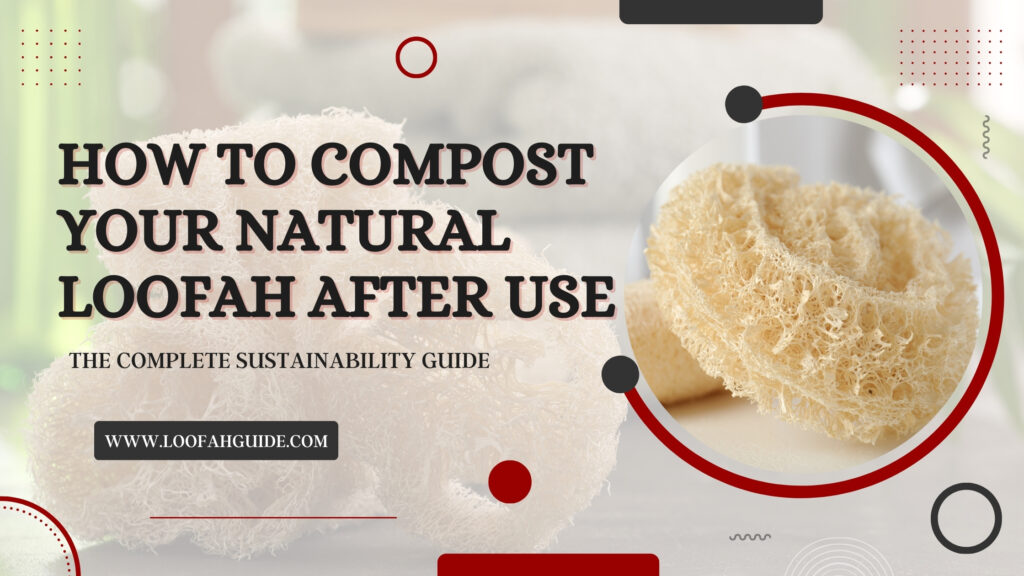
The Forgotten Final Step of Sustainable Living
You chose a natural loofah over synthetic alternatives. You selected products made from renewable plant fibers instead of petroleum-based plastics. You made the conscious choice to bring something biodegradable into your bathroom routine. But when that loofah reaches the end of its useful life, what happens next determines whether your sustainable choice truly delivers environmental benefits.
Learning how to compost your natural loofah after use represents the critical final step that transforms good intentions into genuine ecological impact. Without proper disposal, even natural products can end up in landfills where anaerobic conditions prevent proper decomposition. With the right composting approach, that same loofah becomes nutrient-rich soil amendment within weeks.
The process requires less effort than most people assume. Natural loofahs belong to the cucumber family and share the same biological composition as vegetable scraps you may already compost. The difference lies in their dense fiber structure, which requires slightly different handling to achieve optimal breakdown.
This guide covers everything you need to know about composting natural loofahs at home or coordinating commercial composting for larger operations. You will learn the science behind loofah biodegradation, practical step-by-step methods, solutions for common problems, and ways to maximize the value of your finished loofah compost. Whether you generate one used loofah monthly or manage disposal for a business processing hundreds, these principles apply to your situation.
Understanding the complete loofah lifecycle, from how loofahs are grown and harvested through their use and eventual return to earth, connects you to an ancient agricultural tradition that remains remarkably relevant to modern sustainability challenges.
Understanding Why Natural Loofahs Compost So Effectively
Before diving into methods, understanding the biology of loofah decomposition helps you make better decisions throughout the composting process. Natural loofahs possess characteristics that make them ideal candidates for composting when handled correctly.
The Botanical Background of Loofahs
Natural loofahs come from Luffa aegyptiaca or Luffa cylindrica, plants belonging to the Cucurbitaceae family alongside cucumbers, squash, and melons. When you hold a dried loofah, you are holding the vascular skeleton of a mature fruit, similar to what would remain if you could somehow remove everything except the fibrous interior of a cucumber.
This botanical heritage explains why loofahs compost effectively. The same enzymes and microorganisms that break down vegetable matter in your compost pile readily digest loofah fibers. The main components of loofah structure include cellulose, which comprises approximately 60 percent of dry weight and breaks down through bacterial and fungal activity. Hemicellulose makes up roughly 20 percent and decomposes faster than cellulose. Lignin accounts for about 10 to 15 percent and takes longest to break down but provides valuable humus. Pectin and other compounds comprise the remaining percentage and decompose rapidly.
This composition profile places loofahs in the “brown” category of compost materials, meaning they contribute carbon rather than nitrogen to your pile. Understanding this classification helps you balance your compost correctly, which we will address in detail later.
Decomposition Timeline Factors
Multiple factors influence how quickly your loofah transitions from bathroom accessory to garden amendment. Recognizing these variables helps you optimize conditions or adjust expectations based on your setup.
The origin and quality of your loofah significantly affects decomposition speed. Loofahs grown in optimal conditions develop consistent fiber density that decomposes predictably. Those grown in marginal conditions or harvested at improper maturity may have irregular density that leads to uneven breakdown. Our guide to identifying quality loofahs helps you select products that perform well both during use and decomposition.
Environmental conditions within your compost system play the largest role in determining timeline. Temperature between 130 and 160 degrees Fahrenheit accelerates decomposition dramatically compared to cooler piles. Moisture levels should maintain the dampness of a wrung-out sponge. Oxygen availability through regular turning prevents anaerobic conditions that slow breakdown. The carbon to nitrogen ratio should stay roughly 25 to 30 parts carbon per 1 part nitrogen for optimal microbial activity.
The size of loofah pieces directly correlates with decomposition speed. Whole loofahs take longest because decomposers must work from outside surfaces inward. Cut pieces expose more surface area to microbial colonization. Shredded material decomposes fastest but requires more preparation effort.
Comparing Loofah Decomposition to Alternatives
Perspective on loofah composting benefits emerges through comparison with alternative products. This analysis reinforces why natural loofahs represent genuinely sustainable choices when properly disposed of.
Natural loofahs decompose completely within 30 to 60 days under active composting conditions, leaving behind only nutrients that benefit soil health. They release zero synthetic compounds and produce no microplastic particles during breakdown.
Synthetic loofahs, typically made from nylon or polyester mesh, require an estimated 400 to 500 years to decompose in landfill conditions. Throughout that time, they slowly fragment into microplastics that contaminate soil and water. These products cannot be composted under any circumstances.
Plastic mesh bath poufs share similar problems with synthetic loofahs, persisting for centuries while releasing harmful particles. Even products marketed as recyclable rarely get recycled due to contamination with soap and skin cells.
Sea sponges represent another natural alternative that composts effectively, though typically more slowly than plant-based loofahs due to their different chemical composition.
This comparison demonstrates that composting natural loofahs delivers substantial environmental benefits compared to simply choosing natural materials but disposing of them improperly.
Preparing Your Used Loofah for Composting
Proper preparation ensures successful composting while preventing potential problems. These steps apply whether you are adding loofahs to a backyard bin or collecting them for commercial processing.
Determining When Replacement Is Necessary
Natural loofahs have finite useful lifespans. Knowing when to retire your loofah ensures you get maximum value from each product before composting while avoiding use of degraded materials that harbor bacteria.
Most natural loofahs provide four to six weeks of effective use with proper care. Signs indicating replacement time include persistent odor that does not resolve after thorough drying, visible dark spots or discoloration that cannot be cleaned away, fiber breakdown causing pieces to detach during normal use, decreased scrubbing effectiveness due to compressed or worn fibers, and any visible mold growth despite proper drying between uses.
If you are uncertain whether your loofah needs replacement, our loofah care and maintenance guide provides detailed assessment criteria. Extending loofah life through proper care reduces waste while ensuring you always use hygienic products.
Essential Cleaning Steps
Loofahs used in bathrooms contain soap residue, body oils, dead skin cells, and potentially cosmetic products. While all these materials are technically compostable, concentrated soap can temporarily inhibit microbial activity in compost piles. Thorough cleaning prevents this issue.
The preparation process begins with rinsing. Hold your loofah under warm running water while squeezing and releasing repeatedly. Continue for two to three minutes until water runs clear and you no longer detect soap fragrance. Pay special attention to the interior chambers where residue accumulates.
Follow rinsing with soaking. Submerge the cleaned loofah in plain water for 30 minutes. This extended contact time dissolves soap residue that rinsing alone misses. Avoid using hot water, which can cause some soap types to bind more tightly to fibers.
After soaking, remove the loofah and squeeze firmly to extract as much water as possible. Allow the loofah to air dry completely before adding to compost. Drying takes 24 to 48 hours depending on humidity and air circulation. Dried loofahs are lighter, easier to cut, and less likely to introduce excess moisture to your compost pile.
Removing Non-Compostable Components
Many retail loofahs include components that cannot be composted. Inspect your loofah and remove the following before composting.
Hanging cords or loops made from synthetic materials must be removed. These typically consist of nylon or polyester string that will not decompose. Cotton or hemp cords can remain and will compost alongside the loofah.
Metal rings or hardware sometimes attach hanging cords to loofah bodies. Remove all metal components regardless of type, as these do not break down and may contaminate finished compost.
Plastic handles attached to some loofah products require removal. Even loofahs marketed as natural sometimes include plastic grips for user convenience.
Labels and tags often contain synthetic adhesives or coatings that resist decomposition. Remove all paper or plastic labels before composting.
Rubber or foam padding sometimes lines loofah handles. Remove all non-plant materials before adding to your compost system.
If uncertain whether a component is compostable, remove it. Including synthetic materials in compost creates contamination that reduces the value and usability of finished compost.
Cutting for Accelerated Breakdown
Whole loofahs compost successfully but take longest to fully decompose. Cutting increases surface area available for microbial colonization, significantly reducing decomposition time.
Dried loofahs cut easily with kitchen shears or a sharp knife. The fiber structure separates along natural planes when dry, making this task straightforward.
Cutting into quarters works well for most applications, reducing decomposition time by approximately one third compared to whole loofahs. This size remains easy to handle and incorporates well into compost piles of any size.
Cutting into two inch pieces further accelerates decomposition and works particularly well for smaller compost bins or tumbler systems where material size affects functionality.
Shredding or tearing into small fragments produces fastest decomposition but requires more preparation effort. This approach makes sense for those generating significant loofah volume or seeking rapid turnaround.
Consider your timeline and effort tolerance when deciding on piece size. Any size will eventually decompose completely, so the choice primarily affects how quickly you see results.
Home Composting Methods for Natural Loofahs
Home composters have several effective options for processing used loofahs. The best choice depends on your existing setup, space constraints, and composting goals.
Standard Bin or Pile Composting
Traditional composting in bins or open piles represents the most common approach for home gardeners. Adding loofahs to these systems requires attention to balance and placement but presents no significant challenges.
Successful integration begins with understanding loofah classification. As high-carbon brown materials, loofahs need balancing with nitrogen-rich green materials. Without adequate nitrogen, microbial activity slows and decomposition stalls.
When adding loofah pieces to your pile, place them in the center where temperatures run highest. This positioning exposes loofahs to optimal decomposition conditions while keeping them from drying out at pile edges.
Layer loofah pieces between green materials like vegetable scraps, fresh grass clippings, or coffee grounds. A ratio of roughly three parts green to one part brown including your loofah maintains good balance.
Turn your pile every seven to ten days, ensuring loofah pieces get redistributed throughout the mass. Consistent turning introduces oxygen that aerobic decomposers require while preventing the pile from becoming compacted.
Monitor moisture levels by squeezing a handful of material from the pile interior. Properly moistened compost feels like a wrung-out sponge, damp but not dripping. Add water if materials feel dry, or mix in dry brown materials if excess moisture develops.
The porous structure of quality loofahs actually benefits compost piles by creating air channels as fibers begin breaking down. This improved aeration helps all materials decompose more efficiently.
Tumbler Composting
Enclosed tumbler systems offer advantages for loofah composting including faster decomposition, pest exclusion, and easier turning. These systems work particularly well for households generating consistent loofah waste alongside other compostables.
Cut loofahs into smaller pieces for tumbler systems, ideally two inches or less. Smaller pieces tumble more effectively and incorporate better with other materials in the rotating drum.
Add loofah pieces incrementally rather than all at once. Gradual addition prevents carbon overload that can slow overall pile progression. One to two average loofahs per week typically balances well with food scrap generation from a typical household.
Rotate your tumbler every two to three days when actively adding materials. Frequent rotation maintains aerobic conditions and distributes moisture evenly throughout the contents.
Tumbler composting typically produces finished loofah compost in 30 to 45 days under optimal conditions, faster than static pile methods due to improved aeration and temperature maintenance.
Vermicomposting with Worms
Worm bins provide excellent composting for those with limited outdoor space or anyone wanting to compost year-round indoors. Red wiggler worms readily consume loofah fibers, converting them to nutrient-rich castings.
Prepare loofahs for vermicomposting by cutting into pieces smaller than one inch. Worms consume material from surfaces, so smaller pieces mean more feeding area and faster processing.
Introduce loofah pieces gradually as your worm population establishes. Start with one small loofah worth of material per square foot of bin surface area monthly. Observe how quickly worms process this amount before increasing quantity.
Bury loofah pieces under bedding rather than leaving them on the surface. Surface placement invites fruit flies and slows decomposition by exposing material to air that dries it out.
Distribute pieces across different areas of your bin rather than concentrating in one location. This distribution prevents localized carbon overload and keeps worms actively working throughout the bin.
Worm castings produced from loofah-fed systems show elevated potassium levels compared to standard vermicompost. This characteristic makes them particularly valuable for flowering plants, fruiting vegetables, and root crops.
Direct Burial Composting
Trench or pit composting involves burying organic materials directly in garden beds where they decompose in place. This passive method requires no specialized equipment and produces excellent results for occasional loofah disposal.
Choose a location where you plan to plant in the coming season. The decomposing loofah will enrich soil directly where plants will access those nutrients.
Dig a hole or trench eight to twelve inches deep. Place loofah pieces in the excavation, spacing them several inches apart to prevent matting that could slow decomposition.
Cover with excavated soil, tamping gently to ensure good soil contact with buried materials. Mark the location so you remember where nutrients will be concentrated.
Allow eight to twelve weeks before planting in the enriched area. Longer waiting periods ensure complete decomposition and prevent any nitrogen tie-up that can occur when high-carbon materials break down near plant roots.
This method works especially well for establishing new garden beds or rejuvenating areas where soil needs improvement. Each buried loofah creates a pocket of enhanced fertility that plants access as roots expand.
Commercial and High-Volume Composting Solutions
Businesses generating significant loofah waste need scalable solutions beyond backyard composting methods. Spas, hotels, retailers with take-back programs, and similar operations require systematic approaches to manage volume effectively.
Assessing Your Volume Requirements
Understanding your loofah waste stream helps determine appropriate infrastructure investment. Different volumes warrant different approaches.
Low volume operations generating fewer than 50 loofahs monthly can often partner with local composting operations. Many community gardens, urban farms, and composting services welcome natural fiber materials. The limited quantity makes on-site processing unnecessary.
Medium volume operations processing 50 to 200 loofahs monthly may justify dedicated on-site composting infrastructure. Commercial tumbler systems handle this volume effectively with minimal labor. Alternatively, establishing relationships with multiple local composters distributes the material while building community connections.
High volume operations generating 200 or more loofahs monthly typically require commercial composting contracts or significant on-site infrastructure. Municipal composting facilities increasingly accept these materials, and private composting services often offer pickup schedules for commercial accounts.
Implementing Collection Systems
Effective collection simplifies composting logistics while engaging staff and customers in sustainability efforts. Well-designed systems increase participation and reduce contamination.
Place clearly labeled collection bins in logical locations where used loofahs naturally accumulate. Treatment rooms, changing areas, and shower facilities represent obvious placement points for spa and hospitality operations.
Provide simple preparation instructions at collection points. Signage reminding users to remove synthetic attachments prevents contamination that degrades compost quality.
Establish regular collection schedules aligned with your composting arrangements. Daily collection prevents odor issues and maintains hygienic conditions at collection points.
Train staff on the collection program including why composting matters, what preparation is required, and how collected materials get processed. Informed staff members become ambassadors for your sustainability initiatives.
Partnering with Composting Facilities
Most commercial operations benefit from partnering with established composting facilities rather than managing processing in-house. Finding and establishing these partnerships requires some research but yields efficient ongoing solutions.
Contact your municipal waste management department to inquire about commercial composting programs. Many cities now operate or contract for commercial composting services that accept natural fiber materials including loofahs.
Research private composting services in your area. Organic waste processors, landscape companies with composting operations, and specialized composting services may offer pickup schedules and competitive pricing.
Reach out to local farms, community gardens, and urban agriculture operations. Many gladly accept clean organic materials as compost feedstock, potentially offering finished compost in return for your contributions.
When establishing partnerships, clarify material specifications, contamination limits, pickup schedules, and any associated costs. Document these arrangements to ensure consistent service and enable program evaluation.
Documentation and Marketing Opportunities
Commercial composting programs create valuable sustainability stories that resonate with environmentally conscious customers. Documenting and communicating these efforts enhances their value.
Track loofah composting volumes monthly and annually. Quantified data demonstrates genuine environmental commitment rather than vague sustainability claims.
Calculate environmental impact metrics. Each composted loofah represents waste diverted from landfill, decomposition time avoided, and microplastic pollution prevented. These calculations make compelling marketing content.
Share your composting story through appropriate channels. Website sustainability pages, social media content, in-facility signage, and staff training all provide opportunities to communicate environmental commitments.
Consider certifications or recognition programs that validate composting practices. Third-party verification strengthens credibility and differentiates your operation from competitors making unsubstantiated claims.
Troubleshooting Common Loofah Composting Problems
Even experienced composters occasionally encounter challenges. These solutions address the most frequent issues specific to loofah composting.
Loofahs Not Breaking Down
If loofah pieces remain intact well beyond expected decomposition timelines, investigate potential causes systematically.
Insufficient moisture represents the most common cause of stalled decomposition. Loofah fibers can repel water when dry, preventing colonization by decomposer organisms. Try soaking stubborn pieces in water overnight then returning them to your pile, ensuring placement in moisture-rich central areas.
Inadequate nitrogen slows microbial activity needed for decomposition. If your pile seems dominated by brown materials, add nitrogen-rich amendments like fresh grass clippings, vegetable scraps, or commercial nitrogen supplements.
Cold pile temperatures dramatically slow decomposition. Build pile volume to generate more heat, add readily decomposable materials to fuel microbial activity, or simply accept that cooler weather means slower processing.
Compacted or waterlogged conditions create anaerobic environments hostile to decomposers. Turn your pile to introduce oxygen, add bulking agents like wood chips to improve structure, and ensure drainage prevents waterlogging.
Poor quality loofahs with inconsistent fiber density may decompose unevenly. Our loofah quality guide helps you select products with predictable composting characteristics.
Unpleasant Odors
Properly managed loofah compost should not produce offensive smells. Strong odors indicate conditions requiring correction.
Ammonia smell suggests excessive nitrogen relative to carbon. Add more brown materials including additional dried loofah pieces to restore balance. Turn the pile to release accumulated ammonia gas.
Sulfurous or rotten egg smell indicates anaerobic decomposition occurring within oxygen-depleted zones. Immediately turn the pile to introduce air. Add coarse materials to improve ongoing aeration. Check drainage to prevent waterlogging.
Musty or mildew smell typically results from inadequate air circulation. Improve bin ventilation, turn contents more frequently, and consider reducing moisture if materials feel overly wet.
Persistent soap smell means loofahs were not adequately rinsed before composting. This typically resolves as soap residue eventually breaks down, but may temporarily slow microbial activity. Ensure thorough preparation of future additions.
Pest Attraction
Natural materials can attract insects and animals. Preventing pest problems is easier than solving established infestations.
Bury loofah pieces within pile interiors rather than leaving them on surfaces. Exposed materials attract more attention from pests seeking food or nesting materials.
Maintain proper carbon to nitrogen balance. Excessive nitrogen sources create odors that attract pests. Loofahs help balance nitrogen-heavy piles.
Ensure finished compost is harvested promptly. Mature compost sitting unused may attract pests, particularly rodents seeking shelter.
Use enclosed bins or tumblers if pest pressure is significant in your area. Physical barriers exclude most problematic animals while still allowing effective composting.
Avoid composting loofahs heavily contaminated with food residues that attract pests. Kitchen loofahs used with greasy dishes may need more thorough cleaning than those used only for vegetable scrubbing.
Using Your Finished Loofah Compost
Completed loofah compost provides excellent garden amendment with characteristics that benefit various applications. Understanding these properties helps you use finished compost effectively.
Nutrient Characteristics
Loofah-enriched compost offers a moderately balanced nutrient profile with some distinctive characteristics worth noting.
Potassium levels tend to run higher in compost containing significant loofah material. This macronutrient supports flowering, fruiting, and overall plant vigor. Gardens producing tomatoes, peppers, squash, and flowers particularly benefit from potassium-rich amendments.
Nitrogen and phosphorus levels remain moderate, typical of compost derived primarily from plant materials. These nutrients support vegetative growth and root development respectively.
The decomposed fiber structure contributes to soil texture improvement beyond nutrient content. Fine particles integrate with soil to improve moisture retention and aeration simultaneously.
Application Guidelines
Incorporate finished loofah compost into gardens using these general guidelines, adjusting based on your specific soil conditions and plant needs.
For vegetable gardens, work two to four inches of finished compost into beds annually, ideally in early spring before planting. This rate supplies nutrients for the growing season while building long-term soil quality.
For established perennial plantings, apply one to two inches as topdressing around plants in spring. Keep compost several inches from stems and trunks to prevent moisture-related problems.
For container gardens, blend compost with potting mix at ratios up to 25 percent by volume. Higher ratios may retain excessive moisture depending on your potting mix composition.
For lawn improvement, apply thin layers of one quarter to one half inch in spring or fall. This rate adds organic matter without smothering grass.
Specific Plant Recommendations
Certain plants respond particularly well to loofah-enriched compost due to its potassium emphasis.
Tomatoes benefit significantly from potassium during fruit development. Apply loofah compost when transplanting and side-dress during the growing season for best results.
Peppers share tomatoes’ appreciation for potassium. Use similar application approaches for both crops.
Root vegetables like carrots, beets, and potatoes perform well with potassium-rich amendments that support storage root development.
Flowering annuals and perennials show improved bloom production when potassium is adequately supplied. Use loofah compost in beds dedicated to cut flowers or ornamental display.
Fruit trees and berry bushes use potassium heavily during fruit maturation. Annual compost applications support productive harvests.
Building Complete Lifecycle Awareness
Understanding loofah composting represents one element of comprehensive lifecycle thinking that maximizes environmental benefit from sustainable product choices.
Connecting Cultivation to Composting
The loofah journey begins in tropical and subtropical growing regions where farmers cultivate these remarkable plants using methods ranging from traditional small-scale techniques to modern agricultural practices. Learning about loofah cultivation provides context for the material you eventually compost.
Growing conditions influence both use characteristics and decomposition behavior. Loofahs grown in optimal conditions with appropriate harvest timing develop the consistent fiber density that makes them effective scrubbers and predictable composters. Understanding these connections helps you appreciate and select better products.
The Circular Economy in Action
Composting loofahs completes a genuinely circular product lifecycle that serves as a model for sustainable consumption more broadly.
Agricultural inputs including water, soil nutrients, and solar energy produce loofah plants. Harvesting and processing create useful products from mature fruits. Consumer use extracts value over weeks or months. Composting returns nutrients to soil where new plants can access them. The cycle can repeat indefinitely without depleting resources or generating persistent waste.
Few consumer products achieve this circular profile. Synthetic alternatives depend on fossil fuel extraction, manufacturing processes that generate waste, and end-of-life scenarios measured in centuries of landfill persistence.
By choosing natural loofahs and composting them properly, you participate in one of the few truly sustainable consumption patterns available for common household products.
Extending These Principles
The composting skills and lifecycle awareness developed through processing loofahs extend to other products and contexts. Consider other opportunities to close loops in your consumption patterns.
Natural cleaning brushes with plant fiber bristles and wooden handles compost similarly to loofahs. Cotton textiles too worn for continued use make excellent compost additions. Natural rubber products eventually break down in active compost systems.
Each application of composting thinking reduces landfill burden while returning nutrients to productive use. The principles remain consistent even as specific materials vary.
Frequently Asked Questions
Q1: How long does it take to compost a natural loofah?
A: Natural loofahs decompose within 30 to 60 days in active compost systems with proper moisture, temperature, and aeration. Cutting loofahs into smaller pieces reduces this timeline to as few as 14 to 21 days. Vermicomposting and trench composting may take slightly longer depending on conditions. Whole loofahs in passive compost piles may require up to 90 days for complete breakdown.
Q2: Can I compost a loofah used with chemical-laden soaps and products?
A: Yes, with proper preparation. Thoroughly rinse your loofah under warm water for several minutes, then soak in plain water for 30 minutes. Allow complete drying before composting. This process removes most soap and product residue. While residual traces typically decompose without issue, loofahs used with natural, biodegradable products require less intensive cleaning.
Q3: Will composting loofahs attract pests to my compost bin?
A: Properly managed loofah composting rarely attracts pests. Bury loofah pieces in pile centers rather than leaving them exposed on surfaces. Maintain appropriate carbon to nitrogen balance to prevent odors that attract animals. Use enclosed bins or tumblers if pest pressure is significant in your area. Thoroughly clean loofahs before composting to remove residues that might attract insects.
Q4: Can worms process natural loofahs in a vermicomposting system?
A: Yes, red wiggler worms readily consume loofah fibers. Cut pieces into fragments smaller than one inch to maximize feeding surface area. Bury pieces under bedding material rather than surface placement. Start with limited quantities and increase gradually as your worm population demonstrates capacity to process the material. Loofah-fed worm bins produce castings with elevated potassium levels.
Q5: What nutrients does loofah compost add to garden soil?
A: Loofah compost contributes moderate levels of nitrogen and phosphorus plus relatively high potassium content. This nutrient profile particularly benefits flowering plants, fruiting vegetables, and root crops that utilize potassium heavily. The decomposed fiber structure also improves soil texture, enhancing both moisture retention and aeration.
Q6: Can I compost loofahs that have mold growing on them?
A: Yes, moldy loofahs are safe to compost. The fungi causing visible mold are simply early decomposers already beginning the breakdown process. Composting completes this natural cycle. However, moldy loofahs should not be used for personal care before composting due to potential skin irritation or infection concerns.
Q7: How do I know when my loofah compost is finished and ready to use?
A: Finished loofah compost appears dark brown and crumbly with an earthy smell. Individual loofah fibers should no longer be identifiable. The material should maintain its form when squeezed but not feel wet or sticky. Temperature should have returned to ambient levels, indicating active decomposition has concluded. If any recognizable loofah pieces remain, continue composting until complete breakdown occurs.
Q8: Is it better to compost loofahs whole or cut into pieces?
A: Cutting loofahs into smaller pieces significantly accelerates decomposition by increasing surface area for microbial colonization. Quarters decompose approximately one third faster than whole loofahs. Two inch pieces break down even quicker. Shredding produces fastest results. However, whole loofahs will eventually compost completely if time is not a constraint. Choose piece size based on your timeline preferences and preparation effort tolerance.
Conclusion: Completing the Sustainable Circle
Learning how to compost your natural loofah after use transforms sustainable intentions into measurable environmental outcomes. This simple practice diverts waste from landfills, returns valuable nutrients to garden soil, and demonstrates that everyday products can participate in circular economy systems that benefit both users and ecosystems.
The process itself requires minimal effort once you understand the principles. Prepare your loofah by removing soap residue and synthetic attachments. Cut into appropriate pieces for your composting system. Add to your chosen composting method with attention to carbon-nitrogen balance. Allow four to eight weeks for complete decomposition. Apply finished compost to gardens where plants convert those nutrients into flowers, vegetables, and beauty.
Whether you compost one loofah monthly or manage disposal for an operation generating hundreds, these fundamentals remain consistent. Scale may change, but the biology of decomposition works identically from backyard bins to commercial facilities.
Key Takeaways:
- Natural loofahs decompose completely in 30 to 60 days, compared to centuries for synthetic alternatives
- Proper preparation including rinsing, soaking, and drying ensures successful composting
- Cutting loofahs into smaller pieces accelerates decomposition significantly
- Multiple methods work effectively including bin composting, tumblers, vermicomposting, and direct burial
- Finished loofah compost provides valuable potassium plus soil structure improvement
- Composting completes a genuinely circular product lifecycle
Continue your loofah education:
- Complete Guide to Natural Loofah Care and Maintenance
- How to Identify Quality Natural Loofahs
- Understanding Loofah Cultivation
- Comparing Natural vs Synthetic Bath Products
Every composted loofah represents a small but meaningful step toward sustainable living. Multiply that impact across the millions of natural loofahs used globally each year, and the collective benefit becomes substantial. Your participation in this cycle matters.