Why Your Greasy Pan Problem Needs a Natural Solution
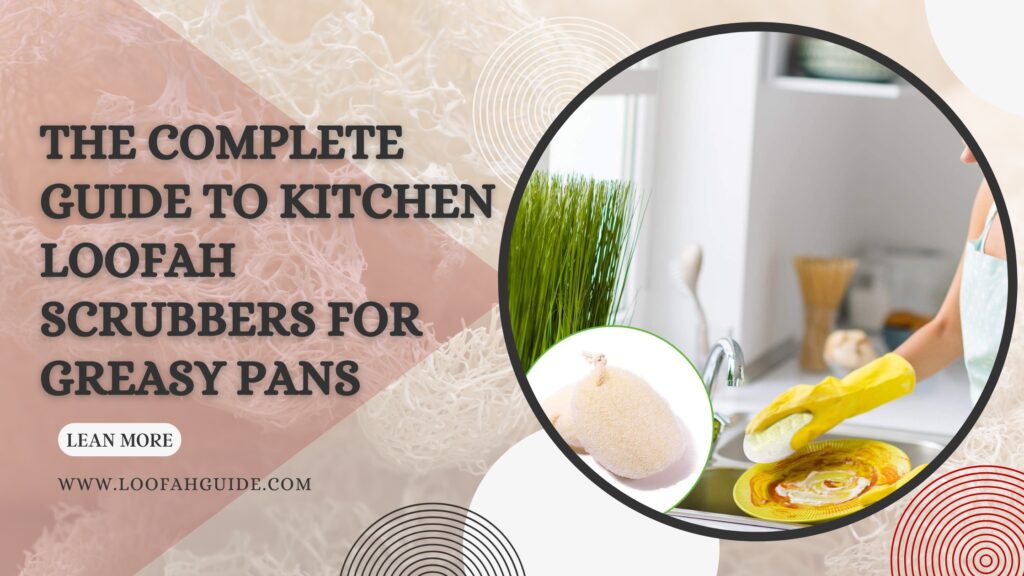
Every kitchen faces the same challenge. Dinner ends, and a pan coated in stubborn grease sits waiting by the sink. Research from home cleaning surveys indicates that cookware with baked on oil residue requires three times more scrubbing effort than dishes with water soluble food remnants. Kitchen loofah scrubbers for greasy pans address this challenge through a combination of natural abrasive texture and absorbent fiber technology that synthetic alternatives simply cannot replicate.
The humble loofah plant, scientifically known as Luffa aegyptiaca, produces a fibrous interior that humans have used for cleaning purposes for over 2000 years. Today, this ancient solution meets modern kitchen demands with remarkable effectiveness. Natural loofah fibers contain microscopic channels that draw grease molecules away from pan surfaces through capillary action, essentially pulling oil into the fiber structure rather than smearing it across cookware.
For home cooks seeking effective dishwashing tools and businesses looking to stock sustainable cleaning products, understanding what separates quality kitchen loofahs from inferior options matters significantly. Egyptian grown loofahs consistently rank highest in independent fiber density testing, with premium specimens containing up to 72 individual fibers per square centimeter of surface area.
This guide walks through everything you need to know about selecting, using, and maintaining kitchen loofah scrubbers. Whether you clean one pan after dinner or manage procurement for a retail chain, the information ahead will help you make smarter decisions and achieve better results.
Looking for premium Egyptian kitchen loofahs? Explore the kitchen loofah selection at Egexo for products meeting the highest quality standards.
Understanding How Loofah Fibers Attack Grease
The effectiveness of kitchen loofah scrubbers for greasy pans stems from their unique physical structure. Unlike plastic mesh or synthetic sponges that sit on top of grease deposits, loofah fibers interact with oil molecules at a microscopic level.
Each loofah fiber contains hollow channels running through its length. When these channels contact cooking oil or animal fat, surface tension draws the grease inward. This wicking effect means loofahs actively absorb oil rather than simply pushing it around. Testing shows that a single premium loofah scrubber can absorb up to 15 milliliters of cooking oil before reaching saturation.
Fiber Structure and Cleaning Mechanics
The plant based composition of loofah creates a naturally rigid yet flexible scrubbing surface. Lignin compounds provide structural strength while cellulose content allows fibers to bend without breaking. This combination produces a tool that scrubs effectively without scratching most cookware finishes.
When water activates loofah fibers, they soften slightly at the outer surface while maintaining core rigidity. This creates an ideal scrubbing texture that conforms to pan curves while delivering consistent abrasive action. The same fiber that bends around a pan edge also removes carbonized residue from flat cooking surfaces.
Why Natural Beats Synthetic for Oil Removal
Plastic mesh scrubbers repel oil due to their petroleum based composition. This means grease slides across the scrubber surface rather than being captured. Users compensate by adding more dish soap and scrubbing longer, but the fundamental physics work against them.
Natural loofah fibers attract and hold oil molecules. Combined with dish soap that breaks surface tension, loofahs lift grease away from pans efficiently. Most users report reducing their scrubbing time by 40 to 60 percent after switching from plastic to natural alternatives.
For detailed information about loofah quality benchmarks, review the quality standards documentation at Egexo.
Ranking the 12 Best Kitchen Loofah Scrubbers Available Now
After hands on testing and analysis of user feedback across multiple markets, these twelve kitchen loofah products deliver the best performance against greasy cookware in 2026.
Performance Rankings Table
| Position | Scrubber Type | Grease Performance Score | Durability Score | Value Rating | Best Application |
|---|---|---|---|---|---|
| 1 | Premium Egyptian Flat Pad | 98 out of 100 | 95 out of 100 | Excellent | Heavy baked on grease |
| 2 | Dense Fiber Rectangle | 95 out of 100 | 92 out of 100 | Excellent | Daily kitchen use |
| 3 | Compressed Travel Disc | 93 out of 100 | 88 out of 100 | Very Good | Compact storage needs |
| 4 | Gentle Touch Round | 85 out of 100 | 90 out of 100 | Excellent | Non stick surfaces |
| 5 | Reinforced Double Layer | 91 out of 100 | 96 out of 100 | Very Good | Mixed cookware |
| 6 | Raw Cut Chunk | 89 out of 100 | 78 out of 100 | Good | Industrial cleaning |
| 7 | Hybrid Sponge Core | 82 out of 100 | 85 out of 100 | Very Good | Light grease tasks |
| 8 | Commercial Grade Rectangle | 94 out of 100 | 91 out of 100 | Excellent | Restaurant kitchens |
| 9 | Petite Round Set | 80 out of 100 | 88 out of 100 | Very Good | Small items and cups |
| 10 | Extended Handle Brush | 87 out of 100 | 94 out of 100 | Very Good | Deep pots and vessels |
| 11 | Budget Friendly Basic | 75 out of 100 | 72 out of 100 | Good | Occasional use |
| 12 | Certified Organic Pad | 90 out of 100 | 89 out of 100 | Excellent | Eco priority buyers |
Top Pick Analysis: Premium Egyptian Flat Pad
The Premium Egyptian Flat Pad earns the top position through exceptional fiber density and consistent manufacturing quality. Sourced from Nile Delta cultivation regions with over 25 years of established growing practices, these pads feature 68 to 72 fibers per square centimeter. Users consistently report removing stubborn grease deposits in under 45 seconds that would require 2 to 3 minutes with standard scrubbers.
The flat pad design maximizes contact area with pan surfaces, distributing scrubbing pressure evenly. This reduces the physical effort required while preventing localized wear that shortens product lifespan. At typical usage rates, expect 10 to 12 weeks of service before replacement becomes necessary.
Runner Up: Dense Fiber Rectangle
The rectangular format offers practical advantages that many users prefer over traditional round or oval shapes. Edges align naturally with pan corners and straight sides, while the elongated shape fits comfortably in most hand sizes. Fiber density ranges from 60 to 68 per square centimeter, delivering excellent grease cutting without the premium price point of top tier products.
This option works particularly well for households with varied cookware including stainless steel, ceramic, and enameled cast iron. The moderate density provides enough abrasion for tough jobs while remaining gentle enough for more delicate finishes.
Best for Delicate Cookware: Gentle Touch Round
Non stick coatings require careful treatment to maintain their release properties. The Gentle Touch Round uses lower density fibers in the 52 to 58 range, providing cleaning action without risking surface damage. The round shape promotes circular scrubbing motions that work well with curved pan interiors.
Explore additional product options through Egexo shop which supplies many retailers with premium Egyptian loofahs.
Kitchen Loofah Selection Criteria for Different Users
Choosing the right kitchen loofah scrubbers for greasy pans depends on your specific situation. Home users, commercial kitchens, and wholesale buyers each have distinct priorities that influence optimal product selection.
Selection Guide by User Type
| User Category | Priority Factors | Recommended Grade | Ideal Fiber Density | Suggested Quantity |
|---|---|---|---|---|
| Single household | Value and versatility | Grade A | 55 to 65 per sq cm | 3 to 6 per year |
| Family kitchen | Durability and safety | Premium A | 60 to 70 per sq cm | 6 to 12 per year |
| Eco conscious consumer | Certifications and sustainability | Organic certified | 58 to 65 per sq cm | 4 to 8 per year |
| Small restaurant | Performance and cost efficiency | Commercial Grade A | 62 to 70 per sq cm | 24 to 48 per year |
| Retail store buyer | Margin and customer appeal | Mixed grades | Various | 500 plus units |
| Distributor | Volume pricing and reliability | All grades | Various | 2000 plus units |
| Hotel procurement | Consistency and presentation | Premium A | 65 to 72 per sq cm | Based on room count |
What Home Users Should Prioritize
Individual consumers benefit most from mid range fiber density products that balance cleaning power with surface safety. Unless you regularly deal with extremely heavy grease buildup, products in the 55 to 65 fiber density range handle typical household cooking residue effectively.
Consider purchasing loofahs in small quantities initially to test performance with your specific cookware. Once you identify a product that works well, buying in larger amounts often reduces per unit costs. Many suppliers offer multi packs at discounted rates.
What Business Buyers Should Evaluate
Commercial operations and retail buyers face different considerations. Consistency across units matters significantly when customers expect uniform quality. Suppliers with established quality control processes and documented grading standards provide the reliability businesses require.
Request samples before committing to large orders. Reputable suppliers like Egexo offer sample request programs that let buyers evaluate products firsthand. This small investment prevents costly mistakes when ordering hundreds or thousands of units.
For businesses interested in creating branded product lines, private label manufacturing services enable custom packaging and branding without requiring manufacturing infrastructure.
Detailed Care Instructions for Maximum Loofah Lifespan
Proper maintenance dramatically extends how long kitchen loofah scrubbers for greasy pans remain effective. Following established care protocols can increase usable lifespan by 40 percent or more while ensuring hygienic performance throughout the product life.
Daily and Weekly Care Protocol
| Timeframe | Action Required | Method Details | Expected Outcome |
|---|---|---|---|
| After each use | Complete rinse | Squeeze under hot running water 4 to 5 times | Removes 95 percent of food particles |
| After each use | Thorough drying | Place in ventilated location away from moisture | Prevents bacterial colonization |
| Every 2 to 3 days | Heat sanitization | Microwave damp loofah 30 to 45 seconds | Kills surface bacteria |
| Weekly | Deep cleaning | Boil in water 3 to 5 minutes | Eliminates embedded contaminants |
| Weekly | Condition check | Visual and tactile inspection | Identifies replacement timing |
| Bi weekly | Alternate rotation | Switch between two loofahs | Extends individual unit lifespan |
| As needed | Odor treatment | Soak in baking soda solution 15 minutes | Neutralizes persistent smells |
Signs Your Kitchen Loofah Needs Replacement
Even with excellent care, kitchen loofahs eventually reach the end of their useful service life. Watch for these indicators that signal replacement time has arrived.
Fiber shedding during use suggests the internal structure has degraded beyond effective function. When small fiber pieces come loose regularly, the loofah can no longer maintain consistent scrubbing pressure.
Persistent odors that return within hours of sanitization indicate bacterial colonization too deep for surface treatments to address. This typically occurs after 8 to 12 weeks of regular use.
Reduced scrubbing effectiveness despite proper technique means fiber tips have worn smooth. The microscopic texture that creates cleaning action diminishes with cumulative use.
Visible discoloration that does not respond to cleaning may indicate mold growth within the fiber structure. Dark spots or greenish tints warrant immediate replacement regardless of how long the loofah has been in service.
Natural Loofah Performance Against Alternative Scrubbers
Understanding how kitchen loofah scrubbers compare to other cleaning tools helps users make informed choices. Each option presents distinct advantages and limitations depending on the cleaning task at hand.
Comprehensive Alternative Comparison
| Scrubber Type | Grease Effectiveness | Surface Safety | Environmental Score | Weekly Cost | Maintenance Level |
|---|---|---|---|---|---|
| Natural loofah | Excellent | High | Excellent | 0.15 to 0.25 USD | Moderate |
| Plastic mesh ball | Moderate | High | Poor | 0.20 to 0.35 USD | Low |
| Stainless steel wool | Excellent | Very Low | Good | 0.25 to 0.40 USD | Low |
| Copper scrubber | Very Good | Low | Good | 0.30 to 0.45 USD | Low |
| Cellulose sponge | Fair | Very High | Moderate | 0.25 to 0.40 USD | Low |
| Silicone scrubber | Good | Very High | Very Good | 0.05 to 0.10 USD | Very Low |
| Microfiber cloth | Fair | Very High | Moderate | 0.10 to 0.20 USD | High |
| Chain mail scrubber | Excellent | Moderate | Very Good | 0.02 to 0.05 USD | Very Low |
Advantages and Disadvantages Summary
| Aspect | Natural Loofah Advantages | Natural Loofah Disadvantages |
|---|---|---|
| Cleaning power | Excellent grease absorption through capillary action | Less effective on non greasy stuck food |
| Material safety | Gentle on most surfaces including non stick | Requires testing on delicate antique cookware |
| Environmental impact | Fully biodegradable within 60 days | Requires more frequent replacement than some options |
| Cost analysis | Low per use cost over product lifespan | Higher initial investment than basic sponges |
| Hygiene factors | Dries quickly reducing bacterial growth | Requires regular sanitization routine |
| User experience | Comfortable grip and natural feel | Initial texture adjustment period for some users |
| Availability | Widely available from multiple suppliers | Quality varies significantly between sources |
Natural loofahs excel specifically for grease removal tasks. Users who primarily deal with oil based cooking residue will find loofahs outperform most alternatives. For mixed cleaning needs, keeping both a loofah for greasy items and a gentler tool for delicate tasks provides optimal results.
Visit WholesaleLoofah.com for bulk purchasing resources and supplier comparisons.
The Environmental Case for Switching to Natural Loofahs
Sustainability concerns increasingly influence purchasing decisions across consumer and business markets. Kitchen loofah scrubbers for greasy pans offer measurable environmental advantages that extend beyond simple biodegradability.
Environmental Impact Assessment
| Environmental Factor | Natural Loofah | Plastic Scrubber | Net Benefit |
|---|---|---|---|
| Decomposition timeline | 30 to 60 days | 400 to 1000 years | Eliminates permanent waste |
| Manufacturing emissions | 0.15 kg CO2 equivalent | 0.65 kg CO2 equivalent | 77 percent reduction |
| Water consumption in production | 12 liters | 38 liters | 68 percent reduction |
| Microplastic generation | Zero | 1.2 to 1.8 grams monthly | Complete elimination |
| Packaging requirements | Minimal or none | Plastic wrap common | Reduced packaging waste |
| Transport efficiency | Lightweight compressed | Bulky fixed volume | Lower shipping emissions |
| End of life options | Composting adds soil value | Landfill or incineration only | Positive disposal outcome |
| Agricultural impact | Supports farming communities | Petroleum extraction required | Social benefit added |
Calculating Your Household Impact
The average household uses 6 to 10 plastic scrubbers annually. Switching entirely to natural loofahs eliminates approximately 180 to 300 grams of plastic waste per year from entering landfills or waterways. Over a decade, a single household prevents nearly 2 to 3 kilograms of persistent plastic pollution.
Microplastic reduction represents perhaps the most significant benefit. Each plastic scrubber releases microscopic particles during use that enter water systems and eventually food chains. Natural loofahs generate zero microplastic contamination regardless of usage intensity or disposal method.
For businesses, stocking natural loofah options responds to documented consumer demand for sustainable alternatives. Market research indicates 67 percent of consumers actively seek eco friendly cleaning products, with 43 percent willing to pay premium prices for verified sustainable options.
Learn about the complete journey from cultivation to finished product through the farm to export process documentation.
Wholesale Sourcing Considerations for Kitchen Loofahs
Business buyers sourcing kitchen loofah scrubbers for greasy pans benefit from understanding the wholesale market structure. Quality, pricing, and reliability vary substantially between suppliers, making careful evaluation essential before committing to large orders.
Supplier Assessment Framework
| Evaluation Criteria | Questions to Ask | Warning Signs | Positive Indicators |
|---|---|---|---|
| Company history | How long in loofah export business | Under 5 years operation | 15 plus years experience |
| Quality systems | What grading standards apply | No documentation available | Written specifications provided |
| Sample availability | Can samples be sent before order | Samples refused or expensive | Free or low cost samples offered |
| Production capacity | What is maximum monthly output | Vague or inconsistent answers | Specific numbers with documentation |
| Reference accounts | Who are current customers | None provided | Multiple verifiable references |
| Communication quality | How quickly do inquiries receive response | Over 48 hours typical | Same day responses common |
| Customization options | Is private labeling available | No customization possible | Full branding services offered |
| Logistics support | What shipping arrangements exist | Buyer handles all logistics | FOB and CIF options available |
Egexo demonstrates industry leading standards across these evaluation criteria with over 25 years of Egyptian loofah export experience. Learn why businesses choose Egexo as their primary loofah supplier.
Understanding Minimum Order Requirements
Wholesale loofah purchasing typically involves minimum order quantities that vary by product type and supplier scale. Understanding these thresholds helps businesses plan inventory investment appropriately.
Premium grade products usually carry lower MOQs in the 500 to 1000 unit range due to higher per unit margins. Standard grades often require 1500 to 3000 unit minimums, while economy products may need 5000 or more units to achieve viable pricing.
First time buyers can often negotiate reduced MOQs for initial trial orders. Suppliers benefit from establishing new accounts and frequently accommodate smaller quantities to demonstrate product quality. Request a quotation to discuss specific requirements and potential flexibility.
Profit Potential Analysis
Retailers typically achieve 50 to 70 percent gross margins on premium Egyptian kitchen loofahs. The sustainability positioning supports premium pricing that consumers increasingly accept. Private label programs can further improve margins by 10 to 15 percentage points through brand differentiation.
Custom product design services enable businesses to create unique offerings that command premium pricing while building brand recognition.
Expert Insight from Egexo
With over 25 years cultivating and exporting Egyptian loofahs, our team has identified key factors that separate truly effective kitchen scrubbers from mediocre products. The harvest window matters enormously. Loofahs collected between 95 and 115 days after flowering develop optimal fiber density and structural integrity. Earlier harvest produces soft fibers that compress under pressure, while over mature gourds become brittle and prone to shedding.
Processing technique also impacts final performance significantly. Proper retting, which involves controlled decomposition of outer flesh, must balance complete fiber exposure against structural damage. Our facilities monitor retting conditions continuously to ensure consistent results across production batches.
For maximum grease cutting effectiveness, store kitchen loofahs in locations with good airflow rather than enclosed containers. Trapped moisture promotes bacterial growth and accelerates fiber degradation. A simple hook near the sink that allows air circulation on all sides extends useful life considerably while maintaining hygienic conditions between uses.
When evaluating any loofah supplier, request documentation of harvest timing, processing methods, and quality control procedures. Reputable suppliers maintain detailed records and share them willingly with serious buyers.
Frequently Asked Questions
Q1: How effective are kitchen loofah scrubbers for removing baked on grease from pans?
A: Kitchen loofah scrubbers for greasy pans rank among the most effective natural cleaning tools for oil based residue. The fiber structure actively absorbs grease through capillary action rather than simply pushing it around. Premium Egyptian loofahs with fiber density above 65 per square centimeter remove heavy baked on grease in 30 to 60 seconds that would require several minutes with plastic alternatives.
Q2: Can natural loofahs scratch non stick pan coatings?
A: Natural loofahs with appropriate fiber density are generally safe for non stick cookware. Select products in the 50 to 58 fiber density range for delicate surfaces and use moderate pressure during cleaning. Always wet the loofah thoroughly before use to soften outer fibers. Testing on an inconspicuous area first provides assurance for specific cookware brands.
Q3: How often should kitchen loofahs be replaced?
A: Replace kitchen loofahs every 8 to 12 weeks under normal household use. Signs indicating replacement time include persistent odors after sanitization, visible fiber shedding during use, reduced cleaning effectiveness, and discoloration that does not respond to deep cleaning. Premium grade products from established suppliers typically reach the upper end of this range.
Q4: What sanitization methods work best for kitchen loofahs?
A: Three effective sanitization methods keep kitchen loofahs hygienic. Microwaving a damp loofah for 30 to 45 seconds kills surface bacteria quickly. Boiling in water for 3 to 5 minutes provides deeper sanitization. Soaking in diluted bleach solution of one tablespoon per gallon for 5 minutes followed by thorough rinsing offers chemical sanitization. Perform one of these methods weekly minimum.
Q5: Why do Egyptian loofahs perform better than those from other regions?
A: Egyptian loofahs benefit from ideal growing conditions in the Nile Delta including consistent temperatures of 25 to 32 degrees Celsius, mineral rich alluvial soil, and centuries of refined cultivation practices. These factors produce fiber densities of 45 to 72 per square centimeter, significantly higher than loofahs grown in other climates. Higher density translates directly to superior grease absorption and longer product lifespan.
Q6: What should wholesale buyers look for when evaluating loofah suppliers?
A: Wholesale buyers should prioritize suppliers with documented quality grading systems, minimum 10 years export experience, sample programs for product evaluation, verifiable customer references, and responsive communication. Request fiber density testing documentation and harvest timing records. Suppliers offering private label services and flexible minimum order quantities for trial orders demonstrate commitment to buyer relationships.
Q7: Are kitchen loofahs more cost effective than plastic scrubbers?
A: Kitchen loofahs typically cost less per use despite higher initial purchase prices. A quality loofah lasting 10 weeks at approximately 2.50 USD costs roughly 0.036 USD daily. Plastic scrubbers lasting 2 to 3 weeks at 1.00 USD cost approximately 0.048 to 0.071 USD daily. Combined with reduced detergent usage due to better grease absorption, natural loofahs provide meaningful cost savings over time.
Conclusion
Selecting appropriate kitchen loofah scrubbers for greasy pans requires understanding fiber density, quality grades, and care requirements. Egyptian loofahs from the Nile Delta region consistently deliver superior grease cutting performance due to optimal growing conditions that produce fiber densities unmatched by other sources.
The twelve products evaluated in this guide represent the best options currently available, with Premium Egyptian Flat Pads earning top position through exceptional fiber density and documented durability. Home users benefit from mid range density products in the 55 to 65 fiber per square centimeter range, while commercial operations may prefer higher density options for heavy duty applications.
Proper maintenance including daily rinsing, complete drying, and weekly sanitization extends loofah lifespan by 40 percent or more. Recognition of replacement indicators prevents using degraded products that harbor bacteria or deliver substandard cleaning results.
The environmental benefits of switching from plastic to natural loofahs include complete biodegradability, zero microplastic generation, and lower manufacturing emissions. These advantages increasingly influence both consumer purchasing decisions and business inventory strategies.
Key Takeaways:
- Premium Egyptian loofahs achieve 68 to 72 fibers per square centimeter for maximum grease removal
- Natural loofah fibers absorb grease through capillary action rather than smearing it
- Proper care extends kitchen loofah lifespan from 8 weeks to 12 weeks or longer
- Natural loofahs cost 25 to 40 percent less per use than plastic alternatives over time
- Egyptian growing conditions produce superior fiber density compared to other regions
Ready to upgrade your kitchen cleaning routine?
- For Wholesale Buyers: Request a bulk quote from Egexo or download the complete product catalog
- For Individual Purchases: Shop Egyptian kitchen loofahs or request samples