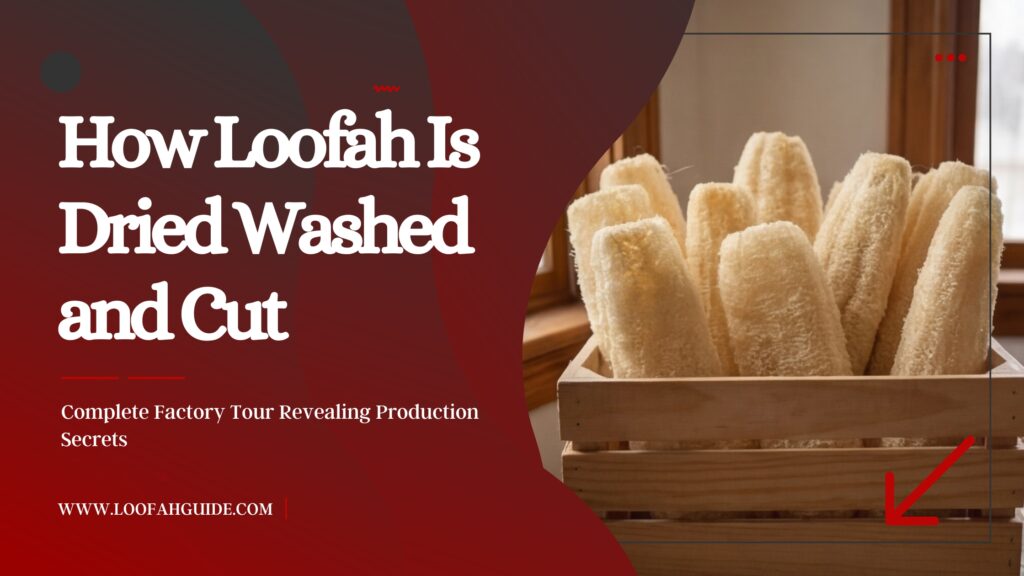
From Green Gourd to Golden Sponge: The Processing Journey Explained
That textured natural sponge hanging in your shower underwent a complex transformation spanning several weeks before arriving at your door. Knowing how loofah is dried, washed, and cut provides valuable insight for anyone seeking products that perform well and last long. This knowledge matters whether you manage procurement for a hotel chain or simply want your next loofah purchase to outlast previous disappointments.
Natural loofah processing remains surprisingly misunderstood despite growing consumer interest in sustainable bath alternatives. Many assume these plant based sponges require minimal preparation after harvest. The reality involves intricate procedures developed across generations of Egyptian agricultural tradition, where approximately 65 percent of worldwide loofah supply originates. Each processing decision influences how your loofah feels against skin, how long it resists mold in humid bathrooms, and whether it maintains integrity through months of daily use.
This factory tour guide examines authentic production methods employed by leading manufacturers including Egexo, whose 25 years of expertise established benchmarks other suppliers strive to match. You will discover why identical looking loofahs from different sources perform dramatically differently, what separates premium processing from budget shortcuts, and specific indicators revealing quality before purchase. Business buyers will gain supplier evaluation knowledge while everyday consumers learn selection criteria ensuring satisfaction with every purchase.
Explore premium Egyptian loofahs processed according to these quality standards at the Egexo shop, or continue reading for comprehensive production insights.
Why Processing Methods Determine Everything About Your Loofah Experience
Before diving into specific stages, understanding why processing matters helps frame subsequent details. Raw loofah gourds fresh from harvest bear little resemblance to finished products. They contain excessive moisture inviting mold growth, organic residues creating unpleasant odors, tough outer skins hiding usable fibers, and irregular shapes requiring modification for practical use.
The Transformation Challenge
Converting harvested gourds into desirable bath products requires solving multiple challenges simultaneously. Moisture must drop from approximately 85 percent in fresh specimens to under 12 percent in finished goods without damaging delicate fiber networks. Skins must release cleanly without tearing underlying structures. Internal debris including seeds, pulp remnants, and plant sap requires complete removal. All this must happen while preserving the natural fiber characteristics making loofahs effective exfoliators.
Facilities cutting corners on any stage create products failing to meet consumer expectations. Rushed drying produces mold prone sponges. Inadequate washing leaves residues causing odor development. Careless cutting wastes material and creates inconsistent products. Quality processing demands patience, expertise, and investment that not all suppliers provide.
Regional Processing Variations
Production methods vary significantly between loofah growing regions, explaining quality differences between Egyptian products and alternatives from Asia or South America. Egyptian facilities benefit from ideal drying conditions including intense sunshine, low ambient humidity, and consistent temperatures. These natural advantages reduce reliance on energy intensive industrial drying while producing superior results.
Additionally, Egyptian processing knowledge accumulated across centuries creates expertise difficult to replicate elsewhere. Families pass techniques through generations, with experienced workers recognizing subtle quality indicators invisible to newcomers. This institutional knowledge manifests in consistently superior products that have established Egyptian loofah as the global quality standard.
Learn more about Egyptian production advantages through the comprehensive farm to export process overview detailing the complete supply chain from cultivation through international shipping.
Stage by Stage: How Loofah Is Dried for Maximum Longevity
Drying represents the foundational processing stage determining product shelf life and mold resistance. Understanding how loofah is dried reveals why some sponges survive months of bathroom humidity while others develop problems within weeks.
Initial Field Drying Phase
Processing begins immediately after harvest when workers arrange freshly picked gourds for preliminary drying. This initial phase occurs in open areas near cultivation sites, utilizing natural airflow and solar radiation to begin moisture reduction. Gourds typically remain in field drying configurations for one to two weeks depending on weather conditions and initial moisture levels.
During this period, moisture content drops from harvest levels near 85 percent down to approximately 35 to 45 percent. This reduction serves multiple purposes beyond simple water removal. Controlled moisture loss triggers biochemical changes within fiber networks, initiating the hardening process that contributes to finished product durability. Additionally, reduced moisture inhibits bacterial growth during subsequent transport to processing facilities.
Field drying requires careful management to prevent quality degradation. Workers rotate gourds regularly ensuring uniform exposure. Overnight covering protects against dew accumulation that reverses drying progress. Sorting removes specimens showing mold initiation or pest damage before problems spread to adjacent materials.
Secondary Precision Drying
Following skin removal and initial washing, loofahs enter the critical secondary drying phase targeting specific moisture specifications. This stage transforms partially processed fibers into shelf stable products capable of indefinite storage without quality degradation.
Target Moisture Specifications by Product Application
| Application Category | Target Moisture | Tolerance Range | Reasoning |
|---|---|---|---|
| Long term storage wholesale | 8 to 10 percent | Plus or minus 1 percent | Maximum mold resistance for extended warehousing |
| Standard retail products | 10 to 12 percent | Plus or minus 1.5 percent | Balance between durability and flexibility |
| Immediate use products | 12 to 14 percent | Plus or minus 2 percent | Softer initial feel acceptable for quick turnover |
Achieving precise moisture targets requires either extended sun drying with frequent testing or climate controlled chamber systems. Premium facilities typically employ hybrid approaches combining traditional sun exposure with finishing periods in controlled environments. This combination captures benefits of natural drying while guaranteeing consistent specifications regardless of weather variations.
Drying Method Comparison for Quality Assessment
| Characteristic | Traditional Sun Only | Industrial Chamber Only | Hybrid Approach |
|---|---|---|---|
| Processing Time | 4 to 7 days variable | 24 to 36 hours fixed | 2 to 4 days optimized |
| Energy Requirements | Minimal | Significant | Moderate |
| Consistency | Weather dependent | Very high | High |
| Fiber Quality | Excellent when ideal | Good | Excellent |
| Suitable Scale | Small to medium | Large | All scales |
| Cost Impact | Lowest | Higher | Moderate |
Wholesale buyers evaluating suppliers should inquire about drying methods and request moisture content documentation. Facilities unable to provide specific moisture readings likely lack testing protocols ensuring consistent quality. Visit Egexo quality standards for detailed specifications maintained across all production batches.
Washing Protocols That Create Clean Safe Products
Multiple washing stages transform dried fibers from agricultural materials into hygienic products suitable for skin contact. How loofah is washed affects appearance, odor, safety, and even texture characteristics that consumers notice immediately upon first use.
Retting and Skin Separation
The washing process begins with retting, an ancient technique using water immersion to loosen connections between outer gourd skin and interior fiber networks. Dried gourds submerge in water tanks for periods ranging from 24 hours to three days depending on skin thickness and desired processing speed.
Water temperature significantly influences retting effectiveness. Warm water between 25 and 35 degrees Celsius accelerates skin loosening while cooler temperatures require extended immersion. However, excessively warm water risks premature fiber softening that complicates subsequent handling. Experienced processors monitor water conditions carefully, adjusting timing based on observed skin separation progress.
Following adequate soaking, workers remove loosened skins through manual peeling or gentle mechanical processing. This reveals the characteristic fibrous interior that consumers recognize as natural loofah. Skill matters considerably during skin removal, as aggressive handling tears fiber networks while insufficient effort leaves skin fragments creating rough spots on finished products.
Debris Removal Washing Cycles
Exposed fiber networks contain various residues requiring removal through dedicated washing stages. Seeds lodged within fiber matrices must flush out completely, as retained seeds decompose during storage creating odor problems. Plant sap concentrated within fibers during growth requires dissolution and removal to prevent discoloration and stickiness. General agricultural debris including soil particles and organic matter accumulated during cultivation needs thorough flushing.
Quality facilities employ three to five separate washing cycles with complete water changes between stages. Workers agitate fibers manually or through mechanical tumbling, inspecting individual pieces between cycles to identify those requiring additional treatment. This labor intensive approach explains price differences between carefully processed premium products and budget alternatives rushed through minimal washing.
Sanitization Methods and Consumer Safety
Final washing stages address hygiene requirements for products contacting human skin. Various sanitization approaches offer different benefits that buyers should understand when evaluating options.
Sanitization Approach Comparison
| Method | Process Description | Advantages | Considerations |
|---|---|---|---|
| Extended Sun Exposure | Multiple day UV exposure between water rinses | Chemical free natural antimicrobial | Weather dependent time intensive |
| Food Grade Hydrogen Peroxide | Controlled concentration bath with thorough rinsing | Effective residue free when rinsed | Requires proper handling |
| Ozone Treatment | Gaseous ozone exposure in sealed chambers | No residue excellent effectiveness | Equipment investment required |
| Hot Water Processing | Extended exposure to elevated temperatures | Simple effective widely available | Energy intensive potential fiber impact |
Consumers with chemical sensitivities should verify sanitization methods before purchasing. Products processed exclusively through sun and water methods suit those seeking completely natural options. Request samples to evaluate different processing approaches before committing to larger purchases.
Cutting Techniques Creating Diverse Product Forms
The final major processing stage involves cutting and shaping operations that transform processed fiber cylinders into specific product forms. How loofah is cut determines not only product appearance but also functional characteristics affecting exfoliation intensity and ease of use.
Fiber Orientation and Cutting Implications
Natural loofah grows with fiber networks oriented in specific patterns that cutting operations either preserve or alter. Understanding this structural reality helps explain why different cuts produce different user experiences.
Fiber density varies across loofah cross sections, with denser concentrations near outer surfaces and progressively looser networks toward central cores. Crosscut slices expose this density gradient on both faces, creating surfaces with variable exfoliation intensity across their area. Users discover gentler central regions suitable for sensitive areas alongside more vigorous outer zones appropriate for rougher skin.
Lengthwise cuts maintain consistent fiber density across exposed surfaces, producing uniform exfoliation characteristics regardless of where pressure applies. This consistency suits applications requiring predictable performance, though it sacrifices the versatility offered by crosscut density variations.
Cutting Operation Types
Manual Hand Cutting
Skilled workers wielding sharp blades examine each loofah individually before making cuts optimized for that specific piece. Hand cutting excels at adaptive decision making, routing around damage, maximizing usable material from irregular shapes, and creating custom products meeting specific requirements.
Hand cutting remains essential for premium grade products where individual attention justifies higher labor costs. Workers evaluate fiber density patterns, identify optimal cutting angles, and adjust dimensions based on specific characteristics rather than forcing uniform processing regardless of material variations.
Mechanical Cutting Systems
Automated cutting equipment delivers consistent results at higher speeds than manual operations allow. Mechanical systems excel at producing standardized products meeting specific dimensional requirements for retail packaging or hospitality applications demanding uniformity.
Modern facilities integrate both approaches strategically. Standard product lines flow through mechanical systems maximizing throughput efficiency. Premium products, custom orders, and irregular materials route to skilled manual cutters whose judgment optimizes outcomes impossible for automated systems to achieve.
Product Form Specifications
| Product Category | Cutting Approach | Typical Specifications | Primary Users |
|---|---|---|---|
| Whole Natural Loofahs | Minimal end trimming only | 15 to 45 cm length natural diameter | DIY enthusiasts retailers seeking variety |
| Body Scrubbing Slices | Crosscut machine or manual | 4 to 10 cm thickness full diameter | Spas hotels general consumers |
| Facial Cleansing Pads | Die cut from crosscut slices | 5 to 8 cm diameter 2 to 3 cm thick | Beauty retailers skincare focused consumers |
| Dish Cleaning Scrubbers | Crosscut with optional core removal | 8 to 12 cm diameter varied thickness | Kitchen suppliers grocery retailers |
| Back Scrubbers | Lengthwise cut with strap attachment | 35 to 50 cm length narrow width | Bath accessory retailers spa facilities |
| Pet Grooming Products | Custom shaped for animal ergonomics | Variable per species application | Pet supply distributors veterinary suppliers |
Wholesale buyers seeking specific product forms should explore custom loofah product design services enabling unique specifications beyond standard catalog offerings. Consumers can find diverse ready made options in the bath and body loofah collection.
Quality Grading Systems Explained
Finished products receive quality classifications determining market positioning and pricing. Understanding grading criteria helps wholesale buyers specify requirements accurately and enables consumers to evaluate whether products match labeled claims.
Grading Evaluation Criteria
Quality assessment considers multiple factors that trained inspectors evaluate for each production batch.
Quality Assessment Checklist
Visual Appearance Factors
- Uniform natural coloration without discoloration spots
- Consistent fiber density without thin or bare areas
- Clean surfaces free from debris or skin fragments
- Absence of mold indicators or moisture damage signs
- Structural integrity without tears or compressed sections
Tactile Evaluation Points
- Appropriate firmness indicating proper moisture content
- Flexibility without brittleness suggesting overdrying
- Smooth surfaces without rough patches from retained skin
- Consistent density across product surface
Functional Performance Indicators
- Fiber security resisting shedding during use
- Shape retention after wetting and drying cycles
- Appropriate exfoliation intensity for intended application
- Neutral odor without mustiness or chemical residues
Grade Classification Standards
| Grade Level | Quality Characteristics | Suitable Applications | Relative Value |
|---|---|---|---|
| Premium Select | Exceptional uniformity zero defects optimal density | Luxury retail gift presentation high end spa | Highest tier |
| Standard Quality | Minor variations minimal defects good density | General retail mid range hospitality | Standard pricing |
| Commercial Grade | Noticeable variations acceptable defects adequate density | Budget retail economy hospitality | Value pricing |
| Industrial Utility | Significant variations multiple defects variable density | Non consumer applications craft supplies | Economy tier |
Business buyers should specify grade requirements when requesting quotations to ensure pricing accuracy and product suitability. The complete Egexo product catalog details available grades across all product categories.
Recognizing Quality: Practical Evaluation Techniques
Whether examining products in retail settings or evaluating wholesale samples, specific techniques reveal processing quality that determines performance and longevity.
Visual Assessment Methods
Quality processed loofahs display consistent coloration ranging from light cream through golden tan shades. Avoid products showing dark spots potentially indicating mold exposure during processing. White patches suggest bleaching that may irritate sensitive skin while masking underlying quality issues. Fiber networks should appear intact and evenly distributed without significant gaps or overly compressed regions.
Hold loofahs against light sources to examine fiber density and uniformity. Quality products display consistent translucency patterns without dramatically lighter or darker regions suggesting uneven processing or material defects.
Touch Based Evaluation
Proper drying produces fibers feeling firm yet retaining slight flexibility when compressed. Excessive brittleness indicates overdrying that weakens fibers causing premature breakdown during use. Soft or spongy areas reveal retained moisture creating mold risk. Press firmly against loofah surfaces, feeling for uniform resistance without unexpected hard or soft spots.
Gently flex products checking for cracking sounds indicating fiber damage from processing or handling. Quality products flex smoothly without audible stress indicators that predict premature failure during normal use.
Smell Testing Procedures
Fresh processed loofahs carry minimal scent, perhaps slight earthy tones reflecting natural plant origins. Strong musty odors definitively indicate mold development from inadequate drying. Chemical smells suggest harsh sanitization treatments leaving residues that may cause skin irritation. Products passing smell testing feel fresh and neutral, compatible with any preferred soaps or body wash products.
Wet Testing Protocol
When possible, briefly wet sample products to evaluate behavior under use conditions. Quality loofahs absorb water evenly across surfaces without dry spots suggesting density inconsistencies. Wet fibers should feel uniformly textured without slippery areas indicating retained processing residues. After squeezing out excess water, quality products begin drying immediately without prolonged sogginess suggesting moisture retention problems.
Wholesale Buyer Evaluation Framework
Business purchasers investing significant resources in loofah inventory benefit from systematic supplier evaluation incorporating processing knowledge. Beyond comparing prices and examining samples, thorough evaluation investigates underlying capabilities determining product reliability across orders.
Supplier Assessment Questions
Document answers to these inquiries when evaluating potential suppliers:
Processing Infrastructure
- What drying methods and equipment ensure consistent moisture content
- How many washing cycles occur during standard processing
- What sanitization approaches meet destination market requirements
- Are climate controlled facilities available for weather independent production
Quality Management
- How are quality grades defined and differentiated
- What testing protocols verify moisture content and other specifications
- Can batch specific documentation accompany orders
- Are third party certifications available for quality verification
Capacity and Flexibility
- What production volumes support various order sizes
- How quickly can orders ship after confirmation
- Can processing customize to specific buyer requirements
- What minimum quantities apply for different product types
Discover why leading importers choose Egexo as their Egyptian loofah supplier, including detailed capability information supporting informed decisions.
Warning Signs Suggesting Processing Shortcuts
Experienced buyers recognize indicators suggesting suppliers sacrifice quality for cost reduction:
- Prices significantly below market averages without clear justification
- Reluctance to discuss processing methods or provide facility information
- Sample quality exceeding bulk order consistency
- Strong odors in fresh products indicating washing inadequacy
- Rapid mold development during sample storage testing
- Inconsistent moisture content across sample selections
- Inability to provide moisture testing documentation
Minimum Order Planning
| Product Type | Typical MOQ | Standard Lead Time | Customization Options |
|---|---|---|---|
| Body loofah slices | 500 to 1000 units | 14 to 21 days | Size thickness grade |
| Facial pads | 1000 to 2000 units | 14 to 21 days | Diameter thickness |
| Kitchen scrubbers | 500 to 1000 units | 14 to 21 days | Size core configuration |
| Whole loofahs | 300 to 500 units | 14 to 21 days | Length selection grade |
| Custom products | 1500 to 3000 units | 28 to 42 days | Full specification control |
| Private label | 2500 to 5000 units | 35 to 56 days | Complete branding packaging |
Explore private label loofah manufacturing opportunities for branded product lines leveraging Egyptian quality with your market identity.
Environmental Responsibility in Loofah Processing
Sustainability considerations influence purchasing decisions across both business and consumer segments. Understanding environmental aspects of how loofah is dried, washed, and cut enables informed choices supporting ecological values.
Natural Advantage of Egyptian Production
Egyptian processing benefits from environmental conditions reducing resource intensity compared to production elsewhere. Abundant sunshine enables solar powered drying minimizing electricity consumption. Low humidity accelerates natural drying without energy intensive dehumidification equipment. Consistent climate allows year round outdoor processing impossible in regions with variable weather.
Water Conservation Practices
Progressive facilities implement water recycling systems capturing and filtering wash water for reuse in initial processing stages. These closed loop approaches reduce freshwater consumption by 40 to 60 percent compared to single use water practices. Solar water heating further reduces energy requirements for temperature controlled washing stages.
Waste Stream Utilization
Loofah processing generates organic byproducts including removed skins, extracted seeds, and cutting scraps. Responsible facilities compost these materials, returning nutrients to agricultural land supporting subsequent growing seasons. Seeds recovered during processing supply cultivation needs, creating closed loop production systems minimizing external inputs.
End of Life Considerations
Unlike synthetic alternatives persisting in environments for decades, natural loofahs biodegrade completely within 60 to 90 days under proper composting conditions. Consumers can compost used loofahs rather than contributing to landfill volumes, extending sustainability benefits throughout product lifecycles.
For additional wholesale resources supporting sustainable sourcing decisions, visit our partner site Wholesale Loofah.
Expert Insight from Egexo
Twenty five years processing Egyptian loofahs taught us that consumer disappointment almost always traces back to inadequate drying. Products reaching customers with moisture content above 12 percent inevitably develop problems regardless of how carefully users maintain them. Proper drying cannot be rushed or approximated. It requires patience, proper equipment, and verification testing that many suppliers skip to accelerate production.
Our advice for consumers involves simple observation during first uses. Quality processed loofahs dry completely within 24 hours of bathroom use under normal ventilation conditions. Products remaining damp after this period contain excessive moisture that will eventually manifest as mold, odor, or accelerated fiber breakdown. Consider this drying behavior an ongoing quality indicator throughout product lifespan.
For wholesale buyers, we recommend requesting moisture content reports for any significant order. Suppliers maintaining proper quality systems readily provide calibrated meter readings documenting specification compliance. Hesitation to share this data typically indicates either inadequate testing protocols or awareness that products fail to meet professional standards. Verification protects your investment and your customers.
Frequently Asked Questions
Q: How long should quality loofah processing take from harvest to finished product?
A: Thorough processing requires minimum three to four weeks encompassing all stages properly executed. Initial field drying spans one to two weeks, followed by soaking, skin removal, multiple washing cycles spanning several days, secondary drying requiring three to five days, and final cutting and packaging. Significantly faster timelines indicate skipped or shortened stages compromising quality and longevity.
Q: What causes some loofahs to develop mold while others remain fresh for months?
A: Mold development directly correlates with moisture content at completion of processing. Loofahs dried to 8 to 12 percent moisture resist mold growth even in humid bathroom environments. Products retaining higher moisture provide conditions favoring mold establishment. Processing shortcuts accelerating drying stages produce consistently mold prone products regardless of subsequent user care.
Q: Why do Egyptian loofahs command premium positioning in global markets?
A: Egyptian production combines ideal growing conditions, optimal processing climate, and generational expertise impossible to replicate elsewhere. Consistent sunshine and low humidity enable superior natural drying. Agricultural knowledge accumulated across centuries ensures quality from cultivation through processing. Established export infrastructure supports reliable international supply. These combined advantages produce loofahs consistently outperforming alternatives from other regions.
Q: How can consumers identify properly processed loofahs before purchasing?
A: Examine color consistency seeking uniform cream to tan shades without dark spots or white patches. Feel for firm texture with slight flexibility, avoiding brittle or spongy specimens. Smell for neutral or slight earthy scent, rejecting products with musty or chemical odors. Quality processed loofahs pass all three assessments indicating proper execution of drying, washing, and handling throughout production.
Q: What makes hand cut loofahs different from machine processed products?
A: Hand cutting enables adaptive decisions optimizing each individual loofah based on its specific characteristics. Skilled workers evaluate fiber density, identify damage to avoid, and determine optimal angles maximizing usable material. Machine cutting delivers consistency and speed but cannot adapt to individual variations. Premium products typically involve hand cutting while standard products suit mechanical processing.
Q: How do sanitization methods affect loofah safety and performance?
A: Different sanitization approaches offer varying benefits. Extended sun exposure provides chemical free natural antimicrobial treatment suitable for organic certifications. Food grade hydrogen peroxide delivers effective sanitization leaving no residue when properly rinsed. Ozone treatment provides excellent effectiveness without chemical contact. Method selection should match intended market positioning and buyer preferences regarding chemical exposure.
Q: What minimum order quantities should wholesale buyers expect?
A: Standard product MOQs typically range from 500 to 1000 units for body loofahs and kitchen scrubbers, with facial pads requiring 1000 to 2000 units. Custom shaped products and private label orders require higher minimums, typically 1500 to 5000 units, reflecting setup investments for specialized production. Lead times range from two to eight weeks depending on product complexity and customization requirements.
Conclusion
This detailed examination of how loofah is dried, washed, and cut reveals the extensive processing transforming harvested gourds into effective bath products. Each stage contributes essential qualities that determine whether your loofah delivers months of satisfying performance or disappoints within weeks. The three to four week journey through Egyptian processing facilities represents investment in quality that distinguishes premium products from inferior alternatives flooding global markets.
Armed with this knowledge, both wholesale buyers and individual consumers can make informed decisions based on processing quality rather than superficial appearances or price alone. Understanding what creates durable, hygienic, effective loofahs enables recognition of products worth purchasing and suppliers worth trusting.
Egyptian loofah production, exemplified by Egexo’s 25 years of expertise, continues setting global standards through traditional techniques refined across generations combined with modern quality controls ensuring consistency. This combination delivers natural products that outperform synthetic alternatives while supporting sustainable agricultural practices.
Key Takeaways:
- Processing requires three to four weeks minimum for quality results
- Moisture content between 8 and 12 percent prevents mold and ensures longevity
- Multiple washing cycles remove debris and ensure hygienic products
- Cutting methods affect exfoliation characteristics and product versatility
- Egyptian production advantages include climate, expertise, and infrastructure
Ready to source quality processed Egyptian loofahs?
For Wholesale Buyers: Request a detailed quotation or download the complete product catalog
For Individual Consumers: Browse the full collection or request samples to evaluate quality personally