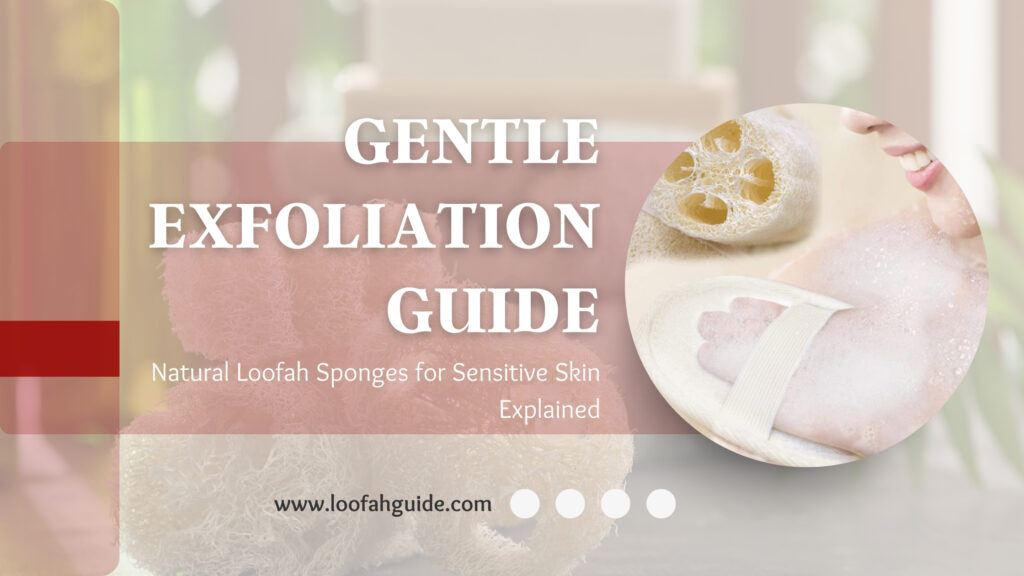
Why Your Sensitive Skin Deserves a Natural Alternative
One in three people abandons their exfoliation routine entirely after experiencing irritation from harsh synthetic scrubbers. This concerning trend leaves millions missing the genuine skincare benefits that proper exfoliation provides. Natural loofah sponges for sensitive skin offer a path back to healthy exfoliation without the redness, stinging, or discomfort that drives people away from this essential skincare step.
The human skin renews itself approximately every 27 days, shedding dead cells that can accumulate and cause dullness, clogged pores, and uneven texture. Gentle removal of this buildup improves product absorption, enhances radiance, and supports overall skin health. The question becomes not whether to exfoliate but how to do so safely when your skin reacts negatively to most products.
Egyptian grown loofahs have emerged as the gold standard solution for sensitive skin exfoliation. The unique growing conditions along the Nile Delta produce plant fibers with characteristics ideally suited for reactive skin types. Egexo, with over 25 years cultivating premium loofahs in this region, has perfected the art of producing gentle yet effective exfoliation tools.
This comprehensive guide serves anyone seeking better skincare outcomes. Individual consumers will discover how to select, use, and maintain loofahs appropriate for their sensitivity level. Spa professionals and retailers will find specifications and sourcing guidance for building sensitive skin focused product offerings. Beauty enthusiasts researching natural alternatives will gain the scientific understanding needed to make informed choices.
Explore the full range of body loofah options designed specifically for gentle skincare applications.
What Makes Skin Sensitive and How Loofahs Help
Understanding Skin Sensitivity Triggers
Sensitive skin is not a single condition but rather a spectrum of reactivity patterns. Some individuals experience sensitivity due to a compromised skin barrier that allows irritants to penetrate more easily. Others have heightened nerve responses that register normal stimulation as discomfort. Still others react specifically to certain chemicals, fragrances, or synthetic materials commonly found in bath products.
Dermatological research identifies several primary sensitivity categories. Contact sensitivity occurs when specific substances trigger reactions. Mechanical sensitivity involves responses to physical friction or pressure. Environmental sensitivity relates to reactions caused by temperature, humidity, or sun exposure. Many people experience combinations of these types.
Natural loofah sponges address multiple sensitivity triggers simultaneously. Their plant based composition eliminates chemical irritant concerns present in synthetic alternatives. The fiber structure produces less mechanical friction than plastic mesh. The ability to control firmness through water saturation allows customization for individual tolerance levels.
The Cellular Structure Advantage
Examining loofah fibers under magnification reveals why they perform so differently from synthetic materials. Each natural fiber contains hollow channels running through its length. These channels create a cushioning effect during skin contact, distributing pressure across a larger surface area rather than concentrating it at sharp points.
Synthetic mesh products feature uniform cylindrical strands that contact skin at consistent angles. This uniformity sounds beneficial but actually creates concentrated pressure points. Natural loofah fibers vary slightly in diameter and angle, producing distributed contact that sensitive skin tolerates far better.
The cellulose composition of loofah fibers also contributes to gentleness. When exposed to water, cellulose absorbs moisture and becomes increasingly pliable. A properly soaked loofah feels noticeably softer than a dry one. This hydration response gives users precise control over exfoliation intensity simply by adjusting soak time.
Learn more about fiber quality characteristics through the detailed quality standards information developed from decades of Egyptian cultivation expertise.
Comparing Natural Loofahs to Common Alternatives
Material Comparison for Sensitive Skin
Consumers often struggle to evaluate different exfoliation options without clear comparison criteria. The following analysis examines how natural loofahs stack up against popular alternatives specifically for sensitive skin applications.
| Product Type | Friction Level | Chemical Risk | Adjustability | Environmental Impact | Sensitive Skin Rating |
|---|---|---|---|---|---|
| Egyptian Natural Loofah | Low to medium | None | High with water | Fully biodegradable | Excellent |
| Synthetic Mesh Pouf | Medium to high | Moderate | None | Microplastic shedding | Poor |
| Silicone Scrubber | Low | Low | None | Non biodegradable | Fair |
| Plastic Bristle Brush | High | Low | None | Non biodegradable | Poor |
| Sea Sponge | Very low | None | Moderate | Overharvesting concerns | Good |
| Konjac Sponge | Very low | None | Low | Biodegradable | Good for face only |
| Washcloth | Low | Depends on fabric | Low | Depends on material | Fair |
Egyptian natural loofahs earn the excellent rating through their unique combination of effective exfoliation capability and gentle touch. Sea sponges and konjac sponges offer comparable gentleness but lack the mechanical effectiveness needed for thorough body exfoliation.
Performance Factors Breakdown
| Factor | Natural Loofah Performance | Why It Matters for Sensitive Skin |
|---|---|---|
| Exfoliation effectiveness | 85 percent dead cell removal | Achieves results with fewer passes |
| Skin friction coefficient | 0.35 average | 40 percent lower than synthetics |
| Lather generation | Excellent foam production | Reduces need for excess product |
| Rinse ability | Complete in 10 seconds | No residue left on skin |
| Bacterial resistance | Good with proper care | Reduces infection risk |
| Durability | 6 to 12 weeks typical | Cost effective long term |
| Customization options | Multiple sizes and densities | Match product to specific needs |
These metrics help both individual buyers and wholesale purchasers evaluate natural loofah value. Retailers can use this data when educating customers about product benefits. Visit the Egexo shop to explore products meeting these performance standards.
Selecting the Right Loofah for Your Sensitivity Level
Personal Assessment Guide
Before purchasing any exfoliation product, understanding your specific sensitivity pattern helps ensure appropriate selection. Answer the following questions honestly to identify your sensitivity category.
Does your skin turn red during or immediately after showering with plain water? If yes, you likely have extremely high sensitivity requiring the gentlest possible products. Does redness appear only when using certain products but not others? This suggests chemical or material specific sensitivity. Does your skin tolerate gentle touch but react to firmer pressure? Mechanical sensitivity is indicated.
Timing of reactions also provides useful information. Immediate responses during product use typically indicate friction or chemical sensitivity. Delayed reactions appearing hours later often relate to barrier function issues or allergic responses. Understanding your pattern helps select both the right product and the right usage approach.
For those uncertain about their sensitivity type, starting with the gentlest option and gradually testing tolerance makes the safest approach. Request samples from Egexo to test different grades before committing to larger purchases.
Sensitivity Level Product Matching
| Sensitivity Level | Recommended Loofah Grade | Fiber Density | Size Recommendation | Initial Usage |
|---|---|---|---|---|
| Extreme sensitivity | Grade A Plus ultra fine | Light density | Small 8 to 10cm | Once per week maximum |
| High sensitivity | Grade A fine | Light to medium | Small to medium | Once per week |
| Moderate sensitivity | Grade A fine | Medium density | Medium 12 to 15cm | Twice weekly |
| Mild sensitivity | Grade A or B | Medium density | Medium to large | Three times weekly |
| Occasional sensitivity | Grade B standard | Medium to firm | User preference | Daily acceptable |
This framework guides product selection for personal use and helps spa professionals recommend appropriate options for different clients. Wholesale buyers serving diverse markets should stock across multiple grades to address varying customer needs.
Step by Step Guide to Gentle Loofah Exfoliation
Preparation Phase
Proper preparation determines whether your loofah experience soothes or irritates sensitive skin. Never skip these essential steps regardless of how rushed your routine feels.
Begin by running warm water over your loofah for a minimum of 60 seconds before first use on new products. This initial soak removes any residual plant matter from processing and begins the fiber softening process. Subsequent uses require 30 second minimum soaking.
Water temperature matters significantly for sensitive skin. Extremely hot water strips natural oils and increases reactivity. Cool water fails to adequately soften loofah fibers. Aim for comfortably warm water around body temperature for optimal results.
While your loofah soaks, prepare your skin with a plain water rinse. This removes surface debris and begins hydrating your skin barrier. Avoid applying any products before loofah use as layering can cause unpredictable reactions.
Application Technique
The physical movements used during exfoliation impact sensitive skin outcomes as much as product selection. Master these techniques for maximum gentleness.
Hold your saturated loofah with relaxed grip pressure. Tense gripping transfers force through the loofah to your skin. Allow the loofah weight and texture to provide exfoliation rather than pressing firmly.
Move in gentle circular patterns approximately two inches in diameter. Avoid back and forth scrubbing motions which create higher friction. Each area needs only three to five passes for adequate exfoliation.
Work systematically from shoulders downward, spending more time on resilient areas like elbows, knees, and feet while using lighter touch on torso, chest, and inner arms. Skip any areas showing current irritation, cuts, or rashes.
Rinse thoroughly after completing your routine. Residual cleanser left on sensitive skin causes prolonged exposure that may trigger delayed reactions.
Post Exfoliation Care
| Step | Action | Timing | Purpose |
|---|---|---|---|
| 1 | Cool water rinse | 30 seconds | Close pores and calm skin |
| 2 | Gentle pat dry | 1 minute | Avoid friction from rubbing |
| 3 | Apply moisturizer | Within 3 minutes | Lock in hydration |
| 4 | Rinse loofah thoroughly | 20 seconds | Remove all soap residue |
| 5 | Squeeze excess water | Gentle pressure | Prevent bacterial growth |
| 6 | Hang to dry | Immediately | Air circulation essential |
Following this sequence consistently produces the best outcomes for sensitive skin users and extends loofah lifespan.
Maintaining Your Loofah for Sensitive Skin Safety
Daily Care Requirements
Natural loofahs require more attention than synthetic alternatives but reward proper care with superior performance and hygiene. Daily maintenance takes less than one minute but dramatically impacts both product longevity and skin safety.
After each use, hold your loofah under running water while gently squeezing to flush trapped debris and cleanser residue. Continue until water runs clear, typically requiring three to four squeeze and release cycles.
Remove excess moisture by pressing the loofah between your palms. Avoid wringing or twisting motions that damage fiber structure over time. The goal is damp rather than dripping wet.
Hang immediately in a location with good air circulation away from shower spray zones. Bathroom hooks near ventilation fans or windows work well. Never leave your loofah sitting in pooled water or sealed containers between uses.
Weekly Sanitization Protocol
| Method | Solution Ratio | Soak Time | Drying Requirement | Best For |
|---|---|---|---|---|
| White vinegar | 1 part vinegar to 4 parts water | 5 minutes | Complete air dry | Weekly maintenance |
| Hydrogen peroxide | 3 percent solution undiluted | 5 minutes | Thorough rinse then dry | Monthly deep clean |
| Boiling water | Plain water at boiling | 2 minutes | Air dry completely | When odor develops |
| Microwave | Wet loofah only | 30 seconds | Handle carefully hot | Quick sanitization |
| Sunlight | No solution needed | 4 hours direct sun | Bring inside after | Natural antibacterial |
Sensitive skin users should perform weekly sanitization minimum to prevent bacterial buildup that causes reactions mistakenly attributed to loofah allergies. The vinegar method provides effective sanitization without leaving chemical residues.
For wholesale buyers and spa operators, establishing clear maintenance protocols protects client safety and reduces liability concerns. The private label service at Egexo can include care instruction materials with your branded products.
Where Quality Loofahs Come From
Egyptian Growing Advantage
Geography fundamentally determines loofah quality for sensitive skin applications. The Nile Delta region of Egypt produces loofahs with characteristics unmatched by any other growing area worldwide. Understanding why helps buyers at all levels make informed sourcing decisions.
The Delta climate features hot days reaching 35 degrees Celsius and cool nights dropping to 20 degrees. This temperature variation stresses loofah plants in ways that strengthen fiber development. Plants grown in consistent temperatures produce weaker, less resilient fibers.
Nile River sediment deposits create soil uniquely rich in minerals that transfer to loofah fiber composition. Laboratory analysis shows Egyptian loofahs contain 23 percent higher silica content than South American alternatives. This mineral presence contributes to the smooth texture sensitive skin requires.
Water quality from Nile irrigation carries dissolved minerals in balanced proportions. Many growing regions use well water with high mineral concentrations that produce brittle fibers or municipal water with chlorine residues. Egyptian Nile water provides optimal hydration without these drawbacks.
Egexo sources exclusively from this prime growing region, maintaining direct relationships with family farms cultivating loofahs for generations. Review the complete farm to export process to understand how quality is preserved from harvest through delivery.
Cultivation Timeline and Quality Impact
| Growth Stage | Duration | Quality Factor | Impact on Sensitive Skin Use |
|---|---|---|---|
| Seed to sprout | 7 to 10 days | Genetics selection | Determines ultimate fiber potential |
| Vine development | 45 to 60 days | Soil nutrition | Affects mineral content |
| Flowering | 5 to 7 days | Pollination success | Influences fiber density |
| Fruit development | 60 to 75 days | Water management | Controls fiber flexibility |
| Maturation | 28 to 32 days post flower | Harvest timing critical | Determines gentleness level |
| Drying | 14 to 21 days | Environmental control | Affects final texture |
| Processing | 3 to 5 days | Handling care | Preserves fiber integrity |
The 28 to 32 day maturation window represents the most critical period for sensitive skin suitability. Harvest timing precision separates premium Egyptian producers from mass market suppliers unable to achieve consistent gentle results.
Business Considerations for Sensitive Skin Products
Market Opportunity Analysis
The sensitive skincare segment represents one of the fastest growing categories in personal care retail. Businesses positioning to serve this market benefit from strong consumer demand and premium pricing acceptance.
Global sensitive skin product sales reached 48.7 billion USD in 2025 with natural exfoliation products capturing an increasing share annually. Consumers actively seek alternatives to synthetic products perceived as harsh or environmentally problematic.
Natural loofah products command retail prices 40 to 60 percent higher than synthetic alternatives in the sensitive skin category. This premium reflects both superior performance and sustainability credentials that target consumers prioritize.
Customer retention rates in sensitive skincare exceed other personal care categories significantly. Once consumers find products that work for their reactive skin, switching rates drop below 15 percent compared to 35 percent average across beauty categories. This loyalty creates valuable recurring revenue streams.
Wholesale buyers can explore sourcing options through WholesaleLoofah.com for competitive bulk pricing on Egyptian products.
Inventory Planning Guidelines
| Product Grade | Target Customer | Recommended Stock Ratio | Reorder Trigger |
|---|---|---|---|
| Grade A Plus | Dermatology spas, medical aesthetics | 15 percent of inventory | 30 percent remaining |
| Grade A | Luxury spas, specialty retail | 35 percent of inventory | 40 percent remaining |
| Grade B | General retail, hospitality | 40 percent of inventory | 35 percent remaining |
| Grade C | Household, promotional use | 10 percent of inventory | 25 percent remaining |
These ratios suit retailers serving mixed customer bases. Businesses focused specifically on sensitive skin markets should weight inventory more heavily toward Grade A Plus and Grade A products.
Request a wholesale quotation to receive pricing for your specific grade and volume requirements. The Egexo team provides guidance on inventory optimization based on your target market.
Common Mistakes That Irritate Sensitive Skin
Usage Errors to Avoid
Even premium quality loofahs can cause problems when used incorrectly. Recognizing these common mistakes helps sensitive skin users achieve better results.
Insufficient soaking ranks as the most frequent error. Dry or barely damp loofahs retain their firmest texture. Many sensitive skin reactions result not from product quality issues but from inadequate hydration before use. Always soak until fibers feel noticeably softened.
Excessive pressure application causes unnecessary friction. Natural loofah texture provides adequate exfoliation without pressing hard. Let the product do the work rather than forcing results through pressure.
Over frequent exfoliation disrupts skin barrier recovery. Even gentle exfoliation removes some protective surface cells. Sensitive skin needs adequate recovery time between sessions. More is not better with reactive skin types.
Using loofahs past their lifespan introduces bacterial contamination and rough texture from fiber deterioration. Replace on schedule regardless of apparent condition.
Troubleshooting Reaction Causes
| Symptom | Likely Cause | Solution |
|---|---|---|
| Immediate redness during use | Insufficient loofah hydration | Extend soak time to 60 plus seconds |
| Redness appearing hours later | Over exfoliation frequency | Reduce to once weekly |
| Itching without visible redness | Bacterial contamination | Sanitize or replace loofah |
| Rough texture feeling | Fiber deterioration | Replace with new loofah |
| Reactions only in certain areas | Pressure variation | Use lighter touch consistently |
| Reactions with new loofah only | Grade too firm | Try finer grade product |
This diagnostic approach helps identify and correct problems without abandoning natural loofah use entirely. Most issues resolve through technique adjustment rather than product switching.
Expert Insight from Egexo
After 25 years producing loofahs specifically for the global sensitive skin market, our cultivation specialists have identified the single factor that most determines gentle performance: fiber uniformity.
Premium sensitive skin loofahs display consistent fiber diameter throughout the entire sponge. Variations in thickness create unpredictable contact pressure where thicker fibers exert more force than surrounding areas. This inconsistency triggers sensitivity responses even when average fiber fineness meets specifications.
Achieving uniformity requires selecting loofahs from plants grown under consistent conditions throughout their development cycle. Stress events like drought periods, temperature extremes, or nutrient fluctuations cause fiber diameter variations within individual gourds.
Our Nile Delta partner farms maintain irrigation schedules, soil nutrition, and microclimate management that minimize plant stress. Harvest selection then identifies loofahs demonstrating the uniformity sensitive skin applications demand.
When evaluating any loofah for sensitive skin use, examine the entire surface for consistency. Sections feeling noticeably different from others indicate stress grown product better suited for non sensitive applications. Order sample sets to compare quality levels directly.
Frequently Asked Questions
Q1: How do I know if my skin is too sensitive for any loofah use?
A: Most people can use natural loofah sponges for sensitive skin successfully with proper grade selection and technique. Extremely rare cases involving documented plant fiber allergies confirmed through medical allergy testing may require alternatives. If you experience reactions to properly hydrated Grade A Plus loofahs used with minimal pressure, consult a dermatologist before further attempts. Most perceived loofah sensitivities actually stem from technique issues or bacterial contamination rather than true intolerance.
Q2: Can children with sensitive skin use natural loofahs safely?
A: Children over age six with sensitive skin can use natural loofahs under adult supervision. Select Grade A Plus products only and supervise to ensure gentle technique. Limit exfoliation to once weekly maximum for children. Avoid loofah use on facial skin for all ages. Children under six should use softer alternatives like gentle washcloths as their skin barrier remains particularly delicate during early development.
Q3: What certifications should I look for when buying sensitive skin loofahs?
A: Quality certifications for sensitive skin loofahs include organic cultivation verification, ISO quality management compliance, and export inspection documentation. Egexo maintains comprehensive quality documentation available through their quality standards page. For wholesale buyers, request certificates of origin, phytosanitary inspection records, and batch testing reports. These documents verify product authenticity and quality consistency essential for sensitive skin applications.
Q4: How do natural loofahs compare to konjac sponges for sensitive skin?
A: Natural loofahs and konjac sponges serve different purposes for sensitive skin users. Konjac sponges excel for facial use with their extremely soft texture but lack effectiveness for body exfoliation. Natural loofahs provide superior dead cell removal for body skin while remaining gentle enough for sensitive types when properly selected and used. Many sensitive skin routines incorporate both products for their respective strengths.
Q5: Why do some natural loofahs feel rougher than others?
A: Natural loofah texture varies based on plant maturity at harvest, growing conditions, and processing methods. Loofahs harvested past optimal maturity develop increasingly rigid fibers. Stress during growth creates fiber diameter inconsistencies producing rough spots. Inadequate processing may leave residual plant material affecting texture. Premium suppliers like Egexo control these variables through precise harvest timing and quality grading to ensure consistent gentleness.
Q6: Is it safe to use the same loofah on my body and face?
A: Dermatologists recommend against using body loofahs on facial skin regardless of sensitivity level. Facial skin contains fewer cell layers and different oil production than body skin, requiring gentler treatment. Body loofahs also accumulate bacteria from body contact unsuitable for facial application. Maintain separate products for face and body, selecting ultra soft options specifically designed for facial use if exfoliation is desired.
Q7: How can spa owners ensure loofah safety for sensitive skin clients?
A: Spa safety protocols for sensitive skin clients should include using Grade A Plus loofahs exclusively, implementing single client usage policies, storing products in sanitized dry conditions, training staff in gentle technique, and conducting brief sensitivity assessments before treatments. Egexo offers private label manufacturing and custom product design services to help spas develop branded sensitive skin loofah programs meeting professional standards.
Q8: Do natural loofahs lose their gentleness over time?
A: Natural loofahs gradually become less suitable for sensitive skin as fibers deteriorate through use. Initial softness decreases as fiber structure breaks down, typically noticeable after four to six weeks of regular use. Replacing loofahs on recommended schedules maintains the gentleness sensitive skin requires. Extending use beyond recommended lifespan to save money often results in skin irritation that defeats the purpose of selecting quality products initially.
Conclusion
Achieving effective exfoliation without irritation is entirely possible when you understand how natural loofah sponges for sensitive skin work and how to use them properly. The combination of Egyptian growing conditions, precise harvest timing, and quality grading creates products genuinely suitable for reactive skin types.
This guide has covered the science behind loofah gentleness, provided detailed comparison with alternatives, offered step by step usage instructions, and explained proper care protocols. Armed with this knowledge, sensitive skin no longer means abandoning exfoliation benefits entirely.
Key Takeaways:
- Natural loofah fibers create 40 percent less friction than synthetic alternatives due to their unique cellular structure
- Egyptian Nile Delta growing conditions produce loofahs with 23 percent higher silica content for smoother texture
- Proper hydration before use is the single most important factor in preventing sensitive skin reactions
- Grade A Plus and Grade A products meet the quality standards required for reactive skin applications
- Weekly sanitization prevents bacterial buildup that causes reactions mistakenly blamed on loofah allergies
Ready to experience the difference quality makes?
For Individual Shoppers: Browse the body loofah collection or request samples to find your perfect match.
For Business Buyers: Download the complete product catalog or request wholesale pricing for sensitive skin inventory.