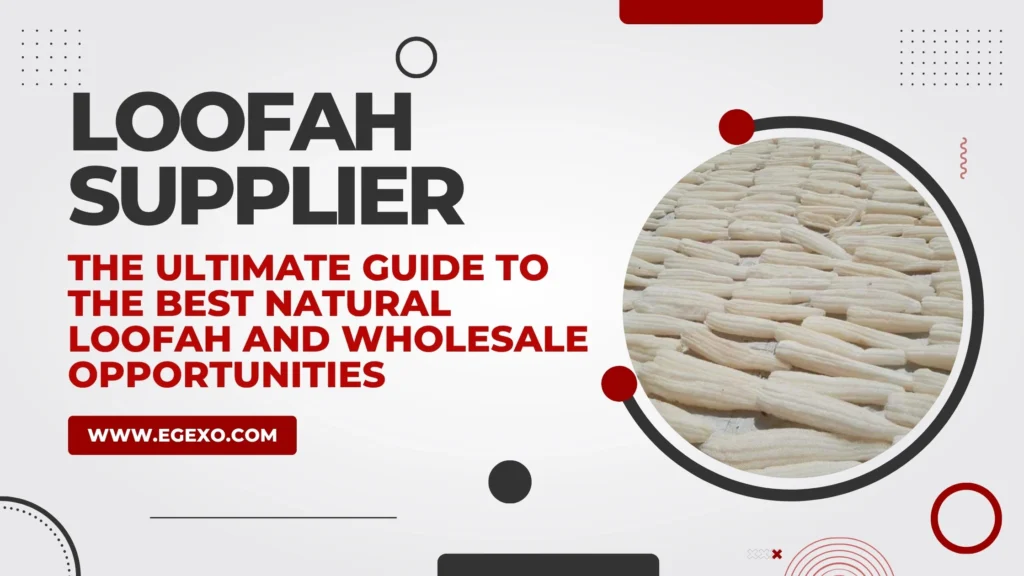

See our wholesale prices on egexo.com under Products. For anyone evaluating business ventures in the green economy, whether as a wholesale distributor or a direct-to-consumer retailer, understanding the financial realities and market dynamics of this industry is critical.
This guide examines the complete landscape of launching and operating a successful loofah business in 2025. From detailed cost breakdowns to supplier evaluation criteria, revenue projections to competitive positioning strategies, we cover the practical information needed to make informed decisions. You will discover why Egyptian-grown loofahs dominate quality rankings worldwide and how connecting with the right manufacturing partners can determine your success or failure in this competitive market.
The Current State of the Loofah Market
The natural loofah industry has matured significantly in recent years. What started as a niche product found primarily in health food stores and specialty shops now occupies shelf space in mainstream retailers, hotel bathrooms, and e-commerce platforms worldwide. This mainstream acceptance reflects broader consumer trends toward reducing plastic consumption and choosing biodegradable alternatives in daily life.
The growth stems from multiple converging factors including heightened awareness of microplastic pollution, increased disposable income in developing economies, and the wellness industry’s continued expansion.
For business owners, this growth translates into opportunities across multiple revenue channels. Physical retailers can integrate loofah products into existing bath and body sections without requiring separate boutique positioning. Online sellers benefit from strong search volume and customer intent around sustainable alternatives. Spa and wellness centers incorporate loofahs into treatment protocols while also retailing them to clients. Even pet grooming operations now stock specialized loofah tools designed for animal care applications.
Regional Market Dynamics and Opportunities
Understanding where demand concentrates and which markets show the strongest growth helps entrepreneurs target their efforts effectively. The loofah business opportunity looks different depending on geographic focus.
Rising middle-class populations in India, China, Southeast Asia, and other regions create expanding customer bases for personal care products generally, with natural alternatives gaining share within that growth. These markets show price sensitivity but reward quality and durability when clearly communicated.
Middle Eastern and African markets present niche opportunities, particularly in hospitality and tourism sectors. Hotels, resorts, and spas in these regions increasingly specify natural amenities including loofahs as part of their sustainability and luxury positioning.
Product Category Performance Analysis
Not all loofah products perform equally in the marketplace. Understanding which categories show the strongest demand helps businesses allocate inventory investment wisely.
Kitchen and household scrubbers generate excellent repeat purchase rates since cleaning applications wear products faster than bath use.
Smart businesses diversify across multiple categories rather than concentrating exclusively in one area. This approach balances slower-growing but stable categories with higher-risk, higher-growth segments. It also increases average order values when customers purchase multiple product types in single transactions.
Planning your first order? Ask EGEXO For Export for a quote. We answer within 24 hours, with no minimum order on standard products.
Investment Requirements Across Business Models
The loofah business opportunity accommodates various investment levels and business structures. Understanding the realistic capital requirements for different approaches helps entrepreneurs choose models matching their resources and risk tolerance.
Detailed Cost Analysis by Business Type
Home-Based Online Retail Operation
This model represents the most accessible entry point for individual entrepreneurs testing the loofah business opportunity without leaving existing employment or making substantial financial commitments.
Core Investment Components:
This model works well for entrepreneurs willing to handle all operations personally, from order fulfillment to customer service. Time investment typically runs 10 to 20 hours weekly initially, increasing during growth phases or promotional periods.
Retail Store Product Line Addition
Existing retailers considering loofah additions face different economics than pure startups. They benefit from established customer traffic and checkout infrastructure but must justify shelf space allocation against alternative products.
Investment Requirements:
The key is securing reliable supply from manufacturers like Egexo who maintain consistent quality and delivery schedules, preventing stockout situations that damage category performance.
Spa and Salon Integration
Wellness businesses enjoy unique advantages when adding loofah products. They can incorporate items into treatments while simultaneously retailing them, creating dual revenue streams from single inventory investments.
Implementation Costs:
The quality standards maintained by Egyptian producers ensure consistent performance that reflects well on the business and encourages retail purchases.
Scaling Investment: From Startup to Established Business
Understanding the financial trajectory of a growing loofah business helps entrepreneurs plan capital needs and set realistic growth expectations.
Phase One: Launch and Validation (Months 1 to 6)
Initial investment covers foundational expenses as outlined above. During this phase, focus remains on validating product-market fit, identifying best-selling items, and establishing operational processes. Many entrepreneurs operate part-time during this phase, minimizing fixed costs while testing the business model.
Cash flow typically turns positive in months 4 to 6 for well-executed launches. Early revenue should be reinvested in inventory expansion and marketing rather than drawn as owner compensation. This reinvestment accelerates reaching critical mass where the business generates sufficient volume for favorable supplier pricing tiers.
Phase Two: Growth and Optimization (Months 7 to 18)
After validating the business model, focus shifts to scaling successful elements while eliminating underperformers.
- Enhanced marketing across additional channels
- Improved website functionality or expanded retail presence
- First experiments with custom products or variations
- Professional photography and content development
Phase Three: Maturity and Brand Building (Months 19 and beyond)
Established businesses with consistent revenue streams consider significant investments in brand development and market expansion. This phase may include:
- Multiple sales channel expansion
- Regional or international market entry
- Wholesale programs selling to other retailers
- Subscription service development
Revenue Models and Profitability Analysis
Pricing Strategy and Margin Structures
Natural loofah products command pricing that reflects their quality, sustainability positioning, and production costs.
Customer Lifetime Value Considerations
The consumable nature of loofah products creates opportunities for recurring revenue that dramatically impact business economics. Understanding customer lifetime value helps justify higher acquisition costs and informs marketing budget decisions.
Average customer purchase patterns based on industry data:
Consumer Direct Purchase Model
Wholesale Business Customer
- Initial order: 250 to 600 units
These lifetime value calculations demonstrate why businesses can justify meaningful investment in customer acquisition and relationship building.
Implementing systems that encourage repeat purchases magnifies these lifetime value figures. Consider:
- Email reminder sequences timed to replacement cycles
- Subscription programs offering convenience and modest discounts
- Loyalty programs rewarding repeat purchases
- Education content reinforcing proper product care and replacement timing
Realistic First-Year Revenue Projections
Entrepreneurs benefit from understanding achievable first-year performance benchmarks based on different effort levels and business models.
Part-Time Online Operation (10 to 15 hours weekly)
Full-Time Online or Physical Retail (40 plus hours weekly)
Spa or Salon Integration (treatment plus retail)
These projections assume consistent effort, quality product sourcing, and reasonable marketing effectiveness. Actual results vary based on competitive intensity in your market, marketing skill, operational efficiency, and product selection decisions.
Supplier Selection: The Foundation of Business Success
No factor influences long-term success in the loofah business opportunity more than supplier selection. Quality issues, unreliable delivery, or unsustainable pricing from suppliers create problems that excellent marketing and customer service cannot overcome.
Evaluating Supplier Capabilities and Reliability
Smart entrepreneurs evaluate potential suppliers across multiple dimensions beyond simple unit pricing. While cost matters, it represents just one factor in the total value equation.
Critical Supplier Evaluation Checklist
Manufacturing Capabilities:
- Direct cultivation and processing versus reseller operations
- Annual production capacity and scalability
- Quality control systems and testing protocols
- Years in operation and experience with international clients
Product Quality Factors:
- Fiber density and consistency across batches
- Color uniformity and natural appearance
- Durability in actual use testing
- Comparison against competitors in similar price ranges
Business Operations:
- No minimum order on standard products. Private label from 1,000 units.
- Lead times from order to delivery
- Payment terms and conditions
- Communication responsiveness and language capabilities
- Ability to provide samples before large commitments
Value-Added Services:
- Custom product development capabilities
- Private labeling and packaging options
- Mixed orders across product categories
- Market insights and product recommendations
- Problem resolution processes
Egyptian loofah suppliers with established track records typically excel across these dimensions. The farm to export process used by experienced manufacturers ensures quality control from cultivation through packaging, eliminating gaps that compromise product integrity.
Understanding Egyptian Loofah Quality Advantages
Egyptian loofah dominates premium market segments for reasons rooted in geography, climate, and agricultural tradition. Understanding these advantages helps businesses communicate value propositions to customers while justifying premium pricing.
The Nile Delta and Nile Valley regions provide optimal growing conditions that other production areas cannot replicate. Specific temperature ranges, humidity patterns, soil mineral content, and water availability combine to produce loofahs with superior characteristics:
Fiber Structure Comparison
| Origin Region | Fiber Density Rating | Water Absorption | Durability Score | Texture Consistency |
|---|---|---|---|---|
| Egypt (Premium) | 9.2 out of 10 | Excellent | 8.8 out of 10 | Very High |
| Egypt (Standard) | 8.4 out of 10 | Very Good | 8.1 out of 10 | High |
| East Asia | 7.1 out of 10 | Good | 6.9 out of 10 | Medium |
| Central America | 6.8 out of 10 | Good | 6.4 out of 10 | Medium |
| Other Regions | 6.2 out of 10 | Fair to Good | 5.9 out of 10 | Variable |
These quality differences affect customer satisfaction and repeat purchase rates. Loofahs that hold up well generate fewer customer service issues and higher lifetime value than lower-quality alternatives that need replacing sooner.
For businesses building brands and reputations, the quality investment pays dividends through reduced returns, positive reviews, and customer referrals. Short-term savings from cheaper suppliers often cost far more in long-term brand damage and lost customers.
Building Strategic Supplier Relationships
The most successful loofah businesses treat suppliers as strategic partners rather than interchangeable vendors. This relationship approach creates mutual benefits and competitive advantages.
Consider these relationship-building practices:
Regular Communication and Feedback
Share customer feedback, market trends, and product performance data with your supplier. This information helps manufacturers improve products and develop innovations aligned with market demands. Suppliers receiving actionable feedback often prioritize those customers for new product launches and favorable terms.
Payment Reliability
Consistently meeting payment terms builds trust and goodwill. This priority matters during high-demand periods when allocation decisions affect order fulfillment timing.
Growth Partnership
Include suppliers in your growth planning. Manufacturers understanding your expansion timeline can ensure adequate capacity and suggest product additions that complement your strategy. This partnership approach often unlocks customization options and private label opportunities that transactional relationships cannot access.
Quality Partnership
Report quality issues immediately with specific details and photos. Good suppliers want to address problems quickly and prevent recurrence. This collaborative approach to quality management strengthens relationships and improves products over time.
Businesses can request quotes that outline not just pricing but also the full scope of supplier capabilities and services. This comprehensive evaluation approach leads to better long-term partnerships than simple price shopping.
Marketing Strategies for Loofah Businesses
Successfully capitalizing on the loofah business opportunity requires effective marketing that reaches target customers and communicates compelling value propositions. Different business models and customer segments require tailored approaches.
Content Marketing and Educational Approaches
Natural product customers typically research purchases more extensively than buyers of conventional alternatives. This research behavior creates opportunities for businesses providing valuable information rather than purely promotional content.
Develop content addressing these topic areas:
For Individual Consumers
- Benefits of natural loofahs versus synthetic alternatives
- Proper usage techniques for different body areas
- Hygiene best practices and replacement timing
- Environmental impact comparisons
- Loofah care and maintenance to extend lifespan
- Skin type considerations and product selection
For Business Buyers
- Supplier evaluation frameworks
- Customer education approaches that drive sales
- Display and merchandising techniques
- Inventory management for natural products
This educational content builds trust and positions your business as an expert resource rather than just another seller. Publish this content on your website, share through social media, and repurpose into email sequences that nurture customer relationships.
Digital Marketing Channel Strategies
Different digital channels serve different purposes in customer acquisition and retention strategies.
Search Engine Optimization
Natural product searches show strong commercial intent. Customers searching for sustainable alternatives, natural bath products, or eco-friendly cleaning tools are actively seeking solutions your business provides. Optimize product pages and content for these search terms while building authority through educational resources.
Social Media Marketing
Visual platforms like Instagram and Pinterest work exceptionally well for loofah products. Showcase products in attractive bathroom settings, demonstrate usage techniques through short videos, and highlight sustainability credentials that resonate with environmentally conscious audiences. User-generated content from satisfied customers provides authentic social proof more compelling than branded messaging.
Email Marketing
Build email lists through website opt-ins and purchase history. Use automated sequences timed to product lifespan, reminding customers when replacement is recommended. Share usage tips, new product launches, and exclusive offers that reward subscriber loyalty. Email typically delivers the highest ROI among digital channels for established businesses with customer databases.
Influencer Partnerships
Micro-influencers in sustainability, zero-waste lifestyle, and natural beauty niches often have engaged audiences perfectly aligned with loofah products. Focus on authentic partnerships with influencers genuinely aligned with natural products rather than pure transaction-based relationships.
Offline Marketing for Physical Locations
Retailers and spa businesses benefit from location-based marketing strategies that digital-only businesses cannot employ.
In-Store Experiences
Create touchable displays allowing customers to feel product texture and density. Include educational signage explaining Egyptian origin, sustainability benefits, and proper usage. Staff trained to discuss product advantages convert browsing into purchases at significantly higher rates than passive displays alone.
Local Partnerships
Partner with complementary businesses like yoga studios, wellness centers, or natural food stores for cross-promotion. These partnerships introduce your products to audiences with demonstrated interest in health and sustainability.
Community Events
Participate in local farmers markets, sustainability fairs, or wellness events. These venues attract concentrated audiences of ideal customers while providing immediate feedback on product reception and pricing sensitivity.
Risk Management and Common Pitfalls
Every loofah business opportunity involves risks that careful planning can mitigate. Understanding common failure points helps entrepreneurs avoid expensive mistakes.
Inventory and Cash Flow Management
Natural products require specific storage conditions and have finite shelf lives even though loofahs are quite durable when properly stored. Businesses must balance having adequate inventory to meet demand against tying up excessive capital in slow-moving stock.
Inventory Best Practices
Start conservatively with smaller orders across multiple product types rather than large quantities of single items. This diversification allows market testing while minimizing risk if specific products underperform.
Monitor inventory turnover closely. Products sitting unsold for 6 plus months indicate pricing problems, positioning issues, or selection errors. Mark down slow-moving inventory to clear space and capital for better-performing items rather than hoping stagnant products eventually sell.
Maintain sufficient working capital to reorder inventory before completely selling out. Stockouts damage customer trust and interrupt the momentum of growing businesses. Plan reorders based on lead times, allowing for production and international shipping time, or faster timelines for domestic suppliers.
Store inventory in dry, well-ventilated areas. While quality loofahs resist degradation, prolonged exposure to humidity can affect appearance and customer appeal. Proper storage protects your inventory investment.
Quality Control and Customer Satisfaction
One shipment of substandard products can severely damage your business reputation in an era of online reviews and social media.
Inspect incoming shipments promptly and thoroughly. Compare products against samples and specifications provided by suppliers. Document any variances with photographs and communicate issues immediately. Reputable manufacturers like Egexo stand behind their quality and address legitimate concerns quickly.
For your own customers, set clear expectations about natural products. Explain that natural loofahs show minor variations in color and size unlike manufactured synthetics. This education prevents returns based on misunderstanding rather than genuine defects.
Implement hassle-free return policies within reasonable parameters. The cost of occasional returns is substantially less than negative reviews or social media complaints about poor customer service. Make returns easy while preventing systematic abuse.
Competition and Market Saturation
As the loofah market grows, competition inevitably increases. Sustainable competitive advantages come from factors beyond price alone.
Focus on differentiation through superior quality, exceptional customer service, and educational expertise.
Develop proprietary product variations through custom product design that competitors cannot easily replicate. Private label products create brand assets with lasting value versus reselling commodity items anyone can source.
Build customer relationships that transcend single transactions. Loyalty programs, subscription services, and genuine customer care create switching costs that protect your customer base from competitive pressure.
FAQ Section
Q1: What makes Egyptian loofahs superior to other origins?
A: Egyptian loofahs benefit from optimal growing conditions in the Nile Delta region where specific soil composition, temperature ranges, and humidity levels produce denser fiber structures with superior water absorption and durability. These quality advantages justify premium pricing and result in higher customer satisfaction scores.
Q2: How much time does operating a loofah business require?
A: Time requirements vary dramatically based on your chosen business model and scale. Part-time online operations typically require 10 to 15 hours weekly for order processing, customer service, marketing, and administrative tasks. Full-time retail or distribution operations demand 40 plus hours weekly, particularly during growth phases. Spa integrations require minimal additional time beyond initial setup since products become part of existing treatment protocols. The loofah business opportunity works well for entrepreneurs seeking flexible side income or those building full-time ventures. Automation through e-commerce platforms, email marketing systems, and streamlined fulfillment processes can reduce time requirements as operations mature.
Q3: Can I start a loofah business from home?
A: Absolutely. Home-based loofah businesses represent one of the most accessible entry points into the natural products industry. Initial space requirements are minimal since loofah products are compact and lightweight. A spare bedroom, basement area, or garage provides adequate storage for starting inventory levels. Many successful loofah businesses began as home operations before scaling into commercial facilities. The key considerations for home-based operations include maintaining proper storage conditions with low humidity, implementing organized inventory systems, and ensuring efficient order fulfillment workflows.
Q5: How do I handle seasonal demand fluctuations?
A: Loofah demand shows moderate seasonality with peaks during holiday gift-giving periods and New Year wellness resolution timing. Plan inventory purchases and marketing budgets to align with these patterns. Increase stock levels in October and November for holiday demand, and prepare for January surges driven by wellness intentions. During slower summer months, focus on building content, improving operations, and developing new product variations rather than aggressive customer acquisition. Some businesses run promotions during slower periods to smooth demand fluctuations and maintain cash flow consistency. Understanding your specific customer patterns helps refine seasonal planning over time, though overall demand for quality natural products remains fairly consistent year-round.
Q7: Should I focus on a niche or offer broad product selection?
A: This strategic decision depends on your resources, target market, and competitive positioning. Niche focus allows for deeper expertise, more targeted marketing, and stronger brand identity. Broad selection appeals to customers preferring one-stop shopping and increases average order values through cross-selling. Many successful businesses begin with focused selection to establish credibility and market position, then expand into complementary categories after proving initial concepts. Consider starting with 2 to 4 product categories that appeal to your target customer segment, then add categories based on actual demand rather than assumptions. This measured approach balances focus with diversification while managing inventory risk during early growth stages.
Q8: How important is sustainable packaging in the loofah business?
A: Extremely important. Customers choosing natural loofahs over synthetic alternatives consistently demonstrate environmental values. These customers scrutinize packaging materials and respond negatively to excessive plastic or non-recyclable materials. Sustainable packaging reinforces brand positioning and prevents cognitive dissonance when eco-friendly products arrive in environmentally harmful packaging. Use recyclable cardboard, minimal plastic, biodegradable materials, and clear recycling instructions. Many suppliers including Egexo offer sustainable packaging options or work with businesses on custom packaging solutions aligned with environmental values. The modest additional cost of sustainable packaging generates positive returns through enhanced brand perception and customer loyalty among your target demographic.
A Note from Egexo
EGEXO has been exporting Egyptian loofah since 2015, from our own farms and partner farms in the Nile Delta. Natural loofahs are now a genuine opportunity for businesses, driven by consumer demand for sustainable alternatives.
The businesses succeeding in 2025 share common characteristics. They prioritize product quality over short-term cost savings, understanding that a single batch of inferior loofahs can destroy months of reputation building. They invest in customer education, recognizing that informed customers become loyal advocates who return repeatedly and refer others. They build genuine relationships with suppliers based on mutual success rather than transactional price negotiations.
From a supplier perspective, we most value customers who communicate clearly, provide honest market feedback, and pay reliably. These businesses receive priority during high-demand periods, early access to new products, and customization support unavailable to purely transactional buyers. Think of supplier selection as choosing a business partner rather than simply finding the lowest price.
No amount of processing or treatment can compensate for inferior raw materials. When you source from Egypt, you access this accumulated expertise and environmental advantage. Your customers may not consciously understand why Egyptian loofahs feel different, but they experience the quality difference in daily use.
The loofah business opportunity rewards patience, quality focus, and genuine customer service more than most retail categories. Request a quote or request samples from EGEXO.
Conclusion
The loofah business opportunity in 2025 presents compelling prospects for entrepreneurs willing to focus on quality, customer education, and strategic differentiation.
Egyptian loofahs from established manufacturers offer measurable quality advantages translating into customer satisfaction, reduced returns, and stronger brand positioning.
The businesses thriving in this market combine premium product sourcing, educational marketing approaches, and genuine customer service creating competitive moats beyond price competition. Whether launching a side business, expanding existing retail operations, or building a dedicated loofah enterprise, the fundamental success factors remain consistent: quality products, informed customers, and reliable supplier partnerships.
Key Takeaways:
- Egyptian loofah quality advantages justify premium positioning and pricing
- Educational marketing and customer service drive sustainable competitive advantage
- Strategic supplier relationships enable growth and customization opportunities
Ready to explore your loofah business opportunity?
- For Business Inquiries: Request detailed wholesale quotations with pricing and terms
- For Product Information: Download the complete catalog with specifications
- For Quality Evaluation: Order sample products to assess quality firsthand
- For Immediate Purchase: Request a quote or request samples
Keep reading: loofah market trends and loofah wholesale buying guide.