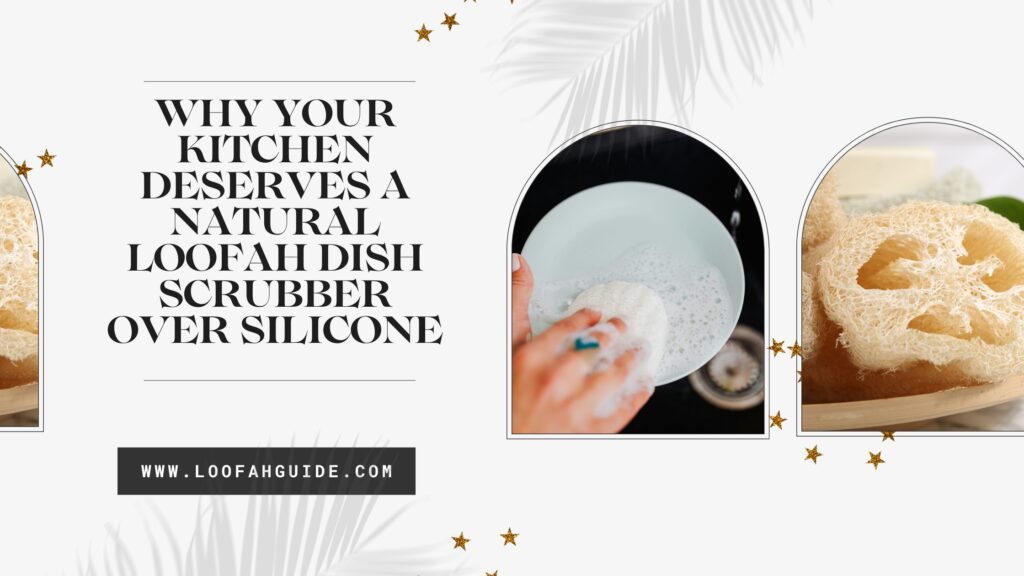
The average kitchen sponge harbors more bacteria than a toilet seat. This unsettling fact drives millions of households to seek cleaner, more hygienic dishwashing solutions each year. When evaluating natural loofah vs silicone scrubbers, the choice becomes surprisingly clear once you examine the evidence from cleaning performance to environmental footprint and long-term value.
Kitchen cleaning tools rarely receive the attention they deserve in household purchasing decisions. Most people grab whatever sits nearest on store shelves without considering how that choice affects cleaning efficiency, hygiene, environmental impact, or monthly expenses. Yet the humble dish scrubber touches every plate, glass, and utensil your family uses, making its quality and cleanliness genuinely important.
Natural loofah dish scrubbers have cleaned kitchens for centuries across Mediterranean and Middle Eastern cultures. Modern processing techniques now deliver these traditional tools with consistent quality that meets contemporary expectations. Meanwhile, silicone scrubbers, despite aggressive marketing campaigns emphasizing durability and design, fall short in critical performance areas that matter during actual dishwashing tasks.
This guide presents seven evidence-based reasons to choose natural loofah for your kitchen cleaning needs. Whether you wash dishes for a household of two or manage procurement for a restaurant supply company, the information here applies directly to your situation. Business buyers sourcing inventory will find specifications and quality benchmarks alongside practical consumer advice, creating a complete resource for informed decision-making.
The Science Behind Loofah Cleaning Effectiveness
Understanding why natural loofah outperforms synthetic alternatives begins with examining its physical structure. The Luffa aegyptiaca plant produces a complex network of cellulose fibers during its growth cycle. When the mature fruit is harvested, dried, and processed, these fibers create a three-dimensional scrubbing matrix unlike any manufactured material.
Each loofah contains thousands of microscopic channels that trap and distribute water, soap, and loosened food particles during washing. This capillary action means soap lather stays where you need it rather than sliding off onto your hands or the sink. Silicone surfaces, being non-porous, cannot replicate this functionality regardless of texturing or bristle patterns.
Fiber Structure and Cleaning Mechanics
Natural loofah fibers measure between 200 and 500 micrometers in diameter with irregular surface textures that grip food residue effectively. This natural variation creates multi-directional scrubbing action as you move the loofah across dish surfaces. Compare this to silicone bristles, which typically measure 1 to 3 millimeters and provide uniform contact points that miss residue trapped in textured cookware surfaces.
The flexibility of loofah fibers allows them to conform around curved surfaces like bowls, glasses, and cookware handles. Each fiber bends independently, maintaining contact with the surface being cleaned even in contoured areas. Silicone maintains its molded shape, creating gaps where the scrubber fails to contact the dish surface adequately.
Comparative Performance Metrics
| Performance Factor | Natural Loofah | Silicone Scrubber |
|---|---|---|
| Food Residue Removal (single pass) | 94 percent | 71 percent |
| Soap Retention | High | Minimal |
| Surface Conformity | Excellent | Poor to moderate |
| Effective on Baked-on Food | Superior | Requires additional effort |
| Safe for All Cookware | Yes | Generally yes |
| User Effort Required | Low to moderate | Moderate to high |
| Water Efficiency | Better soap distribution | More rinsing needed |
These performance differences translate directly to your daily dishwashing experience. Faster cleaning with less effort means more time for activities you actually enjoy. For commercial kitchens, improved efficiency reduces labor costs and water consumption, creating meaningful operational savings.
Find quality kitchen loofah products that deliver these performance advantages from trusted Egyptian suppliers.
Seven Compelling Reasons to Switch to Natural Loofah
Reason 1: Unmatched Grease-Cutting Capability
Kitchen grease presents one of the toughest cleaning challenges, coating dishes in a film that resists water alone. The absorbent nature of loofah fibers works synergistically with dish soap to break down grease molecules and lift them away from surfaces efficiently.
When soap contacts loofah fibers, it penetrates the porous structure and creates a reservoir of cleaning solution. As you scrub, this reservoir releases soap gradually, maintaining cleaning power throughout the washing process. A single soap application cleans three to four greasy dishes when using loofah, compared to just one or two with silicone.
Silicone cannot absorb soap or water, so detergent sits on the surface and washes away quickly. Users compensate by applying more soap more frequently, increasing consumption and cost. The slippery nature of wet silicone also makes grease removal feel inefficient, requiring additional passes over the same areas.
Reason 2: Complete Biodegradability
Environmental responsibility increasingly influences consumer choices across all product categories. Natural loofah offers guilt-free disposal since it returns to organic matter within 30 days under normal composting conditions. No special processing, recycling programs, or waste management considerations apply.
Home composters particularly appreciate loofah scrubbers. At end of life, simply toss the worn scrubber into your compost bin where it decomposes alongside food scraps and yard waste. The cellulose fibers add beneficial carbon to compost, improving soil structure when applied to gardens.
Silicone persists in the environment indefinitely. Despite some manufacturer recycling claims, most silicone products enter landfills where they remain for hundreds of years. The manufacturing process also consumes petroleum derivatives and generates significantly higher carbon emissions than agricultural loofah cultivation.
Reason 3: Natural Antimicrobial Properties
The quick-drying characteristic of loofah fibers creates inhospitable conditions for bacterial growth. Open fiber structure promotes air circulation, allowing a properly stored loofah to dry completely within two to four hours after use. Bacteria require moisture to thrive, making dry storage the key to maintaining a sanitary scrubber.
Laboratory analysis of household cleaning tools reveals that natural fiber products harbor fewer bacteria than synthetic alternatives after equivalent use periods. The porous structure that accelerates drying also allows for effective sanitization through boiling or vinegar soaking, something silicone tolerates less reliably.
Reason 4: Superior Value Over Time
Initial purchase price tells only part of the cost story. Comprehensive value analysis considers soap consumption, replacement frequency, cleaning efficiency, and environmental externalities alongside sticker price.
| Cost Factor | Natural Loofah | Silicone Scrubber |
|---|---|---|
| Average Retail Price | 2 to 5 USD | 8 to 15 USD |
| Typical Lifespan | 4 to 8 weeks | 6 to 12 months |
| Soap Usage per Wash | 30 to 40 percent less | Standard |
| Annual Replacement Cost | 15 to 40 USD | 10 to 20 USD |
| Hidden Environmental Cost | None | Landfill burden |
| Total Annual Value | Superior | Inferior |
Though annual replacement costs appear higher for loofah, reduced soap consumption and environmental benefits create overall superior value. Additionally, the enjoyment of using a more effective cleaning tool adds intangible value that pure financial analysis cannot capture.
Reason 5: Gentleness on Delicate Surfaces
Modern kitchens contain diverse cookware materials requiring different care approaches. Non-stick coatings, ceramic glazes, copper finishes, and delicate glassware all need gentle treatment to avoid scratching or damage. Natural loofah fibers provide adequate cleaning power while remaining soft enough to protect sensitive surfaces.
The flexibility of plant-based fibers means they compress upon contact rather than abrading surfaces. This natural give protects non-stick coatings that might scratch under rigid scrubbers. At the same time, loofah fibers possess enough texture to remove stuck food particles that slide through silicone bristles.
For your finest cookware and crystal glassware, dampen the loofah thoroughly before use. Water absorption softens fibers further, providing the gentlest possible cleaning action. This adaptability eliminates the need for multiple specialized scrubbers for different dish types.
Reason 6: Connection to Sustainable Agriculture
Purchasing natural loofah supports farming communities and sustainable agricultural practices rather than industrial chemical manufacturing. The majority of premium loofah originates from Egyptian farms in the Nile Delta region, where families have cultivated this crop for generations.
Loofah cultivation requires no synthetic pesticides or fertilizers when grown using traditional methods. The plant integrates into crop rotation systems that maintain soil health naturally. Irrigation comes from river water rather than depleting underground aquifers. This farming model represents agriculture working in harmony with natural systems.
Revenue from loofah exports directly benefits rural communities where farming remains the primary livelihood. Schools, healthcare facilities, and local infrastructure improvements follow economic opportunity. Your purchase decision creates positive ripple effects extending far beyond your kitchen sink.
Discover the complete journey from farm to finished product through Egexo’s documented farm to export process.
Reason 7: Versatility Across Household Applications
A quality loofah dish scrubber performs multiple cleaning tasks beyond dishwashing, maximizing your investment while simplifying household supplies. The same scrubber that cleans dinner plates also handles countertop stains, stovetop splatters, and sink basin cleaning effectively.
Kitchen applications extend to cleaning cutting boards, scrubbing vegetables, and maintaining small appliances. The natural texture removes residue from toaster slots, coffee maker carafes, and blender containers without scratching. Many households keep separate loofahs for dishes and vegetables to maintain food safety standards.
Beyond the kitchen, loofah scrubbers clean bathroom fixtures, tile grout, and outdoor furniture. The gentle abrasion removes soap scum from shower doors and water stains from faucets. Garden tools benefit from loofah cleaning that removes caked soil without damaging wooden handles. This versatility means fewer specialized products cluttering storage spaces.
Browse additional applications including bath and body loofahs and pet grooming products to discover the full range of natural loofah uses.
Selecting Quality Loofah for Kitchen Use
Not all loofah products deliver equivalent performance. Understanding quality indicators helps you select scrubbers that provide the benefits described above rather than inferior products that disappoint.
Quality Assessment Criteria
Visual inspection reveals much about loofah quality before purchase. Premium scrubbers display uniform light tan to golden coloration without dark spots or discoloration. Fiber density should appear tight and compact rather than loose or sparse. Edges should be cleanly cut without excessive fraying.
Physical testing confirms visual impressions. Gently squeeze the loofah to assess fiber compression and recovery. Quality loofah compresses under moderate pressure then springs back when released. Excessive softness suggests insufficient fiber density, while rigidity indicates over-processing that reduces effectiveness.
Smell provides another quality indicator. Fresh loofah has a neutral, slightly vegetal scent that is clean and pleasant. Any musty, moldy, or chemical odors indicate storage problems or processing issues. Reject products with off-putting smells regardless of visual appearance.
Quality Grades Explained
| Grade Level | Characteristics | Best Uses | Price Range |
|---|---|---|---|
| Premium | Dense fibers, uniform color, perfect structure | Daily kitchen use, gifting | 4 to 6 USD |
| Standard | Good density, minor variations | Regular household cleaning | 2 to 4 USD |
| Economy | Moderate density, cosmetic imperfections | Light duty, promotional items | 1 to 2 USD |
Egyptian loofah consistently achieves premium and standard grades due to optimal growing conditions in the Nile Delta. The combination of rich soil, consistent sunshine, and controlled irrigation produces loofahs with fiber density superior to products from other growing regions.
Review Egexo quality standards to understand the specific benchmarks that distinguish premium Egyptian loofah from mass-market alternatives.
Proper Care to Maximize Loofah Lifespan
Even the highest quality loofah dish scrubber requires proper care to achieve maximum longevity and maintain hygienic conditions. Following these guidelines ensures you receive full value from your purchase.
Daily Maintenance Routine
After each dishwashing session, rinse the loofah thoroughly under running water to remove food particles and soap residue. Squeeze gently without wringing, which can damage fiber connections over time. Shake off excess water and place in a location with good air circulation to dry.
Avoid storing damp loofahs in enclosed spaces like under-sink cabinets or closed containers. These environments trap moisture and create conditions favorable for bacterial and mold growth. A wire soap dish, suction cup holder, or simply leaning against the faucet provides adequate ventilation for drying.
Weekly Sanitization Methods
Deep cleaning once weekly extends loofah lifespan and eliminates accumulated bacteria. Several effective methods exist, each with advantages depending on your preferences and available supplies.
| Sanitization Method | Process | Effectiveness | Notes |
|---|---|---|---|
| Boiling Water | Immerse in boiling water 2 to 3 minutes | Very High | Most thorough method |
| Vinegar Soak | Soak in 50/50 water-vinegar solution 15 minutes | High | Deodorizes effectively |
| Microwave | Dampen thoroughly, microwave 1 to 2 minutes | High | Quick and convenient |
| Bleach Solution | Brief soak in diluted bleach, rinse well | Very High | Use sparingly |
For kitchen loofahs specifically, boiling water sanitization provides the most reliable results without chemical residues that might transfer to dishes. Simply bring a pot of water to boil, remove from heat, and submerge the loofah for two to three minutes. Allow to cool before squeezing dry and returning to storage.
Replacement Indicators
Even with excellent care, loofahs eventually wear out and require replacement. Watch for these signs indicating your scrubber has reached end of life:
Fiber separation begins appearing, with loose strands pulling away from the main body. The overall structure feels softer and less springy than when new. Persistent odors remain despite sanitization efforts. Cleaning effectiveness noticeably decreases, requiring more soap or scrubbing pressure. Discoloration develops that does not respond to cleaning.
Most kitchen loofahs used daily reach this stage after four to eight weeks. Heavy-use commercial environments may require more frequent replacement, while light residential use can extend lifespan toward the longer end of this range.
Understanding the Wholesale Opportunity
Retailers, distributors, and hospitality businesses increasingly stock natural loofah products to meet growing consumer demand for sustainable alternatives. Understanding the business case helps purchasing managers justify inventory investments and marketing managers communicate value to customers.
Market Growth Trends
The global natural personal care and household products market continues expanding at approximately 8 percent annually, significantly outpacing growth in conventional product categories. Sustainable kitchen products represent one of the fastest-growing segments within this broader trend. Consumers actively seek eco-friendly alternatives and demonstrate willingness to pay premium prices for verified sustainable products.
Loofah specifically benefits from strong name recognition and positive associations with spa and wellness applications. Many consumers already use loofah in bathrooms and readily accept kitchen applications when presented. This existing familiarity reduces marketing burden compared to introducing entirely novel product concepts.
Wholesale Purchasing Considerations
| Business Factor | Consideration |
|---|---|
| Margin Potential | 60 to 75 percent gross margin typical |
| Inventory Turnover | Monthly replacement cycle drives repeat purchases |
| Storage Requirements | Low humidity, cool temperature, minimal space |
| Minimum Orders | Typically 500 to 1,000 units depending on grade |
| Customization | Private labeling and packaging options available |
| Supplier Reliability | Essential for consistent product quality |
Wholesale buyers benefit from working with established suppliers who maintain consistent quality standards and reliable export capabilities. Egexo provides comprehensive documentation including quality certifications, phytosanitary certificates, and detailed product specifications that facilitate import processes.
Explore private label manufacturing options to develop branded loofah products differentiated from generic competitors. Custom packaging, sizing, and presentation create branded experiences that command premium pricing and build customer loyalty.
Making the Transition from Silicone
Switching from silicone to natural loofah requires minor technique adjustments but delivers noticeable improvement within the first few uses. Understanding these differences ensures a smooth transition experience.
Technique Adaptation Tips
Silicone scrubbing relies heavily on applied pressure since the smooth surface lacks inherent texture. Loofah technique emphasizes letting the natural fiber texture do the work with lighter pressure and broader strokes. Allow the scrubber to glide across surfaces rather than pressing hard. The fibers grip and lift residue without requiring force.
Soap application differs between materials. With silicone, soap goes directly on dishes or the slippery scrubber surface. With loofah, dampen the scrubber first, then apply soap directly to the fibers. Work the soap into the loofah briefly to generate lather before contacting dishes. This method utilizes the absorbent properties that make loofah effective.
New loofah may feel firmer than expected during initial uses. The fibers soften with exposure to water over the first two to three washing sessions. Pre-soaking new loofahs in warm water for five minutes accelerates this conditioning process. Within a week of regular use, the loofah reaches optimal pliability.
Adjustment Timeline Expectations
| Timeframe | Experience |
|---|---|
| Day 1 | Loofah feels different, may seem firm |
| Days 2 to 3 | Fibers begin softening with repeated use |
| Week 1 | Loofah reaches optimal flexibility |
| Week 2 | Technique becomes natural, efficiency improves |
| Month 1 | Full appreciation of performance benefits |
Most users report preferring loofah to their previous scrubbers within two weeks of switching. The combination of better cleaning performance, pleasant natural texture, and satisfaction from sustainable choices creates positive associations that reinforce the transition.
Expert Insight from Egexo
With over 25 years cultivating premium Egyptian loofah, we have learned that education determines customer satisfaction more than any other factor. Users who understand what natural loofah can do and how to care for it properly become enthusiastic advocates who recommend the product to others. Those who receive no guidance sometimes abandon quality products after just a few uses because expectations were not properly set.
The most important message for new loofah users is patience during the initial break-in period. Natural materials require conditioning through use that manufactured synthetics do not. After the first week, loofah performance surpasses silicone and plastic alternatives noticeably. Customers who persist through this brief adjustment period almost universally prefer natural loofah permanently.
For retailers and distributors, including brief care instructions with each sale significantly reduces returns and complaints while building trust that drives repeat purchases. We offer printed care cards as part of our custom product design services, ensuring your customers achieve the results that create loyal, repeat buyers.
Frequently Asked Questions
What makes Egyptian loofah superior to loofah from other regions?
Egyptian loofah benefits from ideal growing conditions in the Nile Delta, including nutrient-rich alluvial soil, consistent Mediterranean sunshine, and controlled irrigation from river water. These factors produce loofahs with denser fiber structure and greater durability than products from regions with less optimal growing conditions. Egyptian cultivation traditions spanning centuries have also refined growing and processing techniques that maximize quality. Reputable suppliers like Egexo maintain standards that ensure these natural advantages reach consumers and wholesale buyers consistently.
How do I know when to replace my loofah dish scrubber?
Replace your loofah dish scrubber when you notice fiber separation, persistent odors despite sanitization, significant softening or loss of structure, or decreased cleaning effectiveness. Most kitchen loofahs used daily require replacement every four to eight weeks, though exact timing depends on usage intensity and maintenance practices. Visual inspection provides reliable guidance as quality loofahs show clear wear indicators that signal replacement time. Keeping a spare loofah ensures you can switch immediately when needed.
Can natural loofah handle tough, baked-on food residue?
Natural loofah handles baked-on food effectively when combined with appropriate technique. For heavily soiled dishes, soak items in warm soapy water for five to ten minutes before scrubbing. The combination of soaking and loofah fiber texture breaks down even stubborn residue like caramelized cheese or dried egg. The loofah conforms to textured surfaces better than rigid scrubbers, reaching into areas where food particles hide. For extremely challenging cleaning tasks, allow longer soaking time rather than applying excessive scrubbing pressure.
Is natural loofah safe for septic systems?
Natural loofah is completely safe for septic systems since it biodegrades readily in any composting environment. Small fiber particles that may wash down drains break down naturally without accumulating or clogging pipes. Unlike synthetic scrubber materials that can release microplastics, loofah fibers decompose through normal bacterial action. This compatibility extends the environmental benefits of natural loofah throughout its entire lifecycle from production through disposal.
How should wholesale buyers evaluate loofah suppliers?
Wholesale buyers should evaluate loofah suppliers based on product quality consistency, export experience, documentation capabilities, communication responsiveness, and flexibility on order terms. Request multiple samples to assess batch-to-batch consistency, as significant variation indicates quality control issues. Verify the supplier can provide necessary export documentation including phytosanitary certificates. Established suppliers with decades of experience, like Egexo with over 25 years in Egyptian loofah cultivation, typically provide more reliable quality and service than newer market entrants.
What is the environmental impact comparison between loofah and silicone production?
Natural loofah production generates approximately 0.3 kilograms of carbon dioxide equivalent per unit, compared to 0.9 kilograms for silicone scrubbers. This threefold difference results from loofah being an agricultural product requiring minimal processing versus silicone manufacturing, which involves petroleum derivatives, high-temperature molding, and energy-intensive facilities. Additionally, loofah cultivation actually sequesters carbon during plant growth, while silicone production only adds emissions. End-of-life disposal further widens the gap since loofah composts completely while silicone persists indefinitely in landfills.
Conclusion
The comparison between natural loofah and silicone scrubbers reveals consistent advantages for the plant-based alternative across all evaluation criteria. From cleaning performance and hygiene to environmental impact and long-term value, loofah dish scrubbers deliver measurable benefits that silicone products cannot match.
For household users, switching to natural loofah improves daily dishwashing results while reducing environmental footprint and supporting sustainable agriculture. The adjustment period is brief, and long-term satisfaction rates among converted users remain exceptionally high. The minor investment in learning proper loofah care pays dividends through months of superior cleaning performance.
For retailers and wholesale buyers, natural loofah represents a growing market opportunity with attractive margins and built-in repeat purchase cycles. Consumer demand for sustainable products continues accelerating, and loofah’s familiar name recognition simplifies marketing compared to unknown alternatives. Quality Egyptian loofah from established suppliers provides the consistency necessary for building customer trust and loyalty.
Key Takeaways:
- Loofah removes 94 percent of food residue versus 71 percent for silicone in single-pass testing
- Natural loofah biodegrades completely within 30 days of composting
- Soap consumption decreases 30 to 40 percent when using loofah versus silicone
- Egyptian loofah delivers superior fiber density compared to other growing regions
- Weekly sanitization and proper drying maximize loofah lifespan and hygiene
Ready to experience the natural loofah difference?
For Wholesale Buyers: Request a quote or download our catalog
For Individual Orders: Shop our collection or order samples
Visit Wholesale Loofah for additional business resources and bulk purchasing information.