There is a moment many natural product shoppers experience at the checkout counter of a health food store. You have found the loofah section, picked up a single natural sponge, and noticed the price is nearly double what you paid at a pharmacy for a synthetic alternative. You think: this would be more affordable if I could buy several at once. So you look around the shelf, and the multipack option, if there is one, offers maybe three units.
For people who have genuinely committed to eliminating plastic bath products from their routines, that shelf quantity is not enough. And for businesses, spa owners, or anyone supplying a wellness operation, the health food store loofah aisle is not even in the right conversation.
The question of whether loofah sponges are sold in bulk at health food stores comes up constantly, in consumer forums, in wholesale sourcing discussions, and in the research queries of brand owners looking to launch eco-product lines. This guide addresses it thoroughly, from what retail stores actually carry, to how real bulk purchasing works, to what distinguishes a premium loofah from a commodity one.
By the end of this guide, you will know exactly where loofah sponges are sold in bulk, what quality markers to look for, how Egyptian-grown loofah became the industry benchmark, and whether bulk buying makes sense for your specific situation. For sourcing context and product references, loofahguide.com covers the full landscape of natural loofah products and purchasing options.
What Health Food Stores Actually Offer in the Loofah Category
Retail Stock Quantities and Formats
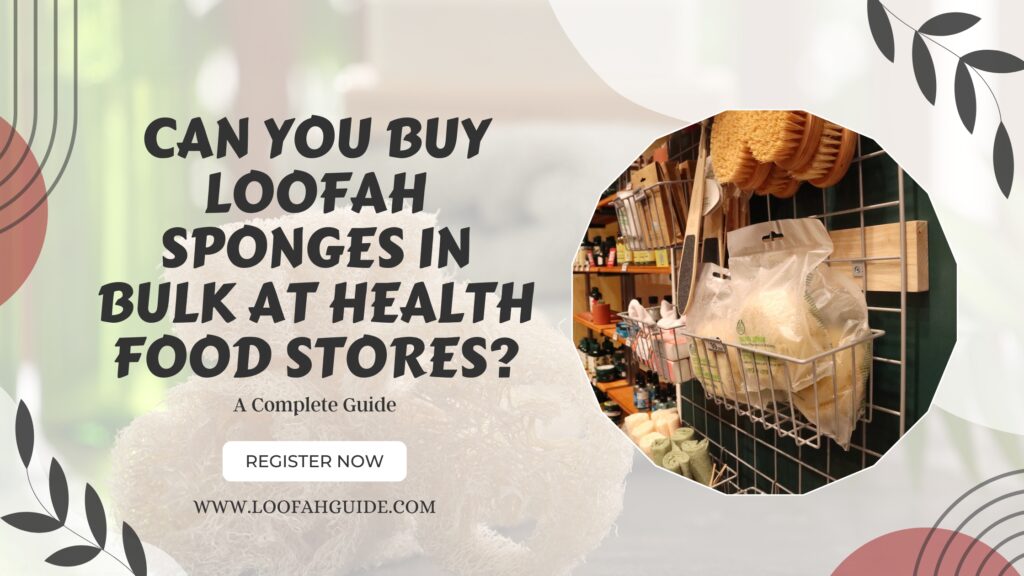
The natural products retail channel, which includes chains like Whole Foods, Sprouts, Natural Grocers, independent food co-ops, and specialty wellness boutiques, does carry natural loofah sponges. The product is genuinely present on those shelves. The issue is what “bulk” means in that context.
In a health food store, the most you will typically find is a multipack of two to five units, often presented as a value bundle, priced at a modest discount compared to buying the same units individually. Sometimes these stores stock compressed loofah rounds or loofah-infused soap bars rather than traditional cylinder loofahs. The selection varies significantly by store size and local market.
What is almost entirely absent from health food store shelves is anything that resembles commercial bulk. No case packs. No wholesale cartons. No palletized quantities. The economics of retail shelf space do not support it, and the retail customer base does not demand it.
Why the Retail Loofah Selection Falls Short for Most Buyers
Even when a health food store carries a decent loofah selection, there are structural limitations that affect value and suitability beyond just quantity.
First, origin is rarely disclosed. The packaging might say “natural loofah” or even “Egyptian loofah” without any verifiable documentation behind that claim. Second, processing methods are unknown. Many retail loofahs are bleached to achieve a bright, uniform appearance that photographs well for packaging. This bleaching removes some of the natural fiber properties that make loofah effective. Third, quality grading does not exist at the retail level. You get what arrives in the product, with no ability to specify fiber density, texture grade, or sizing consistency.
For an individual buyer purchasing one loofah for personal use, these limitations may not matter greatly. For a wellness brand selecting a product to put their name on, or a spa choosing what to offer clients, they matter enormously.
The Real Bulk Loofah Market: How It Actually Works
Wholesale vs. Retail: A Structural Comparison
Understanding where bulk loofah sponges are sold requires understanding how the supply chain works from field to final buyer.
| Supply Chain Stage | Who Operates Here | Typical Quantities | Price Level |
|---|---|---|---|
| Cultivation and harvest | Farmers, farm cooperatives | Tonnage level | Lowest |
| Primary processing | Processing facilities | Thousands of units | Low |
| Exporting | Export companies, farm-to-export suppliers | Full container shipments | Low to medium |
| Importing/distributing | Importers, regional distributors | Case and pallet quantities | Medium |
| Retail | Health food stores, pharmacies, online retail | Single units to small multipacks | Highest |
Every step up this chain adds cost. The health food store represents the most expensive point in the chain. The farm or farm-affiliated export company represents the least expensive, with the highest quality transparency.
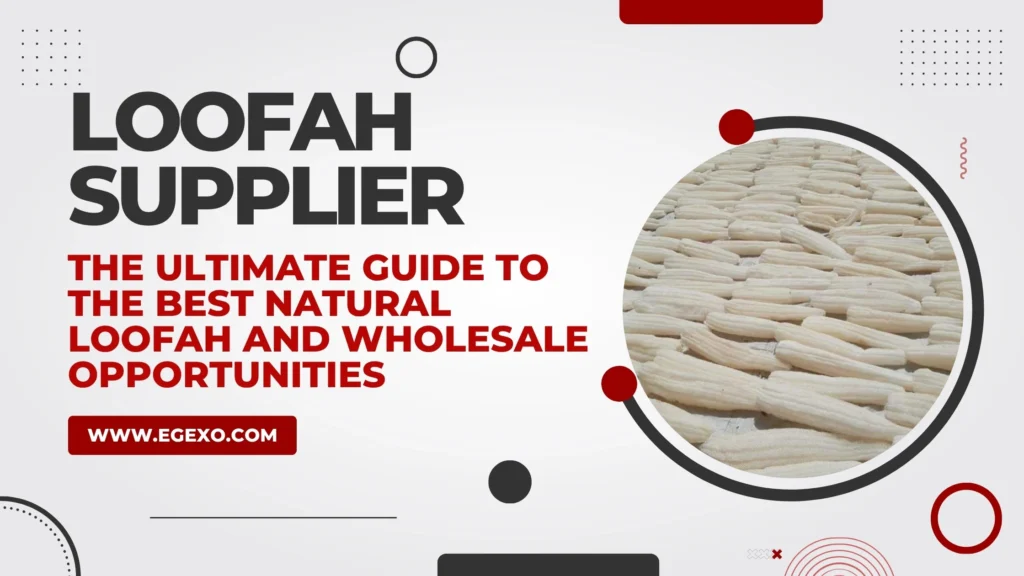
For genuine bulk purchasing, the market exists primarily at the exporter and distributor levels. Egyptian loofah suppliers like Egexo ship directly to wholesale buyers across North America, Europe, Asia, and the Gulf region. Their farm to export process documents exactly how product moves from cultivation through quality control to international shipment.
Where to Actually Buy Loofah in Bulk
Several sourcing channels serve genuine bulk buyers:
Direct farm exporters such as Egexo provide the best combination of quality, pricing, and transparency. With over 25 years in loofah cultivation and export, Egexo ships from Egypt’s Nile Delta to buyers worldwide. The wholesale loofah catalog covers the full product range with specifications.
B2B wholesale platforms like Alibaba and Global Sources list loofah suppliers, though quality consistency varies dramatically between listed vendors. Sample testing before committing to a full order is strongly advised.
Natural product trade shows including Natural Products Expo West and Expo East, Cosmoprof North America, and regional spa industry shows bring suppliers and buyers together in person, allowing tactile quality assessment before any purchase commitment.
Industry-specific distributors who specialize in wellness, spa, or eco-product categories sometimes carry natural loofah in case quantities for retailers or operators who do not want to source internationally.
Egyptian Loofah: Why It Set the Global Standard
The Agricultural Basis for Superior Quality
Egypt’s Nile Delta region provides what loofah cultivation requires above all else: consistent heat, reliable water access, mineral-rich soil, and a dry harvest season that allows the fiber to cure naturally without moisture-related degradation. These conditions have supported loofah cultivation in Egypt for generations, producing a growing expertise in selecting, cultivating, and processing the highest-quality fiber.
The loofah plant, botanically Luffa aegyptiaca or Luffa cylindrica, produces its fiber inside the fruit as a vascular skeleton. When the fruit is allowed to mature fully on the vine, dried, and then processed to remove the outer skin and seeds, what remains is the fiber network. Egyptian growing conditions consistently produce a denser, more uniform fiber network than most other growing regions.
Egexo’s team of agronomists and quality specialists has spent over 25 years refining every stage of this process. The result is a loofah that maintains its texture through weeks of regular use, resists premature breakdown, and delivers consistent exfoliation performance. You can explore the quality benchmarks at Egexo’s loofah quality standards page.
What Premium Egyptian Loofah Looks and Feels Like
A high-quality Egyptian loofah has a golden to cream natural color without artificial whitening. When dry, it is firm but not brittle. When wet, it expands and softens into a pliable mesh that conforms to body contours. It does not shed fiber excessively during use, and it dries relatively quickly between uses, which reduces the bacterial growth that causes odor.
Low-quality loofahs, regardless of claimed origin, are often over-bleached (resulting in a bright white appearance), underprocessed (leaving seed fragments or skin residue in the fiber), or harvested too early (resulting in thin, weak fiber that breaks down quickly).
For buyers evaluating loofahs, wholesaleloofah.com provides detailed sourcing guides and quality comparisons that help distinguish premium products from commodity alternatives.
Loofah Product Categories Available in Bulk
Natural loofah is more versatile than most people realize. The bulk market covers a wide range of product formats suited to different applications.
Bath and Body Loofahs for Spas and Retail
The classic full-cylinder loofah is the most recognized format, typically ranging from 18 to 25 cm in length and 7 to 10 cm in diameter. It is the product most consumers think of when they hear “loofah sponge.” Wholesale buyers in the spa and hotel sector purchase these in carton quantities for guest amenity programs or retail resale.
Loofah slices (cross-sectional cuts of the cylinder, 3 to 5 cm thick) are popular in spa settings because they are easier for clients to handle and offer a slightly gentler exfoliation surface. Loofah mitts and back scrubbers extend the product range for wellness retailers. Egexo’s body loofah category covers all of these formats in bulk configurations.
Kitchen and Eco-Household Products
The shift away from single-use plastic in kitchens has created strong demand for natural loofah dish scrubbers and surface cleaning pads. These products are biodegradable, compostable, effective, and increasingly requested by eco-conscious consumers at health food stores and zero-waste retailers.
Wholesale buyers serving these retail channels can source kitchen loofahs directly in case quantities. The kitchen loofah product range at Egexo is specifically designed for retail packaging and bulk supply.
Pet and Spa Grooming Loofahs
A growing specialty segment covers loofah products designed for pet care and spa grooming applications. Natural loofah is gentle enough for animal skin and coat care, and the demand for natural pet grooming products mirrors the broader natural products trend.
The pet and spa loofah range serves pet retailers, grooming salons, and specialty wellness businesses.
Comparing Bulk Loofah Sourcing Options Side by Side
| Sourcing Channel | Quality Control | Customization | Volume Capacity | Best For |
|---|---|---|---|---|
| Health food store | None (buyer’s discretion) | None | 1 to 5 units | Single consumer |
| Online retail (Amazon, etc.) | Seller-dependent | None | 1 to 24 units | Small household |
| B2B platform (Alibaba) | Variable | Limited | 200 to 5,000 units | Small to mid buyers |
| Regional distributor | Moderate | Minimal | 50 to 500 units | Local retailers |
| Direct farm exporter (Egexo) | Full specification control | Complete | 300 to full container | Wholesale, private label |
How to Buy Loofah in Bulk: A Step-by-Step Process
For buyers ready to move beyond retail channels, this process outlines how bulk loofah purchasing typically works with a reputable direct supplier.
Step 1: Define your requirements. Determine the product type, quantity, quality grade, and any packaging or labeling needs before contacting a supplier. The more specific your brief, the faster the process moves.
Step 2: Request samples. Never commit to a bulk order without evaluating physical product samples. Egexo provides samples through its sample request program so buyers can verify quality before placing an order.
Step 3: Review supplier credentials. Confirm that the supplier holds appropriate export certifications, can provide quality documentation, and has a track record of fulfilling orders of your required size.
Step 4: Request a formal quote. Once samples are approved, submit your full requirements and request an itemized price quote. This should include unit pricing at your volume, packaging specifications, shipping terms, and lead time. Submit your requirements through Egexo’s quotation request page.
Step 5: Approve production specifications. For custom or private label orders, approve all specifications including sizing, grade, label artwork, and carton configuration before production begins. Egexo’s custom product design service supports this stage.
Step 6: Place and track your order. Once all specifications are approved and terms are agreed, the production and shipping process begins. A reliable supplier provides shipment tracking and documentation support through to delivery.
FAQ Section
Q1: Are loofah sponges sold in bulk at health food stores suitable for a spa business?
No. Health food stores stock retail quantities of 1 to 5 units per purchase, which is inadequate for any spa or wellness business operation. A spa that goes through even 50 loofahs per month needs a wholesale supplier relationship, not a retail shopping trip. Direct sourcing from a farm exporter like Egexo is the appropriate channel for any business with ongoing bulk loofah requirements.
Q2: How do I know if a natural loofah has been bleached?
Bleached loofahs are noticeably whiter than unprocessed natural fiber, which has a golden-cream or light tan color. Another indicator is texture: bleached fiber can feel slightly more brittle when dry and less resilient when wet compared to a natural-finish loofah. Chemical smell is a strong signal as well. If the loofah smells faintly of chlorine or has a chemical note, it has almost certainly been treated.
Q3: What makes Egyptian loofah better than loofah from China or India?
Egyptian loofah benefits from the specific growing conditions of the Nile Delta, where climate, soil, and cultivation traditions combine to produce a denser, more uniform fiber than competing origins. Egyptian loofahs typically last 6 to 8 weeks with regular use, compared to 3 to 5 weeks for loofahs from other regions. They also require less chemical processing because the fiber quality is naturally superior.
Q4: Can I get custom-sized loofah sponges in bulk?
Yes. Direct suppliers like Egexo offer custom cutting, shaping, and sizing as part of their bulk service. Whether you need a specific diameter cylinder, a particular slice thickness, or an entirely custom format, these specifications can be accommodated with a minimum production order. Visit the custom product design page to explore options.
Q5: What is a fair price to pay for natural loofah sponges in bulk?
Pricing varies by product type, quality grade, order volume, and shipping origin. Without specific dollar figures, the general principle is that direct wholesale sourcing from an Egyptian exporter will be significantly less expensive per unit than retail purchasing, with per-unit costs typically falling 40 to 70 percent below retail for orders at or above minimum wholesale quantities.
Q6: How should I store bulk loofah sponges before use?
Natural loofahs should be stored in a dry, ventilated environment, away from humidity and direct sunlight over extended periods. Ideal storage conditions are a cool, dry space with adequate airflow. Loofahs that are stored properly in their original packaging maintain quality for 12 to 24 months without degradation.
Q7: Are there organic certified natural loofahs available in bulk?
Yes. Organic certification is available for loofah products cultivated without synthetic pesticides or chemical fertilizers. Buyers who require certified organic product for their brand or retail line should request certification documentation when evaluating suppliers. Egexo provides certification support for export orders.
Expert Insight from Egexo
The question we hear most from new wholesale clients is not about price. It is about consistency. They have tried sourcing loofah through retail channels or from unknown online vendors, and the biggest frustration is always inconsistency: different fiber texture from one batch to the next, unexpected color variation, units that do not match the sample they approved.
This is the core operational advantage of sourcing directly from a cultivation-to-export operation. When the same team manages the growing conditions, harvest timing, drying process, grading, and packaging, the product that leaves the facility in one shipment is functionally identical to the product from the shipment before it. That consistency is what turns a supplier relationship into a long-term partnership.
With 25-plus years of experience in Egyptian loofah production, Egexo has built its entire operation around that consistency promise. Explore the why choose Egexo page to understand what that means in operational terms.
Conclusion
Health food stores are not the answer for anyone who needs loofah sponges in meaningful quantities. They serve a retail function for casual single-unit buyers, and they do it reasonably well. But the moment your need exceeds a handful of units, the retail channel fails on price, fails on origin transparency, fails on quality specification, and fails on volume.
The genuine bulk loofah market is served by wholesale suppliers and farm exporters. Egyptian loofah, grown in the Nile Delta and exported by specialists like Egexo, represents the benchmark that premium wellness brands and spa operations have recognized for decades. If you are building a product line, stocking a spa, or simply making the commitment to buy natural loofah consistently at better pricing, direct wholesale sourcing is where that journey leads.
Key Takeaways:
- Health food stores carry retail quantities only, not commercial bulk
- Real bulk sourcing requires wholesale suppliers or direct farm exporters
- Egyptian loofah from the Nile Delta is the premium global standard
- Quality indicators include natural golden color, fiber density, and no chemical odor
- Both businesses and committed individual consumers benefit from bypassing retail
Ready to experience Egyptian loofah quality?
- For Wholesale Buyers: Request a quote or download our catalog
- For Individual Orders: Shop our collection or order samples