There is a moment that surprises almost everyone who first grows a loofah: the realization that the fibrous sponge hanging in their bathroom came from a climbing vine in their own backyard. Loofah is not seaweed, it is not a marine organism, and it does not come from the ocean. It is a member of the gourd family, a plant that produces a natural fiber skeleton inside each fruit, and that skeleton becomes the scrubber we reach for every morning.
Interest in growing loofah plants has grown significantly alongside the broader sustainability movement. In 2024, global searches for natural loofah cultivation increased by over 40 percent compared to 2022, reflecting both consumer curiosity and a genuine desire to reduce dependence on petroleum-based bath products. This guide covers everything from the temperature zones where loofah thrives to the cultivation practices that determine whether a finished loofah is exceptional or merely adequate.
For readers who want to understand where quality commercial loofahs actually come from, this guide also draws on the expertise of Egexo, Egypt’s leading loofah cultivator and wholesale supplier, with over 25 years of experience producing export-grade loofah from the Nile Delta.
Understanding the Loofah Plant Before You Grow It
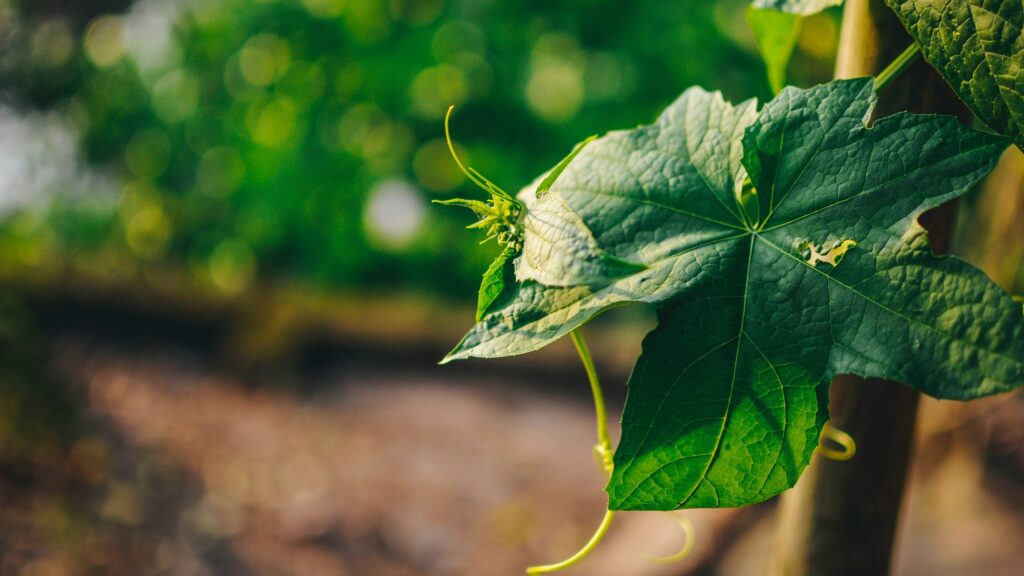
Before getting into temperature requirements and growing schedules, it helps to understand what you are actually working with. Loofah (genus Luffa) is a tropical vine that can reach lengths of 20 feet or more in a single growing season. It produces large, cucumber-like fruits that, once mature, dry into the fibrous sponge structure most people recognize.
The two species most commonly grown are Luffa cylindrica, which produces smooth, round loofahs ideal for bath use, and Luffa acutangula, which has ridged skin and a firmer, more abrasive fiber structure suited for kitchen and industrial scrubbing. Both species require the same fundamental growing conditions, though Luffa acutangula tends to mature slightly faster.
Key Botanical Facts About the Loofah Plant
- Family: Cucurbitaceae (same as cucumber, squash, and melon)
- Native region: Tropical Asia, widely naturalized across Africa and the Americas
- Vine length: 10 to 20 feet in a single season
- Fruit size at harvest: 12 to 24 inches in length, depending on species and conditions
- Pollination: Requires insect pollination, primarily bees; hand-pollination effective as backup
- Life cycle: Annual in temperate climates, perennial in true tropical zones
This botanical context matters because it explains why growing loofah plants in a place like Egypt is so naturally effective. The plant evolved in tropical and subtropical environments, and when it finds conditions that match its origin, it produces abundantly and reliably. The Nile Delta, with its intense heat, mineral-rich soil, and long dry season, is nearly a perfect match.
Is Growing Loofah Plants Actually Difficult?
The honest, useful answer to this question depends almost entirely on where you live. In USDA Zones 9 through 11, growing loofah plants is genuinely straightforward. The climate does most of the work. In Zones 5 through 7, it becomes a project requiring planning, indoor seed starting, and sometimes season-extension equipment. In Zone 4 and below, it is rarely worth attempting outdoors.
Difficulty Level by Climate Zone
| Climate Zone | Season Length | Difficulty Level | Key Adjustments Needed |
|---|---|---|---|
| Tropical (Zone 11+) | Year-round | Very Easy | Minimal intervention required |
| Subtropical (Zone 9 to 10) | 220 to 250+ days | Easy | Standard outdoor growing |
| Warm Temperate (Zone 7 to 8) | 160 to 190 days | Moderate | Early indoor start recommended |
| Cool Temperate (Zone 5 to 6) | 120 to 150 days | Difficult | Indoor start essential, season extension needed |
| Cold (Zone 4 and below) | Under 120 days | Very Difficult | Not recommended for outdoor cultivation |
The reason growing loofah plants fails in cool climates is almost always the same: the fruit does not have enough time to mature before frost arrives. A loofah harvested too early has soft, under-developed fiber that collapses under use rather than providing effective exfoliation.
Temperature Requirements: What Growing Loofah Plants Actually Needs
Temperature is not just a background condition for loofah. It is an active driver of growth rate, fiber quality, and yield. Understanding the specific temperature thresholds for each phase of the plant’s life cycle allows growers at any experience level to make better decisions.
Temperature Thresholds by Growth Stage
| Stage | Minimum | Optimal Range | Effect of Exceeding Maximum |
|---|---|---|---|
| Germination | 68 degrees F (20 C) | 80 to 90 degrees F (27 to 32 C) | Seed dormancy or rot |
| Seedling (first 4 weeks) | 65 degrees F (18 C) | 75 to 82 degrees F (24 to 28 C) | Leaf scorch above 100 F |
| Active Vine Growth | 70 degrees F (21 C) | 80 to 88 degrees F (27 to 31 C) | Growth slows at extremes |
| Flowering | 72 degrees F (22 C) | 82 to 90 degrees F (28 to 32 C) | Flower drop in heat waves |
| Fruit Set and Development | 70 degrees F (21 C) | 85 to 92 degrees F (29 to 33 C) | Best fiber density achieved here |
| Drying Phase | Ambient dry heat | 88 to 100 degrees F (31 to 38 C) | Low humidity essential |
Egypt’s summer climate sits in the 85 to 98 degree Fahrenheit range for the core growing months, which coincides almost perfectly with the optimal fruit development window. This is not a coincidence. It is the reason Egypt became the world’s dominant premium loofah producer, and why Egexo’s supply chain, rooted in the Nile Delta, delivers such consistent quality to wholesale buyers across Europe, North America, and Asia.
For a closer look at how these growing conditions translate into a finished export product, the loofah farm to export process guide provides a detailed walkthrough.
How to Successfully Grow Loofah Plants: The Full Process
Whether you are growing one plant in a backyard garden or evaluating the agricultural practices behind a commercial loofah supply chain, understanding the full cultivation sequence provides valuable perspective.
Loofah Growing Timeline and Process
| Week | Activity | What to Watch For |
|---|---|---|
| Weeks 1 to 2 | Seed soaking and indoor germination | Sprout emergence within 7 to 14 days |
| Weeks 3 to 6 | Indoor seedling growth | 2 to 4 true leaves before transplant |
| Week 6 to 8 | Outdoor transplanting (after frost) | Soil temperature above 65 degrees F |
| Weeks 8 to 12 | Rapid vine growth and trellis training | Weekly guidance of tendrils onto support |
| Weeks 10 to 14 | Flowering period | Male flowers appear before female flowers |
| Weeks 14 to 18 | Fruit set and early development | One to three fruits per major stem |
| Weeks 18 to 22 | Full fruit development | Monitor for yellowing skin |
| Weeks 22 to 28 | Harvest window and drying | Yellow-brown skin signals readiness |
Seed Preparation Tips
Loofah seeds have a tough seed coat that can slow germination. Soaking seeds in warm water for 24 hours before planting, or gently nicking the seed coat with a nail file, significantly improves germination rates. Fresh seeds from the previous season germinate much more reliably than seeds stored for more than two years.
Trellis and Support Requirements
Loofah vines are heavy when bearing fruit. A single mature fruit can weigh 2 to 4 pounds, and a productive vine may carry 8 to 12 fruits simultaneously. Trellises must be anchored firmly and capable of bearing 40 to 60 pounds of combined vine and fruit weight. Cattle panels, wire fencing, or purpose-built wooden trellises all work well.
What Determines Loofah Fiber Quality After Growing?
This is where the connection between growing conditions and end-product quality becomes concrete. Two loofahs of the same species can produce dramatically different fiber quality based on how they were grown, when they were harvested, and how they were dried.
Quality Factors and Their Agricultural Origins
| Quality Factor | Agricultural Cause | Consumer Impact |
|---|---|---|
| Fiber density | Long growing season, optimal temperatures | Durability, effective exfoliation |
| Color uniformity | Consistent ripeness at harvest | Visual appeal, premium appearance |
| Structural integrity | Full fiber maturation before harvest | Resistance to tearing during use |
| Odor neutrality | Thorough drying under low humidity | Hygiene, freshness |
| Flexibility | Adequate moisture content at packaging | Comfortable use without brittleness |
| Pore size | Species and growing conditions | Water retention and lather production |
Commercial loofah producers who control the entire chain from seed selection through post-harvest processing have a significant quality advantage over those who buy raw material from third parties. This is the model Egexo has operated under for over 25 years, and it is why Egyptian loofah consistently commands premium positioning in international markets.
Consumers who want to identify quality loofahs can visit loofahguide.com for in-depth consumer guides on evaluation, use, and care.
Natural Loofah vs Synthetic Alternatives: What the Data Shows
The case for natural loofahs over synthetic alternatives is now well-supported by both environmental research and consumer preference data. Understanding this comparison helps both buyers making purchasing decisions and consumers choosing products for personal use.
Pros and Cons Comparison
| Factor | Natural Loofah | Synthetic Sponge | Natural Loofah Advantage |
|---|---|---|---|
| Biodegradability | 100 percent, 30 days | 300 to 500 year decomposition | Strong advantage |
| Microplastic release | None | Releases microplastics with each use | Strong advantage |
| Skin exfoliation | Natural, adjustable pressure | Artificial texture | Moderate advantage |
| Bacterial retention | Lower due to fast drying | Higher moisture retention | Moderate advantage |
| Cost per use | Comparable over lifespan | Slightly lower upfront | Neutral |
| Consumer demand trend | Strongly growing | Declining in premium segment | Strong advantage |
| Compostability | Yes, fully | No | Strong advantage |
The natural loofah market is growing at approximately 8 to 12 percent annually in developed markets, driven by sustainability-conscious purchasing behavior. Businesses that position natural loofah products effectively are well-placed to capture this demand. For businesses exploring the wholesale angle, wholesaleloofah.com provides comprehensive resources for buyers entering or scaling in this market.
Checklist: How to Evaluate Loofah Quality as a Buyer or Consumer
Whether purchasing for personal use or evaluating a supplier’s product, the following checklist provides a practical quality assessment framework.
Loofah Quality Evaluation Checklist
| Criterion | What to Look For | Red Flags |
|---|---|---|
| Color | Cream to light ivory | Brown or dark spots suggest over-ripeness or mold |
| Fiber texture | Firm but flexible under gentle pressure | Collapsing or mushy texture indicates under-maturity |
| Odor | Neutral, clean | Musty or chemical smell is a quality failure |
| Uniformity | Consistent fiber density across the sponge | Hollow or thin areas indicate uneven growing conditions |
| Moisture content | Fully dry, no dampness | Any remaining moisture creates bacterial risk |
| Size consistency | Matches stated specifications | Irregular sizing suggests poor growing or grading control |
| Debris presence | Clean, seed-free | Seeds or dark debris indicate incomplete processing |
Buyers interested in Egexo’s full quality documentation can review the loofah quality standards page or download the complete product catalog for detailed specifications across all product grades and types.
Expert Insight from Egexo
One of the most misunderstood aspects of growing loofah plants is the relationship between harvest timing and fiber quality. Many growers, both home and commercial, harvest too early because the fruit looks large enough. In reality, the fiber needs the final maturation period, typically the last 3 to 4 weeks before the skin yellows and browns, to reach its full structural density.
We have seen this consistently across our 25-plus years on the Nile Delta. Plants harvested a week too early produce softer sponges that break down faster in use. Plants allowed to fully mature, even if the skin looks slightly over-ripe, produce a fiber that maintains its structure through dozens of use cycles.
For wholesale buyers, this is the core reason farm-controlled supply chains outperform commodity sourcing. When our team controls harvest timing based on direct observation rather than schedule, the product quality difference is measurable and consistent. You can verify this yourself by ordering samples from Egexo before committing to your first bulk shipment.
FAQ Section
Q1: What is the easiest way to start growing loofah plants for the first time?
The easiest approach for first-time growers is to soak seeds in warm water for 24 hours, then plant in small pots indoors using well-draining potting mix about 4 to 6 weeks before the last expected frost. Once seedlings develop 3 to 4 true leaves and outdoor temperatures are consistently above 65 degrees Fahrenheit at night, transplant to a sunny garden bed with a sturdy trellis. Water consistently and expect the vine to grow rapidly once established.
Q2: How warm does it need to be for growing loofah plants to succeed?
For reliable success, daytime temperatures should consistently reach at least 75 degrees Fahrenheit, with soil temperatures above 65 degrees Fahrenheit. The optimal fruit development range is 82 to 92 degrees Fahrenheit. Nights below 55 degrees Fahrenheit can slow growth significantly, and any frost will kill the plant. Tropical and subtropical regions with temperatures in this range throughout most of the year are ideally suited to growing loofah plants.
Q3: How do I know when my loofah is ready to harvest?
A loofah is ready to harvest when the outer skin begins turning from green to yellow-brown and the fruit starts to feel lighter and drier than it did a few weeks earlier. When you shake it gently, you may hear the seeds rattling inside. Allow the skin to dry on the vine if possible, as this continues the fiber maturation process. Peeling the dry skin under running water reveals the fiber skeleton underneath.
Q4: Why does Egyptian loofah have a better reputation than loofah from other regions?
Egyptian loofah benefits from a combination of factors that are difficult to replicate elsewhere. The Nile Delta soil contains a unique mineral profile that supports dense fiber development. The climate provides sustained high temperatures during the growing season and low humidity during the harvest and drying period. Combined with decades of refined cultivation expertise from producers like Egexo, these factors produce a consistently denser, more uniform, and longer-lasting fiber than most other growing regions achieve.
Q5: Can I grow loofah in a container or pot?
Container growing of loofah is possible but requires a very large vessel, at least 15 to 20 gallons, to support the extensive root system. Container plants tend to produce fewer fruits than those planted in garden beds due to restricted root growth. They also require more frequent watering and fertilizing. Containers work best in climates where outdoor growing is limited but a warm, sunny balcony or patio provides adequate light and heat.
Q6: How do wholesale buyers assess loofah quality before placing large orders?
Experienced wholesale buyers evaluate loofah through physical sample testing before committing to bulk purchases. Key assessment points include fiber density (pressing the sponge to feel resistance), color uniformity (cream to ivory without dark patches), structural integrity (the sponge should not tear under moderate lateral pressure), and odor (fully neutral). Egexo provides sample ordering and detailed product specifications for buyers evaluating quality before finalizing orders.
Q7: Does growing loofah plants require a lot of water?
Loofah plants are moderately high water-demand crops. During active vine growth and fruit development, they benefit from 1 to 2 inches of water per week through a combination of rainfall and irrigation. However, they are sensitive to waterlogging, so soil drainage is equally important. Drip irrigation at the root zone is more effective than overhead watering and reduces fungal disease pressure on the leaves and developing fruits.
Conclusion
Growing loofah plants rewards preparation and climate awareness more than any other single factor. Get the temperature right, give the vine time, and support it structurally, and it will return an impressive yield of one of the most sustainable and useful natural fibers in the world.
For anyone who has tried growing loofah and found the results disappointing, the most common culprit is an insufficient growing season rather than poor care. The plant does not fail from neglect in most cases. It fails from cold.
Understanding this growing reality also illuminates why commercially grown Egyptian loofah holds its premium position in the market. Egypt does not just have a good climate for loofah. It has arguably the best climate in the world, and Egexo has spent over 25 years learning how to make the most of it.
Key Takeaways:
- Loofah plants need 150 to 200 frost-free days and temperatures consistently above 70 degrees Fahrenheit to thrive
- USDA Zones 7 through 11 are suitable, with Zones 9 to 11 producing the most reliable results
- Fiber quality is determined by growing conditions, harvest timing, and drying method, not just species
- Egyptian loofah grown in the Nile Delta consistently produces superior fiber density and uniformity
- Natural loofahs are fully biodegradable and have a growing advantage in consumer preference over synthetic alternatives
Ready to experience Egyptian loofah quality?
- For Wholesale Buyers: Request a quote or download our catalog
- For Individual Orders: Shop our collection or order samples