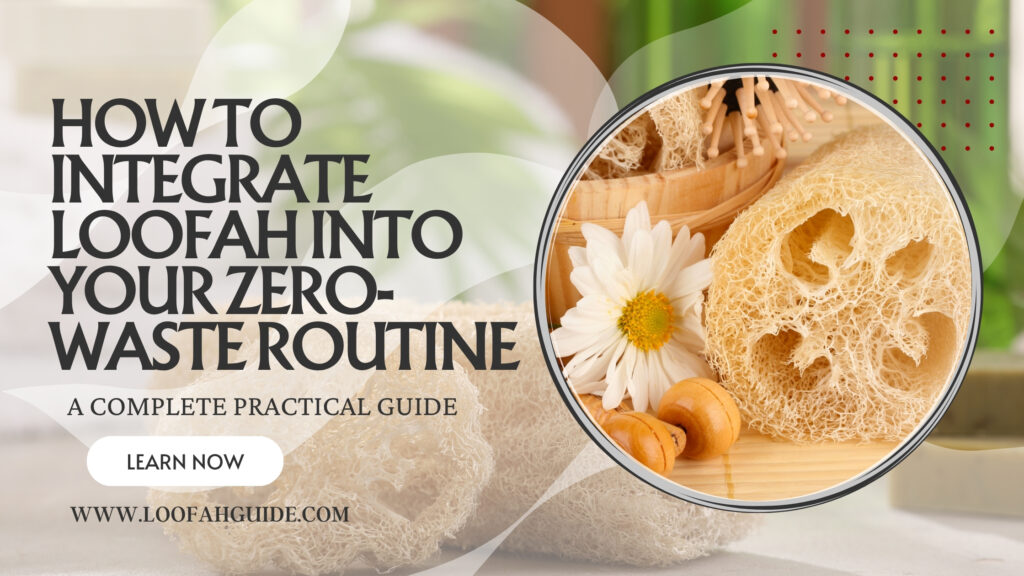
Short answer: A natural loofah can replace plastic sponges in the bathroom, the kitchen and for cleaning. It is a plant fibre and 100% biodegradable. Rinse and dry it after each use and compost it when it is worn out.
Most people have heard that plastic sponges are bad for the environment. Fewer people know exactly what to replace them with, and even fewer have a plan for making that replacement systematic. If you have decided to take sustainability seriously in your daily life or in your business operations, learning how to integrate loofah into your zero-waste routine is one of the most impactful and accessible steps available to you right now.
EGEXO has been exporting Egyptian loofah since 2015. Today, Egyptian loofah grown and exported by suppliers like Egexo reaches spa facilities, wellness retailers, and households in over 40 countries.
This guide covers the full picture: the environmental and commercial case for natural loofah, step-by-step room-by-room integration strategies, quality evaluation for buyers and consumers, and the practices that separate people who try loofah once from those who make it a permanent part of a zero-waste system.
The Environmental Reality That Makes Loofah the Right Choice
Making sustainable choices requires real data. The numbers around plastic sponge waste are difficult to ignore once you encounter them. Synthetic bath sponges and scrubbers are typically made from polyurethane foam or nylon, both petroleum-derived materials that break down into microplastics rather than biodegrading. These microplastics enter water systems during use, not just during disposal.
What Happens to Synthetic Sponges vs Natural Loofah
| Characteristic | Synthetic Sponge | Natural Loofah |
|---|---|---|
| Base Material | Polyurethane / Nylon (petroleum-based) | Luffa cylindrica plant fiber |
| Microplastic Shedding | Yes, during every wash | None |
| Biodegradation | Does not biodegrade in any practical timeframe | Breaks down in compost |
| End of Life | Landfill or ocean | Home compost bin |
| Typical Lifespan | A few weeks | A few weeks (similar use life) |
The comparison is not close. Natural loofah matches synthetic sponges in functional lifespan while eliminating virtually every environmental liability associated with synthetic alternatives. For consumers building a zero-waste routine, this single swap removes plastic from some of the most frequent daily interactions: bathing and dish washing.
The Business Angle on Sustainability
For spa operators and wellness retailers, sustainability is no longer just an ethical position. It is a purchasing driver among consumers aged 18 to 40, who represent the primary growth demographic in wellness spending.
A spa that switches its amenity program from synthetic to natural loofah creates a tangible, communicable sustainability story. Guests can see and feel the difference. Staff can explain the product’s origin and lifecycle. This kind of story has genuine marketing value that synthetic alternatives simply cannot offer.
Running an eco shop? Open the EGEXO catalog for natural loofah products made in Egypt.
How to Integrate Loofah into Your Zero-Waste Routine Step by Step
The most effective approach to integrating loofah into your zero-waste routine is sequential rather than all-at-once. Replacing every plastic cleaning tool in a single day creates overwhelm and often leads to reverting to old habits. A phased approach builds familiarity with the material and allows you to establish care routines before expanding loofah use to new areas.
Phase 1: Start with the Shower
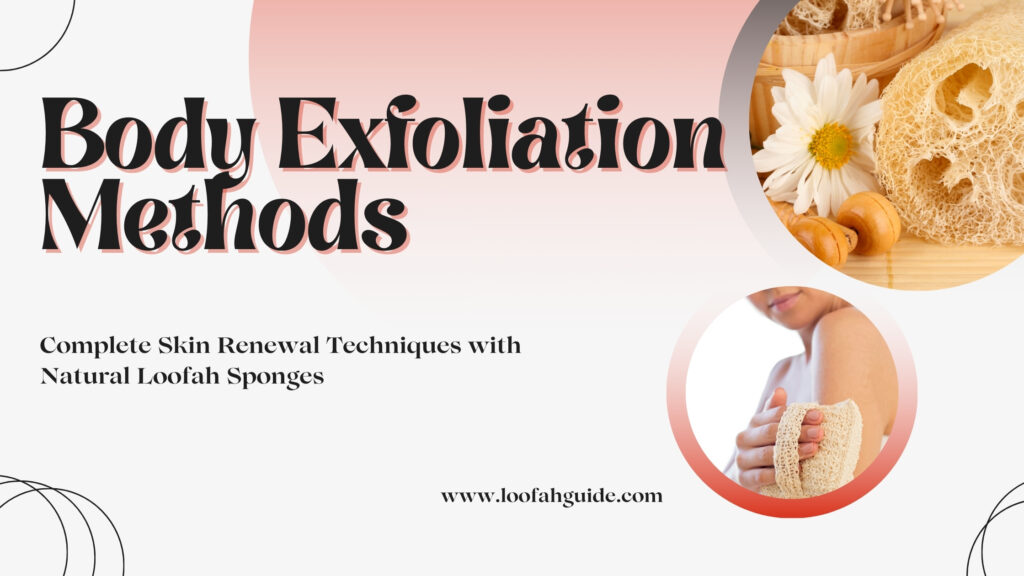
The bath loofah is the most intuitive starting point. Most consumers are already familiar with the concept of a loofah as a bath tool, even if they have been using synthetic versions. Switching to a natural loofah in the shower is a low-friction change that delivers immediate, noticeable benefits.
Natural loofah exfoliates more effectively than most synthetic alternatives because its fiber structure creates multidirectional contact with the skin surface. Dead skin cells are lifted and removed without the need for chemical exfoliants.
Shower loofah routine for beginners:
- Soak the loofah in warm water for 60 seconds before first use to soften fibers.
- Apply your body wash or soap to the wet loofah surface.
- Begin with gentle circular strokes on arms and legs before moving to the torso.
- Use reduced pressure on the face, neck, and chest where skin is thinner.
- Rinse the loofah under running water until water runs clear.
- Squeeze out excess water and hang the loofah where air can circulate around it.
The single most important habit to build is hanging the loofah to dry. A loofah left in a soap dish or on a wet shower shelf stays damp, which accelerates bacterial growth and shortens usable life. A simple hanging hook, widely available and inexpensive, solves this completely.
For premium bath loofah options, explore the bath and body loofah range from Egexo, which includes sizes from 15 centimeters to 40 centimeters to suit different preferences.
Phase 2: The Kitchen Swap
Once the bath loofah is established as a habit, the kitchen is the natural next step. Kitchen loofah slices are cut from full loofah cylinders and sized specifically for dish and surface scrubbing.
The zero-waste benefit of kitchen loofah extends beyond end-of-life composting. Loofah’s open fiber network dries more quickly and can be more easily cleaned between uses.
A kitchen loofah sanitization approach that works well:
- Rinse after every use and wring completely
- Run through a dishwasher cycle three times per week on the top rack
- Soak in a diluted white vinegar solution for 5 minutes once per week
- Replace every few weeks, earlier if any discoloration or odor appears
Retailers stocking kitchen loofahs should note that this category performs strongly in zero-waste and natural cleaning product retail environments, particularly when positioned alongside natural dish soap, bamboo brushes, and compostable bags.
Phase 3: Specialized Applications
Once loofah is established in the bath and kitchen, a range of specialized applications become practical. These are particularly valuable for consumers committed to eliminating plastic from every area of their home, and for retailers seeking to build out a comprehensive loofah product ecosystem.
Body care specializations:
- Loofah facial pads for gentle facial exfoliation (softer, thinner cut)
- Loofah bath mitts for controlled exfoliation pressure
Household and craft applications:
- Raw loofah sections used as compostable packaging padding
- Loofah rounds for applying or removing DIY face masks
- Dried loofah pieces as plant drainage layer in potted garden containers
Pet and grooming applications:
- Appropriately sized pet grooming loofahs for coat care
- Spa loofah accessories for professional treatment environments
For buyers building multi-category loofah product lines, custom loofah product design through Egexo enables the development of specialized products beyond standard catalog offerings.
How to Evaluate Loofah Quality Before You Buy
Whether you are purchasing a single loofah for personal use or placing a bulk order for a retail chain, quality evaluation follows the same core principles. The difference is in the consequences of a poor decision: an individual consumer gets an unsatisfying product, while a wholesale buyer receives inventory that damages their brand reputation with customers.
Consumer Quality Checklist
| What to Check | Good Sign | Warning Sign |
|---|---|---|
| Color | Uniform natural tan or light brown | Bright white (over-bleached) or dark patches |
| Smell | Mild, neutral, or faintly earthy | Chemical, bleach, or musty odor |
| Texture | Firm but flexible, fibers intact | Brittle, fraying edges, or very soft and loose |
| Weight | Feels substantial for its size | Unusually light, suggesting sparse fiber |
| Seeds | None visible inside | Seeds still present inside cavity |
| Surface | Clean exterior with consistent fiber | Rough patches, skin remnants, dark spots |
Wholesale Buyer Evaluation Criteria
For B2B buyers, visual inspection must be supplemented by documentation review.
Egexo’s quality standards documentation outlines all applicable standards and testing protocols, making the due diligence process efficient for importers and purchasing managers evaluating supply options.
Buyers are also encouraged to explore the why choose Egexo page for a full overview of the supplier’s export capabilities, quality assurance processes, and service model.
Loofah vs Other Zero-Waste Alternatives: An Honest Comparison
Loofah is one of several natural materials used in zero-waste cleaning and personal care routines. Understanding how it compares to alternatives helps consumers make informed choices and helps buyers position products accurately.
Natural Cleaning Tool Comparison
| Tool | Best Use | Biodegradable | Exfoliation Level | Water Retention |
|---|---|---|---|---|
| Natural Loofah | Bath and kitchen scrubbing | Yes, fully | Medium to High | Low (dries well) |
| Natural Sea Sponge | Gentle bathing, baby care | Yes | Low to Medium | High |
| Sisal Fiber | Dry brushing, bath mitts | Yes | High | Very Low |
| Bamboo Cloth | Surface wiping, delicate surfaces | Yes | Very Low | Medium |
| Cotton Washcloth | Gentle face cleansing | Yes | Very Low | High |
| Recycled Cellulose Sponge | Kitchen wiping | Mostly | None | Very High |
Loofah occupies a unique position in this comparison. It is the only tool that combines medium-to-high exfoliation with good drying performance and full biodegradability at a replacement cost low enough for regular cycling. For consumers who need genuine exfoliation rather than gentle cleansing, it has no fully natural equivalent that matches all three attributes simultaneously.
Building a Loofah Supply Chain: Guidance for Wholesale Buyers
For businesses at any scale, establishing a reliable loofah supply chain involves more than finding a supplier with acceptable prices. Product consistency, documentation quality, communication responsiveness, and the supplier’s ability to scale with your business are all factors that determine long-term success.
Supplier Evaluation Framework
| Criteria | What to Assess | Red Flags |
|---|---|---|
| Product Consistency | Request samples from multiple production batches | Significant variation between batches |
| Communication | Evaluate response time and technical knowledge | Slow responses, vague answers to specific questions |
| Sampling Policy | Confirm ability to order samples before bulk commitment | Refusal to provide samples or sample charges that are excessive |
| Customization | Assess capability for private label or custom specs | No customization capability at all |
| Scalability | Discuss production capacity and lead times | Inability to discuss realistic capacity figures |
Egexo accommodates buyers at multiple stages, from initial sample requests through to full-scale bulk orders with private label manufacturing. The complete export process, from field to shipment, is outlined on the farm to export process page.
Buyers ready to discuss specific requirements can request a formal quotation or download the product catalog for a full overview of available products and specifications.
A Note from EGEXO
EGEXO has been exporting Egyptian loofah since 2015, from our own farms and partner farms in the Nile Delta.
Egyptian loofah has specific agricultural characteristics that determine how it performs in different applications. These are not the same product, even though both come from the same plant.
When buyers come with only a price question, the conversation starts in the wrong place.
Natural loofah from the Nile Delta represents one of the most credible sustainable products available in the personal care market today. Its entire production cycle, from planting through harvest, processing, export, end use, and composting, supports a genuinely circular economy. For any business positioning itself as a sustainability leader, that story is worth investing in properly. Request a quote or request samples from EGEXO.
Frequently Asked Questions
Q1: How do I know when my loofah needs to be replaced?
Replace your loofah when it develops a persistent unpleasant odor that does not resolve after sanitizing, when the fiber structure begins to break apart or shed heavily during use, or when discoloration appears that does not rinse out. Under normal use and proper care, bath and kitchen loofahs alike should be replaced every three to four weeks. Replacing on schedule, regardless of appearance, is the safest approach for hygiene-conscious users.
Q2: What makes Egyptian loofah better than loofah from other countries?
EGEXO has been exporting Egyptian loofah since 2015. Egyptian loofah is soft and gentle from the first use, and every EGEXO order is checked by hand for colour, holes, size and dryness.
Q3: Can natural loofah be used on the face?
Yes, but with appropriate product selection and technique. Facial skin is thinner and more sensitive than body skin, so a softer, thinner loofah pad designed for facial use is preferable to a standard bath loofah. Use gentle circular motions with minimal pressure and limit facial exfoliation to two to three times per week. If you have a skin condition, ask your doctor.
Q4: What is the best way to store natural loofah between uses?
Hang the loofah in a well-ventilated area where air can circulate completely around it. A bathroom hook away from direct shower spray is ideal. Avoid storing in closed containers, soap dishes, or suction-cup holders that trap moisture against the loofah surface. For kitchen loofahs, a countertop rack or over-sink hanging hook works well. The goal is maximum air exposure to allow complete drying between uses.
Q5: Can businesses brand loofah products with their own label?
Yes. Egexo offers comprehensive private label manufacturing services that allow businesses to sell premium Egyptian loofah under their own brand. This includes custom packaging design, labeling, and product configuration to match specific brand standards. Private label loofah is particularly popular among spa brands, wellness retailers, and eco-product companies that want to offer a distinctive product without managing agricultural supply directly. Explore this option at Egexo private label services.
Q6: Is loofah effective enough to replace a plastic scrub brush in the kitchen?
For most kitchen scrubbing tasks, yes. They are not suitable for tasks requiring a handled brush, such as cleaning bottle interiors or scrubbing grout lines in tight spaces. For flat surface scrubbing and dish cleaning, loofah matches or exceeds the performance of most plastic scrub sponges while eliminating microplastic shedding and landfill waste entirely.
Q7: How should wholesale buyers handle loofah storage to maintain quality?
Store bulk loofah in cool, dry conditions. Avoid direct sunlight exposure during storage, as UV degradation can weaken fiber over time. Every Egexo order is checked by hand for dryness, and bulk loofah ships compressed on pallets.
Conclusion
The zero-waste journey is made up of individual decisions. Each plastic sponge replaced with natural loofah is a small action that accumulates into meaningful environmental impact over time. For individuals, integrating loofah into your zero-waste routine requires little more than a few new habits and a quality product. For businesses, it requires identifying a reliable source of consistent, well-documented loofah that meets both your quality standards and your sustainability commitments.
Egyptian loofah, particularly from Egexo’s Nile Delta cultivation operations, represents the highest standard available in the global market. Its fiber density, processing quality, and export documentation make it the preferred choice for wellness brands and retailers who need a product that performs as well as the story it tells.
Key Takeaways:
- Replacing synthetic sponges with natural loofah eliminates microplastic shedding during every wash
- A phased room-by-room approach builds sustainable habits more effectively than an all-at-once change
- Quality evaluation is equally important for single-unit buyers and wholesale purchasers
- Egyptian Nile Delta loofah outperforms alternatives in fiber density and order consistency
- Composting used loofahs completes the zero-waste cycle
Ready to experience Egyptian loofah quality?
- For Wholesale Buyers: Request a quote or download our catalog
- For Individual Orders: Request a quote or request samples
Keep reading: replacing plastic in a zero-waste bathroom and zero-waste dishwashing with loofah.