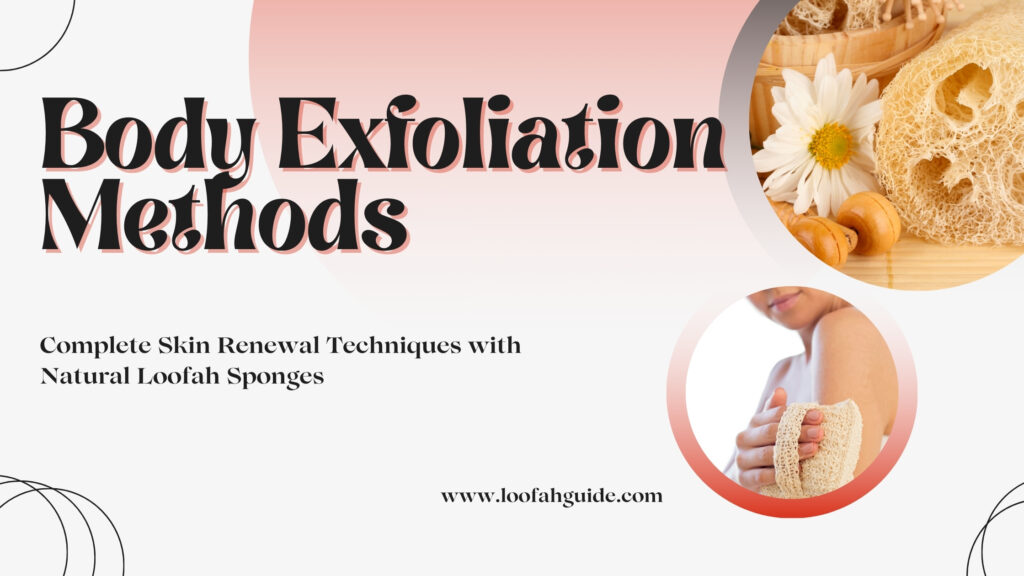
Short answer: To exfoliate your body with a natural loofah, wet the skin and the loofah, rub gently in small circles, rinse and moisturise. Keep it gentle and short, and stop if your skin feels sore.
The human body sheds between one and two pounds of dead skin annually, creating a continuous layer of cellular debris that accumulates on the skin surface.
Their plant based fibers create ideal mechanical exfoliation without the environmental damage caused by plastic microbeads or synthetic scrubbers. Understanding which exfoliation approaches work best for your specific needs ensures you achieve maximum benefits while protecting skin integrity.
This guide presents comprehensive body exfoliation methods suitable for home users seeking spa quality results and professionals developing treatment protocols. Both individual consumers and business operators sourcing products for clients will find actionable guidance throughout.
The Moisture Factor in Effective Exfoliation
Water dramatically changes loofah behavior and exfoliation effectiveness. Dry natural loofah fibers feel rough and inflexible, potentially causing skin irritation or micro abrasions. Properly hydrated fibers soften to an ideal texture that cleanses without damage.
Soaking loofahs for three to five minutes before use allows full water absorption throughout the fiber matrix. This hydration process activates the natural flexibility bred into quality Egyptian loofahs through careful cultivation practices. Professionals recognize that fiber behavior when wet indicates overall loofah quality more reliably than dry appearance.
Reactive and Easily Irritated Skin
Sensitive skin requires the gentlest exfoliation approach using soft, finely structured loofah fibers. Signs of sensitive skin include redness after cleansing, reaction to new products, and discomfort with environmental changes like wind or temperature variations.
For sensitive skin types, seek loofahs specifically processed for softness. Limit exfoliation frequency to once weekly initially, increasing to twice weekly only if no irritation develops. Use minimal pressure with gentle circular motions rather than vigorous scrubbing.
Sebum Overproduction and Congested Pores
Oily skin produces excess sebum that combines with dead cells to form pore blocking plugs. Regular exfoliation helps manage this condition by removing the dead cell component before it mixes with oil. However, aggressive exfoliation triggers compensatory oil production, worsening the underlying problem.
Those with oily skin benefit from exfoliating three to four times weekly using moderate pressure. Natural loofah texture effectively lifts oil and debris without the harsh stripping action of some chemical exfoliants or synthetic scrubbers. Focus additional attention on typically oily zones including the chest, upper back, and shoulder areas.
Standard Skin Without Specific Sensitivities
Normal skin tolerates the widest range of exfoliation frequencies and intensities. Standard density natural loofahs work excellently for normal skin when used two to three times weekly with comfortable pressure. This skin type allows experimentation with different loofah sizes and shapes to find personal preferences.
Combination skin featuring both oily and dry zones requires adjusted technique rather than product changes. Quality natural loofahs accommodate this variation better than rigid synthetic tools.
Comprehensive Comparison of Exfoliation Tool Options
Various tools claim exfoliation benefits, but significant differences exist in effectiveness, safety, and environmental impact. Understanding these distinctions guides smart purchasing decisions for personal use and inventory selection for business buyers.
Natural loofahs from the Luffa Aegyptiaca plant offer compelling advantages across most evaluation criteria. Their complete biodegradability addresses growing environmental concerns about synthetic scrubber pollution. The raw loofah scrubbers available from Egyptian producers demonstrate the material in its most natural form, appealing to consumers prioritizing minimal processing.
For retailers and spa operators selecting inventory, product differentiation matters increasingly as consumers research sustainability credentials. Stocking natural loofah options alongside conventional products allows serving eco conscious customers while maintaining broader appeal.
Starting a loofah range? Download the EGEXO catalog for body, kitchen and raw loofah.
Professional Techniques to Exfoliate Your Body Correctly
Technique significantly impacts exfoliation outcomes regardless of tool quality.
Pre Exfoliation Preparation Protocol
Effective exfoliation begins before the loofah contacts skin. This preparatory soaking also allows body wash or cleanser to penetrate more effectively.
Quality natural loofahs noticeably soften when properly hydrated, a characteristic distinguishing premium products from inferior alternatives. Apply cleanser to the loofah and work into lather before beginning skin contact.
Regional Exfoliation Approach
Different body zones require adjusted technique based on skin thickness, sensitivity, and typical concerns. The following guide outlines professional approaches for each major region.
| Body Region | Recommended Motion | Pressure Level | Duration | Special Considerations |
|---|---|---|---|---|
| Lower Legs | Long upward strokes | Moderate to firm | 2 to 3 minutes | Focus on shin and calf areas |
| Upper Legs | Long strokes toward heart | Moderate | 2 minutes | Gentle over inner thigh |
| Arms | Wrist to shoulder strokes | Moderate | 2 minutes | Extra attention to elbows |
| Abdomen | Circular clockwise motion | Light to moderate | 1 to 2 minutes | Supports digestive function |
| Chest | Outward circular motion | Light | 1 minute | Avoid nipple area |
| Back | Long vertical strokes | Moderate to firm | 2 to 3 minutes | Long handle loofah helpful |
| Feet | Circular scrubbing | Firm | 2 to 3 minutes | Focus on heels and calluses |
| Shoulders | Circular motion | Moderate | 1 minute | Common rough skin area |
This technique, standard in professional spa treatments, provides subtle health benefits beyond simple cleansing.
Spa professionals delivering client services follow similar protocols but often extend treatment times and incorporate additional modalities. Resources at Loofah Guide provide supplementary technique training materials for service providers.
Post Treatment Care Requirements
Capitalize on this increased permeability by applying moisturizers or treatment serums immediately after patting skin dry. Choose products appropriate for your skin type without harsh chemicals that might irritate newly revealed cells.
Avoid hot water, harsh soaps, and direct sun exposure for several hours following exfoliation. These stressors impact the temporarily more vulnerable skin surface. If outdoor activity is necessary, apply broad spectrum sunscreen, as exfoliation increases photosensitivity.
Maintaining Loofah Hygiene and Extending Product Life
Natural loofahs require specific care practices to remain hygienic and effective throughout their usable lifespan. Proper maintenance prevents bacterial colonization while preserving the fiber qualities that make natural loofahs superior exfoliation tools.
Essential Daily Care Steps
After each use, rinse your loofah thoroughly under clean running water. Squeeze firmly to remove trapped cleanser and cellular debris, but avoid twisting motions that damage fiber structures. Place in a location with good air circulation where complete drying occurs within four to six hours.
Never store damp loofahs in enclosed containers, shower caddies, or humid cabinet spaces. Trapped moisture creates conditions favoring bacterial and mold growth that compromise hygiene and accelerate product deterioration. Hanging loofahs in an open area outside the shower zone ensures adequate airflow.
Weekly Sanitization Methods
Weekly deep cleaning eliminates bacteria that survive daily rinsing. Several effective methods exist for home and professional settings.
Spa facilities and retail environments benefit from standardized sanitization protocols ensuring consistent hygiene across multiple products.
Recognizing Replacement Timing
Natural loofahs require replacement every three to four weeks under normal use conditions. Signs indicating replacement time include persistent musty odor despite cleaning, visible dark spots or discoloration, stringy fiber breakdown, and reduced exfoliation effectiveness.
Professional environments should maintain stricter replacement schedules than home users. Spas providing loofah based treatments to multiple clients often provide fresh products for each service, building product costs into treatment pricing. Developing relationships with reliable wholesale suppliers ensures consistent inventory for these operations.
Business Considerations for Loofah Product Sourcing
Retailers, spa operators, and distributors sourcing loofah products face distinct considerations beyond consumer purchasing decisions. Understanding wholesale market dynamics helps businesses optimize inventory investments and satisfy customer expectations.
Evaluating Supplier Quality and Reliability
Product consistency matters critically for businesses depending on loofah quality for customer satisfaction. Suppliers lacking rigorous quality control deliver variable products that frustrate customers and damage business reputations.
Key evaluation criteria include supplier experience and track record, documented quality standards, willingness to provide samples, communication responsiveness, and references from existing customers. Suppliers with vertically integrated operations controlling production from cultivation through export typically deliver more consistent quality than traders purchasing from multiple sources.
The quality standards maintained by established Egyptian producers demonstrate the documentation professional buyers should expect from serious suppliers. Request this information during supplier evaluation to assess commitment to consistency.
Order Volume Considerations
Wholesale pricing structures reward larger purchases with lower per unit costs. However, over ordering ties up capital in inventory that may deteriorate before sale. Balancing these factors requires understanding product shelf life, sales velocity, and storage conditions.
| Business Type | Recommended Initial Order | Reorder Frequency | Inventory Turnover Target |
|---|---|---|---|
| Small Boutique Spa | 100 to 250 units | Monthly | 4 to 6 weeks |
| Large Day Spa | 500 to 1000 units | Monthly | 3 to 4 weeks |
| Specialty Retailer | 250 to 500 units | Bi monthly | 6 to 8 weeks |
| Regional Distributor | 2000 to 5000 units | Quarterly | 10 to 12 weeks |
Sample orders allow quality evaluation before committing to larger purchases. Reputable suppliers accommodate sample requests from qualified business buyers, demonstrating confidence in their product quality.
Branding and Customization Options
Many businesses prefer selling loofahs under proprietary brand names rather than supplier brands. Private label manufacturing services enable this approach without requiring businesses to manage agricultural operations.
Custom packaging, shape modifications, and bundled product configurations represent additional customization possibilities. Custom product design services from capable suppliers transform standard loofahs into differentiated products supporting premium positioning.
Environmental Impact and Sustainability Advantages
Natural loofah products offer significant environmental advantages increasingly valued by consumers and businesses. Understanding these benefits supports marketing efforts and purchasing decisions aligned with sustainability values.
Biodegradability and Waste Reduction
The Luffa Aegyptiaca plant requires minimal agricultural inputs during cultivation. Standard EGEXO loofah is not bleached. Bleaching is available on request. The farm to export process documentation from quality suppliers details these sustainable production methods.
Carbon Footprint Considerations
Plant based loofahs capture carbon during growth, offsetting transportation emissions to some degree. Life cycle analyses comparing natural and synthetic scrubbers consistently favor natural products for overall environmental impact.
Businesses emphasizing sustainability credentials find natural loofah products align well with eco conscious positioning. Marketing these environmental advantages resonates with growing consumer segments prioritizing planetary health alongside personal care effectiveness.
Specialized Applications Expanding Loofah Utility
Natural loofahs serve purposes beyond personal body care, creating additional market opportunities and usage options worth understanding.
Household Cleaning Applications
The same abrasive properties effective for skin exfoliation apply to cleaning tasks. Kitchen loofahs safely scrub dishes, cookware, and surfaces without scratching while offering biodegradable disposal after use. Eco conscious households increasingly replace synthetic scrubbers with natural alternatives.
Animal Care and Grooming
Pet and spa grooming products designed for animal applications feature appropriate sizing and handling configurations for this specialized use.
Artisan and Craft Materials
Dried loofah cross sections create unique craft materials for soap making, candle creation, and decorative projects. The natural cellular structure creates visually interesting textures appealing to handmade product artisans. This niche market continues expanding as sustainability awareness grows among crafting communities.
FAQ Section
Q1: What exfoliation frequency works best for maintaining healthy skin?
A: Optimal exfoliation frequency varies by skin type but generally ranges from two to four times weekly. Normal skin tolerates three sessions weekly, sensitive skin requires only one to two sessions, and oily or thick skinned areas may benefit from four sessions. Monitor your skin response and reduce frequency if irritation develops.
Q2: How do professional spas source their loofah products?
A: Professional spas typically source loofahs through wholesale suppliers specializing in natural skincare products. No minimum order on standard products. Private label from 1,000 units.
EGEXO has been exporting Egyptian loofah since 2015.
While not typically permanent, repeated over exfoliation may cause lasting sensitivity in some individuals. Following recommended frequency guidelines and adjusting based on skin response prevents these problems effectively.
Q5: How should I transition from synthetic to natural loofah products?
A: Transitioning from synthetic to natural loofahs requires a brief adjustment period. Natural loofahs feel different when wet and require more thorough drying between uses. Start by using your natural loofah two to three times weekly, increasing frequency as you become comfortable with the texture and maintenance requirements.
Q6: What storage conditions preserve loofah quality for retail inventory?
A: Store loofah inventory in cool, dry conditions with good air circulation. Avoid plastic sealed packaging that traps moisture and promotes mold growth. Breathable packaging materials maintain product quality during storage. Rotate inventory using first in first out methods to prevent extended shelf time.
EGEXO has been exporting Egyptian loofah since 2015, from our own farms and partner farms in the Nile Delta. Premium Egyptian loofahs soften dramatically when hydrated while maintaining structural integrity, creating the ideal combination of gentle contact and effective exfoliation.
We observe that customers achieving best results follow consistent routines using moderate pressure rather than aggressive scrubbing. The loofah fibers perform the exfoliation work through their natural texture. Pressing harder does not improve results and may cause irritation. This approach delivers superior outcomes compared to forceful techniques that damage both skin and loofah fibers. Request a quote or request samples from EGEXO.
Conclusion
Understanding the science of cellular turnover, selecting appropriate tools for your skin characteristics, and following professional techniques ensures you achieve maximum benefits from this essential practice.
Proper maintenance including thorough drying and regular sanitization extends loofah lifespan while ensuring hygienic conditions. Replacing products every three to four weeks maintains exfoliation effectiveness and prevents bacterial accumulation common in aging natural products.
Key Takeaways:
- Natural Egyptian loofahs provide optimal exfoliation texture while supporting environmental sustainability
- Technique matters as much as tool quality so use appropriate pressure and stroke direction for each body zone
- Proper loofah care including complete drying prevents bacterial growth and extends product usefulness
- Business buyers benefit from supplier relationships ensuring consistent product quality for customer satisfaction
Ready to experience Egyptian loofah quality?
- For Wholesale Buyers: Request a quote or download our catalog
- For Individual Orders: Request a quote or request samples
Keep reading: how to pick a loofah for your skin type and shower scrubbing tools.