Walk barefoot on a smooth floor and you instantly know whether your foot care routine is working. Dry, hardened soles are uncomfortable at best and genuinely painful at worst, yet millions of people continue to apply foot creams to skin too rough to absorb them. The missing step in most foot care routines is consistent, correct exfoliation. And a good tool for the job is not a chemical peel or an electric grinder. It is a natural loofah.
Knowing how to use loofah for exfoliating dry feet properly changes everything. The difference between someone who tries loofah once and gives up and someone who swears by it comes down almost entirely to technique. This guide covers the complete picture: the biology of dry foot skin, the correct method, the right loofah types for feet, frequency guidance, hygiene, and how to compare loofah against other popular tools.
EGEXO has been exporting Egyptian loofah since 2015.
If you want to know more about the wider world of loofah products, loofahguide.com is your starting point.
Understanding Dry Feet: What You Are Actually Dealing With
Dry, rough skin on the feet is not simply a visual issue. The heel and sole of the foot bear the body’s full weight with every step, subjecting them to constant pressure and friction. The skin in these areas responds by thickening, producing dense layers of keratin that protect against mechanical stress. This is healthy up to a point. The problem arises when natural skin shedding cannot keep pace with keratin production, and the dead cell layer accumulates into the cracked, painful roughness most people recognize.
Why Feet Need Different Treatment Than the Rest of the Body
The plantar skin on the bottom of the foot contains no hair follicles or sebaceous glands, the structures that produce natural skin-conditioning oils. This anatomical fact means foot skin dries out faster and more completely than skin anywhere else on the body. Products that work well on the arms or torso provide only superficial benefits on the foot sole because they cannot penetrate through a thick dead cell layer.
This is exactly where loofah exfoliation delivers its primary value. By physically removing the uppermost layer of dead keratinocytes, it exposes the living skin below, which accepts and retains moisture effectively. No cream works as well on feet until that outer dead layer is consistently removed.
The Role of the Loofah in Foot Skin Health
A natural loofah is a fibrous skeleton harvested from a fully matured Luffa cylindrica gourd. Its three-dimensional network of interconnected fibers creates a surface that is simultaneously firm and flexible. When pressed against skin and moved, the fiber network makes thousands of simultaneous contact points, distributing abrasive force evenly rather than concentrating it on sharp edges as a pumice stone or metal file would.
This quality makes the natural loofah uniquely well-suited to the curves and pressure-sensitive areas of the foot. The heel, the ball, the arch, and the area between the toes each have different skin thicknesses and sensitivity levels, and the loofah adapts to all of them in a single tool.
How to Use Loofah for Exfoliating Dry Feet: The Full Technique
The correct technique is specific. General scrubbing with a loofah on unprepared skin produces minimal results and can cause irritation. What follows is the method that consistently produces good outcomes.
Phase 1: Preparing the Skin and Loofah
The single most important factor in effective loofah foot exfoliation is skin preparation. Hard, dry skin treated directly resists exfoliation and increases the risk of over-abrasion in patches while other areas are barely affected.
Fill a basin or bath with water at 38 to 40 degrees Celsius. Add one to two tablespoons of Epsom salt if you have it, as the magnesium sulfate helps draw moisture into the outer skin layer while further softening keratin. Soak both feet for a full 10 to 15 minutes. When you press your thumbnail into the heel and the skin gives slightly, the softening is sufficient.
While your feet soak, place the loofah in the same water or under warm running water for two minutes. The fibers absorb water and expand, which produces a broader contact surface and a gentler, more even abrasive effect.
Phase 2: The Scrubbing Process
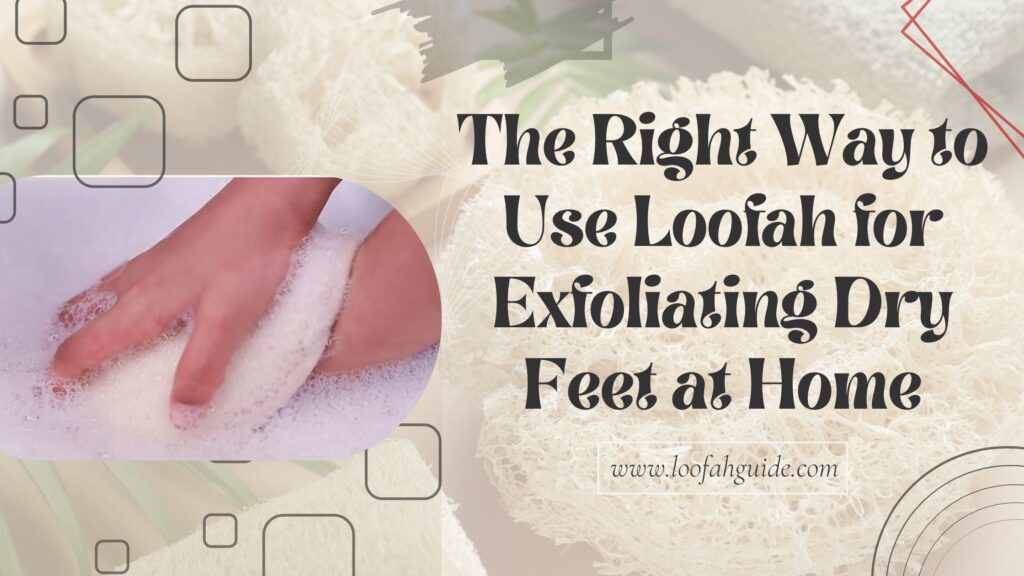
Apply a thin layer of natural soap or a foot scrub product to the wet loofah. The soap provides a mild lubricating effect that reduces friction spikes during scrubbing and helps lift dead skin cells away from the surface.
Hold the loofah with a firm but relaxed grip. The circular motion ensures the fibers contact the skin from multiple angles in rapid succession, which is more effective than linear strokes. Work methodically across the entire heel surface, which typically takes 2 to 3 minutes per heel.
Move to the ball of the foot and the sole with reduced pressure. These areas have thinner skin in the mid-regions and are more susceptible to over-exfoliation. The arch should receive only the lightest passes, primarily to loosen any surface buildup without real abrasion.
Phase 3: Rinsing and Moisturizing
Rinse your feet under clean warm water for at least 60 seconds, making sure all soap residue and loosened skin cells are completely removed. Avoid hot water at this stage, as it can cause the newly exposed skin to lose moisture rapidly.
Pat your feet dry with a clean towel and apply moisturizer right after finishing. Freshly exfoliated skin takes up moisturizer well, so applying it straight away helps keep the skin soft.
Complete Step Reference
| Phase | Step | Time Needed | Critical Detail |
|---|---|---|---|
| Preparation | Fill basin with warm water, add Epsom salt | 1 minute | Temperature 38 to 40 Celsius |
| Preparation | Soak feet | 10 to 15 minutes | Skin should yield under light pressure |
| Preparation | Wet loofah thoroughly | 2 minutes | Fibers should fully expand |
| Scrubbing | Apply soap to loofah | 30 seconds | Thin layer sufficient |
| Scrubbing | Circular scrub on heels | 2 to 3 minutes each | Medium pressure, 3 to 4 cm circles |
| Scrubbing | Lighter scrub on ball and sole | 1 to 2 minutes each | Reduce pressure significantly |
| Scrubbing | Minimal pass on arch | 30 seconds each | Light pressure only |
| Finishing | Rinse feet | 60 to 90 seconds | No hot water |
| Finishing | Pat dry, apply moisturizer | 2 minutes | Right after drying |
| Post-use | Rinse and hang loofah | 1 minute | Ventilated area, not in shower |
Choosing a Loofah for Foot Exfoliation
The market offers a wide range of products labeled as loofah, but they are not equivalent. Understanding what distinguishes a high-performing loofah from a poor one helps you make a better purchase the first time.
Natural vs Synthetic: Why It Matters Specifically for Feet
Synthetic loofahs, typically made from nylon mesh or recycled plastic, are designed primarily as lathering tools. They create foam efficiently but provide minimal genuine abrasion on thick plantar skin. For the face or upper body, where the goal is often more about cleansing than exfoliation, synthetic options are adequate. For dry feet and calluses, they are essentially ineffective.
Natural loofahs from the Luffa cylindrica plant provide genuine mechanical exfoliation because the fiber structure has natural strength and surface irregularity that creates real friction against skin. The bath and body loofah products available from Egexo are made from loofah grown on EGEXO’s own farms and partner farms in Egypt’s Nile Delta and processed in its own factory.
Pros and Cons: Natural Loofah vs Common Alternatives
| Tool | Exfoliation Power | Eco Impact | Gentleness | Cost |
|---|---|---|---|---|
| Natural Egyptian Loofah | Strong, consistent | Excellent | High with correct use | Low |
| Synthetic Nylon Scrubber | Weak | Poor | High | Very Low |
| Pumice Stone | Very Strong | Good | Moderate | Low |
| Electric Callus Remover | Very Strong | Poor | Low risk of over-removal | High |
| Foot Peel Chemical Treatment | Strong, delayed | Poor | High | High |
| Coarse Foot File | Very Strong | Good | Low | Medium |
For most people with mild to moderate dry skin on their feet, the natural loofah is a good starting tool. It is forgiving enough to use without special skill, effective enough to produce real results, and gentle enough for regular use.
How to Assess Loofah Quality Before Buying
A quality natural loofah for foot use should be firm when dry, noticeably softer and more flexible when fully wet, free from bleaching or artificial whitening, and possess a neutral, clean scent. Any strong chemical smell suggests processing with harsh bleaches that weaken fiber integrity and may cause skin reactions.
You can also order loofah samples directly from Egexo to test quality before committing to a larger purchase.
How Often to Exfoliate Feet with Loofah
Frequency guidelines for foot exfoliation are more specific than for body skin because the feet vary so significantly from person to person based on activity level, footwear type, natural skin thickness, and pre-existing conditions.
Frequency by Skin Condition
| Condition | Sessions Per Week | Duration Per Session |
|---|---|---|
| Normal skin, minor roughness | 2 | 5 to 6 minutes |
| Moderate dryness, early calluses | 3 | 7 to 9 minutes |
| Thick calluses, persistent roughness | 3 to 4 | 10 to 12 minutes |
| Sensitive or aging skin | 1 | 4 to 5 minutes |
| Post-chemical peel recovery | 0 | Wait until the skin has recovered |
A useful indicator that you have found the right frequency is the skin feedback between sessions. If feet feel slightly tighter or more sensitive in the 24 hours after exfoliation, you are likely working too hard or too frequently. Correctly exfoliated feet should feel smooth, not tender.
Keeping Your Loofah Safe to Use on Feet
Because the feet carry a higher bacterial load than most body surfaces and because the loofah traps skin cells and residue in its fiber network, hygiene maintenance is non-negotiable for foot-specific use.
Maintenance Schedule
| Frequency | Action | Purpose |
|---|---|---|
| After every use | Thorough rinse under running water | Removes skin cells and soap residue |
| After every use | Hang in ventilated area outside shower | Helps avoid damp conditions where bacteria grow |
| Every few weeks, or when it smells or breaks down | Replace loofah | Fiber degradation reduces effectiveness and increases hygiene risk |
If you notice any persistent odor, visible darkening of the fibers, or structural breakdown before the 4-week mark, replace the loofah immediately. These are signs that bacterial colonization has progressed beyond what cleaning can address.
Seasonal Considerations for Foot Loofah Care
Feet tend to be drier in winter when heating systems reduce indoor humidity, and more actively used in summer when sandals expose them to the elements. Adjusting your loofah routine seasonally produces better year-round results.
In winter, increase exfoliation sessions by one per week and follow each session with a heavier-duty cream or foot butter. In summer, feet may need less intense exfoliation but benefit from consistent maintenance to prevent hardening from sun and heat exposure.
For the most detailed natural loofah product guides, resources, and usage advice, loofahguide.com covers all aspects of loofah use across applications.
FAQ Section
Q1: How to use loofah for exfoliating dry feet without causing irritation?
The key to irritation-free loofah foot exfoliation is preparation and pressure control. Always soak feet for 10 to 15 minutes before using the loofah. Use a fully wet loofah with applied soap, not a dry one. Apply medium pressure in circular motions on the heels and noticeably lighter pressure everywhere else. Avoid more than 3 to 4 sessions per week. If redness persists for more than 20 minutes after use, reduce pressure and frequency immediately.
Q2: Can loofah remove calluses from feet completely?
A natural loofah can help soften and remove the outer layer of dead skin with consistent use, but it is not designed to remove severe calluses in a single session. The exfoliation process works gradually over multiple sessions. For very thick calluses built up over years, combining weekly loofah maintenance with occasional pumice stone treatment is a common approach.
Q3: What kind of loofah is best for the feet specifically?
For foot exfoliation, a natural Egyptian loofah sponge or a flat loofah pad is a good choice. These have sufficient fiber density to exfoliate thick plantar skin without the excessive stiffness of unprocessed raw loofahs. Avoid synthetic mesh loofahs for feet, as they do not provide meaningful mechanical exfoliation on thick skin. Look for a loofah that is firm when dry and flexible when wet, with consistent golden-tan coloring throughout.
Q4: Should I use loofah before or after showering for feet?
Foot exfoliation with loofah is most effective during a warm bath or at the end of a shower after the feet have been exposed to steam and moisture for at least 10 minutes. The goal is to ensure foot skin is thoroughly softened before applying the loofah. Using a dry loofah on dry feet produces friction without effective exfoliation and significantly increases the risk of over-abrasion and sensitivity.
Q5: How long before I see results from loofah foot exfoliation?
Many people notice smoother skin after a few sessions. Chronic dryness or calluses take longer and need consistent use. The rate of improvement depends on how thoroughly moisturizer is applied right after each session. Combining exfoliation with overnight moisturizing, covering with cotton socks to lock in hydration, helps.
Q6: Is it safe to share a loofah between household members?
Sharing a loofah between people is not recommended, particularly for foot use. The foot environment has a higher bacterial concentration than most body surfaces, and loofahs can harbor organisms that transfer between users. Each person in a household should have their own clearly labeled loofah. Replace them on the same schedule every few weeks.
Q7: Can pregnant women use loofah for foot exfoliation?
Loofah foot exfoliation is generally safe during pregnancy and is often recommended because it avoids the chemical exposure of acid-based peels. Pregnant women should sit or use a stable support structure during foot exfoliation to avoid balance-related risks. If swelling or skin sensitivity is present, reduce pressure and session frequency. As with any change to a personal care routine during pregnancy, confirming with a healthcare provider is advisable.
A Note from EGEXO
One question we hear often from both consumers and spa professionals is whether natural loofahs are different from processed or packaged versions from big retail brands. EGEXO has been exporting Egyptian loofah since 2015, from our own farms and partner farms in the Nile Delta. Standard EGEXO loofah is not bleached, so it keeps its natural golden color. Bleaching and dyed colors are available only on request. When evaluating any loofah for foot care, color is one thing to look at. Learn more about the farm to export process behind Egexo’s loofah.
Conclusion
Using loofah for exfoliating dry feet is a practice with a clear right and wrong way. The right way involves softened skin, a thoroughly wet loofah, controlled circular pressure, and immediate moisturizing. Done correctly two to three times per week with a quality natural loofah, it produces noticeably softer skin within days and dramatically improved foot health within weeks.
The wrong way, scrubbing dry skin with a dry loofah and skipping moisturizer, produces little benefit and potential irritation. Technique and preparation are what separate those two outcomes.
Key Takeaways:
- Soak feet for 10 to 15 minutes to soften skin before every session
- Use only circular motions, not back-and-forth strokes, for even exfoliation
- Medium pressure on heels only; lighter everywhere else
- Moisturize right after drying for better absorption
- Replace your loofah every few weeks
Ready to experience Egyptian loofah quality?
- For Wholesale Buyers: Request a quote or download our catalog