
The Gourd That Became a Canvas: An Introduction to Loofah Art
There is something quietly radical about turning a vegetable into a lamp.
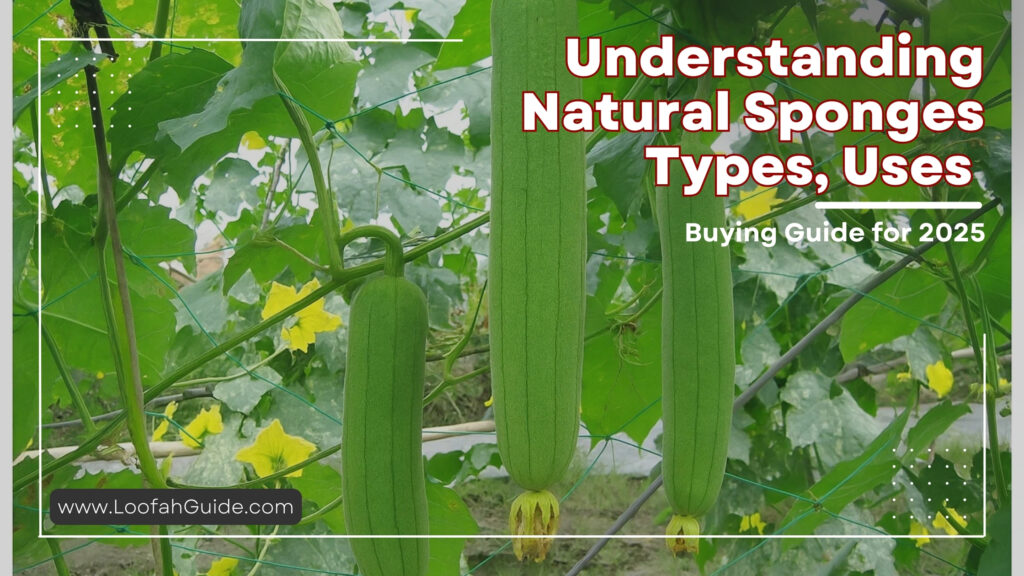
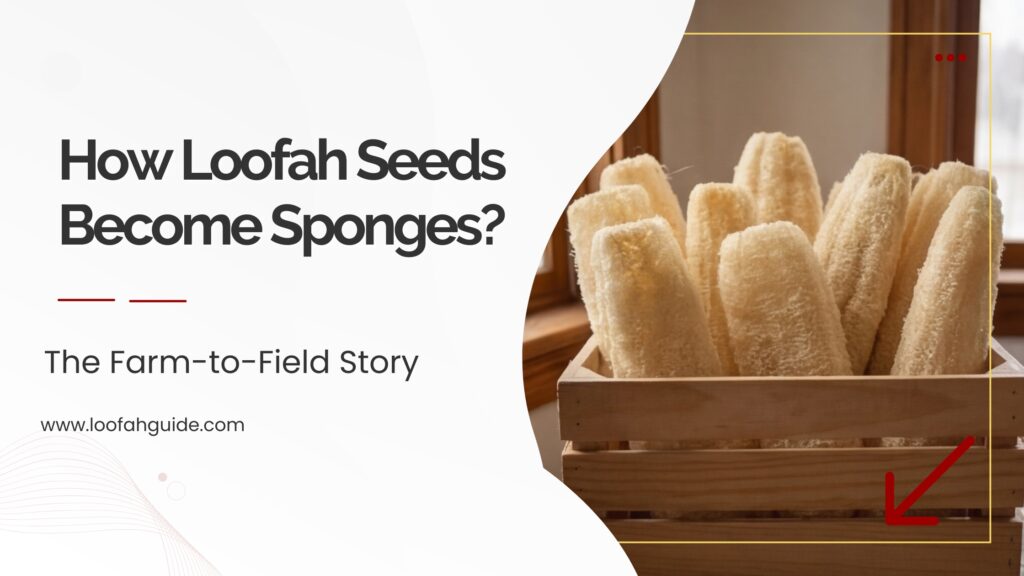
The dried skeleton of a Luffa cylindrica gourd — the same plant whose fibrous interior scrubs millions of backs every morning — has an architectural quality that most people never notice. Hold one up to a light source and you see it: a lattice of interconnected natural fibers, dense enough to hold its shape, open enough to let light pass through in scattered patterns. That structural duality is exactly what makes it an extraordinary material for loofah art.
Loofah art encompasses dyeing, carving, burning, and assembling dried gourd fibers into decorative home pieces. It has roots in Egyptian rural craft traditions, where farm communities repurposed mature luffa gourds that were too large or irregular for export as scrubbers into decorated household objects. Today the practice has migrated from farmhouses to Etsy shops, interior design studios, and wellness retail spaces globally.
This guide is written for two audiences who often share the same questions from different angles. If you make things — if you are a crafter, DIY decorator, or artisan — you will find detailed techniques, material advice, and finishing guidance here. If you buy things for resale — if you run a boutique, spa, or import business — you will find quality sourcing criteria, wholesale guidance, and business opportunity analysis in equal depth.
EGEXO has been exporting Egyptian loofah since 2015. Egyptian loofah is relevant to every technique discussed below.
The Science Behind Why Loofah Makes Such Good Art Material
Before picking up a carving tool, it helps to understand the material you are working with at a structural level. That knowledge makes every technique decision more intuitive.
Cellular Architecture of a Dried Luffa Gourd
The loofah gourd’s fibrous interior is not a solid mass. It is a three-dimensional network of cellulose fibers arranged in interlocking, overlapping rings that run the length of the gourd. When the gourd fully matures and dries, these fibers harden into a rigid but lightweight scaffold with properties that are unusual in natural materials.
The fiber network is porous at multiple scales simultaneously. Individual fibers are hollow tubes — capillary channels that wick liquid inward. The spaces between fibers create macro-level voids large enough for tools to pass through without disturbing adjacent fiber bundles. This dual porosity is the reason loofah accepts dye so uniformly and releases carved sections so cleanly.
That additional wall thickness helps Egyptian loofah hold up during detailed carving work. EGEXO’s management system is certified to ISO 9001, 14001 and 45001. We supply the Certificate of Origin and the Phytosanitary Certificate.
Why the Harvest Timing Matters for Art Applications
A loofah gourd harvested at peak maturity produces the ideal combination of fiber density, fiber length, and dryness for art applications. Gourds harvested too early retain excess moisture and are prone to mold during the dyeing process. Gourds harvested too late become brittle and shed fibers during carving.
Egexo’s harvest protocols, documented as part of the farm-to-export process, specify harvest windows by batch based on growth monitoring, not calendar date. This approach ensures consistent fiber maturity across every wholesale shipment.
Dyeing Dried Loofah Gourds: From Color Theory to Final Rinse
Color is the first transformation most people make to a loofah gourd. It is also the technique with the widest range of approaches — from single-color submersion baths to multicolor resist dyeing techniques borrowed from Japanese shibori tradition.
Color Theory for Natural Fiber Dyeing
Loofah fiber is a natural cellulose material, and it responds to color the way undyed linen or cotton does. Warm earth tones — ochres, terracottas, sage greens, dusty pinks — absorb most easily with natural dye sources and produce the most saturated results relative to dye concentration. Cool blues and purples require higher dye concentrations and benefit from a mordant pre-treatment to achieve similar depth.
Three Dyeing Methods Compared
| Method | Materials Required | Color Depth Achievable | Skill Level | Best For |
|---|---|---|---|---|
| Submersion bath (fiber-reactive) | Procion MX dye, soda ash, warm water | Deep, uniform | Beginner | Single-color pieces, production consistency |
| Natural dye submersion | Plant material (turmeric, madder, indigo), mordant, water | Medium, earthy | Beginner to intermediate | Eco-labeled products, artisan collections |
| Resist dyeing (rubber band or tied sections) | Any dye type, rubber bands or wax | Medium, patterned | Intermediate | Ombre, tie-dye, patterned collections |
| Spray painting | Fabric spray paint, stencils | Light to medium, precise | Beginner | Pattern work, ombre gradients |
| Cold wax batik | Wax, dye, tjanting tool | Deep, complex | Advanced | One-of-a-kind art pieces |
The Critical Pre-Soak Step
Every professional loofah art practitioner agrees on one point: skipping the pre-soak is the single most common beginner mistake in loofah dyeing.
Its fiber cells are in a contracted, low-absorption state. Submerging a dry gourd directly into dye produces a mottled, uneven result because the outermost fibers absorb dye rapidly while the interior remains relatively dry and under-colored.
The subsequent dye bath then penetrates evenly from surface to core, producing consistent color throughout.
Natural Dye Recipes for Loofah Gourds
Turmeric Yellow Boil 60 grams of ground turmeric in 2 liters of water for 20 minutes. Strain. Add pre-soaked gourd and simmer at 70 degrees Celsius for 45 minutes. The result is a warm golden yellow with excellent depth.
Avocado Skin Pink Save the skins and pits from 12 to 15 avocados. Simmer in 3 liters of water for 60 minutes until the water turns deep brick red. Strain and add pre-soaked gourd. Maintain at 70 degrees Celsius for 60 to 90 minutes. The result ranges from blush pink to deep dusty rose depending on gourd fiber density and water mineral content.
Indigo Blue Indigo requires a reduction vat — a mildly fermented solution that converts oxidized indigo into its soluble form. This is the most technically demanding of the natural dye recipes. The reward is a deep, complex blue-green that is impossible to replicate with other plant materials.
Carving Techniques: From First Cut to Finished Piece
Carving transforms a dyed cylinder of loofah fiber into a three-dimensional sculptural object. The techniques range from simple single-tool perforation to complex layered relief work that takes an experienced artisan several hours per piece.
Understanding Fiber Direction Before You Cut
Loofah fibers run in a loose helical pattern along the length of the gourd. Cuts made parallel to fiber direction — lengthwise along the gourd — encounter less resistance and produce cleaner edges. Cuts perpendicular to fiber direction — around the circumference — require more pressure and have a higher tendency to produce ragged edges on lower-density material.
This is not a limitation on what you can carve — it is a guide to how you approach the sequence of cuts. Design patterns that include both directional axes, but plan to make fiber-parallel cuts first when creating complex designs.
Step-by-Step Process: Geometric Perforation Lantern
This is the most beginner-accessible loofah art project and produces a visually impressive result on the first attempt.
| Step | Action | Notes |
|---|---|---|
| 1 | Dye gourd in chosen color and dry completely | 24 to 48 hours dry time required |
| 2 | Draw a 2 cm grid across gourd surface with water-soluble marker | Use a flexible ruler |
| 3 | Mark perforation centers at every grid intersection | Dots, not crosses, for clarity |
| 4 | Drill or punch each marked center with a 4 mm micro drill bit | Work from one end to the other systematically |
| 5 | Clear debris from perforations with a soft brush | Compressed air works well for production quantities |
| 6 | Insert battery LED candle into gourd cavity | Secure with a small wooden disk base |
| 7 | Apply single matte sealant coat to exterior | Protect color and fiber surface |
| 8 | Attach hanging cord or base mount as desired | Jute cord suits the natural aesthetic |
Step-by-Step Process: Relief Carved Wall Medallion
This intermediate project requires a V-gouge and patience, but produces a piece with genuine artisan value.
| Step | Action | Notes |
|---|---|---|
| 1 | Dye gourd and dry fully | Complete 48-hour dry is critical for carving stability |
| 2 | Sketch floral or geometric motif on paper, scale to fit gourd diameter | Transfer with water-soluble transfer paper |
| 3 | Score the outline of the design with a craft knife, shallow cuts only | Depth: 2 to 3 mm |
| 4 | Remove background fiber with V-gouge, working away from design edges | Leave 4 to 6 mm of raised design above cleared background |
| 5 | Refine design edges with fine linoleum cutter | Take your time, work in small sections |
| 6 | Dry brush loose fibers with soft toothbrush | Do not wet clean at this stage |
| 7 | Apply two coats matte sealant, drying between coats | First coat stabilizes cut fibers; second coat provides finish |
| 8 | Mount on driftwood backing or hang on jute cord | Add felt pads to back surface to protect wall |
Sourcing Raw Loofah Gourds: What Buyers Need to Know
The quality of the base gourd determines every downstream result. This is true for individual crafters buying a dozen gourds from an online marketplace and equally true for wholesale buyers sourcing thousands of units for a product line.
Where Does Commercial Loofah Art Material Come From
Global loofah production is concentrated in Egypt, China, India, and Southeast Asia.
The LoofahGuide resource library has detailed origin comparisons for shoppers and buyers evaluating quality across different supply regions.
For buyers who want direct farm-to-export sourcing from Egypt, Egexo offers the most vertically integrated supply chain available, with no intermediary distributors between the Nile Delta farm and the export container. Request a quote or browse the product catalog to begin a sourcing conversation.
Quality Checklist for Evaluating Raw Loofah Gourds for Art
Order samples from Egexo to conduct your own pre-order quality evaluation.
Building a Loofah Art Practice: Supplies, Workspace, and Skill Progression
Whether this is a personal craft hobby or the beginning of a product-based business, building the practice intelligently saves significant time and material cost in the early stages.
Skill Progression Roadmap
Level 1: Single-Color Submersion Dyeing (Week 1 to 2) Master the pre-soak, dye bath, and drying sequence with fiber-reactive dyes. Achieve consistent color depth across multiple gourds in a batch.
Level 2: Geometric Perforation Work (Week 2 to 4) Master the grid marking, drilling, and cleaning sequence. Complete 3 geometric lantern pieces. Success metric: clean, burr-free perforations with consistent spacing across the full gourd surface.
Level 3: Basic Relief Carving (Month 2 to 3) Master the shallow score-and-remove carving sequence with a V-gouge. Complete 2 floral relief medallions. Success metric: raised design edges are clean and consistent, background removal is even.
Level 4: Combination Techniques and Product Development (Month 3 to 6) Combine dyeing and carving. Experiment with resist dyeing on pre-carved surfaces. Develop a signature 3-piece collection. Success metric: product pieces that are sale-ready with professional finish quality.
A Note from EGEXO
The loofah art movement is growing, and from our position as growers and exporters, we watch it with genuine enthusiasm. The craft honors the material rather than disguising it, and that is exactly the relationship that sustainable design should have with its raw inputs.
What we tell every artisan and wholesale buyer who sources from us is this: the gourd itself does most of the work if you give it the right conditions. Egyptian Luffa cylindrica, harvested at peak maturity and processed under controlled moisture conditions, has a structural sophistication that no synthetic alternative can replicate. When you carve into it cleanly and dye it evenly, you are revealing architecture that the plant built. Your tools and pigments are just ways of making that architecture visible.
For businesses scaling up a loofah art product line, our private label manufacturing service supports branded packaging, custom gourd dimensions, and exclusive colorway development.
FAQ Section
Q1: What type of loofah gourd is best for art and carving projects?
Egyptian-grown Luffa cylindrica consistently achieves this density range, compared to Southeast Asian equivalents that typically range from 140 to 170 grams per cubic meter. Higher density gourds hold carving detail cleanly, resist fiber collapse, and absorb dye more uniformly.
Q2: Do I need to seal a loofah art piece after finishing?
Sealing is not strictly required but is recommended for any piece intended for long-term display or sale. Two coats of clear matte sealant spray extend the display lifespan of a finished loofah art piece. Shellac brush coats provide the longest protection but add slight rigidity and a higher sheen than most artisans prefer for natural-aesthetic pieces.
Q3: Can I use food-based dyes on loofah gourds?
Yes. Strong food-based dyes, such as concentrated beet juice, turmeric and red cabbage, will temporarily color loofah fiber, but color fastness is significantly lower than fiber-reactive or even botanical mordant dyes. Expect visible fading over time under normal indoor light conditions. For pieces intended for sale, food-based dyes are generally not recommended unless a deliberately ephemeral, color-changing aesthetic is part of the design concept.
Q4: How do I prevent mold during the dyeing process?
Mold risk during loofah dyeing is primarily associated with incomplete drying after the dye bath. Ensure rinse water runs completely clear before removing the gourd from rinse. Air dry on a mesh rack in a ventilated space at minimum 20 degrees Celsius — avoid closed spaces or humid rooms. A fan assists drying significantly. Complete dryness should be achieved within 24 to 36 hours. If drying will take longer than 48 hours due to environmental conditions, apply a very dilute (1 percent) white vinegar rinse after the final water rinse to reduce surface mold risk.
Q5: What is the best way to hang a carved loofah gourd on a wall?
The most secure and aesthetically compatible hanging method is a knotted jute cord looped through a carved or drilled hole at the top of the gourd and tied to a small driftwood or bamboo horizontal mount. This creates a botanical hanging aesthetic that complements the natural material. For heavier pieces exceeding 200 grams, reinforce the hanging hole with a thin coating of wood glue on the interior fiber around the hole perimeter before attaching the cord.
EGEXO is a family-run Egyptian loofah manufacturer and exporter. No minimum order on standard products. Private label from 1,000 units. Request a quote from Egexo or order samples to evaluate quality before committing to a volume order.
Conclusion
Loofah art is a practice that rewards understanding the material. The more you know about how Luffa cylindrica grows, why Egyptian fiber density outperforms competing origins, how cellulose fibers absorb pigment, and how the helical fiber structure responds to carving tools, the better your results will be — whether you are making one piece for your living room or developing a wholesale product catalog.
The sustainable home decor market is not a trend. See our wholesale prices on egexo.com under Products.
Key Takeaways:
- Pre-soaking before dyeing is essential for uniform color distribution in loofah gourds
- Sealed finished pieces keep their display quality longer, making them viable for retail
Ready to experience Egyptian loofah quality?
- For Wholesale Buyers: Request a quote or download our catalog
- For Individual Orders: Request a quote or request samples