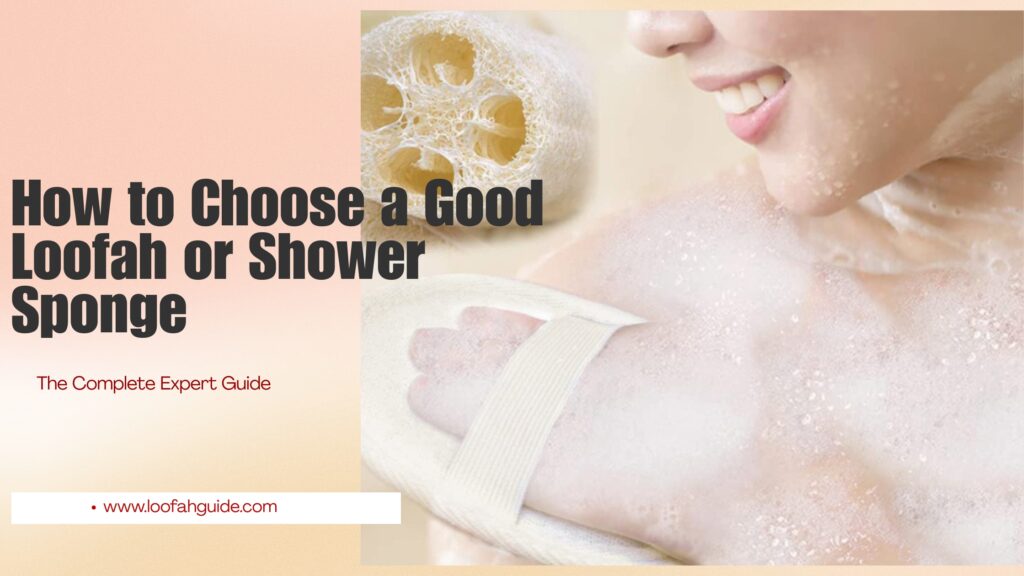
The search for a good loofah or shower sponge leads many people through a maze of conflicting advice, questionable products, and marketing claims that obscure what actually matters. Natural fiber loofahs, plastic mesh poufs, sea sponges, and silicone alternatives all claim superiority, yet each serves different purposes and skin types. Understanding these differences transforms a frustrating shopping experience into confident decision-making.
Research from dermatological studies indicates that effective exfoliation improves skin texture, enhances product absorption by up to 40 percent, and supports healthy cell turnover when performed correctly. However, the wrong tool or technique creates irritation, spreads bacteria, and damages skin barriers. The stakes of selecting appropriate bathing tools extend beyond mere preference into actual skincare outcomes.
This comprehensive guide addresses the question countless readers ask: any suggestions for a good loofah or shower sponge? Whether you need personal recommendations for home use or you manage inventory for a spa, hotel, or retail operation, the principles of quality evaluation remain consistent. Natural loofahs from Egyptian cultivation regions consistently outperform alternatives due to unique growing conditions that produce denser, more durable fibers.
You will discover specific quality markers that distinguish premium products, learn maintenance protocols that triple product lifespan, and understand the environmental implications of your choices. Professional buyers will find evaluation frameworks for wholesale sourcing, while individual consumers gain practical knowledge for everyday purchasing decisions.
Understanding What Separates Quality from Mediocrity
Not all loofahs deserve that name. The market contains everything from premium Egyptian specimens to low-grade products barely suitable for dish cleaning. Learning to identify quality protects your skin and your investment.
The Anatomy of an Excellent Natural Loofah
A truly good loofah exhibits specific characteristics observable through simple inspection. The fiber network should appear tight and uniform, creating consistent texture across the entire surface. Hold the product up to light and examine the webbing pattern. Premium loofahs show regular spacing without large holes or thin spots that indicate immature harvest or improper processing.
Color provides another quality indicator. Well-processed natural loofahs display cream to light tan hues with consistent coloring throughout. Dark spots suggest mold exposure during drying, while bleached white appearance indicates chemical treatment that weakens fibers and reduces natural benefits.
Flexibility testing reveals processing quality. Compress the dry loofah firmly in your palm, then release. Quality products spring back immediately to original shape. Those remaining compressed or returning slowly likely suffered over-drying or storage damage that compromises durability.
Egyptian loofahs command premium prices because the Nile Delta region produces superior specimens. The combination of mineral-rich alluvial soil, controlled irrigation, and Mediterranean climate influences creates growing conditions unmatched elsewhere. Suppliers like Egexo have spent over 25 years perfecting cultivation and processing methods that maximize these natural advantages.
Synthetic Alternatives and Their Limitations
Plastic mesh shower poufs dominate retail shelves due to low manufacturing costs and impressive initial appearance. These brightly colored spheres create abundant lather and feel soft against skin, attracting buyers who prioritize these characteristics. However, deeper analysis reveals significant drawbacks.
Synthetic poufs provide minimal actual exfoliation. The soft mesh gently moves across skin without removing dead cells or stimulating circulation. For consumers seeking genuine exfoliation benefits, these products fundamentally fail their intended purpose.
Environmental concerns compound functional limitations. Every shower releases microplastic fibers from synthetic poufs into water systems. Annual fiber release per pouf ranges from 50,000 to 100,000 particles, contributing to ocean pollution and entering food chains through marine organisms. These plastics persist in environments for centuries.
Bacterial retention presents another synthetic disadvantage. The dense mesh construction traps moisture and organic matter, creating ideal growth conditions for bacteria, mold, and mildew. Studies show synthetic poufs harbor more bacteria after two weeks than natural loofahs after four weeks of equivalent use.
| Assessment Factor | Natural Egyptian Loofah | Synthetic Mesh Pouf |
|---|---|---|
| Exfoliation Effectiveness | High, adjustable with pressure | Minimal to none |
| Bacterial Growth Rate | Moderate, manageable | Rapid accumulation |
| Environmental Impact | Fully biodegradable | Centuries of persistence |
| Microplastic Release | Zero | Thousands daily |
| Typical Useful Life | 3 to 4 months | 4 to 8 weeks |
| Long-term Skin Benefits | Improved texture, circulation | Lather only |
Matching Products to Purposes and Preferences
Different bathing needs call for different tools. The ideal product for vigorous body exfoliation differs from what facial cleansing requires. Understanding these distinctions prevents purchasing mistakes and ensures optimal results.
Body Exfoliation Options
Standard body loofahs serve most exfoliation needs effectively. These products typically measure 10 to 15 centimeters after processing, providing adequate surface area for efficient full-body use. Look for firm texture that softens appropriately when saturated but never becomes mushy or loses structural integrity.
For those seeking intense exfoliation, raw or minimally processed loofahs provide maximum texture. These products retain more natural roughness and suit users with oily skin or those addressing specific concerns like keratosis pilaris or body acne. The raw loofah scrubber category offers options for those preferring minimal processing.
Sensitive skin requires gentler approaches. Some natural loofahs undergo additional softening during processing to reduce abrasiveness while maintaining exfoliation benefits. These products work well for users with dry skin, eczema-prone areas, or general sensitivity. Using lighter pressure and limiting frequency to two or three weekly sessions further reduces irritation potential.
Professional spa facilities often stock multiple product grades to accommodate diverse client needs. Offering choices allows therapists to customize treatments while demonstrating expertise that builds client confidence. The body loofah collection includes options across the texture spectrum for varied requirements.
Facial Cleansing Considerations
Facial skin requires significantly gentler treatment than body skin due to thinner epidermal layers and greater sensitivity. Standard body loofahs prove too abrasive for most faces, potentially causing micro-tears, irritation, and compromised skin barriers.
Facial-specific loofahs undergo extensive softening while retaining enough texture for mild exfoliation. These smaller products typically measure 5 to 8 centimeters in disc or oval configurations that fit comfortably in the palm during use. The reduced size also prevents waste since facial cleansing requires less product surface than body washing.
Alternatives for facial use include konjac sponges, which provide extremely gentle exfoliation suitable for even sensitive or reactive skin. These plant-derived products feel soft when hydrated and offer minimal abrasion while still supporting cleansing routines. However, they lack the exfoliation intensity that some users prefer for addressing texture concerns or product absorption enhancement.
Frequency guidelines for facial exfoliation recommend two to three sessions weekly for normal skin, once weekly for sensitive types, and up to daily use for oily, resilient skin. Observing skin response and adjusting accordingly prevents over-exfoliation damage while optimizing benefits.
Household and Kitchen Applications
Beyond personal care, natural loofahs excel as sustainable kitchen cleaning tools. These products effectively clean dishes, scrub vegetables, and tackle household cleaning tasks while eliminating plastic scrubber waste. Kitchen-grade loofahs feature denser fiber construction suitable for tougher jobs without deteriorating quickly.
The environmental appeal of kitchen loofahs resonates with households pursuing plastic-free living. Each natural loofah replaces multiple synthetic scrubbers over its useful life, reducing both purchase costs and landfill contributions. After exhausting cleaning utility, composting returns nutrients to soil within 30 days.
Commercial kitchens, restaurants, and food service operations increasingly adopt natural loofahs to meet sustainability certifications and consumer expectations. The kitchen loofah category addresses bulk purchasing needs for these applications.
Essential Care Practices for Maximum Lifespan
Proper maintenance dramatically extends useful life while preventing bacterial issues that concern health-conscious users. The difference between a loofah lasting one month versus four months often comes down to daily habits.
Post-Use Protocol
Immediately after each shower, rinse your loofah thoroughly under clean running water. Work through the entire product to flush soap residue and dead skin cells from the fiber network. These organic materials provide food for bacterial colonies and must be removed promptly.
Squeeze the loofah firmly multiple times to expel trapped water. Shake vigorously to dislodge remaining moisture from interior fibers. This step matters because wet interiors create ideal bacterial growth environments even when surfaces feel dry.
Hang the loofah in a location with good air circulation, preferably outside the bathroom or at least away from the shower enclosure. Humid bathroom air slows drying and promotes microbial growth. Many users find bedroom windows, laundry areas, or outdoor hooks provide better drying conditions.
Never leave loofahs sitting on wet shower surfaces or in soap dishes where water collects. This common mistake accelerates bacterial accumulation dramatically. Products stored properly last significantly longer than those subjected to constant moisture exposure.
Weekly Sanitization Methods
Beyond daily rinsing, periodic deep cleaning eliminates bacteria that survive routine maintenance. Choose methods compatible with your preferences and available materials.
| Sanitization Method | Instructions | Time Required | Notes |
|---|---|---|---|
| White Vinegar Soak | Mix 50 percent vinegar, 50 percent water in container | 15 to 20 minutes | Most popular method |
| Diluted Bleach | One tablespoon bleach per gallon water | 5 minutes maximum | Rinse thoroughly after |
| Boiling Water | Submerge in rolling boil | 2 to 3 minutes | May reduce lifespan slightly |
| Hydrogen Peroxide | Use 3 percent solution undiluted | 10 minutes | Gentle yet effective |
| Microwave Steam | Place wet loofah in microwave, high power | 20 to 30 seconds | Quick but watch carefully |
Consistency matters more than method selection. Establishing weekly sanitization habits regardless of chosen approach maintains hygiene standards throughout product life. Many users sanitize on the same day each week to build routine.
Recognizing Replacement Indicators
Even perfectly maintained loofahs eventually require replacement. Bacterial populations accumulate over time in ways cleaning cannot fully address. Watch for these signals indicating end of useful life.
Persistent odor despite proper cleaning suggests deep bacterial penetration beyond surface treatment reach. This unmistakable musty smell indicates the product has exceeded safe use duration and requires immediate replacement regardless of physical appearance.
Visible mold appearing as dark spots or fuzzy growth means the loofah has become unsafe for skin contact. Mold penetrates fiber structures and cannot be adequately removed through cleaning. Dispose of moldy products immediately.
Texture degradation indicates fiber breakdown. Loofahs becoming excessively soft, developing permanent compression, or showing holes and tears no longer provide effective exfoliation. These changes also signal structural weakness allowing bacterial harborage.
Following maximum recommended lifespan of three to four months prevents using products past their safe period. Some users mark purchase dates on calendars to ensure timely replacement even when products appear acceptable.
Sourcing Quality Products Whether Buying One or Thousands
Finding reliable sources presents challenges for both individual consumers and bulk purchasers. Different channels suit different needs, and understanding options simplifies procurement.
Retail Shopping Guidance
Individual consumers encounter loofahs in pharmacies, supermarkets, beauty stores, and online marketplaces. Quality varies dramatically across these channels, making informed evaluation essential.
Avoid products lacking origin information. Legitimate sellers specify cultivation region because source impacts quality significantly. Egyptian origin indicates superior specimens worth premium pricing. Products without source details often come from less favorable growing regions or include synthetic blends.
Examine packaging for quality indicators. Reputable brands provide care instructions, material specifications, and contact information. Minimal packaging with vague descriptions typically accompanies lower-quality products designed for impulse purchasing rather than informed selection.
Online reviews offer insight but require critical interpretation. Focus on reviews mentioning durability, texture maintenance over time, and bacterial issues rather than initial impressions alone. Products receiving praise for months-long performance typically outperform those with enthusiastic first-use reviews followed by complaints.
For consumers seeking assured quality without extensive research, purchasing directly from established suppliers provides confidence. Shop the Egexo collection for products meeting professional standards at accessible quantities.
Wholesale Procurement Strategies
Business buyers face additional considerations including minimum order quantities, quality consistency across shipments, documentation requirements, and supplier reliability. Systematic evaluation prevents costly mistakes.
Request samples before committing to volume orders. Professional suppliers expect this practice and accommodate reasonable sample requests. Test samples using the same methods applied to retail products: water absorption timing, compression recovery, lather production, and visual inspection.
Verify supplier credentials thoroughly. Established exporters maintain documentation including certificates of origin, phytosanitary certifications, and quality inspection reports. These materials facilitate customs clearance and demonstrate professional operations. Egexo’s quality standards documentation exemplifies the transparency professional buyers should expect.
Evaluate communication responsiveness during initial contact. Suppliers slow to answer questions or provide information often deliver similarly poor service during order fulfillment and problem resolution. Reliable partners respond promptly and thoroughly to inquiries.
Consider value-added services that differentiate suppliers. Options like private label manufacturing, custom product design, and flexible packaging accommodate business needs beyond basic product supply. These capabilities support brand building and market differentiation.
Request quotations from multiple suppliers to compare pricing, terms, and capabilities. Lowest price rarely indicates best value when quality consistency, reliability, and support differ substantially.
Environmental Impact and Sustainability Credentials
Sustainability increasingly influences purchasing decisions for individuals and businesses alike. Understanding environmental implications supports informed choices aligned with values and market positioning.
Carbon Footprint Comparison
Natural loofahs require minimal processing compared to synthetic alternatives. Growing, harvesting, drying, and basic cleaning represent the primary energy inputs. No petroleum extraction, polymerization, or complex manufacturing processes contribute to production.
Transportation efficiency further advantages natural products. Lightweight and compressible, natural loofahs pack densely for shipping. A standard shipping container holds approximately 15,000 units, distributing ocean transport carbon costs across many products.
Synthetic poufs require petroleum extraction and refining, chemical processing into polymers, energy-intensive manufacturing, and often individual plastic packaging. Each production stage adds carbon burden absent from natural alternatives.
End of Life Considerations
Natural loofah disposal creates zero lasting environmental impact. Composting returns plant material to soil within 30 days, contributing nutrients rather than pollution. Even landfill disposal results in eventual biodegradation, though composting remains preferable.
Synthetic products persist in environments for 200 to 400 years depending on composition and conditions. Throughout this period, ongoing microplastic release continues environmental contamination. No disposal method eliminates synthetic loofah environmental impact.
For businesses, communicating these sustainability advantages differentiates products in crowded markets. Consumers increasingly seek brands demonstrating environmental responsibility, and natural loofahs provide genuine credentials supporting marketing claims.
Supporting Sustainable Agriculture
Egyptian loofah cultivation supports farming communities while requiring modest resource inputs. The plants grow in rotation with other crops, contributing to soil health and agricultural diversity. Controlled irrigation from Nile waters minimizes freshwater consumption compared to more intensive crops.
Purchasing from established suppliers ensures agricultural practices meet sustainability standards. The farm to export process documentation demonstrates supply chain transparency that conscientious buyers value.
Specialty Uses Expanding Loofah Applications
Creative applications extend natural loofah utility beyond traditional bathing, creating market opportunities and personal use possibilities worth exploring.
Pet Care and Grooming
Natural loofah texture provides excellent grooming benefits for companion animals. Dogs, cats, and horses respond well to loofah brushing that stimulates skin health, distributes natural oils, and removes loose fur. The gentle natural fibers prove less irritating than plastic bristle brushes.
Pet groomers and veterinary clinics increasingly incorporate loofahs into service offerings. The pet and spa grooming category addresses professional needs for animal care applications.
Craft and DIY Projects
Embedding loofah slices in handmade soap creates dual-function products combining cleansing and exfoliation. These specialty soaps command premium prices at craft fairs, boutiques, and online marketplaces. The visual appeal of exposed loofah texture differentiates products from plain bars.
Raw loofahs serve numerous craft applications including natural packaging, plant supports, decorative elements, and educational materials. Crafters appreciate the sustainable credentials and natural aesthetic that complements handmade goods positioning.
Building a Business Around Quality Loofahs
Market growth in natural personal care products creates opportunities for entrepreneurs and existing retailers seeking product line expansion. Loofahs offer accessible entry points with proven consumer appeal.
Market Analysis and Opportunity
Global natural sponge and loofah sales demonstrate consistent growth, reaching approximately 890 million USD in 2024 with projected 7.2 percent annual expansion through 2030. Multiple factors drive this trend including environmental awareness, preference for natural products, and wellness culture growth.
Spa and wellness facilities report natural loofahs among top-selling retail items, benefiting from impulse purchase appeal and perceived value alignment with spa experiences. Hotels adopt natural amenities to satisfy eco-certification requirements and guest expectations.
Getting Started with Wholesale
New entrants can test market response with modest initial orders before scaling. Minimum order quantities from quality suppliers like Egexo accommodate cautious entry while providing products meeting professional standards.
Download the complete product catalog to review available options, specifications, and pricing tiers. The catalog provides foundation for planning product offerings and calculating potential margins.
Order samples to evaluate quality firsthand before committing to inventory purchases. Sample testing prevents costly mistakes and ensures products meet your quality standards and customer expectations.
For comprehensive wholesale resources and industry information, Wholesale Loofah provides additional guidance for business buyers.
Frequently Asked Questions
Q: What should I look for when choosing a good loofah?
A: Quality indicators include tight, uniform fiber patterns visible when holding the loofah to light, consistent cream to light tan coloring without dark spots or bleached appearance, and immediate shape recovery after compression. Good loofahs feel firm when dry and soften appropriately when wet without becoming mushy. Avoid products with visible seeds, irregular holes, musty odors, or chemical smells. Egyptian origin indicates superior growing conditions producing denser, more durable fibers than alternatives from other regions.
Q: How long does a natural loofah typically last?
A: With proper care, quality natural loofahs last three to four months of regular use. This lifespan assumes daily rinsing, complete drying between uses, weekly deep cleaning, and storage away from humid environments. Poor maintenance dramatically reduces useful life to as little as four to six weeks. Replace loofahs immediately if persistent odor, visible mold, or significant texture degradation occurs regardless of time in use.
Q: Is a natural loofah or synthetic shower pouf better for skin?
A: Natural loofahs provide superior exfoliation that synthetic poufs cannot match. The plant fiber structure effectively removes dead skin cells, stimulates circulation, and improves skin texture through regular use. Synthetic poufs offer only gentle surface cleansing with minimal exfoliation benefit despite creating abundant lather. Natural loofahs also avoid microplastic release that synthetic products contribute to water systems with every use.
Q: How do I prevent my loofah from getting moldy or smelly?
A: Prevention requires three consistent practices. First, rinse thoroughly and squeeze firmly after each use to remove organic matter and excess water. Second, store in a well-ventilated area outside the shower where complete drying occurs between uses. Third, perform weekly deep cleaning using vinegar solution, diluted bleach, or hydrogen peroxide. Never leave loofahs sitting on wet surfaces or hanging inside humid shower enclosures.
Q: Are there different types of loofahs for different purposes?
A: Yes, loofah varieties serve different needs. Standard body loofahs provide medium exfoliation suitable for most users. Facial loofahs undergo additional softening for gentler texture appropriate for delicate facial skin. Kitchen loofahs feature denser construction for household cleaning durability. Raw loofahs retain maximum texture for intense exfoliation or craft applications. Pet-specific loofahs suit animal grooming needs with appropriate sizing and texture.
Q: What makes Egyptian loofahs better than others?
A: Egyptian loofahs benefit from unique Nile Delta growing conditions including mineral-rich alluvial soil, controlled irrigation, and Mediterranean climate influences. These factors produce 40 percent higher fiber density compared to loofahs from other regions. Generations of cultivation expertise and modern quality control systems ensure consistent processing that maximizes natural advantages. Egyptian origin has represented the quality standard in global loofah markets for over four decades.
Q: Where can I buy quality loofahs in bulk for my business?
A: Established Egyptian exporters like Egexo supply wholesale buyers globally with consistent quality products. Professional suppliers offer samples for evaluation, provide documentation for customs clearance, accommodate various order sizes, and deliver reliable fulfillment. Start by requesting samples to verify quality meets your standards before placing volume orders. Value-added services including private labeling and custom design support brand building beyond basic product supply.
Expert Insight from Egexo
The question we hear most frequently concerns the dramatic quality differences between seemingly similar loofahs. After 25 years working with Egyptian loofah cultivation, we understand that harvest timing creates more quality variation than any other factor.
Loofahs harvested at optimal maturity develop maximum fiber density and structural integrity. Early harvest produces soft, weak products that deteriorate quickly. Late harvest results in coarse, uncomfortable texture unsuitable for skincare applications. Our farmers monitor individual plants throughout the growing season, selecting harvest windows based on fiber development rather than arbitrary schedules.
Processing follows harvest in importance. Proper drying at controlled temperatures preserves natural elasticity. Rushing this stage to increase throughput creates brittle products that splinter during use. We maintain drying periods measured in days rather than hours, accepting lower output in exchange for superior results.
Consumers and business buyers alike benefit from understanding these distinctions. Price differences between premium and economy products reflect genuine quality variations, not merely marketing positioning. Investing in quality pays returns through extended product life and better performance.
Conclusion
Selecting a good loofah or shower sponge requires understanding quality indicators, matching products to intended purposes, and committing to proper care practices. Natural Egyptian loofahs consistently deliver superior results through unique growing conditions and processing expertise developed over generations.
Quality evaluation focuses on fiber density, color consistency, flexibility, and neutral odor. Different product types serve body exfoliation, facial care, kitchen cleaning, and specialty applications. Maintenance protocols including daily rinsing, proper drying, and weekly sanitization extend useful life while preventing bacterial issues.
Environmental considerations favor natural products that biodegrade completely over synthetic alternatives persisting for centuries while releasing microplastics. Business opportunities exist in the growing natural personal care market for retailers, spas, and distributors ready to offer quality products with genuine sustainability credentials.
Key Takeaways:
- Quality loofahs display tight fiber patterns, consistent coloring, and immediate shape recovery
- Natural products provide effective exfoliation while synthetic poufs offer only gentle cleansing
- Proper care triples loofah lifespan from weeks to months
- Egyptian origin indicates superior growing conditions and processing standards
- Multiple product types serve different applications from bathing to kitchen cleaning
Ready to upgrade your bathing routine or product inventory?
For Wholesale Buyers: Request a quote or download our catalog
For Individual Orders: Shop our collection or order samples