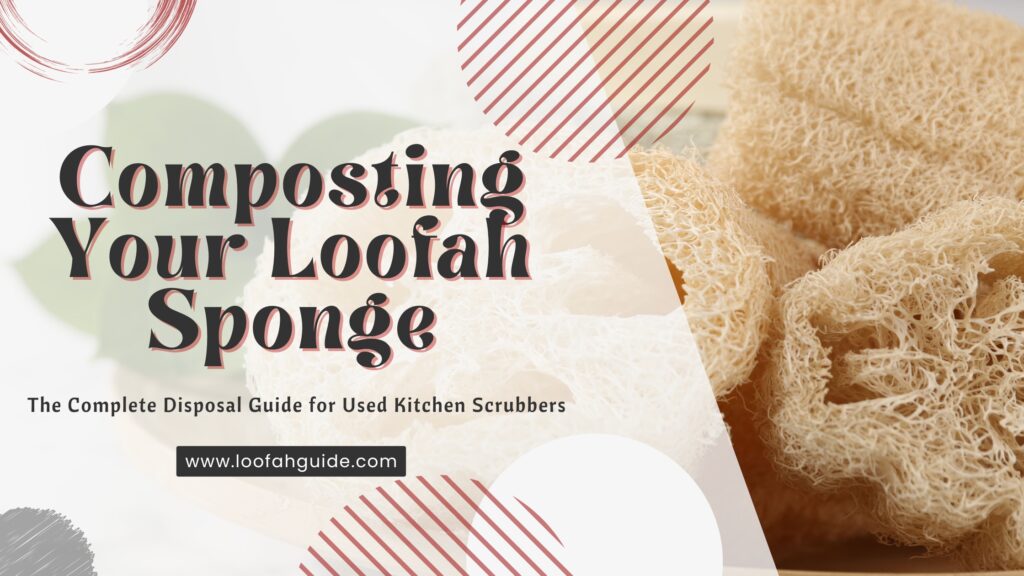
Short answer: A natural loofah is a plant fibre and 100% biodegradable, so a worn-out one can go in a compost bin or pile. Cut it into small pieces to help it break down, and remove any plastic parts or ties first.
That difference is not trivial. Composting your loofah sponge transforms a used household item into a genuine resource, feeding the ground instead of filling a waste site.
This guide exists to give you a thorough, practical understanding of how loofah composting works, what methods produce the fastest results, and how to avoid the handful of pitfalls that slow things down. If you are a home gardener, an apartment renter with a countertop worm bin, or someone who simply wants to throw things away responsibly, the steps ahead will show you exactly what to do.
For those on the business side of things, whether you run a retail store, manage inventory for a spa chain, or import natural goods for distribution, this guide also explains why the compostability of natural loofah is one of the strongest selling points you can put on a label. Businesses sourcing premium Egyptian loofah from established suppliers like Egexo gain a product that carries a genuine environmental promise from harvest through disposal.
Understanding the full life cycle of the products we use, and sell, is what separates thoughtful consumption from mindless waste.
Carbon-to-Nitrogen Ratio and Where Loofah Fits
Every successful compost pile balances carbon-rich materials, often called browns, with nitrogen-rich materials, called greens. Loofah falls firmly into the brown category with an estimated carbon-to-nitrogen ratio of approximately 80 to 1.
This high carbon content means loofah should always be paired with nitrogen-heavy inputs. Here is a reference showing how loofah compares to other common compost ingredients.
| Compost Material | Category | Carbon-to-Nitrogen Ratio | Notes |
|---|---|---|---|
| Natural Loofah Sponge | Brown | 80:1 | Cut into small pieces for faster breakdown |
| Dried Leaves | Brown | 60:1 | Shred before adding |
| Cardboard | Brown | 350:1 | Tear into strips, remove tape |
| Vegetable Kitchen Scraps | Green | 15:1 | Ideal pairing with loofah |
| Coffee Grounds | Green | 20:1 | Excellent nitrogen source |
| Fresh Grass Clippings | Green | 17:1 | Add in thin layers to prevent matting |
| Egg Shells | Neutral | Minimal N content | Adds calcium, crush before composting |
The practical takeaway is straightforward. For every used loofah you add to the pile, toss in a roughly equal volume of vegetable scraps or coffee grounds.
Five Composting Methods Ranked for Loofah Disposal
Not every household composts the same way. Your living situation, available space, and personal preferences determine which method suits you best. Here is how the most common approaches perform specifically with natural loofah material.
Method 1: Tumbler Composting
A rotating compost tumbler is one of the more efficient setups for breaking down loofah. The enclosed drum retains heat well, and regular tumbling ensures consistent oxygen distribution. Loofah pieces placed in a tumbler with balanced green material break down quickly. Tumblers also keep pests away from the material, which matters if you compost in a suburban backyard.
Method 2: Open Pile or Bin Composting
The classic garden compost heap works reliably for loofah disposal. Pile performance depends heavily on how often you turn the material and whether you maintain adequate moisture. In an actively managed open pile, loofah breaks down naturally. Neglected piles take much longer.
Method 3: Trench Composting
This method involves digging a hole or trench in your garden, burying the loofah pieces along with other kitchen and garden waste, and covering it with soil. Soil microorganisms and earthworms handle the rest. Trench composting is low-effort and invisible, ideal for gardeners who want to enrich specific planting areas. Loofah breaks down more slowly underground, depending on soil temperature and moisture.
Method 4: Vermicomposting
Worm bins excel at processing small amounts of food scraps in compact spaces. Red wiggler worms consume softened loofah fiber over several weeks. Pre-soak the loofah pieces in water before adding them to the bin, as worms prefer material that is already partially softened. This method suits apartment living perfectly.
Method 5: Community or Municipal Composting
Many cities now accept natural plant-based materials in curbside green bins. If your municipality offers composting collection, a used loofah sponge qualifies. Processing times vary by facility, but industrial composting operations handle plant fiber efficiently thanks to controlled temperature and mechanical turning.
For businesses and retailers, understanding these methods helps you create better customer education materials. Brands that include disposal guidance on their packaging build loyalty with environmentally motivated shoppers. Suppliers like Egexo offer custom product design services that can incorporate composting instructions directly into your product line.
Buying for a shop or brand? Download the EGEXO catalog to see the kitchen loofah products we make.
Composting Your Loofah Sponge in an Apartment Without Outdoor Space
Urban dwellers often assume composting requires a backyard. It does not. Several indoor-friendly systems handle loofah sponges effectively.
Countertop Worm Bins
Compact vermicomposting bins designed for kitchen counters or under-sink placement process small quantities of food scraps continuously. A standard worm bin can accommodate a used loofah sponge from time to time alongside regular food scraps. Cut the loofah into one-inch cubes, moisten them, and place them in the active feeding tray.
Bokashi Buckets
The Bokashi system uses anaerobic fermentation rather than aerobic decomposition. You layer food waste with Bokashi bran, which contains effective microorganisms, inside a sealed bucket. Loofah pieces ferment within a couple of weeks. The fermented material then needs to be buried in soil or added to a traditional compost pile to finish breaking down, but the Bokashi stage accelerates the overall timeline.
Indoor Compost Collection for Municipal Pickup
If your building or neighborhood participates in a green waste collection program, keep a small sealed container in your kitchen for compostable items. Add your used loofah to this container and set it out on collection day. This requires zero equipment and zero maintenance beyond rinsing the container periodically.
Apartment Composting Quick Reference
| Method | Space Required | Maintenance Level | Loofah Processing Time |
|---|---|---|---|
| Countertop Worm Bin | Small | Moderate, feed weekly | Several weeks |
| Bokashi Bucket | Small | Low, drain liquid regularly | About two weeks plus burial |
| Municipal Green Bin | Minimal | Very Low | Varies by facility |
| Electric Composter | Small | Low, empty regularly | Hours (dehydrates rather than composts) |
Retailers who sell loofah products to urban customers should consider stocking or recommending these composting solutions alongside their scrubbers. Offering an end-of-life pathway increases the perceived value of every product sold.
What Not to Compost and How to Tell Real Loofah from Fake
Identifying Genuinely Compostable Loofah
The word loofah gets applied loosely in the marketplace. Mesh shower poufs made from nylon, foam sponges wrapped in synthetic netting, and plastic scrubbers shaped to resemble natural texture are all sometimes labeled as loofahs. None of these belong in a compost pile.
A real natural loofah has visible plant fibers running in a networked pattern. It feels firm and slightly rough when dry. When wet, it softens but maintains its fibrous structure. It has no synthetic smell, no plastic components, and no artificial color unless dyed, which should be noted on the label.
Material Identification Checklist
| Feature | Natural Loofah (Compostable) | Synthetic Imitation (Not Compostable) |
|---|---|---|
| Texture When Dry | Firm, slightly rough | Soft, spongy, or plasticky |
| Smell | Neutral, earthy, or faintly vegetal | Chemical or plastic odor |
| Color | Natural tan, off-white, or light brown | Bright or artificial colors |
| Burn Test (small fiber) | Smells like burning paper, turns to ash | Melts, smells like plastic |
| Water Absorption | Absorbs slowly, expands gradually | Absorbs instantly or not at all |
| Label Information | Lists Luffa aegyptiaca or natural loofah | May say foam, polyester, or nylon |
Natural loofah from Egypt is grown in the Nile Delta, where the warm climate and fertile soil along the Nile suit the crop. EGEXO has been exporting Egyptian loofah since 2015.
Using Composted Loofah in Your Garden
The humus produced from composted loofah is a valuable soil amendment. Once the loofah has fully broken down and is no longer recognizable as fiber, it contributes several benefits to garden soil.
Soil Structure Improvement
Decomposed loofah fibers create microscopic air channels in the soil. These channels improve drainage in clay-heavy soils and increase water retention in sandy soils. The result is a more balanced growing medium that supports healthier root development.
Carbon Sequestration
This carbon remains in the soil for years, contributing to long-term soil health rather than being released as methane gas, which is what occurs during anaerobic landfill decomposition.
Practical Applications for Loofah Compost
Mix finished loofah compost into garden beds before planting season. Use it as a top dressing around established plants. Blend it into potting soil for container gardening. Add it to raised beds where consistent soil quality matters. Every handful of loofah-derived compost replaces a handful of synthetic soil amendment that you would otherwise need to purchase.
For consumers interested in other ways natural loofah serves the home and garden, Egexo’s raw loofah scrubbers can be used directly as biodegradable plant supports, seed starters, or drainage layers in pots before they ever become compost.
Building a Green Brand Around Compostable Products
Why Compostability Matters for Product Positioning
For retailers, spas, and distributors, carrying compostable loofah products opens several branding opportunities. You can print composting instructions on packaging. You can create social media content showing the composting process. You can partner with local composting organizations for co-branded initiatives. Each of these strategies costs little but builds measurable trust.
What Wholesale Buyers Should Look for in a Compostable Product Line
Sourcing matters as much as marketing. A compostability claim is only as strong as the supply chain behind it. Buyers evaluating loofah suppliers should verify that the product contains no hidden synthetic materials, that no chemical bleaching or coating processes are used, and that the supplier can provide traceability from farm to finished good.
Egexo meets all of these criteria and offers private label manufacturing so businesses can build their own branded line of compostable loofah products. No minimum order on standard products. Private label from 1,000 units. You can request samples to evaluate fiber quality, density, and overall product integrity before placing a wholesale order.
Seasonal Considerations for Loofah Composting
Composting speed depends partly on ambient temperature.
Warm Season Composting (Spring and Summer)
During these months, an outdoor pile with regular turning can process loofah in as few as 25 days. The combination of warm air, active microbes, and abundant green material from garden trimmings creates ideal breakdown conditions.
Cold Season Composting (Fall and Winter)
Insulating your compost bin with straw bales or moving it to a sheltered location helps maintain workable temperatures. Loofah added during winter months may take much longer to fully decompose in an outdoor system. Indoor methods like vermicomposting and Bokashi remain unaffected by outdoor weather.
Year-Round Composting Timeline Summary
Planning your loofah replacement schedule around composting seasons can help you manage pile capacity and ensure consistent decomposition. For businesses, this seasonal data is useful for creating customer-facing content calendars tied to gardening and sustainability themes throughout the year.
FAQ Section
Q1: Is composting your loofah sponge better than throwing it in the trash?
Composting your loofah sponge is better than landfill disposal. In a compost pile, loofah breaks down aerobically and produces nutrient-rich humus. In a landfill, the same loofah decomposes anaerobically, generating methane, a greenhouse gas roughly 28 times more potent than carbon dioxide. Composting reduces methane production while creating a useful soil amendment.
Q2: Do I need to remove anything from my loofah before composting?
Inspect your loofah for any non-plant components before composting. Remove string ties, plastic hanging loops, fabric labels, or synthetic backing material. A pure natural loofah, such as those sourced from Egyptian farms through suppliers like Egexo, contains only plant fiber and requires no preparation beyond cutting it into smaller pieces and rinsing off soap residue.
Q3: Can I compost a loofah that was used with dish soap?
Standard biodegradable dish soap residue will not harm your compost. Rinse the loofah under warm water to remove the bulk of any soap, and it is ready for the pile. If you have a skin condition, ask your doctor.
Q4: How does composting loofah benefit businesses that sell natural products?
Retailers can include composting instructions on packaging, use the compostability claim in marketing materials, and differentiate from competitors selling synthetic alternatives. This adds measurable brand value without additional product cost.
Q5: Where does compostable loofah come from?
Natural loofah from Egypt comes from the Nile Delta region, where alluvial soil and a consistently warm growing season suit the crop. EGEXO has been exporting Egyptian loofah since 2015.
Q6: Can loofah compost replace store-bought fertilizer?
Loofah compost serves as an effective soil conditioner but should be viewed as a supplement rather than a complete fertilizer replacement. For heavy-feeding plants, you may still need additional nutrient inputs. However, regularly adding loofah-derived compost reduces your dependence on purchased soil amendments over time.
Q7: What size should I cut loofah pieces for composting?
Cut or tear used loofah into pieces approximately one to two inches across. This size provides enough surface area for microorganisms to colonize efficiently while being manageable for worm bins and tumbler systems. Pieces larger than three inches decompose noticeably slower because moisture and bacteria penetrate the dense fiber matrix less effectively.
Q8: How can wholesale buyers verify that loofah products are truly compostable?
Request documentation from your supplier confirming the product is 100 percent natural Luffa aegyptiaca with no synthetic additives or chemical coatings. Egexo offers sample orders so buyers can physically check the fiber before committing to bulk purchases through their sample request page.
A Note from EGEXO
There is a detail about loofah composting that rarely gets mentioned but makes a real difference in outcome. The age of the loofah plant at harvest affects how quickly the sponge breaks down after use. Loofah harvested too early contains more moisture and less developed lignin, which means it wears out faster during kitchen use and decomposes almost too quickly in compost, sometimes turning mushy rather than forming good humus. Loofah harvested at full maturity develops a better balance of cellulose and lignin. This produces a sponge that scrubs effectively for weeks and then composts into stable, crumbly humus that benefits soil. At Egexo, we know the product life cycle does not end at the kitchen sink. It ends in the garden. Request a quote or request samples from EGEXO.
Conclusion
Composting your loofah sponge closes a loop that starts in rich agricultural soil and ends by enriching soil once more. Whether you maintain an active backyard pile, a compact apartment worm bin, or simply place your used sponge in a municipal green waste container, the outcome is the same: plant material returned to the earth instead of occupying landfill space for a very long time.
For consumers, this is one of the easiest sustainability habits to adopt. It requires no special equipment, no expertise, and almost no time. For businesses that sell natural loofah products, composting represents a genuine differentiator that builds customer trust, supports marketing efforts, and aligns with the documented purchasing preferences of environmentally conscious shoppers worldwide.
EGEXO is a family-run Egyptian loofah manufacturer and exporter.
Key Takeaways:
- Natural loofah decomposes at different speeds depending on composting method and season
- Loofah is a carbon-rich brown material that pairs well with nitrogen-heavy kitchen scraps
- Indoor composting methods like worm bins and Bokashi systems work for apartment dwellers
- Always verify your loofah is 100 percent natural before composting, and remove any synthetic components
- Businesses gain a powerful marketing advantage by educating customers on loofah compostability
Ready to explore premium compostable loofah products?
- For Wholesale Buyers: Request a quote or download the product catalog
- For Individual Orders: Request a quote or request samples
Keep reading: how to compost a loofah after use and zero-waste dishwashing with loofah.