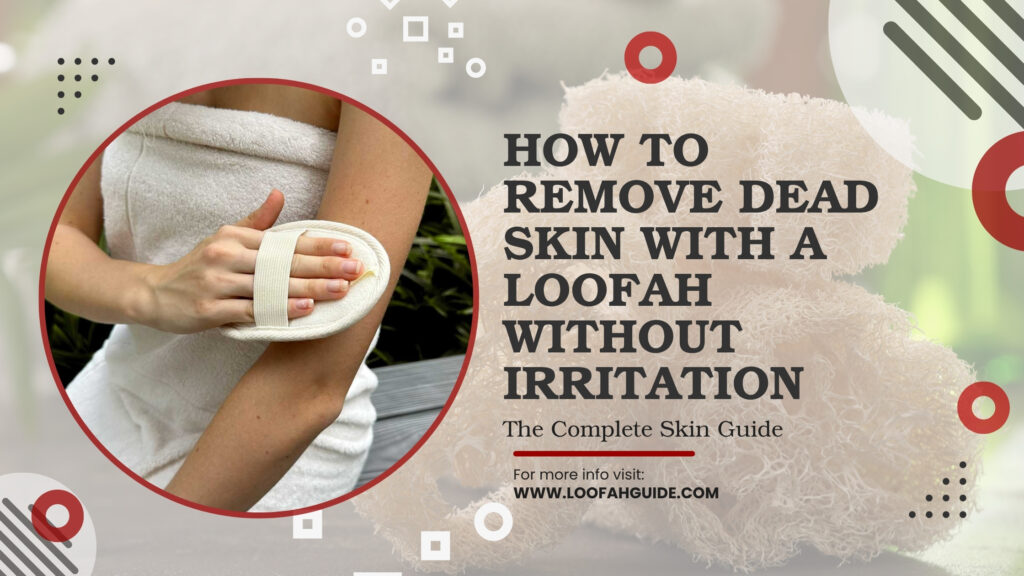
Here is something worth knowing before you reach for your loofah: the way most people exfoliate is actually working against their skin. Too much pressure, a dry loofah, the wrong product grade, or skipping moisturizer afterward can turn what should be a refreshing routine into a source of chronic skin irritation.
Learning to remove dead skin with a loofah without irritation is a skill. The good news is that it takes only a few adjustments to get it right, and the difference in how your skin looks and feels is immediate.
This guide covers the complete picture. You will learn why exfoliation matters biologically, how to choose a loofah that matches your skin type, the exact technique that protects rather than damages the skin barrier, and how to care for your loofah so it remains hygienic and effective. There is also useful information for spa owners and wellness retailers who want to understand what separates a premium natural loofah from an inferior product.
Egyptian loofah, the kind cultivated along the Nile Delta and exported by specialists like Egexo, represents the global standard for natural loofah quality, and understanding why will help both consumers and buyers make better decisions.
What Happens to Your Skin Without Regular Exfoliation
The human body replaces its entire outer skin layer approximately every 28 to 40 days. That process slows with age, stress, poor hydration, and environmental exposure. When dead cells accumulate faster than they shed naturally, the visible result is dullness, uneven tone, clogged pores, and skin that feels rough or dry regardless of how much moisturizer you apply.
Regular, gentle exfoliation interrupts that cycle. A natural loofah is one of the most effective tools for this because it provides mechanical friction across a wide surface area without requiring harsh chemicals or excessive pressure.
The Difference Between Over-Exfoliation and Effective Exfoliation
Over-exfoliation strips the stratum corneum too aggressively, disrupting the skin’s moisture barrier and triggering redness, sensitivity, and breakouts. Effective exfoliation removes only the outermost dead cell layer without disturbing the living cells beneath. The distinction comes down to frequency, pressure, and loofah quality.
| Exfoliation Outcome | Over-Exfoliation Signs | Proper Exfoliation Signs |
|---|---|---|
| Skin Texture | Raw, tight, burning sensation | Smooth, soft, comfortable |
| Skin Color | Red, inflamed | Even tone, healthy glow |
| Moisture Retention | Worse after session | Better after moisturizing |
| Pore Appearance | Enlarged, more visible | Cleaner, tighter-looking |
| Recovery Time | Days needed | None needed |
The table above illustrates why technique and product quality matter so much. A session that crosses into over-exfoliation territory will set your skin back days, not help it.
Choosing the Best Loofah for Gentle Dead Skin Removal
Natural Loofah vs Other Exfoliation Tools
The market offers a wide range of exfoliation tools, from synthetic mesh puffs to silicone scrubbers to chemical peels. Each has its place, but for full-body, regular dead skin removal, natural loofah delivers the best combination of effectiveness and gentleness.
| Tool | Effectiveness | Gentleness | Eco-Friendly | Hygiene | Cost Over Time |
|---|---|---|---|---|---|
| Natural Egyptian Loofah | High | High (correct use) | Yes | Good with care | Low |
| Synthetic Mesh Puff | Moderate | Low-Moderate | No | Poor | Moderate |
| Silicone Scrubber | Moderate | High | Moderate | Excellent | Low |
| Exfoliating Gloves | Moderate | Low-Moderate | Depends | Moderate | Low |
| Chemical Exfoliant | High | Moderate | Varies | N/A | High |
| Dry Body Brush | Moderate | Low | Yes | Good | Low |
For most people seeking to remove dead skin without irritation, a natural Egyptian loofah sits at the top of this comparison when it is sourced from a reputable producer and used correctly.
The bath and body loofah collection from Egexo includes multiple grades and sizes designed for different skin types and use cases.
Understanding Loofah Grades and Skin Type Matching
Not all loofahs carry the same fiber density or softness. A coarse loofah that works well for someone with thick, oily skin can cause real damage to sensitive or mature skin. Understanding the grade system helps consumers choose correctly and helps buyers stock a range that serves their customer base.
| Loofah Grade | Fiber Density | Texture Feel | Best Skin Type | Typical Use |
|---|---|---|---|---|
| Grade A Fine | 130-150 per cm2 | Soft, even | Sensitive, dry, mature | Daily use, gentle routines |
| Grade A Medium | 120-130 per cm2 | Firm, smooth | Normal, combination | 2-3 times weekly |
| Grade B | 100-120 per cm2 | Firm, slightly rough | Oily, normal | 2 times weekly |
| Grade C | Below 100 per cm2 | Rough | Industrial / cleaning | Not for skin |
Consumers should look for Grade A Egyptian loofah from verified sources. When purchasing retail, check for a pale ivory or light yellow color, which indicates proper processing and storage. Dark or gray coloring suggests mold risk or improper drying.
The Complete Step-by-Step Guide to Loofah Exfoliation Without Skin Irritation
This section walks through the full routine from start to finish. Following these steps consistently is what separates people who love their loofah from those who blame the loofah for irritation that was actually caused by technique.
Preparation: Setting Up for Success
Before touching skin with a loofah, two things must happen.
First, your skin needs time in warm water. Five to seven minutes of warm shower exposure softens the outermost dead cell layer, reducing the resistance your loofah needs to overcome. Less resistance means less required pressure, which means less irritation.
Second, your loofah needs to be soaked. Hold it under warm running water for 60 to 90 seconds, then gently squeeze and release several times to ensure water penetrates the full fiber network. A fully saturated loofah is far softer and more pliable than a dry one.
Active Exfoliation: Technique That Protects Skin
Apply your preferred body wash or gentle soap to the soaked loofah. Begin at the feet and lower legs. Use circular motions approximately 3 to 5 centimeters in diameter, moving slowly enough to maintain consistent contact.
The most important rule: let the loofah fiber do the work. The friction of hundreds of natural fibers against softened skin is sufficient to remove dead cells effectively. Adding pressure does not improve results. It simply increases the risk of micro-abrasion and inflammation.
Body areas and recommended technique adjustments:
- Lower and upper legs: Standard circular motion, moderate area coverage
- Hips and buttocks: Wider circles, consistent pressure, good for ingrown hair prevention
- Abdomen: Lighter pressure, avoid bony prominences
- Back: Long strokes or circular, particularly beneficial for back congestion
- Chest and decolletage: Very light pressure, skin here is thin
- Arms: Standard circular from wrist toward shoulder
- Underarms: Once per week maximum, very gentle
Never use a loofah on:
- The face (the skin is too delicate for body loofah fiber)
- Fresh shave areas for at least 24 hours
- Actively irritated, sunburned, or broken skin
- Areas with open wounds or active skin conditions
Post-Exfoliation: Protecting What You Just Revealed
Newly exfoliated skin is at its most receptive state for hydration. The dead cell barrier that previously blocked absorption is gone, which means any product you apply will penetrate more effectively.
Rinse with cool water for 30 to 60 seconds. This reduces surface heat and helps close pores. Pat dry with a clean, soft towel. Within 3 minutes of drying, apply a moisturizer, body oil, or serum appropriate for your skin type. The hydration window is brief, so act quickly.
Loofah Exfoliation and Specific Skin Goals
Achieving Brighter, More Even Skin Tone
Skin dullness is almost always partially caused by accumulated dead cells that scatter light unevenly. Within 2 to 3 weeks of consistent, twice-weekly loofah exfoliation, most users notice a visible improvement in skin brightness. The effect is most dramatic in areas like the elbows, knees, and ankles, where dead skin tends to accumulate thickly.
Managing Body Acne and Congested Pores
Clogged pores are a primary driver of body acne, particularly on the back and chest. Gentle loofah exfoliation 2 to 3 times weekly clears the follicle openings, reducing blackhead formation and the bacterial buildup that leads to breakouts. Use a clean loofah every time and avoid sharing, as loofah can transfer bacteria between users.
Preparing Skin for Self-Tanning Products
Self-tanning products develop most evenly on freshly exfoliated skin. Dead cells absorb tanning agents inconsistently, leading to patchy, streaky results. Exfoliate with a natural loofah 24 to 48 hours before applying self-tanner, paying particular attention to knees, elbows, ankles, and wrists, where skin is thickest.
Loofah Hygiene: The Part Most People Skip
Inadequate loofah care is the actual cause of most loofah-related skin problems. A contaminated loofah reintroduces bacteria to freshly exfoliated skin, which has reduced protective barrier function immediately after use, creating the exact conditions for irritation and infection.
Loofah Care Schedule
| Task | Frequency | Method | Benefit |
|---|---|---|---|
| Thorough rinse | After every use | Running warm water until clear | Removes debris and soap residue |
| Air drying | After every use | Hang vertically in ventilated space | Prevents mold and bacterial growth |
| Deep cleaning | Weekly | 5-minute soak in 1 part vinegar to 4 parts water | Kills mold spores and odor bacteria |
| Sunlight exposure | Weekly | Hang in direct sunlight for 30 minutes | UV sanitization |
| Fiber inspection | Every 2 weeks | Check color, smell, and texture | Early detection of breakdown |
| Full replacement | Every 3-4 weeks | Discard and replace entirely | Old fibers harbor bacteria regardless of cleaning |
One practical tip from loofah cultivation experts: the speed at which a loofah dries between uses is one of the strongest predictors of how long it remains safe and effective. Investing in a simple hanging hook in a well-ventilated bathroom area extends loofah life and hygiene significantly.
For consumers interested in always having a fresh loofah available, subscribing to a monthly natural loofah supply is increasingly popular among skincare-conscious buyers. Shop Egexo’s bath body collection for premium Egyptian options.
What Spa Professionals and Retailers Should Know About Loofah Quality
For businesses that incorporate loofah into treatments, retail shelves, or spa product lines, the quality of the loofah product is a direct reflection of the brand.
Clients who receive a loofah treatment at a spa will associate their experience with the product itself. If the loofah scratches, sheds fibers, or carries any off-putting odor, the complaint lands on the spa’s reputation, not the supplier’s.
This is why sourcing from a verified, direct-farm Egyptian loofah supplier matters so much for commercial buyers. Egexo’s custom product design service allows spa brands and retailers to specify exact dimensions, fiber grades, and packaging requirements while maintaining the Egyptian quality standard their clients deserve.
Quality Evaluation Checklist for Wholesale Buyers
| Evaluation Point | Pass Criteria | Fail Criteria |
|---|---|---|
| Color | Pale ivory to light yellow | Brown, dark spots, gray tones |
| Smell | Neutral / slight natural scent | Chemical, musty, or sour |
| Texture (dry) | Firm but not rigid, uniform | Brittle, flaking, inconsistent |
| Texture (wet) | Soft, pliable, uniform flex | Scratchy hot spots, uneven |
| Fiber Shedding | Minimal on first use | Heavy shedding on first use |
| Dimensions | Within 5% of stated spec | More than 5% variance |
| Moisture Content | Below 12% | Above 14% |
Businesses ready to evaluate Egyptian loofah at Grade A standard can request samples before committing to any volume. Egexo also offers full private labeling support for retailers who want to build their own branded loofah line.
For a complete overview of available products, grades, and MOQs, download the Egexo product catalog or visit wholesaleloofah.com for additional wholesale resources and market information.
Common Loofah Myths Addressed
Myth: A loofah should feel scratchy to work effectively. Reality: Effective exfoliation does not require pain or discomfort. If your loofah feels scratchy, it is either too dry, too coarse for your skin type, or being used with too much pressure.
Myth: You only need to replace a loofah when it looks visibly moldy. Reality: Bacterial colonies establish well before visible mold appears. The 3 to 4 week replacement rule is based on fiber degradation timelines, not visible contamination.
Myth: Soaking a loofah makes it less effective. Reality: Saturated loofah fiber is more effective and significantly gentler than dry fiber. Soaking is not optional for sensitive skin users.
Myth: Natural and synthetic loofahs perform the same way. Reality: The fiber structure, porosity, and biodegradability of natural loofah create a genuinely different user experience. Synthetic options shed microplastics, hold bacteria more readily, and typically deliver uneven pressure distribution.
Expert Insight from Egexo
The most overlooked quality factor in natural loofah is fiber uniformity, not just density. Two loofahs can have similar overall fiber counts but very different exfoliation experiences depending on how evenly those fibers are distributed throughout the product. Gaps or dense clusters in the fiber network create pressure hot spots during use, which is what causes the localized irritation many consumers blame on their technique.
At Egexo, our quality control process specifically evaluates cross-section fiber distribution using standardized sampling from each production batch. This is one of the reasons our Grade A products perform consistently across different users and skin types. The Egyptian climate and Nile Delta growing conditions that our farms benefit from naturally produce more uniform Luffa aegyptiaca than tropical growing regions, giving our loofah a structural advantage from the ground up. Learn more about our farm-to-export standards and why they matter for end product quality.
FAQ Section
Q1: How do I remove dead skin with a loofah without causing irritation to sensitive skin? A: For sensitive skin, choose a Grade A fine-fiber natural Egyptian loofah, soak it for 90 seconds in warm water before use, and apply it only after 5 to 7 minutes in a warm shower. Use the lightest possible pressure in slow circular motions, limit sessions to once per week, and always apply a fragrance-free, barrier-supporting moisturizer within 3 minutes of finishing. Avoid hot water, which increases inflammation risk.
Q2: What is the right loofah to use for dead skin removal? A: A Grade A natural Egyptian loofah with a fiber density above 120 per square centimeter is the best choice for most skin types. Look for pale ivory or light yellow coloring and a neutral dry scent. Avoid anything that feels scratchy when dry or smells chemical. Egexo’s body loofah range is produced to Grade A standards from Nile Delta farms with 25-plus years of cultivation experience.
Q3: How long should I exfoliate with a loofah per session? A: A full-body loofah exfoliation session should take 5 to 10 minutes. Spending more time does not improve results and increases irritation risk. For specific problem areas like elbows, knees, or the back, add an extra 30 to 60 seconds of circular motion. Never exfoliate the same area more than once per session, as this significantly increases friction damage even with light pressure.
Q4: Can I use a loofah every day? A: Daily loofah use is too frequent for most skin types and will cause cumulative irritation, sensitivity, and barrier disruption over time. Normal skin can handle 3 to 4 sessions per week maximum. Dry or sensitive skin should limit use to once or twice weekly. The skin needs recovery time between exfoliation sessions to restore its protective barrier and complete the natural cell renewal cycle.
Q5: Why does my skin turn red after using a loofah? A: Mild transient redness immediately after loofah exfoliation is normal and typically fades within 10 to 20 minutes. Persistent redness, burning, or peeling indicates over-exfoliation. Common causes include too much pressure, a loofah that is too coarse for your skin type, using the loofah on dry skin, or exfoliating too frequently. Switching to a softer grade and reducing session frequency usually resolves the issue within a week.
Q6: What is the best way to dry a loofah to keep it hygienic? A: After rinsing thoroughly, hang the loofah vertically in a well-ventilated area outside the shower cubicle. Gravity drainage combined with air circulation allows complete drying between uses. Never store a wet loofah in a closed bag, on the shower floor, or against the wall in a damp corner. If you live in a humid climate, placing the loofah near a window with natural airflow significantly extends its hygienic lifespan.
Q7: Are natural loofahs really better than synthetic ones for exfoliation? A: For gentle dead skin removal, natural Egyptian loofah outperforms synthetic alternatives in fiber uniformity, pressure distribution, biodegradability, and long-term skin compatibility. Synthetic mesh puffs shed microplastics, retain bacteria more effectively in their sealed fiber pockets, and typically deliver uneven friction that is more likely to cause localized irritation. The environmental impact of replacing synthetic loofahs also adds up significantly over time.
Q8: Where can wholesale buyers source authentic Egyptian loofah in bulk? A: Egexo, based in Egypt’s Nile Delta region, is a direct-farm Egyptian loofah supplier with over 25 years of cultivation and export experience. They serve wholesale buyers including spa brands, health retailers, and importers in more than 40 countries. Buyers can request a wholesale quotation or explore the complete range through the Egexo product catalog.
Conclusion
Removing dead skin with a loofah without irritation is entirely achievable for every skin type, but it requires understanding what you are doing and why each step matters. Preparation, technique, product quality, and post-care are all equally important. Shortcut any one of them and the loofah becomes the problem rather than the solution.
For consumers, the key lessons are simple: soak your loofah, use light pressure, exfoliate damp skin, moisturize immediately after, and replace your loofah on a 3 to 4 week schedule. Follow those five rules and you will see consistent, irritation-free results.
For spa professionals and retail buyers, the quality of the loofah you source defines the experience your customers have. Grade A Egyptian loofah from a direct-farm supplier is the only way to ensure that experience is consistently positive.
Key Takeaways:
- Pre-soak both your skin and your loofah before every exfoliation session
- Circular motions with minimal pressure are the most effective and least irritating technique
- Natural Egyptian loofah is superior to synthetic alternatives in every meaningful category
- Loofah hygiene, including weekly cleaning and timely replacement, is non-negotiable for skin safety
- Grade A fiber density and color are the fastest quality indicators for both consumers and buyers
Ready to experience Egyptian loofah quality?
- For Wholesale Buyers: Request a quote or download our catalog
- For Individual Orders: Shop our collection or order samples