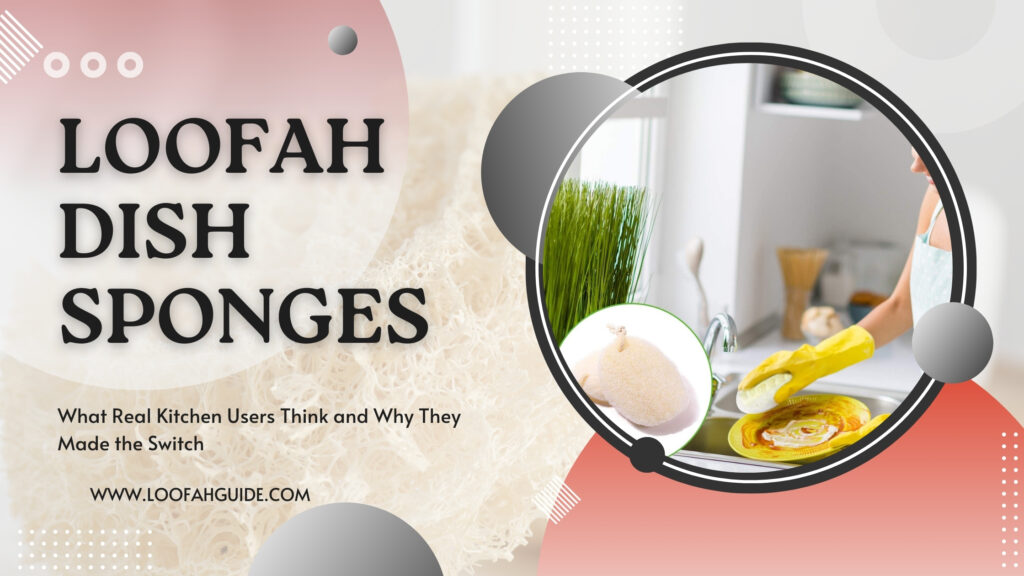
The average household discards between 24 and 36 synthetic sponges annually, contributing to an estimated 400 million pounds of plastic sponge waste entering landfills each year across North America and Europe combined. This mounting environmental concern has fueled growing interest in natural alternatives, with loofah dish sponges emerging as the most viable plastic-free option for everyday kitchen cleaning.
But do these plant-based scrubbers actually perform as well as their synthetic counterparts? The question appears constantly in online forums, social media discussions, and product review sections. After analyzing thousands of user experiences and consulting with agricultural specialists who cultivate these remarkable gourds, a clear picture emerges.
Loofah dish sponges genuinely work. They effectively remove grease, dried food, and everyday residue from cookware, dishes, and kitchen surfaces. However, success depends heavily on product quality and proper usage techniques. Inferior loofah products have unfortunately given natural sponges a poor reputation among users who purchased cheap, poorly processed alternatives that disintegrated within days.
This guide delivers everything needed to make informed decisions about kitchen loofah. Home cooks will find practical advice on selection, use, and maintenance. Those exploring business opportunities in sustainable products will discover market insights and supplier evaluation criteria. Everyone benefits from understanding what separates exceptional loofah from disappointing products.
Egyptian loofah represents the acknowledged quality benchmark in the natural sponge industry. Suppliers like Egexo have cultivated these plants for over 25 years, developing expertise that produces consistently superior kitchen scrubbers. Understanding why origin matters helps explain the dramatic quality variations users encounter.
Understanding How Loofah Dish Sponges Actually Clean
The cleaning mechanism of natural loofah differs fundamentally from synthetic sponges, which explains both its advantages and the adjustment period some users experience. Grasping this science helps users maximize effectiveness while setting realistic expectations.
Loofah originates from the mature fruit of the Luffa aegyptiaca plant. When the gourd fully ripens and dries on the vine, the flesh decomposes naturally, leaving behind an intricate network of cellulose fibers. These fibers form an interconnected matrix containing thousands of microscopic chambers that trap debris, absorb cleaning solutions, and create friction against surfaces.
Unlike synthetic sponges that rely primarily on absorption, loofah combines absorption with mechanical action. The fiber network physically lifts and dislodges food particles through gentle abrasion while simultaneously absorbing greasy residue into its cellular structure. This dual-action cleaning explains why many users report needing less dish soap when using natural loofah compared to foam sponges.
The Cellular Architecture of Effective Cleaning
Microscopic examination reveals that quality loofah contains approximately 60 percent cellulose forming the primary structural fibers, 30 percent hemicellulose providing flexibility and water absorption capacity, and 10 percent lignin contributing rigidity and resistance to degradation. This natural composition creates a material that softens when wet for safe surface contact yet maintains enough structure for effective scrubbing.
The density of this fiber network varies significantly based on growing conditions, harvest timing, and processing methods. Premium Egyptian loofah from the Nile Delta typically measures 85 to 95 individual fibers per square centimeter. Products from other regions commonly fall in the 50 to 75 range. This density difference directly impacts cleaning performance and longevity in ways users immediately notice.
For those interested in the complete journey from plant to kitchen product, resources at Egexo’s farm to export documentation provide fascinating insight into how quality loofah reaches consumers worldwide.
Collecting Honest Feedback from Loofah Dish Sponge Users
Rather than relying on manufacturer claims, examining actual user experiences provides the most valuable guidance for those considering natural kitchen scrubbers. Patterns emerge clearly when analyzing feedback from verified purchasers across multiple retail platforms and community forums.
What Users Consistently Praise
Several positive attributes appear repeatedly in favorable reviews, suggesting genuine advantages rather than marketing influence:
Odor resistance ranks among the most frequently mentioned benefits. Synthetic sponges notoriously develop unpleasant smells within one to two weeks of regular use, even with careful rinsing. Users report that properly maintained loofah remains odor-free throughout its entire useful life of four to eight weeks. The natural fiber structure dries more completely between uses, preventing the bacterial growth responsible for sponge smell.
Grease-cutting ability surprises many first-time users. The cellular structure of loofah appears particularly effective at breaking down and absorbing cooking oils. Multiple reviewers specifically mention reduced dish soap consumption after switching, with estimates ranging from 20 to 40 percent less soap needed per dishwashing session.
Cookware safety generates positive comments from users who previously struggled with scratched non-stick surfaces. When properly hydrated, loofah fibers soften enough to clean delicate coatings without damage while remaining effective on tougher surfaces like cast iron and stainless steel.
Where Users Express Disappointment
Negative reviews cluster around identifiable issues that typically trace to product quality or usage misunderstandings:
Rapid deterioration frustrates users who purchased low-quality loofah expecting durability. Products with loose, sparse fiber structures fall apart within days, leaving fibers on dishes and creating the impression that loofah simply does not work. These experiences usually involve inexpensive products from unknown sources with no quality standards.
Initial texture concerns appear in reviews from users expecting synthetic sponge softness. Natural loofah feels rougher when dry, leading some to abandon use before discovering that proper hydration significantly softens the material. Clear usage instructions would prevent many of these negative experiences.
Mold and mildew problems arise when users store loofah improperly. Unlike synthetic sponges designed for constant moisture exposure, natural loofah requires thorough drying between uses. Users who leave loofah sitting in water or enclosed spaces encounter hygiene issues that proper storage would prevent.
Performance Comparison Across Kitchen Tasks
Different kitchen cleaning challenges reveal loofah strengths and limitations. Understanding where natural scrubbers excel and where they face challenges helps users make appropriate application decisions.
| Kitchen Task | Loofah Performance | Notes and Tips |
|---|---|---|
| Greasy pots and pans | Excellent | Natural fibers absorb and lift oil effectively |
| Baked-on food | Very Good | Brief soaking helps, then loofah loosens residue |
| Non-stick cookware | Excellent | Gentle when wet, no scratching concerns |
| Cast iron | Very Good | Provides scrubbing without removing seasoning |
| Stainless steel | Excellent | Removes residue without visible scratching |
| Glass bakeware | Excellent | Safe and effective on all glass surfaces |
| Delicate china | Good | Use light pressure on gilded or painted pieces |
| Ceramic dishes | Excellent | Standard dishwashing works perfectly |
| Plastic containers | Good | May require extra passes for oily residue |
| Countertop wiping | Moderate | Better tools exist for flat surface wiping |
The table reveals that loofah dish sponges perform best on cookware and dishes requiring actual scrubbing action. For tasks like wiping countertops or cleaning up liquid spills, traditional cloths or paper towels remain more practical. Loofah works as a scrubbing tool rather than a general-purpose wiper.
For those seeking kitchen loofah products, specialized suppliers maintain selections designed specifically for dishwashing applications. Browse kitchen loofah options to see the variety available for different cleaning needs.
Selecting Quality Loofah Dish Sponges
The dramatic quality range among loofah products makes selection criteria essential knowledge. Whether shopping for personal use or evaluating products for retail inventory, these factors reliably distinguish superior loofah from disappointing alternatives.
Visual and Physical Inspection Points
Before purchasing, examine loofah products for these quality indicators:
Fiber Density: Quality loofah appears tightly woven with minimal visible gaps between fiber strands. When held against light, dense loofah shows an even, consistent network rather than scattered, irregular patterns. This density directly correlates with cleaning effectiveness and product longevity.
Color Consistency: Natural loofah ranges from cream to light tan. Bright white coloring indicates bleaching, which weakens fibers and may introduce chemical residues. Uneven coloring or dark spots suggest improper drying during processing, potentially indicating mold susceptibility.
Structural Integrity: Gently flex the loofah to assess fiber connections. Quality products bend without crumbling or shedding fibers. Brittle loofah that breaks easily was likely over-dried or harvested too late, resulting in inferior performance.
Weight Assessment: Dense loofah feels substantial for its size. Lightweight, airy products lack the fiber density needed for effective scrubbing and typically deteriorate quickly. Compare similar-sized products to identify those with superior density.
Aroma Evaluation: Fresh, properly processed loofah has a neutral or slightly earthy smell. Chemical odors indicate bleaching or artificial treatment. Musty smells suggest moisture problems during storage that may indicate mold presence.
Quality Verification Checklist
| Quality Factor | Acceptable Standard | Warning Signs |
|---|---|---|
| Fiber visibility | Tight, uniform pattern | Sparse, irregular gaps |
| Color | Natural cream to tan | Bright white or dark spots |
| Flexibility | Bends without breaking | Brittle, crumbles easily |
| Weight | Dense, substantial | Lightweight, airy |
| Smell | Neutral or earthy | Chemical or musty |
| Thickness | Minimum 1 inch | Paper thin sections |
| Surface feel | Consistent texture | Rough and smooth patches |
Understanding quality standards helps consumers and buyers alike recognize products worth purchasing.
Proper Care Extends Loofah Lifespan Significantly
Maintenance practices dramatically impact how long loofah dish sponges remain effective and hygienic. Users who follow proper care routines consistently report lifespan at the upper end of the four to eight week range, while those who neglect maintenance often discard loofah prematurely.
Essential Daily Habits
After each dishwashing session, thorough rinsing removes soap residue and food particles that would otherwise decompose within the fibers. Hold the loofah under running water while squeezing repeatedly until water runs clear. This step takes only 15 to 20 seconds but significantly impacts hygiene and longevity.
Complete drying between uses represents the single most important maintenance factor. After rinsing, squeeze firmly to extract maximum water, then place the loofah in a location with good air circulation. Many users find that suction-mounted holders positioned near the sink work perfectly, keeping loofah accessible while ensuring airflow reaches all surfaces.
Avoid storing loofah in enclosed soap dishes, inside cabinets, or anywhere that restricts airflow. Unlike synthetic sponges engineered for moisture retention, natural loofah needs to dry completely between uses to prevent bacterial growth and fiber degradation.
Weekly Sanitization Methods
Regular deep cleaning maintains hygiene throughout the loofah’s useful life. Choose the method most convenient for your routine:
Microwave Sanitization: Thoroughly saturate the loofah with water, place it in a microwave-safe container, and heat on high power for 60 to 90 seconds. The heat kills bacteria while refreshing fiber texture. Allow cooling before handling. This method proves most effective for rapid sanitization.
Vinegar Treatment: Prepare a solution of one part white vinegar to two parts water. Submerge the loofah completely and soak for 15 to 20 minutes. The acidic environment neutralizes odor-causing bacteria while remaining gentle on natural cellulose fibers. Rinse thoroughly and dry completely after treatment.
Boiling Water Method: Bring a pot of water to rolling boil, remove from heat, and submerge the loofah for five minutes. This thermal treatment sanitizes effectively without the electromagnetic concerns some users have regarding microwaves. Ensure complete drying afterward.
Dishwasher Sanitization: Place loofah on the top rack and run a hot water sanitize cycle. This method works well for users who already run daily dishwasher loads, adding no extra effort while maintaining loofah hygiene.
Lifespan Expectations and Replacement Timing
Understanding realistic longevity helps users assess product value and plan replacement schedules. Quality loofah dish sponges follow predictable usage patterns that indicate remaining useful life.
| Usage Phase | Time Period | Characteristics | Action Required |
|---|---|---|---|
| Break-in | Days 1 to 3 | Fibers softening, texture adjusting | Normal use, allow hydration |
| Peak performance | Weeks 1 to 4 | Optimal cleaning, firm structure | Regular maintenance |
| Gradual decline | Weeks 5 to 6 | Slightly softer, still effective | Monitor condition closely |
| End of life | Weeks 7 to 8 | Noticeably worn, fiber loosening | Prepare replacement |
| Compost ready | Week 8 plus | Degraded structure, reduced effectiveness | Replace and compost |
These timeframes assume daily use with proper maintenance. Light use extends lifespan while heavy commercial use accelerates wear. Quality Egyptian loofah typically reaches the upper end of these ranges, while products from other origins often require earlier replacement.
Several indicators signal replacement time: persistent odor despite sanitization, visible fiber separation or thinning, noticeably reduced scrubbing effectiveness, and slimy texture that does not resolve with cleaning. When these signs appear, composting the old loofah and beginning fresh optimizes both hygiene and cleaning performance.
For those using loofah in commercial or high-volume settings, requesting samples allows testing durability under actual usage conditions before committing to larger orders.
Environmental Advantages of Natural Kitchen Scrubbers
Beyond practical cleaning performance, loofah dish sponges deliver meaningful environmental benefits that resonate with increasingly eco-conscious consumers. Understanding these advantages helps individuals reduce household environmental impact while providing retailers with compelling marketing messages.
Microplastic Elimination
Every synthetic sponge sheds microscopic plastic particles during use. Research estimates that a single plastic sponge releases over 1,000 microplastic particles with each washing session. These particles flow directly into wastewater systems, eventually reaching oceans, lakes, and rivers where they accumulate in sediments and enter marine food chains.
Natural loofah produces zero microplastics. The only particles shed during use are biodegradable plant fibers that decompose completely in aquatic environments without ecological harm. For households seeking to minimize microplastic contribution, switching dish sponges represents an impactful, low-effort change.
Complete Biodegradability
When a synthetic sponge enters a landfill, it persists for 200 years or more before fully decomposing. During this time, it slowly releases chemical compounds into surrounding soil and groundwater. Multiply this impact by the billions of sponges discarded annually, and the cumulative environmental burden becomes staggering.
Natural loofah composts completely within 25 to 30 days under standard composting conditions. Users can add worn loofah directly to backyard compost bins, municipal composting programs, or even bury directly in garden soil. The decomposing fibers actually contribute beneficial organic matter to soil structure.
Sustainable Agricultural Origin
Loofah cultivation represents regenerative agriculture rather than extractive manufacturing. The plants require minimal water compared to many crops, thrive without synthetic pesticides when properly managed, and naturally improve soil quality through organic matter cycling. Purchasing loofah supports farming communities while minimizing supply chain environmental impact.
The farm to export process documentation reveals how sustainable cultivation practices translate into quality products reaching consumers worldwide.
Market Trends and Business Potential
The sustainable household products sector continues rapid expansion, creating opportunities for retailers, distributors, and entrepreneurs. Understanding market dynamics helps those considering loofah products for business ventures.
Growth Trajectory Analysis
| Market Indicator | Current Status | Five Year Projection |
|---|---|---|
| Global sustainable cleaning market | 24.5 billion USD | 38.2 billion USD |
| Annual growth rate | 8.5 percent | Continuing acceleration |
| Natural sponge segment growth | 9.2 percent annually | Above market average |
| Consumer premium willingness | 62 percent pay more for eco products | Rising with awareness |
| Repeat purchase rate quality loofah | 73 percent customer retention | Stable with quality |
These figures indicate sustained demand growth with no signs of plateau. Consumer awareness of plastic pollution continues spreading through media coverage and educational initiatives, driving behavioral change toward sustainable alternatives.
Success Factors for Retail
Retailers succeeding with loofah products share common approaches. Quality sourcing proves non-negotiable. Stores stocking inferior loofah experience high return rates, negative reviews, and damaged reputation. Premium Egyptian loofah costs more per unit but generates positive customer experiences that build loyalty and word-of-mouth referrals.
Effective merchandising positions loofah as premium sustainable alternatives rather than cheap disposables. This positioning justifies appropriate pricing while attracting customers who prioritize quality and environmental responsibility. Cross-merchandising with complementary eco-friendly products encourages larger purchases.
Customer education reduces returns and negative feedback. Including care instructions with products, training sales staff on proper usage, and providing in-store demonstrations all contribute to successful customer outcomes. Satisfied customers become repeat buyers and recommend products to others.
Businesses exploring wholesale sourcing can request quotations to evaluate pricing structures and minimum order requirements.
Wholesale Buyer Considerations
For those evaluating loofah products for business purposes, additional factors beyond individual product quality influence supplier selection and purchasing decisions.
Supplier Evaluation Framework
| Assessment Area | Key Considerations | Verification Methods |
|---|---|---|
| Product consistency | Same quality across batches | Order samples from multiple batches |
| Production capacity | Ability to fulfill ongoing demand | Request capacity documentation |
| Quality control | Sorting and grading processes | Ask for QC procedure details |
| Export experience | Familiarity with international shipping | Request destination country references |
| Communication | Responsiveness and clarity | Test response time and accuracy |
| Flexibility | Willingness to customize orders | Discuss specific requirements |
| Documentation | Proper certificates and paperwork | Request sample documentation |
Established suppliers like Egexo provide transparent information across all these areas. The product catalog offers comprehensive product specifications while sample programs enable quality verification before larger commitments.
Private Label Opportunities
Retailers seeking differentiated product lines can develop custom branded loofah products through private label manufacturing. This approach allows unique packaging, specific product configurations, and brand identity development without managing agricultural operations directly.
Custom product development through design services enables creation of loofah products tailored to specific market positioning or customer needs.
Frequently Asked Questions About Loofah Dish Sponges
Q1: Do loofah dish sponges work as well as synthetic sponges for everyday dishes?
Quality loofah dish sponges clean everyday dishes effectively and many users report superior grease removal compared to synthetic alternatives. The natural fiber structure creates mechanical cleaning action that lifts food residue while absorbing oils into the cellular matrix. Success depends entirely on product quality, with premium Egyptian loofah performing significantly better than cheap alternatives. Users should expect a brief adjustment period as they learn optimal pressure and technique for natural scrubbers.
Q2: How do I prevent my loofah dish sponge from getting smelly or moldy?
Preventing odor and mold requires proper drying between uses. After each dishwashing session, rinse the loofah thoroughly and squeeze firmly to remove excess water. Store in a location with excellent air circulation, avoiding enclosed spaces or pooled water. Weekly sanitization through microwave heating, vinegar soaking, or boiling water treatment maintains hygiene throughout the product lifespan. Properly maintained loofah remains odor-free for its entire useful life of four to eight weeks.
Q3: Will loofah scratch my non-stick pans or delicate dishes?
Natural loofah softens significantly when wet, making it safe for non-stick cookware and delicate surfaces under normal use. The cellulose fibers provide cleaning action without the harsh abrasiveness of plastic scrub pads or metal scouring tools. New loofah should be soaked in warm water for 10 to 15 minutes before first use on delicate surfaces. Users consistently report that quality loofah cleans effectively without scratching when proper hydration and reasonable pressure are applied.
Q4: What makes Egyptian loofah better than loofah from other countries?
Egyptian loofah demonstrates measurably superior fiber density, typically 85 to 95 fibers per square centimeter compared to 50 to 75 for products from other origins. This density results from optimal Nile Delta growing conditions including climate, soil composition, and water quality combined with cultivation expertise refined over generations. Higher fiber density translates directly to better cleaning performance, longer product life, and more consistent quality across batches.
Q5: How long should a loofah dish sponge last with daily use?
Premium quality loofah dish sponges typically last four to eight weeks with daily kitchen use. Products with dense fiber structure from reputable sources consistently reach the upper end of this range when properly maintained. Lower quality loofah from unknown sources may deteriorate within one to two weeks. Replacement indicators include persistent odor despite cleaning, visible fiber separation, reduced scrubbing effectiveness, and slimy texture that does not resolve with sanitization.
Q6: Are loofah dish sponges more hygienic than regular sponges?
Research indicates that properly maintained natural loofah harbors fewer bacteria than synthetic sponges tested under similar conditions. The fiber structure dries more completely between uses, creating less hospitable conditions for bacterial growth compared to moisture-retaining plastic foams. However, improper storage that prevents complete drying can create hygiene problems with any sponge type. Following recommended care practices ensures natural loofah maintains excellent hygiene throughout its useful life.
Q7: Where can I buy quality loofah dish sponges in bulk for my store?
Quality wholesale loofah requires sourcing from established suppliers with demonstrated cultivation expertise and export experience. Suppliers should offer product samples, provide clear quality specifications, and maintain consistent production standards. The Egexo wholesale portal provides access to premium Egyptian loofah with flexible minimum order quantities and sample programs that allow quality verification before larger commitments.
Expert Insight from Egexo
After 25 years cultivating loofah in the Nile Delta, we understand why kitchen loofah quality varies so dramatically between suppliers. The critical factor most producers overlook is harvest timing precision. Loofah fibers reach peak density during a narrow window of approximately seven to ten days when the gourd has dried sufficiently on the vine but before fibers become brittle. Harvesting earlier produces soft, weak loofah that disintegrates quickly in kitchen use. Harvesting later yields brittle fibers that scratch surfaces and shed during washing. Our farmers inspect plants individually during this critical period, selecting only gourds at optimal maturity. This labor-intensive approach cannot be replicated by high-volume, low-cost producers who harvest entire fields simultaneously regardless of individual plant readiness. The result is loofah with consistent fiber density that performs reliably across millions of products annually.
Conclusion
The verdict from real kitchen users is clear: loofah dish sponges work effectively when product quality meets reasonable standards. Users who source premium natural loofah and follow proper maintenance practices report cleaning performance equal to or exceeding synthetic alternatives, with added benefits of odor resistance, environmental sustainability, and often longer useful life.
The key insight from analyzing thousands of user experiences is that negative reviews almost always trace to product quality issues rather than inherent limitations of loofah as a material. Cheap, poorly processed loofah gives the entire category a poor reputation, while premium Egyptian loofah earns loyal users who never return to synthetic sponges.
Key Takeaways:
- Quality loofah dish sponges effectively clean everyday cookware and dishes with superior grease-cutting ability
- Proper drying between uses prevents odor and extends useful life to four to eight weeks
- Egyptian loofah demonstrates measurably higher fiber density resulting in better performance and longevity
- Environmental benefits include zero microplastic shedding and complete biodegradability within 30 days
- Product quality varies dramatically, making supplier selection crucial for satisfactory experiences
Ready to try quality loofah dish sponges?
- For Personal Use: Browse kitchen loofah options or order samples
- For Business Purchasing: Request wholesale pricing or download the product catalog