Why Natural Facial Exfoliation Matters for Your Skin Health
Every single day, your skin works tirelessly to regenerate itself. Dermatological research confirms that the human body sheds between 30,000 and 40,000 dead skin cells per minute, yet many of these cells remain trapped on the surface. When you use a loofah for gentle facial exfoliation, you actively support this natural renewal process and unlock the radiant complexion beneath accumulated debris.
The practice of loofah exfoliation dates back thousands of years to ancient Egyptian beauty rituals. Today, this time-tested method attracts attention from skincare enthusiasts seeking natural alternatives to chemical exfoliants and plastic-based scrubbers. The appeal extends beyond individual consumers to wellness professionals, spa operators, and retailers recognizing growing demand for authentic natural skincare solutions.
Understanding proper facial exfoliation technique transforms results dramatically. Incorrect methods can damage delicate facial tissue, while proper approaches reveal smoother texture, improved tone, and enhanced product absorption. This comprehensive resource delivers the knowledge needed to exfoliate safely and effectively, whether you seek personal skincare improvement or professional expertise for your wellness business.
Throughout this guide, you will discover the science behind effective exfoliation, criteria for selecting facial-appropriate loofahs, detailed technique instructions, maintenance protocols, and insights valuable for both home users and industry professionals. The information presented draws from established skincare principles and expertise from leading Egyptian loofah cultivators with decades of agricultural experience.
The Science of Mechanical Exfoliation Explained
How Dead Skin Accumulates and Affects Appearance
Your epidermis constantly produces new cells in its deepest layer. These cells gradually migrate upward over approximately 28 days, eventually reaching the surface where they should naturally slough away. Multiple factors disrupt this process and cause accumulation.
Age significantly impacts cell turnover rate. Studies indicate that turnover slows by approximately 7 percent per decade after age 30. Environmental factors including pollution, sun exposure, and climate conditions further impede natural shedding. Lifestyle elements such as diet, hydration, and sleep quality also influence skin renewal efficiency.
When dead cells accumulate, visible consequences appear. Complexion becomes dull and lacks luminosity. Pores appear larger as debris collects within them. Texture grows uneven with rough patches. Skincare products fail to penetrate effectively, reducing their benefits despite continued investment.
Mechanical exfoliation using natural loofah addresses these issues directly. The physical friction lifts and removes accumulated cells, immediately improving appearance while stimulating increased cellular turnover over time.
Why Loofah Fibers Work Exceptionally Well
The Luffa aegyptiaca plant produces a unique fibrous structure ideally suited for skin exfoliation. Unlike synthetic materials manufactured with uniform textures, natural loofah contains an interconnected vascular network that evolved to transport nutrients throughout the living plant.
This natural architecture creates several advantages for facial exfoliation. The fiber network provides consistent yet variable texture that adapts to skin contours. Unlike abrasive crystals or beads that can create micro-tears, loofah fibers flex and yield under pressure. The cellular structure absorbs and releases water effectively, allowing precise control over softness through soaking duration.
Natural loofah also offers sustainability benefits increasingly important to conscious consumers. The plant grows readily in suitable climates without intensive agricultural inputs. Harvested loofahs biodegrade completely within weeks when composted, leaving zero environmental trace unlike synthetic alternatives that contribute to microplastic pollution.
For skincare professionals and retailers, these characteristics support compelling product positioning. Natural origin, proven effectiveness, and environmental responsibility align with dominant consumer values driving purchasing decisions in the current market.
Selecting Appropriate Loofahs for Facial Application
Understanding Loofah Grades and Their Purposes
Not every loofah suits facial use. The natural variation in loofah characteristics requires understanding grade distinctions to select appropriately for sensitive facial skin.
| Grade Classification | Fiber Characteristics | Thickness Range | Best Applications | Suitability for Face |
|---|---|---|---|---|
| Ultra-Fine | Densely packed, silky texture | 2 to 4 mm | Sensitive facial skin, neck | Excellent |
| Fine | Tight weave, soft feel | 4 to 6 mm | Normal facial skin, decolletage | Good |
| Medium | Moderate density, balanced | 6 to 10 mm | Body exfoliation, hands, feet | Not recommended |
| Coarse | Open weave, firm texture | 10 to 15 mm | Rough body areas, calluses | Avoid for face |
| Raw/Unprocessed | Variable, natural state | 15 mm plus | Crafts, heavy-duty cleaning | Not for skin use |
Facial exfoliation requires ultra-fine or fine grade loofahs exclusively. These grades undergo additional processing to ensure consistent softness and remove any coarse fiber segments. The investment in proper grade selection prevents irritation and ensures positive experiences.
Premium Egyptian loofahs consistently produce the highest proportion of facial-grade material due to optimal growing conditions in the Nile Delta region. The climate, soil composition, and traditional cultivation methods developed over generations yield superior fiber density and uniformity. Suppliers like Egexo specialize in graded products suitable for various applications including facial care.
Visual and Tactile Quality Assessment
Whether purchasing for personal use or business inventory, evaluating loofah quality before use ensures safety and effectiveness. Develop these assessment skills to identify superior products.
Examine color first. Quality facial loofahs display natural cream to light tan coloring. Bright white indicates bleaching treatments that may leave chemical residues. Dark brown or gray suggests age or improper storage. Uneven coloring throughout a single piece signals inconsistent quality.
Test flexibility by gently bending the dry loofah. Quality fibers bend smoothly without cracking or breaking. Brittleness indicates age, poor storage, or inferior plant genetics. Excessive rigidity suggests the loofah will remain too harsh even after soaking.
Assess fiber distribution by holding the loofah up to light. Premium products show uniform density throughout without gaps, holes, or clumped sections. Irregular distribution creates uneven exfoliation with some areas too harsh and others ineffective.
Smell provides important information. Natural loofah has a neutral, slightly earthy scent. Chemical odors indicate processing treatments. Musty or moldy smells reveal moisture damage and potential contamination.
Finally, perform the wet test. Soak the loofah for 60 seconds and press against your inner wrist. Quality facial-grade loofah feels soft and gentle immediately. Persistent scratchiness indicates unsuitable grade or inferior quality.
For business buyers evaluating suppliers, requesting samples before bulk orders allows hands-on quality verification. Reputable suppliers like Egexo offer sample programs specifically for this purpose. Reviewing supplier quality standards documentation provides additional confidence in consistency.
Comprehensive Technique to Use a Loofah for Gentle Facial Exfoliation
Pre-Exfoliation Preparation Steps
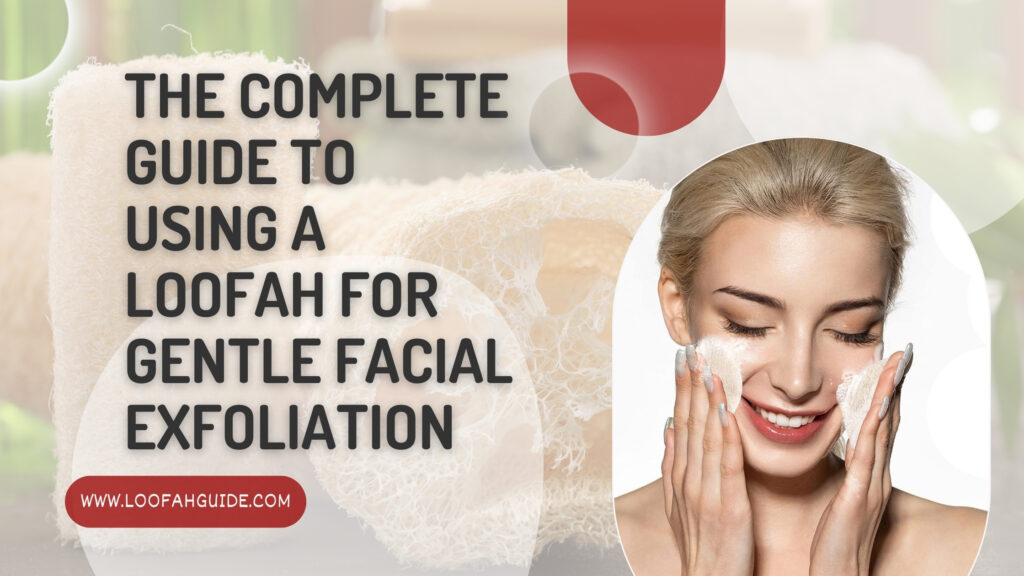
Proper preparation significantly influences your results when you use a loofah for gentle facial exfoliation. These preliminary steps create optimal conditions for safe, effective treatment.
Begin by removing all makeup, sunscreen, and surface products using your preferred cleanser. This initial cleanse prevents pushing debris deeper into pores during exfoliation. Oil-based cleansers work effectively for makeup removal, followed by water-based cleansers for thorough preparation.
Splash your face with lukewarm water for 30 seconds. This temperature opens pores slightly and softens the skin surface without causing the flushing associated with hot water. Avoid cold water at this stage, which constricts pores and reduces exfoliation effectiveness.
Prepare your loofah simultaneously by submerging it in warm water. Facial-grade loofahs require 30 to 60 seconds of soaking to reach optimal softness. The fibers absorb water and become supple, flexing gently rather than scratching. Squeeze the loofah several times underwater to ensure complete saturation of interior fibers.
After soaking, wring excess water from the loofah. It should feel damp throughout but not dripping wet. Excessive water reduces friction and dilutes any cleanser applied, diminishing effectiveness. Insufficient moisture leaves fibers too rigid for facial use.
The Step-by-Step Exfoliation Process
Follow this methodical approach for consistent, safe results:
| Phase | Area | Motion | Duration | Pressure Level |
|---|---|---|---|---|
| 1 | Forehead | Small circles, temple to temple | 20 seconds | Light, skin moves slightly |
| 2 | Nose | Downward strokes on bridge, circles on sides | 15 seconds | Light to medium |
| 3 | Cheeks | Upward circles from jaw toward cheekbone | 25 seconds | Light |
| 4 | Chin | Small circles across entire chin area | 15 seconds | Light to medium |
| 5 | Jawline | Following bone structure toward ears | 15 seconds | Light |
| 6 | Upper lip | Gentle horizontal strokes | 10 seconds | Very light |
| 7 | Neck | Upward strokes from collarbone to jaw | 20 seconds | Light |
Apply a small amount of gentle cleanser to the loofah before beginning. Cream or gel cleansers designed for sensitive skin work well. Avoid cleansers containing their own exfoliating particles, which create excessive abrasion when combined with loofah texture.
The entire process should take approximately two to three minutes. Resist the temptation to extend duration or increase pressure. More aggressive treatment does not produce better results and risks irritation, redness, and compromised skin barrier function.
Throughout the process, maintain awareness of skin feedback. Slight warmth and mild pinkness indicate effective exfoliation. Burning, stinging, or intense redness signals excessive pressure or duration requiring immediate adjustment.
Post-Exfoliation Care Protocol
Proper aftercare locks in benefits and supports skin recovery. Complete these steps immediately following exfoliation:
Rinse thoroughly with cool water for at least 30 seconds. Cool temperature helps close pores that opened during the warm water preparation phase. Ensure no cleanser residue remains, which can cause irritation if left on freshly exfoliated skin.
Pat face dry with a clean, soft towel. Never rub, as post-exfoliation skin is temporarily more vulnerable to friction damage. Use gentle pressing motions to absorb moisture.
Apply toner within 60 seconds of drying. Freshly exfoliated skin absorbs products exceptionally well, making this an ideal time for active ingredients. Hydrating toners containing hyaluronic acid or soothing ingredients like aloe work excellently.
Follow with serum if part of your routine. The enhanced absorption following exfoliation increases serum effectiveness. Vitamin C serums provide particular benefit, as antioxidants help protect newly revealed skin cells.
Finish with moisturizer appropriate for your skin type. Even oily skin benefits from moisturization post-exfoliation. The process temporarily disrupts the lipid barrier, and moisturizer supports restoration while preventing compensatory oil overproduction.
Apply sunscreen if exfoliating in morning hours. Newly exfoliated skin shows increased photosensitivity. Broad-spectrum SPF 30 or higher provides necessary protection.
Customizing Frequency Based on Individual Factors
Skin Type Considerations
Exfoliation frequency varies significantly based on skin characteristics. Following generalized recommendations without considering individual factors leads to suboptimal results or adverse reactions.
| Skin Type | Recommended Frequency | Key Considerations | Warning Signs of Over-Exfoliation |
|---|---|---|---|
| Normal | 2 to 3 times weekly | Most flexible schedule | Unusual tightness or shine |
| Oily | 3 to 4 times weekly | Higher tolerance, faster cell turnover | Paradoxical oil increase |
| Dry | Once to twice weekly | Always follow with rich moisturizer | Flaking, rough patches |
| Sensitive | Once weekly maximum | Use ultra-fine grade only | Redness beyond 1 hour |
| Combination | 2 to 3 times weekly | Focus on T-zone, lighter on cheeks | Uneven texture changes |
| Mature | Once to twice weekly | Gentlest pressure essential | Fine lines appear deeper |
| Acne-prone | Once to twice weekly | Never exfoliate active breakouts | Increased inflammation |
Begin with the lower end of your skin type range. Increase frequency gradually only if no adverse reactions occur after two weeks. Some individuals within each category tolerate more or less than typical recommendations.
External factors also influence appropriate frequency. Dry winter climates or heated indoor environments may require reduced exfoliation. Humid summer conditions might support increased frequency. Travel, stress, illness, and hormonal changes temporarily affect skin resilience.
Seasonal and Environmental Adjustments
Adapting your routine to environmental conditions optimizes results throughout the year.
Winter months typically require reduced exfoliation frequency and increased moisturization. Cold outdoor air and heated indoor environments strip moisture from skin, making it more vulnerable to irritation. Many people reduce from three times weekly to twice weekly during winter.
Summer conditions often allow increased exfoliation for most skin types. Higher humidity supports skin resilience, and faster cell turnover from increased sun exposure can benefit from more frequent removal of dead cells. However, always assess your individual response rather than following seasonal generalizations automatically.
Geographic location matters considerably. Desert climates create different demands than coastal humidity. High altitude increases UV exposure and may affect skin resilience. Urban environments expose skin to pollution particles that benefit from regular removal.
Maintaining Your Facial Loofah for Safety and Longevity
Daily and Weekly Care Requirements
Proper maintenance prevents bacterial contamination and extends useful lifespan. Facial loofahs require more attentive care than body loofahs due to contact with more sensitive skin.
After each use, rinse the loofah thoroughly under running water. Squeeze repeatedly to flush cleanser residue, dead skin cells, and any debris from the fiber interior. These organic materials provide nutrition for bacteria and fungi if allowed to remain.
Shake the loofah vigorously several times to expel water from deep within the fiber structure. Hang in a location with good air circulation away from shower humidity. Avoid enclosed medicine cabinets or damp bathroom corners. The loofah should dry completely between uses.
Weekly deep cleaning eliminates accumulated microorganisms. Choose one of these effective methods:
Vinegar soak involves submerging the loofah in a solution of one tablespoon white vinegar per cup of warm water for five to ten minutes. The mild acidity kills bacteria without damaging natural fibers. Rinse thoroughly and dry completely afterward.
Microwave sanitization works for loofahs without any metal components. Wet the loofah thoroughly and microwave for 30 seconds. The heat kills microorganisms effectively. Allow to cool before handling and ensure complete drying afterward.
Boiling water immersion provides thorough sanitization. Submerge the loofah in freshly boiled water for two minutes. Remove with tongs and allow to cool and dry completely. This method may slightly accelerate fiber breakdown over time.
Recognizing Replacement Indicators
Even with excellent care, facial loofahs have finite useful lifespans. Continuing use beyond appropriate limits compromises hygiene and effectiveness.
| Replacement Indicator | What You Notice | Why It Matters |
|---|---|---|
| Fiber shedding | Loose fibers during or after use | Breakdown indicates age, reduced effectiveness |
| Persistent odor | Smell remains after deep cleaning | Bacterial colonization in fiber interior |
| Discoloration | Color changes not removed by washing | Mold growth or permanent contamination |
| Texture change | Feels rougher than when new | Fiber degradation creates harsh texture |
| Extended dry time | Takes much longer to dry between uses | Fiber structure compromised, moisture retention |
| Reduced flexibility | Less supple when wet | Fibers losing integrity |
For facial loofahs used two to three times weekly, expect replacement every three to four weeks. Higher frequency use or humid storage conditions may shorten this interval. Premium Egyptian loofahs from suppliers maintaining strict quality standards typically offer slightly longer lifespans due to superior fiber density.
Mark your calendar when beginning use of a new loofah to track age objectively. Visual and tactile assessment supplements time-based tracking but should not replace it entirely.
Comparing Exfoliation Methods for Informed Choices
Loofah Versus Alternative Approaches
Understanding how loofah exfoliation compares to alternatives helps you make informed decisions and explain benefits to others seeking guidance.
| Method | Mechanism | Gentleness Rating | Cost Over Time | Environmental Impact | Best For |
|---|---|---|---|---|---|
| Natural loofah | Physical friction from plant fibers | 8 out of 10 | Low | Minimal, biodegradable | Most skin types, eco-conscious users |
| Synthetic scrubber | Physical friction from plastic fibers | 6 out of 10 | Low | High, microplastic shedding | Budget-focused, durability priority |
| Chemical exfoliant AHA | Acid dissolves cell bonds | 7 out of 10 | Medium | Low | Aging concerns, hyperpigmentation |
| Chemical exfoliant BHA | Acid penetrates pores | 7 out of 10 | Medium | Low | Acne-prone, oily skin |
| Enzyme exfoliant | Biological breakdown of proteins | 9 out of 10 | High | Low | Very sensitive skin |
| Microdermabrasion | Crystal or diamond abrasion | 5 out of 10 | Very high | Medium | Professional treatments, specific concerns |
| Dermaplaning | Blade removes surface cells | 6 out of 10 | Medium to high | Low | Facial hair removal combined |
Natural loofah offers an excellent balance of effectiveness, gentleness, cost efficiency, and environmental responsibility. For most individuals seeking regular maintenance exfoliation, loofah provides ideal characteristics.
Some people combine methods effectively. Using loofah for mechanical exfoliation two to three times weekly while incorporating chemical exfoliation once weekly can address multiple skin concerns. However, never use multiple methods on the same day, as this risks over-exfoliation and barrier damage.
Addressing Common Misconceptions
Misinformation about loofah exfoliation prevents some people from benefiting from this effective method. Accurate understanding removes these barriers.
The belief that loofahs are inherently unhygienic stems from improper care rather than the material itself. Natural loofah fibers actually dry faster than many synthetic alternatives due to their vascular structure. Proper maintenance as outlined earlier in this guide maintains excellent hygiene standards.
Some assume natural products are less effective than engineered alternatives. Research into exfoliation mechanisms shows the opposite for many applications. The variable texture of natural loofah adapts to skin contours better than uniform synthetic materials, providing more thorough yet gentler exfoliation.
Concerns about roughness reflect experience with body-grade products inappropriately used on faces. Proper facial-grade loofahs, when correctly prepared and used, feel gentle against skin. The selection and preparation guidance in this guide ensures appropriate softness.
Business Perspectives on Facial Loofah Products
Market Opportunity Analysis
For spa owners, retailers, and distributors, facial loofah products represent significant business potential aligned with consumer trends.
| Market Factor | Current Status | Business Implication |
|---|---|---|
| Natural skincare growth | 8.5 percent annual increase | Expanding customer base |
| Sustainability priority | 73 percent of consumers consider environmental impact | Marketing advantage for natural products |
| DIY skincare interest | Significant post-pandemic growth | Demand for quality home-use products |
| Spa treatment evolution | Natural treatments gaining preference | Service menu development opportunity |
| Recurring purchase cycle | 3 to 4 week replacement interval | Predictable repeat revenue |
| Price sensitivity | Moderate, quality prioritized over lowest cost | Premium positioning viable |
These factors combine to create favorable conditions for businesses entering or expanding in the natural loofah category. Consumer education drives purchasing decisions, positioning knowledgeable retailers and service providers for success.
Sourcing Quality Products for Business Use
Professional applications require consistent quality that supports pricing strategy and customer satisfaction. Establishing reliable supply relationships proves essential.
Evaluate potential suppliers on multiple criteria beyond price per unit. Quality consistency across shipments matters more than occasional excellent batches. Documentation of quality processes indicates supplier professionalism. Flexible minimum order quantities accommodate businesses at various growth stages.
Consider value-added services that support your business model. Private labeling options allow brand building rather than generic product reselling. Custom product design creates differentiation from competitors. These services typically prove worthwhile despite higher per-unit costs.
For businesses evaluating Egyptian loofah suppliers, Egexo represents the industry standard with over 25 years of cultivation expertise. Their comprehensive product catalog details available options, and their quotation process provides customized pricing based on specific needs.
Explore additional wholesale resources at WholesaleLoofah.com for comprehensive sourcing guidance. For consumer-focused educational content supporting customer outreach, Egexo main site provides extensive information.
Expert Insight from Egexo
Drawing from over 25 years cultivating premium Egyptian loofahs, we consistently observe that success with facial exfoliation depends more on consistency than intensity.
Many newcomers to loofah facial care expect dramatic results from aggressive single sessions. This approach typically produces irritation rather than improvement. The skin responds best to gentle, regular exfoliation that works with natural renewal cycles rather than against them.
We recommend establishing a sustainable routine you can maintain long-term. Two gentle sessions weekly for six months delivers far better outcomes than intensive daily exfoliation abandoned after two weeks due to irritation. Your skin adapts to consistent care, and cumulative benefits compound over time.
For those selecting loofahs for facial use, fiber density matters significantly. Premium Egyptian loofahs contain 15 to 20 percent more fiber per square centimeter than standard products, creating smoother texture that glides across skin rather than dragging. This density difference distinguishes products that deliver excellent results from those causing disappointment.
Whether purchasing for personal use or professional inventory, prioritize quality certification and source transparency. Understanding where your loofah originated and how it was processed ensures confidence in safety and effectiveness. Our quality standards documentation exemplifies the transparency reputable suppliers provide.
Frequently Asked Questions
Q1: How do I know if my loofah is soft enough for facial use?
A: After soaking for 30 to 60 seconds, press the loofah against the inside of your wrist. Facial-grade loofahs feel soft and gentle immediately, similar to a damp cotton washcloth. If you feel any scratchiness or roughness on your wrist, the product is not appropriate for facial use. Either soak longer, seek a finer grade product, or reserve it for body exfoliation only.
Q2: Can I use a loofah for gentle facial exfoliation if I have sensitive skin?
A: Yes, but with modifications. Choose ultra-fine grade loofahs only and limit frequency to once weekly initially. Use minimal pressure with very light touch. Monitor your skin response for 24 hours after each session. If redness resolves within one hour and no irritation develops, you can continue. Some sensitive skin types may need even less frequency or may find alternative exfoliation methods more suitable.
Q3: What happens if I exfoliate my face too often with a loofah?
A: Over-exfoliation damages the skin barrier, leading to increased sensitivity, redness, dryness, or paradoxical oiliness. Your skin may feel tight or look shiny. Fine lines might appear more pronounced. If you notice these signs, stop exfoliation immediately and focus on barrier repair with gentle, hydrating products. Wait until symptoms resolve completely, then restart at lower frequency with lighter pressure.
Q4: Should spa professionals use loofahs differently than home users?
A: Professional applications follow the same fundamental techniques but incorporate additional considerations. Professionals assess individual client skin types before treatment, customize pressure and duration accordingly, and ensure strict single-use or proper sanitization protocols. Spa settings often combine loofah exfoliation with complementary treatments like steam, masks, and massage for enhanced results. Professional training in skin assessment enhances safety and outcomes.
Q5: How does Egyptian loofah quality compare to loofahs from other regions?
A: Egyptian loofahs, particularly those from the Nile Delta region, consistently demonstrate superior fiber density, uniformity, and softness. The unique combination of climate, soil composition, and traditional cultivation methods developed over generations produces loofahs with 15 to 20 percent more fiber per square centimeter than typical products. This density translates to smoother exfoliation and longer product lifespan, justifying premium positioning in the market.
Q6: Can loofah exfoliation help reduce the appearance of pores?
A: Regular loofah exfoliation can improve pore appearance by removing dead cell buildup that accumulates around pore openings. This debris makes pores appear larger than their actual size. Consistent exfoliation keeps the surface clear, allowing pores to appear minimized. However, loofah exfoliation cannot change actual pore size, which is determined by genetics and skin type. Realistic expectations lead to satisfaction with genuine improvements.
Q7: What is the best time of day to use a loofah for facial exfoliation?
A: Evening exfoliation offers advantages for most people. Your skin repairs itself during sleep, and removing dead cells before bed allows optimal access for overnight skincare products. Additionally, freshly exfoliated skin shows increased sun sensitivity, which matters less when sleeping follows exfoliation. However, morning exfoliation works well too if you apply adequate sun protection afterward. Consistency with your chosen timing matters more than which time you select.
Q8: How do wholesale buyers evaluate loofah quality before placing large orders?
A: Request samples before committing to bulk purchases. Evaluate samples using the assessment criteria outlined in this guide including color, flexibility, fiber distribution, scent, and wet texture test. Review supplier documentation including quality standards, sourcing transparency, and processing methods. Reputable suppliers like Egexo provide sample programs and comprehensive quality documentation to support informed purchasing decisions.
Conclusion
Learning to use a loofah for gentle facial exfoliation connects you with an ancient beauty practice backed by modern understanding of skin science. This guide has equipped you with comprehensive knowledge spanning product selection, proper technique, maintenance protocols, and customization strategies for individual needs.
Key Takeaways:
- Facial-grade loofahs require ultra-fine or fine classification with dense, uniform fiber distribution for safe use
- Proper technique involves light pressure, circular motions, and total duration of two to three minutes maximum
- Frequency depends on skin type, ranging from once weekly for sensitive skin to three to four times weekly for oily skin
- Maintenance including thorough rinsing, complete drying, and weekly sanitization ensures safety
- Replacement every three to four weeks maintains hygiene and effectiveness
- Egyptian loofahs offer superior quality due to optimal growing conditions and traditional cultivation expertise
Natural exfoliation delivers results when approached with knowledge and consistency. The information in this guide supports both personal skincare success and professional expertise for those in the wellness industry.
Ready to experience premium Egyptian loofah quality?
- For Wholesale Buyers: Request a quote or download the product catalog
- For Individual Orders: Shop the collection or order samples
Learn more about why leading businesses choose Egexo as their trusted Egyptian loofah supplier.