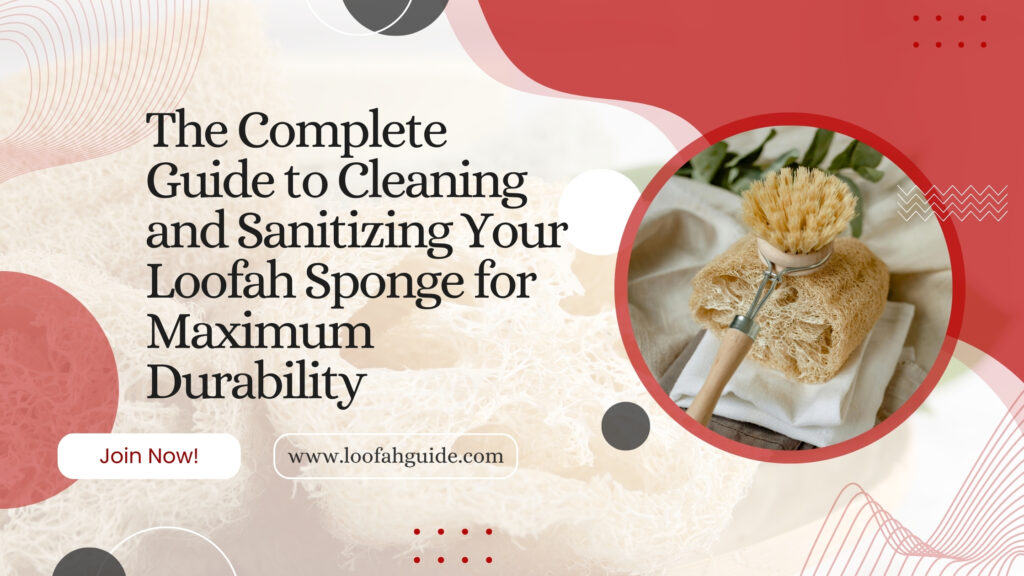
Why Learning How to Clean and Sanitize Your Loofah Sponge Changes Everything
A single natural loofah sponge can accumulate bacterial colonies numbering in the millions within just two weeks of regular bathroom use. Dermatological research consistently identifies improperly maintained bath sponges as common sources of skin irritation, breakouts, and infections that users rarely trace back to their shower routine.
Understanding how to clean and sanitize your loofah sponge represents the dividing line between a hygienic exfoliation tool and a bacterial reservoir pressed against your skin daily. This knowledge serves individual consumers seeking healthier skincare routines and business operators managing product quality across retail inventory or spa services.
The natural fiber structure of authentic loofahs, particularly those cultivated in Egypt’s Nile Delta region, provides inherent advantages when properly maintained. These plant-derived sponges feature cellular networks that dry faster and resist colonization better than synthetic alternatives. However, realizing these benefits requires consistent application of correct care techniques.
Throughout this guide, you will discover the biological factors driving loofah contamination, master multiple sanitization approaches suited to different situations, and develop maintenance habits that potentially double your sponge lifespan. The methods presented draw from both scientific research and practical experience from industry professionals who handle thousands of loofahs annually.
For those ready to implement these practices immediately, premium Egyptian loofahs designed for durability and easy maintenance are available through Egexo’s bath and body collection.
The Biology of Loofah Contamination Explained
What Actually Grows Inside Your Loofah
Natural loofahs function as biological filters during use, trapping dead skin cells, sebum, soap residue, and environmental particles within their fibrous matrix. This accumulated organic material creates nutrient-rich conditions where bacteria and fungi establish colonies rapidly.
Laboratory analyses of used bathroom loofahs commonly identify several concerning organisms. Pseudomonas species thrive in moist environments and cause skin infections in susceptible individuals. Staphylococcus bacteria, including strains responsible for staph infections, transfer easily from skin to loofah and back. Candida yeast and various mold species establish presence when drying protocols fail.
The warm, humid bathroom environment accelerates these growth cycles dramatically. Organisms that might take weeks to reach problematic levels in dry conditions can multiply to concerning concentrations within days when moisture remains constant.
Understanding this biology empowers better decision-making about care frequency and method selection. Rather than following arbitrary schedules, informed users can assess their specific conditions and adjust accordingly.
Risk Factors That Accelerate Bacterial Growth
Certain conditions dramatically increase contamination speed, requiring modified care approaches:
| Risk Factor | Impact Level | Recommended Response |
|---|---|---|
| Humid climate or bathroom without ventilation | High | Daily sanitization and enhanced drying |
| Shared loofah between household members | Very High | Individual loofahs for each person |
| Storage in shower stall or enclosed space | High | Relocate to ventilated area |
| Use on broken skin or acne-prone areas | Moderate | More frequent replacement |
| Immunocompromised user | High | Shortened replacement cycles |
| Infrequent use allowing prolonged dampness | Moderate | Complete drying between uses |
Business operators face additional considerations when managing loofah inventory. Retail products stored in humid warehouses or displayed in damp store environments can develop issues before reaching customers. Spa facilities must balance sanitation requirements with operational efficiency and cost management.
Quality suppliers address these concerns through proper processing and packaging. The Egexo farm to export process includes controlled drying stages and protective packaging that maintains product integrity through international shipping and storage.
Daily Loofah Care Fundamentals That Prevent Problems
The Correct Post-Use Rinsing Method
Effective rinsing removes the organic debris that feeds bacterial growth, yet most users rush this essential step. Proper technique requires 45 to 60 seconds of active manipulation under running water.
Begin by holding your loofah under warm running water. Squeeze firmly to compress the fibers, then release to allow water penetration into the interior structure. Repeat this compression cycle at least ten times, rotating the sponge to address all areas equally.
Pay attention to the center of thicker loofahs where debris accumulates but water penetration proves difficult. Consider occasionally turning the loofah inside out if its structure allows, exposing interior surfaces to direct water flow.
Water temperature should remain comfortably warm rather than hot. Excessive heat can cause fiber brittleness over time, reducing both exfoliation effectiveness and overall lifespan. Lukewarm water dissolves soap residue effectively without thermal stress.
Achieving Complete Dryness Between Uses
Moisture control stands as the single most impactful factor in loofah longevity and hygiene. Bacterial reproduction requires water, making thorough drying the most effective growth inhibitor available.
After rinsing, squeeze your loofah firmly to extract maximum water. Avoid twisting or wringing motions that stress and damage natural fibers. A straight compression removes water effectively while preserving structural integrity.
Shake the loofah vigorously five to ten times to dislodge water droplets trapped within the cellular matrix. This step often gets skipped but meaningfully reduces drying time.
Select a storage location meeting these criteria: direct air circulation, distance from shower spray, exposure to room air rather than enclosed spaces, and convenient access for daily use. Hanging systems work better than horizontal surfaces because gravity assists water drainage and air reaches all surfaces simultaneously.
The target drying window is four to six hours to complete dryness. Bathrooms with exhaust fans or windows achieve this easily. Windowless interior bathrooms may require relocating the loofah to a bedroom or hallway hook after showering.
Weekly Deep Cleaning Protocols for Thorough Sanitization
Natural Vinegar Treatment Method
White distilled vinegar provides antimicrobial action through acetic acid content without introducing harsh chemicals to products that contact skin. This method suits users prioritizing natural solutions and proves gentle enough for frequent application.
Prepare a soaking solution using one cup white vinegar mixed with two cups warm water in a clean bowl or container. Ensure the container is large enough to submerge your loofah completely.
Immerse the loofah fully, pressing down to displace air pockets that might keep interior sections dry. Allow soaking for 20 to 30 minutes. The vinegar solution penetrates fiber networks, neutralizing bacteria and dissolving organic buildup that regular rinsing misses.
After soaking, remove the loofah and rinse extensively under running water. Continue rinsing until no vinegar scent remains, typically requiring two to three minutes of active manipulation. Proceed with standard drying protocols.
This treatment works optimally when performed weekly for typical household use. Increase frequency to twice weekly for humid environments, shared bathrooms, or daily heavy use.
Hydrogen Peroxide Deep Disinfection
Three percent hydrogen peroxide solution, available at any pharmacy, delivers hospital-grade disinfection suitable for situations requiring maximum sanitization confidence. This concentration effectively eliminates bacteria, viruses, and fungal organisms while remaining safe for skin-contact items when properly rinsed.
Create a treatment solution by mixing equal parts hydrogen peroxide and water. The dilution reduces fiber stress while maintaining effectiveness against pathogens.
Submerge your loofah completely and observe the bubbling action that indicates active oxidation of organic matter. This visible reaction provides feedback that the solution is working. Soak duration should be 15 to 20 minutes.
Rinse thoroughly after treatment, taking extra care to flush all solution from interior fibers. Hydrogen peroxide breaks down into water and oxygen, leaving no toxic residue, but complete rinsing ensures no oxidizing agent remains to potentially irritate sensitive skin.
Reserve this method for monthly deep cleaning under normal conditions, or implement weekly for high-risk situations including use by individuals with compromised immunity, shared facility environments, or following illness recovery.
Boiling Water Emergency Treatment
Boiling provides the most aggressive sanitization option, achieving near-complete sterilization through sustained high temperature exposure. However, this intensity comes with trade-offs that limit its appropriate use.
Bring a pot of water to rolling boil, then remove from heat source. Submerge your loofah in the hot water and allow it to remain for three to five minutes as the water cools gradually.
Remove carefully using tongs or allowing sufficient cooling time. The loofah will require extended drying time after this treatment due to thorough water saturation.
Boiling causes measurable fiber degradation with repeated application. Natural plant fibers lose flexibility and structural integrity when exposed to extreme temperatures regularly. Use this method only for emergency situations such as known contamination exposure, visible mold development, or following illness where maximum disinfection justifies accelerated wear.
For ongoing sanitization needs, gentler methods preserve loofah quality while providing adequate hygiene.
Method Selection Guide: Matching Approach to Situation
Choosing optimal cleaning methods depends on user circumstances, loofah type, and specific hygiene requirements. The following framework helps both individual consumers and business operators make appropriate selections.
| User Situation | Recommended Primary Method | Recommended Secondary Method | Frequency |
|---|---|---|---|
| Standard home bathroom use | Vinegar soak | Hydrogen peroxide monthly | Weekly |
| Humid climate or poor ventilation | Hydrogen peroxide | Vinegar between treatments | Twice weekly |
| Sensitive skin or allergies | Vinegar soak only | Extended rinsing | Weekly |
| Shared household bathroom | Hydrogen peroxide | Individual loofah assignment | Weekly minimum |
| Post-illness sanitization | Boiling single treatment | Resume normal protocol | Once then standard |
| Commercial spa single-client use | Hydrogen peroxide | Documented protocols | After each session |
| Retail inventory management | Climate-controlled storage | Rotation monitoring | Ongoing |
Business applications require documented procedures ensuring consistent quality. Spa operators benefit from written protocols posted at sanitation stations. Retail managers need inventory rotation systems preventing product deterioration during storage.
For wholesale buyers establishing loofah programs, supplier partnerships provide valuable guidance. Egexo offers quality standards documentation and consultation services helping businesses implement effective care protocols across their operations.
Recognizing End of Life Indicators
Visual and Sensory Warning Signs
Natural loofahs communicate their condition through observable changes that indicate when cleaning no longer suffices and replacement becomes necessary.
Color changes provide the most obvious indicator. Fresh loofahs display uniform cream to light tan coloration. Developing gray, green, or black discoloration signals mold penetration or deep bacterial colonization that surface cleaning cannot address. Yellowing beyond natural aging suggests accumulated residue buildup resistant to standard treatments.
Textural changes indicate structural compromise. Healthy loofahs feel firm yet flexible, springing back immediately when compressed. Mushiness, excessive softness, or brittleness all signal deterioration. Loose fibers separating from the main structure show advancing breakdown.
Odor persistence after thorough cleaning proves contamination has penetrated beyond treatable depths. A properly cleaned loofah should smell neutral or carry only faint natural plant notes. Musty, sour, or otherwise unpleasant scents remaining post-treatment indicate replacement necessity.
Functional decline manifests as reduced exfoliation effectiveness. When your loofah no longer provides the satisfying skin-smoothing action you expect, fiber wear has progressed past useful service life regardless of visual appearance.
Lifespan Expectations by Product Category
Different loofah types and quality grades demonstrate predictable service life ranges when properly maintained:
| Product Category | Minimum Expected Lifespan | Maximum Achievable Lifespan | Primary Failure Mode |
|---|---|---|---|
| Premium Egyptian body loofah | 6 weeks | 12 weeks | Gradual fiber softening |
| Standard body loofah | 4 weeks | 8 weeks | Bacterial accumulation |
| Kitchen cleaning loofah | 3 weeks | 6 weeks | Grease saturation |
| Facial exfoliation pad | 2 weeks | 4 weeks | Gentleness reduction |
| Raw unprocessed loofah | 8 weeks | 16 weeks | Physical wear |
| Synthetic mesh alternative | 6 weeks | 10 weeks | Bacterial embedding |
Egyptian loofahs consistently achieve the upper ranges of these expectations due to superior fiber density resulting from optimal growing conditions. The Nile Delta region produces loofahs with cellular structures 30 to 40 percent denser than alternatives from other growing regions.
Explore premium options through Egexo’s raw loofah collection for maximum durability potential.
Storage Strategies That Extend Useful Life
Optimal Home Storage Configuration
Storage location selection directly impacts drying speed and contamination exposure. Thoughtful positioning maximizes the benefit from your cleaning efforts.
The ideal storage spot provides constant air movement without direct water exposure. Position your loofah at least one meter from showerheads and bathtub edges. This distance prevents splash contact while keeping the sponge accessible.
Vertical hanging orientation outperforms horizontal placement significantly. Gravity pulls moisture downward and away from the main body while air contacts all surfaces equally. Simple suction-cup hooks positioned near bathroom exhaust fans or windows provide excellent results at minimal cost.
Avoid common storage mistakes that trap moisture: shower caddies with solid backs, decorative containers without drainage, locations behind shower curtains, or surfaces that remain wet. Each of these extends drying time and accelerates bacterial growth.
For households with multiple bathrooms, maintain separate loofahs for each location rather than transporting a single sponge. This practice prevents cross-contamination between environments with different humidity levels and bacterial profiles.
Business Inventory and Display Considerations
Commercial operations face storage challenges at multiple stages: warehouse inventory, retail display, and active service use.
Warehouse storage requires climate control maintaining relative humidity below 55 percent and temperatures between 15 and 25 degrees Celsius. Higher humidity promotes mold development even on unused packaged products. Stack inventory to allow air circulation and implement first-in-first-out rotation preventing extended storage of older stock.
Retail displays should avoid locations near store entrances where humidity fluctuates, bathroom sections where moisture levels run high, or window areas where temperature cycling occurs. Sealed packaging provides protection but cannot compensate indefinitely for poor environmental conditions.
Active-use loofahs in spa settings need dedicated drying stations between clients. Commercial-grade approaches include drying cabinets with controlled airflow, UV sanitization units, and rotation systems ensuring complete drying before reuse.
For detailed guidance on commercial loofah management, consult wholesale loofah resources designed specifically for business applications.
Specialized Care for Different Loofah Applications
Body Care Versus Kitchen Applications
Loofahs serving different purposes encounter distinct contamination types requiring adjusted care approaches.
Body care loofahs primarily face skin-derived bacteria, personal care product residues, and bathroom-environment organisms. Standard vinegar or hydrogen peroxide treatments effectively address these contaminants. Replacement timing focuses on maintaining gentle exfoliation and preventing skin-contact bacterial transfer.
Kitchen loofahs encounter food residue, cooking oils, and potentially pathogenic bacteria from raw ingredients. These require more aggressive sanitization schedules. Daily disinfection using hydrogen peroxide proves appropriate for kitchen applications. Boiling becomes acceptable as a regular treatment because kitchen loofahs already experience shorter lifespans due to oil saturation.
Maintain strict separation between body and kitchen loofahs. Store in different locations, use distinct cleaning containers, and never interchange usage regardless of how thoroughly you clean. Cross-contamination risks do not justify the convenience of dual-purpose use.
Explore purpose-designed options through Egexo’s kitchen loofah category featuring products optimized for food-contact durability.
Pet Grooming and Specialty Applications
Loofahs used for pet grooming face unique challenges including animal dander, outdoor contaminants, and potentially different bacterial profiles than human-use products.
Implement shortened replacement cycles for pet grooming loofahs, typically half the duration acceptable for personal body care. Use hydrogen peroxide sanitization after every grooming session rather than weekly intervals.
Store pet grooming loofahs separately from human-use products and maintain dedicated cleaning supplies. The bacterial populations present on animals differ from human skin flora, making cross-use inadvisable.
Professional groomers and pet spas should consider single-use or client-dedicated loofah systems similar to human spa protocols. This approach maximizes hygiene while creating upselling opportunities for product retail.
Browse specialized options through pet and spa grooming loofahs engineered for animal care applications.
The Sustainability Advantage of Proper Maintenance
Environmental Impact of Extended Lifespan
Every additional week of loofah service life reduces resource consumption proportionally. Proper maintenance that doubles average lifespan from four to eight weeks cuts annual consumption by 50 percent without sacrificing hygiene or performance.
Consider the full environmental footprint of loofah production. Agricultural cultivation requires water, land, and energy inputs. Harvesting and processing consume additional resources. International shipping from growing regions to global markets adds transportation emissions. Packaging materials contribute to overall impact.
By extending each product’s useful service through proper care, conscious consumers and businesses meaningfully reduce demand pressure on these resource chains. The cumulative effect across millions of loofah users represents significant environmental benefit.
This sustainability message increasingly influences purchasing decisions. Spa clients actively seek eco-friendly service providers. Retail customers demonstrate willingness to pay premium prices for durable, sustainable products. Business operators benefit from both cost savings and marketing advantages when implementing responsible loofah programs.
Composting and Natural End-of-Life Processing
Natural loofahs offer complete biodegradability that synthetic alternatives cannot match. When retirement becomes necessary, responsible disposal returns plant material to earth rather than landfill.
Prepare retired loofahs for composting by cutting into smaller pieces that decompose faster. Add to backyard compost bins alongside other plant materials. Municipal composting programs accepting yard waste typically welcome natural loofahs.
Direct soil incorporation works for gardeners wanting to skip formal composting. Bury loofah pieces in garden beds where they break down over two to four months while adding organic matter to soil structure.
Some users extend loofah utility by transitioning retired body care sponges to household cleaning tasks. A loofah too worn for skin exfoliation may provide additional weeks of service scrubbing garden pots, cleaning outdoor furniture, or similar rough-use applications before final composting.
Quality Assessment Checklist for Informed Purchasing
Selecting high-quality loofahs from the start reduces maintenance burden and extends achievable lifespan. Both individual consumers and wholesale buyers benefit from systematic quality evaluation.
| Assessment Criteria | Premium Indicators | Caution Signs | Testing Method |
|---|---|---|---|
| Fiber density | Tight uniform structure | Visible gaps or thin spots | Compress and observe recovery |
| Color consistency | Even cream to tan | Spots, streaks, or gray areas | Visual inspection under good light |
| Flexibility | Immediate springback | Stays compressed or cracks | Squeeze test |
| Weight relative to size | Substantial feel | Unusually light or hollow | Compare similar sized samples |
| Natural aroma | Neutral or faint plant scent | Musty, chemical, or unpleasant | Smell before purchase if possible |
| Surface texture | Uniform exfoliation pattern | Rough patches or smooth spots | Run fingers across surface |
| Structural integrity | No loose fibers | Shedding or separating strands | Gentle tug test |
Wholesale buyers should request samples before large orders. Evaluate samples using these criteria under real-world conditions before committing to bulk purchases. Test cleaning responsiveness by implementing your intended sanitization protocol on sample products.
Request samples from Egexo to evaluate their Egyptian loofahs against these quality benchmarks.
Expert Insight from Egexo
With over 25 years cultivating premium loofahs in Egypt’s fertile Nile Delta region, Egexo has refined both growing techniques and care recommendations through extensive practical experience. Our expertise reveals that successful loofah maintenance begins with product selection and continues through proper daily habits.
The dense fiber structure characteristic of authentic Egyptian loofahs provides natural advantages in both durability and hygiene. Our Grade A products feature 35 to 45 percent higher fiber density than typical market alternatives. This density translates directly to extended service life and superior resistance to bacterial penetration when users implement proper drying protocols.
We consistently observe that customers achieving maximum loofah longevity share one common practice: complete drying between every use without exception. This single habit outweighs all other factors in determining how long any loofah will serve effectively. Invest in proper hanging storage and make thorough drying non-negotiable for best results.
For businesses seeking to offer premium products with comprehensive care support, explore our private label manufacturing services including custom care instruction materials.
Frequently Asked Questions
Q: How frequently should I clean and sanitize my loofah sponge to maintain proper hygiene?
A: Clean and sanitize your loofah sponge through weekly deep treatments under standard conditions. Implement vinegar soaking or hydrogen peroxide disinfection every seven days for typical bathroom use. Increase frequency to twice weekly for humid environments or shared facilities. Daily thorough rinsing after each use complements weekly deep cleaning. Commercial settings require sanitization after every client session.
Q: What distinguishes Egyptian loofahs from other varieties in terms of cleaning and durability?
A: Egyptian loofahs grown in the Nile Delta region feature fiber density 30 to 45 percent higher than alternatives from other growing regions. This dense cellular structure dries faster, resists bacterial penetration more effectively, and withstands sanitization treatments better over time. Premium Egyptian products typically achieve eight to twelve week lifespans compared to four to six weeks for standard alternatives when properly maintained.
Q: Is microwave sanitization safe and effective for natural loofah sponges?
A: Microwave sanitization provides effective bacterial elimination for home users when performed correctly. Thoroughly wet the loofah before microwaving since dry loofahs can catch fire. Heat on high for one to two minutes and allow cooling before handling. This method works well between regular deep cleanings but should not replace weekly vinegar or hydrogen peroxide treatments. Commercial operations typically cannot scale this method effectively.
Q: How can spa owners implement cost-effective loofah sanitization programs?
A: Spa operators should establish hydrogen peroxide soaking stations with documented protocols and timing logs for regulatory compliance. Create rotation systems ensuring loofahs dry completely between clients. Consider offering clients dedicated personal loofahs stored between visits, creating both hygiene benefits and retail revenue opportunities. Partner with quality suppliers providing bulk pricing and care documentation to support staff training.
Q: What signs indicate my loofah has become too contaminated for continued use?
A: Replace your loofah immediately when you observe persistent discoloration remaining after deep cleaning, especially gray, green, or black spots. Musty or sour odors that survive thorough sanitization indicate deep contamination beyond surface treatment capability. Structural changes including mushiness, brittleness, or fiber separation signal end of useful life. Reduced exfoliation effectiveness also indicates replacement necessity.
Q: Can I use the same loofah for body care and kitchen cleaning?
A: Maintain strict separation between body care and kitchen loofahs. These applications encounter different bacterial populations and contamination types that should not cross-contaminate. Kitchen loofahs face food-borne pathogens inappropriate for skin contact. Body care loofahs carry skin bacteria unsuitable for food preparation areas. Store separately, clean with dedicated supplies, and never interchange regardless of how thoroughly you sanitize.
Conclusion
Mastering how to clean and sanitize your loofah sponge transforms an often-overlooked bathroom routine into a cornerstone of effective skincare and sustainable consumption. The techniques detailed throughout this guide provide clear pathways to achieving maximum hygiene and longevity from every loofah you own.
The fundamentals prove straightforward: thorough rinsing after each use, complete drying between sessions, and weekly deep cleaning using appropriate sanitization methods. These practices prevent the bacterial accumulation that compromises both product performance and user health while potentially doubling useful service life.
Quality product selection amplifies maintenance benefits significantly. Premium Egyptian loofahs offer inherent advantages in fiber density and durability that translate to extended lifespans when combined with proper care protocols.
Key Takeaways:
Rinse actively for 45 to 60 seconds after every use, compressing and releasing repeatedly. Achieve complete dryness within four to six hours through proper ventilation and hanging storage. Implement weekly deep cleaning using vinegar soaks for gentle maintenance or hydrogen peroxide for thorough disinfection. Replace immediately upon observing persistent discoloration, odors, or structural deterioration. Select premium quality products from reputable suppliers to maximize baseline durability.
Ready to experience superior loofah quality?
For Wholesale Buyers: Request a quote for bulk pricing or download the complete product catalog to review all available options.
For Individual Consumers: Shop the Egexo collection for premium Egyptian loofahs or request samples to test quality firsthand.