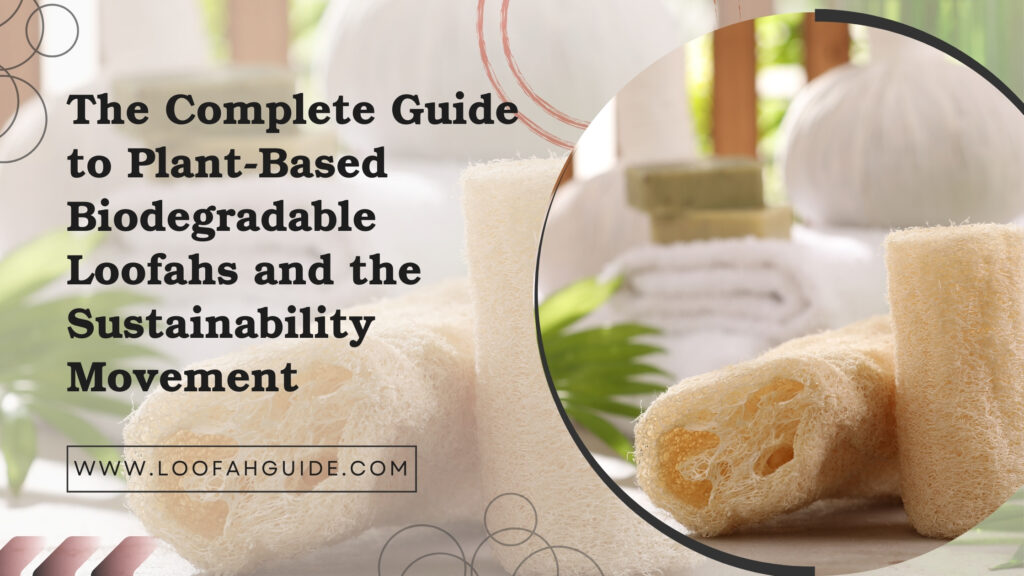
Short answer: A natural loofah is a plant fibre and 100% biodegradable, while plastic sponges and poufs are made of plastic. When a loofah is worn out, cut it up and add it to the compost.
Meanwhile, plant-based biodegradable loofahs offer a solution that ancient civilizations discovered thousands of years ago and modern sustainability science has validated. The natural loofah, derived from the mature fruit of the Luffa plant, represents one of the most effective intersections of traditional wisdom and contemporary environmental responsibility.
The green living movement has elevated plant-based biodegradable loofahs from niche natural products to mainstream essentials. This transformation affects everyone from large-scale distributors evaluating inventory strategies to individuals seeking meaningful ways to reduce their environmental footprint through everyday choices.
This guide examines every dimension of the biodegradable loofah phenomenon. Readers will discover the botanical science behind these remarkable plants, understand what separates exceptional quality from mediocre products, and gain practical knowledge applicable whether purchasing in bulk quantities or selecting a single loofah for home use. Egyptian cultivation represents the pinnacle of loofah production, and understanding why provides crucial context for informed decision-making.
EGEXO has been exporting Egyptian loofah since 2015. Their quality standards documentation reflects the rigorous approach that distinguishes premium products in this growing market.
Understanding the Luffa Plant and Its Remarkable Properties
Before examining market trends and purchasing considerations, understanding the botanical foundation of plant-based biodegradable loofahs provides essential context. The Luffa plant belongs to the Cucurbitaceae family, making it a relative of cucumbers and squash, yet its mature fruit serves an entirely different purpose than its edible cousins.
Botanical Classification and Growth Characteristics
Two primary species produce commercial loofahs: Luffa aegyptiaca and Luffa acutangula. The former, also known as the Egyptian or smooth loofah, dominates the quality market due to its superior fiber characteristics. These vigorous climbing vines can extend 30 feet or more during a single growing season, producing multiple fruits per plant when conditions favor optimal development.
The transformation from edible vegetable to functional scrubber occurs during the final weeks of fruit maturation. Young Luffa fruits are consumed as vegetables in many Asian and African cuisines. However, when allowed to mature fully on the vine, the interior flesh breaks down while the vascular fiber network strengthens and becomes the familiar loofah texture consumers recognize.
Standard EGEXO loofah is not bleached. Bleaching is available on request. This inherent simplicity contributes significantly to the environmental advantages that make plant-based biodegradable loofahs so appealing to sustainability-focused buyers and consumers.
Fiber Structure and Functional Performance
Microscopic examination of loofah fibers reveals a complex three-dimensional network that explains their exceptional scrubbing performance. Unlike synthetic materials manufactured to uniform specifications, natural loofah fibers feature variable diameters and surface textures that create superior mechanical action against skin.
The cellular structure includes both thick-walled support fibers and thinner interconnecting strands. This combination produces the characteristic flexibility that allows loofahs to conform to body contours while maintaining enough rigidity for effective exfoliation. No synthetic manufacturing process has successfully replicated this natural architecture.
Decomposition Process Explained
Under good composting conditions, a loofah breaks down naturally into soil-enriching humus.
This process occurs because loofah fibers consist primarily of cellulose and lignin, the same compounds that form the structural basis of all plant matter.
Contrast this with synthetic bath products composed of petroleum-derived polymers. These materials did not exist until the 20th century, meaning no organisms have evolved mechanisms to digest them efficiently.
Verification Standards for Biodegradability
Commercial buyers sourcing plant-based biodegradable loofahs should understand the testing standards that verify biodegradability claims:
Natural loofahs processed without synthetic additives easily meet all these standards. However, some manufacturers add dyes, preservatives, or binding agents that may compromise biodegradability. Buyers should verify that suppliers maintain pure processing methods. Egexo’s farm to export process demonstrates the additive-free approach that ensures complete biodegradability.
Regional Demand Patterns
Different global regions exhibit distinct demand characteristics for plant-based biodegradable loofahs. European markets lead in per capita consumption, driven by strong environmental regulations and established consumer awareness. Asian markets present complex dynamics with traditional loofah use competing against modern product development.
Consumer Demographic Analysis
The sustainability movement spans all age groups, but purchasing patterns reveal important demographic variations that inform both wholesale strategy and individual shopping behavior:
Consumers aged 18 to 34 demonstrate the highest awareness of environmental issues and most actively seek biodegradable alternatives. However, consumers aged 35 to 54 represent the largest actual purchasing volume, combining environmental concern with greater disposable income. Older demographics show increasing adoption rates as grandchildren and media exposure influence awareness.
For wholesale buyers, these demographics suggest product positioning strategies. Premium natural loofahs appeal across age ranges when quality and sustainability messaging align. Value-oriented options attract younger consumers building sustainable habits on limited budgets. Gift-ready packaging appeals to older consumers purchasing for environmentally conscious family members.
Running an eco shop? Open the EGEXO catalog for natural loofah products made in Egypt.
Egyptian Loofah Excellence Examined
Understanding why Egyptian loofahs command premium positioning helps buyers evaluate sourcing options and assists consumers in recognizing quality indicators.
Environmental Factors Creating Superior Products
Annual sunshine exceeding 3000 hours ensures consistent photosynthesis throughout the extended growing season. Temperatures remain within the optimal 25 to 35 degree Celsius range that Luffa plants prefer. Humidity levels stay low enough to prevent fungal diseases while irrigation from the Nile provides reliable moisture.
Soil composition in traditional Egyptian growing regions contains mineral deposits accumulated over millennia of Nile flooding. These nutrients support robust plant growth without synthetic fertilizer dependence. The resulting loofahs develop dense fiber networks with the strength and flexibility that distinguish premium products.
Perhaps most importantly, the dry post-harvest climate allows natural sun-curing. Loofahs dried gradually under the Egyptian sun retain their cellular structure better than those processed with artificial heat. This difference manifests in product feel, durability, and performance that discerning buyers and consumers readily notice.
Quality Differentiation Factors
Not all Egyptian loofahs achieve equal quality levels. Understanding differentiation factors helps buyers specify requirements and helps consumers recognize value:
| Quality Factor | Premium Indicator | Standard Indicator | Economy Indicator |
|---|---|---|---|
| Harvest timing | 85 to 90 days maturity | 80 to 95 days range | Variable timing |
| Fiber uniformity | Consistent throughout | Minor variations | Noticeable inconsistencies |
| Color | Even cream to light tan | Slight color variation | Irregular coloring |
| Flexibility when dry | Bends without cracking | Slight resistance | May crack or feel rigid |
| Aroma | Neutral to slight earth | Minimal detectable scent | Any off odors |
| Seed removal | Complete and clean | Minimal residue | Visible seed remnants |
Egexo maintains strict quality control across these factors. Their product catalog provides detailed specifications that professional buyers require for informed purchasing decisions.
Practical Applications Beyond Basic Bathing
Plant-based biodegradable loofahs serve purposes far beyond simple body washing. Understanding the full application range helps wholesale buyers identify market opportunities and assists consumers in maximizing value from their purchases.
Personal Care Applications
Body exfoliation represents the most recognized loofah application, but personal care uses extend considerably further:
Facial care applications use softer loofah sections or specially processed products for gentle exfoliation of delicate facial skin. The natural fibers provide mechanical exfoliation without the microplastic concerns associated with synthetic scrubbing products or plastic microbead alternatives now banned in many jurisdictions.
Foot care benefits particularly from loofah’s natural texture. The coarser fiber sections effectively address calluses and rough heel skin.
Hand care for gardeners, mechanics, and others whose work creates stubborn dirt accumulation finds natural loofahs highly effective. The fiber texture reaches into skin texture and nail areas more effectively than smooth synthetic alternatives.
Household Cleaning Applications
Kitchen applications represent a growing segment of the natural loofah market. Kitchen loofah products effectively clean dishes, pots, and surfaces without scratching.
General household cleaning tasks from scrubbing tile grout to cleaning outdoor furniture benefit from loofah’s combination of effective scrubbing and surface safety. The natural fibers provide enough texture for cleaning power without the abrasiveness that damages finishes.
Specialty and Commercial Applications
For wholesale buyers exploring diverse market segments, Egexo offers custom product design services that develop products for specific application requirements.
Sourcing Strategies for Different Buyer Types
Whether purchasing container quantities for distribution or selecting products for personal use, understanding sourcing considerations ensures optimal outcomes. The following guidance addresses buyer needs across the spectrum.
Wholesale Buyer Evaluation Criteria
Commercial buyers should systematically evaluate potential suppliers using consistent criteria:
Egexo demonstrates strength across all evaluation areas. Their why choose Egexo page addresses these considerations directly, and their team welcomes detailed inquiries from serious wholesale buyers.
Volume and Pricing Structures
Understanding typical industry pricing structures helps buyers negotiate effectively and budget accurately:
| Order Category | Typical Volume Range | Price Position | Lead Time | Best Application |
|---|---|---|---|---|
| Samples | 10 to 50 pieces | Premium pricing | 1 to 2 weeks | Quality evaluation |
| Container quantity | 5000 plus pieces | Maximum discount | 6 to 8 weeks | Large scale import |
Buyers can request quotations for specific requirements or order samples to begin the evaluation process.
Individual Consumer Selection Guide
Consumers shopping for personal use should consider these factors:
Product type should match intended use. Body loofahs designed for skin contact differ from kitchen or industrial products in fiber selection and processing.
Size selection depends on personal preference and storage space. Larger loofahs last longer but require more bathroom storage. Smaller options suit travel and limited spaces.
Quality indicators visible to consumers include uniform color, flexible texture when dry, neutral aroma, and consistent fiber density throughout the product. These characteristics indicate proper cultivation, harvest timing, and processing.
Origin verification matters for quality assurance.
Care and Maintenance Best Practices
Proper care dramatically extends the functional lifespan of plant-based biodegradable loofahs while maintaining hygiene standards essential for products contacting skin. These practices apply equally to commercial settings maintaining professional standards and individual consumers maximizing value.
Daily Care Protocol
After each use, rinse the loofah thoroughly under running water to remove all soap residue and loosened skin cells. Squeeze firmly to expel trapped water from the interior fiber structure. Shake vigorously to remove additional moisture from surface fibers.
Hang the loofah in a location with good air circulation, ideally outside the shower enclosure where humidity levels remain lower. A ventilated hook near a window or in a dry area of the bathroom works well. Avoid enclosed containers or shower caddies that trap moisture.
Weekly Maintenance Schedule
| Day | Action | Purpose | Method |
|---|---|---|---|
| Day 1 | Regular use and daily care | Normal operation | Standard rinse and dry protocol |
| Day 7 | Deep sanitization | Eliminate accumulated bacteria | Boiling water soak for 5 minutes |
| Day 7 | Inspection | Check for wear and damage | Visual and tactile examination |
| Day 7 | Rotation if applicable | Even wear distribution | Switch between multiple loofahs |
Replacement Indicators
Even with excellent care, natural loofahs require periodic replacement. Watch for these indicators:
Fiber breakdown manifests as increasingly soft texture and reduced scrubbing effectiveness. When a loofah no longer provides adequate exfoliation despite proper care, replacement time has arrived.
Persistent odor despite sanitization suggests bacterial colonization has penetrated too deeply for effective cleaning. Replace immediately if odors persist after proper sanitization.
Visible mold or discoloration indicates contamination requiring immediate replacement. While uncommon with proper care, these conditions can develop if loofahs remain wet for extended periods.
Physical damage including tears, holes, or fiber separation reduces effectiveness and can harbor bacteria in damaged areas.
EGEXO has been exporting Egyptian loofah since 2015, from our own farms and partner farms in the Nile Delta. Premium loofahs produce a soft, consistent rustling sound indicating uniform fiber distribution. Loofahs with internal voids or uneven development produce crackling or silence in certain areas.
Voids and density variations result from uneven maturation or improper drying. These defects reduce durability and create areas prone to early breakdown.
When evaluating suppliers or examining products before purchase, this simple test provides information beyond what appearance alone reveals. Combined with visual indicators of color consistency, flexibility, and overall appearance, the acoustic test helps identify the premium products that deliver superior performance and longevity.
Professional buyers can request this quality verification as part of sample evaluation. Individual consumers can apply this technique when selecting from retail displays. This knowledge transforms abstract quality claims into verifiable product characteristics. Request a quote or request samples from EGEXO.
FAQ Section
Q: What makes plant-based biodegradable loofahs better for the environment than synthetic options?
A: Plant-based biodegradable loofahs provide environmental benefits throughout their lifecycle. During cultivation, loofah plants absorb carbon dioxide and release oxygen, contributing positively to atmospheric balance. Manufacturing requires minimal processing compared to petroleum-based synthetic production.
Q: How do wholesale buyers verify that loofahs are genuinely biodegradable?
A: Wholesale buyers should request documentation demonstrating compliance with recognized biodegradability standards such as ASTM D6400, EN 13432, or ISO 14855. Additionally, buyers should confirm that no synthetic additives, dyes, or preservatives compromise biodegradability. Reputable suppliers like Egexo maintain documentation supporting all environmental claims and welcome detailed inquiries about processing methods.
Q: Can people with sensitive skin safely use natural loofahs?
A: Natural loofahs suit most skin types including sensitive skin when used appropriately. The key involves selecting softer loofah products and using gentle pressure during exfoliation. Unlike synthetic materials that can cause reactions, natural plant fibers rarely trigger allergic responses. New users should begin with brief, gentle sessions and gradually increase intensity as skin adjusts. Those with specific skin conditions should consult healthcare providers before beginning any exfoliation routine.
Q: What volume discounts can wholesale buyers typically expect?
A: Wholesale pricing for plant-based biodegradable loofahs follows tiered structures based on order volume. Specific pricing depends on product specifications, customization requirements, and supplier relationships.
Q: How often should natural loofahs be replaced?
Replacement indicators include reduced exfoliation effectiveness, persistent odors despite sanitization, visible mold or discoloration, and physical damage to fibers. Individual usage frequency affects lifespan, with daily users replacing sooner than occasional users. Maintaining multiple loofahs in rotation can extend individual product life through reduced usage frequency.
Q: Are there different loofah types for different purposes?
A: Yes, plant-based biodegradable loofahs come in varieties optimized for specific applications. Body loofahs feature medium-texture fibers suitable for skin exfoliation. Kitchen loofahs use denser fiber selections for effective cleaning without scratching. Pet grooming products incorporate gentle textures appropriate for animal coats. Raw loofah materials serve craft and industrial applications. Understanding intended use helps buyers and consumers select appropriate products for optimal results.
Conclusion
The movement toward plant-based biodegradable loofahs reflects a broader awakening to the environmental consequences of everyday consumer choices. These remarkable products deliver superior performance while eliminating the lasting environmental burden of synthetic alternatives. From the botanical excellence of Egyptian cultivation to the practical benefits experienced in daily use, natural loofahs represent a meaningful intersection of quality and sustainability.
For wholesale buyers, the expanding market for biodegradable bath products presents significant opportunity. Establishing relationships with quality suppliers positions businesses advantageously as consumer demand continues accelerating. For individual consumers, choosing natural loofahs transforms routine personal care into participation in environmental stewardship.
Key Takeaways:
- Egyptian growing conditions produce globally recognized premium quality
- Diverse applications extend beyond bathing to kitchen, pet care, and specialty uses
Explore Premium Egyptian Loofahs:
For Wholesale Inquiries: Request detailed pricing or download the complete catalog for full product specifications. Sample orders allow quality verification before volume commitment.
Keep reading: how to compost a loofah and replacing plastic in a zero-waste bathroom.