Think about the last time you felt truly clean after a shower. Not just rinsed, but genuinely clean, with skin that felt smooth and refreshed from head to toe. For most people, that feeling is inconsistent because the back, shoulders, and lower legs, areas that benefit most from regular exfoliation, are also the hardest to reach without the right tool.
A loofah scrubber with handle changes that equation entirely. By extending your natural range of motion by 12 to 18 inches, it brings every part of your body within comfortable reach while delivering the deep-cleaning benefits of natural fiber exfoliation. It is not a luxury accessory. It is a practical hygiene tool that dermatologists, spa professionals, and natural wellness advocates have recommended for decades.
This guide is built for two types of readers. If you are a consumer looking for honest, practical advice on choosing, using, and maintaining a handled loofah, you will find detailed answers here. If you are a spa owner, retailer, or importer evaluating loofah products for bulk purchase, this guide covers quality standards, sourcing criteria, and business considerations as well.
Natural loofah, particularly Egyptian loofah cultivated in the fertile Nile Delta region, is widely recognized as the world standard for quality fiber products. Suppliers like Egexo, with over 25 years of cultivation and export experience, have built the infrastructure that makes high-grade loofah consistently available to global markets. Browse their bath and body loofah range for a clear picture of what premium looks like, or explore the loofahguide.com resource library for additional consumer guidance.
Understanding the Loofah Scrubber with Handle: What It Is and How It Works
Before evaluating options, it helps to understand exactly what separates a handled loofah from other bathing tools and why the design produces better results for full-body cleaning.
The Anatomy of a Handled Loofah
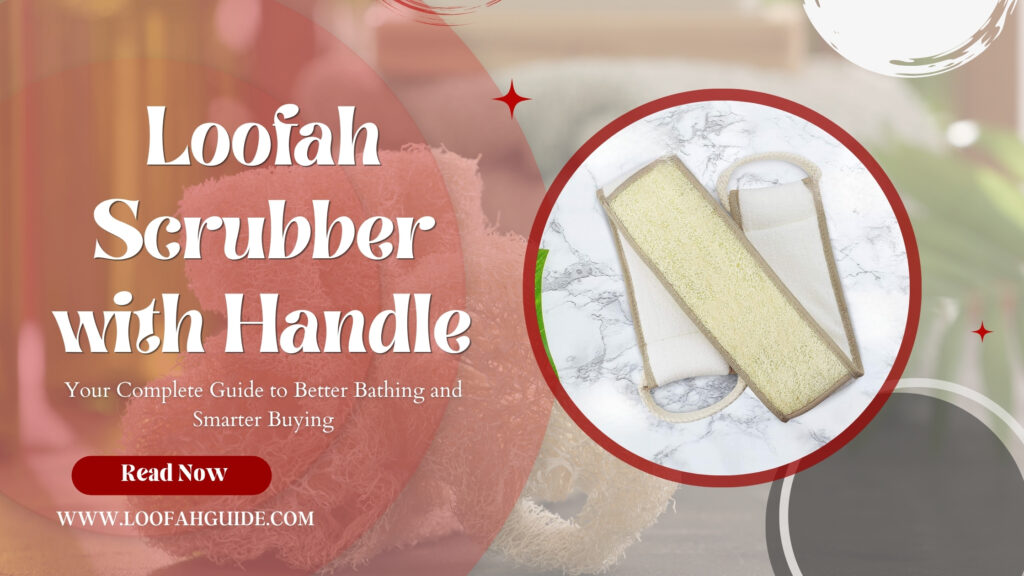
A loofah scrubber with handle consists of two main components. The loofah head is a section of dried Luffa cylindrica gourd fiber, trimmed and shaped into a cylindrical or oval pad. The handle is an attached extension, typically 30 to 45 centimeters long, made from bamboo, natural wood, recycled plastic, or braided cotton rope.
The loofah fiber itself is a three-dimensional mesh of interlocking cellulose strands. This open-cell structure does several things simultaneously during use. It holds soap or body wash and generates lather efficiently. It conforms lightly to body contours during scrubbing. It lifts dead skin cells from the surface without cutting or tearing living skin. And it rinses clean quickly, releasing trapped particles rather than holding them.
The handle transforms this effective material into a full-body tool. Without it, loofah use is limited to whatever areas the hand and wrist can reach comfortably. With it, the entire body surface becomes accessible in a single shower session.
Why the Back Is the Most Neglected Area in Personal Care
Research on skin health consistently highlights the back as the most under-cleansed major body surface. The combination of inaccessibility, higher sweat gland density, and regular contact with clothing creates conditions where dead skin buildup, folliculitis, and back acne develop far more frequently than on easily reached areas.
A loofah scrubber with handle specifically addresses this because it provides the reach and leverage needed for effective back exfoliation. The handle allows long, even strokes from upper to lower back, something that is genuinely difficult with a short-handled or handleless product.
The Science of Exfoliation: Why Natural Loofah Outperforms Alternatives
Exfoliation, the process of removing dead skin cells from the outermost layer of skin, is one of the most evidence-supported practices in personal skin care. Regular mechanical exfoliation with an appropriate tool improves skin texture, supports healthy cell turnover, prevents ingrown hairs, enhances the absorption of moisturizers, and contributes to an even skin tone over time.
The material used for exfoliation matters significantly. Natural loofah occupies a unique position in this category because its fiber structure provides what dermatologists describe as adaptive exfoliation: the resistance adjusts based on pressure applied and how wet the fibers are, giving the user natural control over intensity.
Comparing Exfoliation Tools
| Tool Type | Exfoliation Level | Skin Compatibility | Eco Impact | Durability | Cost Effectiveness |
|---|---|---|---|---|---|
| Natural Loofah with Handle | Moderate, adaptive | Broad, adjustable | Fully biodegradable | 3 to 4 weeks | High per use |
| Synthetic Mesh Scrubber | Moderate, uniform | Moderate | Microplastic shedding | 2 to 3 months | Medium per use |
| Bristle Body Brush | High, firm | Limited, tougher skin | Low waste | 6 to 12 months | High long-term |
| Exfoliating Gloves | Low to Moderate | Very broad | Moderate | 1 to 2 months | Medium |
| Washcloth | Low | Very broad | Low waste | Months | Low per use |
| Pumice Stone | Very High | Limited, feet only | None | Years | Very high long-term |
Natural loofah with handle sits at the center of this table by design. It offers meaningful exfoliation without the firmness of a bristle brush, broader compatibility than pumice, better eco credentials than synthetic mesh, and a more effective cleanse than cloth or gloves alone.
For consumers looking to make a genuinely informed switch, the Egexo loofah shop offers a range of natural handled products with verified Egyptian origin. For deeper reading on loofah types and uses, loofahguide.com maintains a comprehensive resource collection.
How to Choose the Best Loofah Scrubber with Handle for Your Needs
The market for handled loofah products ranges from low-cost disposable items to premium handcrafted pieces. Knowing what distinguishes one from another saves money and frustration.
Key Selection Criteria for Consumers
Loofah fiber quality is the most important factor. A quality natural loofah should be cream to light tan in color, free from dark patches or grey discoloration, and should have a visible, open mesh structure when held to light. The fiber should feel slightly firm when dry and noticeably softer within 20 to 30 seconds of wetting.
Handle length and material determine usability. A 35 to 45 centimeter handle suits most adults for full back reach. Bamboo and untreated wood handles align with the natural profile of the loofah itself and feel more secure in a wet hand than smooth plastic equivalents.
Attachment method affects longevity. The connection between handle and loofah should be tight, with no wobble on first inspection. Look for loofah heads secured with natural cord, wire, or a tight-fitted socket rather than adhesive alone.
Consumer Decision Guide
| Your Priority | Best Handle Type | Best Loofah Grade | Where to Buy |
|---|---|---|---|
| Maximum eco-friendliness | Bamboo | Premium, certified organic | Natural wellness retailers |
| Best back reach | Long wood (40 to 45 cm) | Standard or Premium | Bath specialty stores |
| Gift or spa experience | Rope braided or decorative wood | Premium | Spa boutiques, online |
| Budget conscious | Recycled plastic | Standard | General retail |
| Sensitive skin | Short bamboo | Premium, soft grade | Natural health stores |
| Wholesale purchase | Customizable | All grades available | Egexo wholesale |
For wholesale buyers, the decision process adds layers around quality grading, certification, customization options, and supplier reliability. The Egexo supplier evaluation page provides documented evidence of origin, quality standards, and export experience that supports informed purchasing decisions.
Egyptian Loofah: Why Origin Matters More Than Most People Realize
When shopping for a loofah scrubber with handle, the origin of the loofah fiber is the single most important quality variable. Egyptian loofah, grown in the Nile Delta, has earned its global reputation through measurable performance advantages over loofahs grown elsewhere.
The Nile Delta’s combination of rich alluvial soil, consistent warm temperatures, and controlled irrigation produces Luffa cylindrica plants with unusually dense fiber networks. The fibers grow tighter and more uniform, which translates directly into better exfoliation performance, longer product life, and a more consistent feel from one product to the next.
Egyptian vs. Other Origins: Performance Data
| Performance Factor | Egyptian Loofah (Nile Delta) | Standard Imported Loofah | Synthetic Replacement |
|---|---|---|---|
| Fiber density rating | Premium | Standard to Medium | Uniform (man-made) |
| Softness on first wet contact | Soft within 20 seconds | Moderate | Does not change with water |
| Useful life (with care) | 25 to 35 sessions | 12 to 22 sessions | 40 to 60 sessions |
| Biodegradation | 30 to 45 days | 30 to 60 days | Not biodegradable |
| Microplastic risk | None | None | Yes, sheds microplastics |
| Consistency across batches | High | Variable | High (synthetic) |
| Organic certification available | Yes | Rarely | No |
Egexo has exported Egyptian loofah for over 25 years, building relationships with Nile Delta farmers who use sustainable growing practices and harvesting at optimal fiber maturity. This attention to agricultural process is what keeps Egyptian loofah at the top of quality comparisons year after year.
Review the full origin story at the Egexo farm-to-export page, or check the detailed quality standards documentation for specifications buyers can verify independently.
Step-by-Step: How to Get the Most from Your Loofah Scrubber with Handle
Knowing how to use a loofah scrubber with handle correctly makes a real difference in results. Most people use too little water, too much pressure, or skip the back entirely. Here is how to do it properly.
Full-Body Shower Routine with a Handled Loofah
Step 1: Prepare with warm water (1 to 2 minutes) Begin your shower with warm water rather than hot. Hot water strips natural oils and can irritate skin before you even begin scrubbing. Hold the loofah under the water for 20 to 30 seconds to fully hydrate the fibers.
Step 2: Load the loofah with cleanser Apply a generous amount of your preferred body wash or soap bar directly to the wet loofah. Natural loofah generates substantial lather with relatively little product because of its open fiber structure. You will likely use less soap than with a cloth or synthetic scrubber.
Step 3: Begin with the back (the primary reason for the handle) Start your scrubbing on the back using the handle for control. Use long, even strokes rather than circular motions on the back. Apply moderate pressure and cover the full length from upper to lower back in overlapping passes. Most people find 8 to 10 strokes sufficient per side.
Step 4: Work through shoulders, arms, and legs Move progressively through your body. Use lighter pressure on thinner skin areas like the inner arm and behind the knees. The handle remains useful for the lower legs, where bending is the alternative.
Step 5: Rinse both body and loofah completely Thorough rinsing of the loofah is as important as rinsing your body. Squeeze and agitate the loofah under running water until the water runs clear and no soap remains in the fiber.
Step 6: Dry and store correctly Shake the loofah to expel excess water and hang it in open air, not inside a closed shower caddy or bag. This step directly determines how long the loofah lasts and how hygienic it remains between uses.
Usage Frequency by Skin Type
| Skin Type | Sessions Per Week | Pressure Level | Additional Notes |
|---|---|---|---|
| Normal | 3 to 5 | Moderate | Can increase as preferred |
| Dry | 2 to 3 | Light | Follow immediately with moisturizer |
| Oily or Combination | 4 to 5 | Moderate | Focus on back and shoulders |
| Sensitive | 2 | Light only | Wet thoroughly before every use |
| Mature Skin | 2 to 3 | Light | Avoid over-exfoliation |
| Post-hair removal | Wait 48 hours | Light after waiting period | Reduces ingrown hair risk |
Care, Hygiene, and Knowing When to Replace
The most common complaint about natural loofah products is that they develop odors or mold quickly. This is almost always a storage problem, not a product problem. With the right care routine, a natural loofah scrubber with handle stays fresh and effective for its full intended lifespan.
Loofah Care Routine
| Action | Frequency | Method |
|---|---|---|
| Full rinse and squeeze | After every use | Under running water until clear |
| Air drying | After every use | Hang in ventilated area, not enclosed |
| Sanitizing soak | Once per week | 5 minutes in diluted white vinegar solution |
| Visual inspection | Every 2 weeks | Check for discoloration or soft spots |
| Handle check | Monthly | Test for wobble or attachment wear |
| Full replacement | Every 3 to 4 weeks | Regardless of apparent condition |
Signs it is time to replace your loofah:
- Persistent odor that does not clear after a vinegar soak
- Grey, green, or dark brown discoloration in the fiber
- Structural breakdown, with fibers separating or tearing
- Reduced lather generation despite adequate soap
- Slimy texture after rinsing
Natural loofah is compostable at end of life. If the handle is bamboo or untreated wood, the entire product can go into a compost bin. This complete biodegradability is one of the clearest advantages natural loofah holds over synthetic alternatives.
For Wholesale Buyers: Sourcing Loofah Scrubbers with Handles at Scale
The wholesale opportunity in handled loofah products is substantial and growing. The global bath and body natural products market has seen consistent year-on-year growth of 6 to 8 percent, with natural scrubbers among the fastest-growing subcategories. Consumer demand for plastic-free, biodegradable personal care products is creating sustained pressure on retailers to shift inventory toward natural alternatives.
A loofah scrubber with handle is one of the strongest individual SKUs in this transition because it combines the functionality argument (reach, leverage, full-body cleaning) with the sustainability argument (natural fiber, compostable, zero microplastics) in a single product.
Wholesale Product Specifications
| Specification | Entry Level | Standard | Premium | Custom |
|---|---|---|---|---|
| Handle Length | 28 to 32 cm | 32 to 40 cm | 40 to 50 cm | Per spec |
| Loofah Diameter | 7 to 9 cm | 9 to 11 cm | 11 to 13 cm | Per spec |
| Handle Material | Recycled plastic | Bamboo or wood | Bamboo, premium finish | Any |
| MOQ | 1,000 units | 500 units | 300 units | 200 units |
| Lead Time | 2 weeks | 2 to 3 weeks | 3 to 4 weeks | 4 to 6 weeks |
| Private Label | Available | Available | Available | Full custom |
| Certification | Standard export | Standard export | Organic available | Per request |
Egexo supports wholesale buyers with a range of services beyond product supply, including private label manufacturing, custom product design, and pre-order sampling through the sample request service. The complete wholesale product catalog provides full specifications and available options.
For additional wholesale sourcing guidance, wholesaleloofah.com is a dedicated resource for trade buyers evaluating loofah products and suppliers.
Expert Insight from Egexo
One thing that surprises first-time wholesale buyers is how much variation exists within the category they think of as a single product. A loofah scrubber with handle can mean a premium, organically grown Egyptian loofah on a sustainably harvested bamboo handle with certified packaging, or it can mean a low-grade compressed fiber on a painted plastic stick. Both use the same product name.
The way to distinguish them is straightforward. Ask the supplier for origin documentation, request a physical sample before any order, and wet the sample before evaluating it. Quality loofah changes character completely when wet, becoming noticeably softer, more pliable, and more responsive. A loofah that feels identical wet and dry is almost certainly not natural Egyptian fiber.
With over 25 years of cultivation experience in Egypt’s Nile Delta, Egexo has developed quality grading standards that remove the guesswork from this evaluation. Every product grade is documented, verifiable, and consistent across orders.
FAQ Section
Q1: What makes a loofah scrubber with handle better than a regular loofah pad? A: A loofah scrubber with handle extends your reach by 12 to 18 inches beyond what the hand and wrist allow. This makes it possible to scrub the full back, upper shoulders, and lower legs effectively in a single shower. Beyond reach, the handle provides better leverage, meaning more consistent pressure with less physical strain. For anyone who has struggled to feel truly clean after showering, the handle version makes a measurable practical difference.
Q2: How should I clean and store my loofah scrubber with handle between uses? A: After every use, rinse the loofah thoroughly under running water, squeezing repeatedly until the water runs completely clear. Then hang it in an open, well-ventilated area to dry completely before the next use. Avoid storing it in closed shower caddies or enclosed containers. Once a week, soak it in a diluted white vinegar solution for 5 minutes to reduce bacterial accumulation. This routine keeps a natural loofah fresh for its full 3 to 4 week lifespan.
Q3: Is a loofah scrubber with handle safe to use during pregnancy? A: Generally yes, though the approach should be adjusted. During pregnancy, use lighter pressure and avoid scrubbing areas where the skin is stretched or sensitive. Ensure the loofah is very well hydrated before use to maximize softness. Avoid using on broken skin or areas with stretch marks that are newly formed and tender. As with any personal care change during pregnancy, consulting a healthcare provider is advisable for anyone with specific skin concerns.
Q4: What is the environmental impact of a natural loofah scrubber compared to synthetic options? A: A natural loofah scrubber with bamboo handle is one of the most environmentally favorable bathing tools available. The loofah fiber biodegrades in 30 to 45 days under composting conditions. Bamboo handles biodegrade similarly. Synthetic mesh scrubbers, by contrast, shed microplastic particles with every use, and these particles enter waterways and persist in ecosystems indefinitely. Choosing a natural loofah with a wooden or bamboo handle eliminates this pollution source entirely from your personal care routine.
Q5: How do wholesale buyers verify that they are receiving genuine Egyptian loofah? A: Genuine Egyptian loofah can be verified through several methods. Ask suppliers for documented country of origin certificates and any available quality certifications. Request physical samples before ordering and test fiber response to warm water: genuine Egyptian loofah softens noticeably within 20 seconds. Examine fiber color, which should be consistent cream to light tan with natural variation. Egexo provides full traceability documentation and origin verification for all wholesale orders, along with pre-order samples through the sample request page.
Q6: Can children use a loofah scrubber with handle? A: Children aged 6 and above can use a natural loofah scrubber with handle under parental guidance. Choose a shorter handle version, approximately 30 centimeters, for easier grip and control. Use very light pressure and ensure the loofah is fully wetted before contact with skin. Children with eczema, psoriasis, or other skin conditions should avoid loofah use unless cleared by a dermatologist. For younger children, a soft cloth remains the safer choice.
Q7: Where is the best place to buy a quality loofah scrubber with handle? A: For individual consumers, the best sources are natural health stores, bath specialty retailers, and verified online suppliers that specify Egyptian origin and natural fiber composition. Avoid products that do not identify fiber origin or that seem unusually cheap, as these are often low-grade compressed fiber products sold under the loofah name. For wholesale purchasing, Egexo offers verified Egyptian loofah with full quality documentation. Browse the Egexo shop or contact the export team for wholesale pricing through the quotation request page.
Conclusion
A loofah scrubber with handle is one of those products that quietly solves a real problem. The back washing challenge is universal, the benefits of regular exfoliation are well documented, and the natural loofah material is genuinely superior to the synthetic alternatives that have dominated shelves for the past two decades.
Understanding what to look for, how to use it correctly, and how to maintain it properly transforms a simple bath accessory into a meaningful part of a healthy personal care routine. For wholesale buyers, the combination of growing consumer demand, strong sustainability credentials, and premium positioning makes handled loofah products one of the most strategically sound additions to any natural personal care range.
Egyptian loofah, with its measurably superior fiber quality, remains the gold standard for this product category, and Egexo remains the most experienced and reliable source for it.
Key Takeaways:
- A handled loofah adds 12 to 18 inches of reach, solving the back-washing problem completely
- Natural loofah with bamboo handle is fully compostable with zero microplastic impact
- Egyptian Nile Delta loofah outperforms all other origins on durability, softness, and consistency
- Correct storage, specifically open-air drying after every use, determines product lifespan
- Wholesale buyers gain access to custom grades, private labeling, and verified origin documentation through Egexo
Ready to make the switch to natural?
For Wholesale Buyers: Request a bulk quote or download the full product catalog
For Individual Shoppers: Shop the loofah collection or order samples before committing to bulk