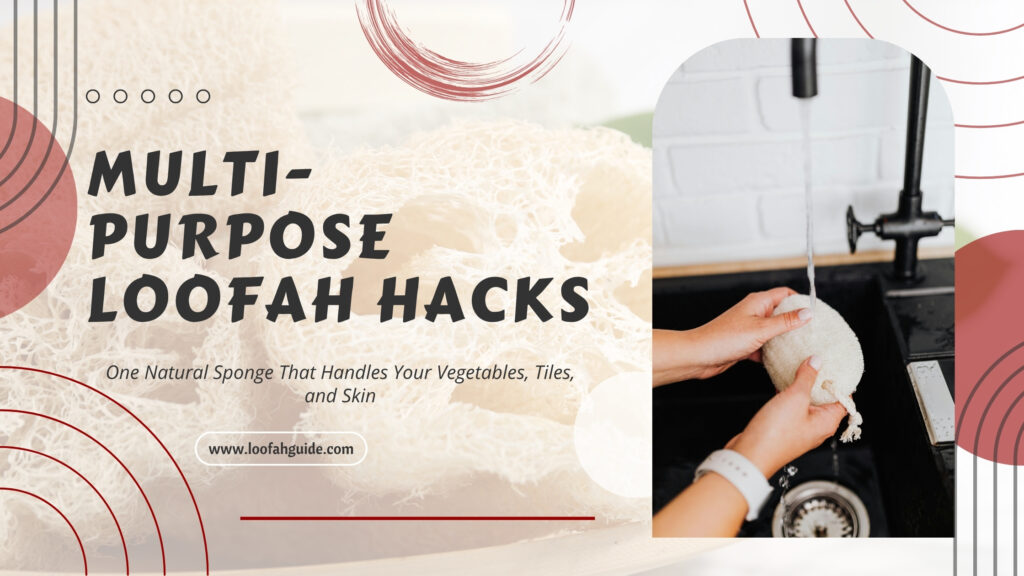
Here is something most people have never tried: the same natural sponge sitting by your shower can scrub the dirt off your carrots, clean the soap scum off your bathroom tiles, and exfoliate your skin without any chemical additives or synthetic materials involved. That is not an exaggeration. It is exactly how the natural loofah was used for centuries before single-use plastic took over the cleaning aisle.
Multi-purpose loofah hacks are gaining real traction in 2026 as more households look for ways to cut plastic waste without sacrificing cleaning performance. A single natural Egyptian loofah replaces three or four different scrubbing tools that most people currently buy separately and discard within weeks of each other.
This guide is built for people who want to use their loofah smarter. Whether you are a first-time buyer curious about what a natural loofah can actually do, an eco-conscious household looking to reduce disposable scrubbers, or a wellness retailer sourcing products for a natural living brand, this guide covers the full picture. You will find step-by-step methods, surface-by-surface breakdowns, care schedules, and answers to the questions most commonly asked about loofah versatility.
For a deeper look at sourcing and product selection, loofahguide.com and wholesaleloofah.com both carry practical resources for individual buyers and trade professionals alike.
Understanding What Makes a Loofah Multi-Purpose
A natural loofah is not a sponge in the traditional sense. It is the dried fibrous interior of a gourd from the Luffa plant family. When the gourd matures and dries, the interior becomes a three-dimensional mesh of interlocking cellulose fibers. That mesh is porous, flexible, and adjustable in abrasiveness depending on how wet or dry it is.
This structural quality is what makes multi-purpose loofah hacks genuinely practical rather than just creative. The same tool behaves differently depending on hydration level, pressure applied, and the surface it contacts.
How Loofah Fiber Behavior Changes with Moisture
| Moisture Level | Fiber State | Abrasiveness | Best Application |
|---|---|---|---|
| Fully dry | Stiff, rigid | Very high | Heavy grout scrubbing, craft use |
| Semi-dry (wrung out) | Firm, structured | High | Tile cleaning, pan scrubbing |
| Slightly damp | Flexible, open | Moderate | Vegetable scrubbing, counter wiping |
| Fully saturated | Soft, pliable | Low | Body exfoliation, facial cleansing |
This moisture-abrasion relationship is the foundation of every multi-purpose hack described in this guide. Adjust the water level, and the loofah adjusts its behavior.
Why Egyptian Loofah Outperforms Imported Varieties
Not all natural loofahs offer the same quality of fiber. Egyptian loofahs grown in the Nile Delta, the most fertile agricultural region in Egypt, consistently produce denser, more uniform fiber networks than varieties grown in lower-quality agricultural zones. The mineral-rich Nile Delta soil and carefully controlled irrigation create ideal conditions for the Luffa aegyptiaca plant to develop stronger cell walls.
Egexo, a leading Egyptian loofah supplier with over 25 years of cultivation experience, exports this premium variety to buyers in more than 40 countries. The quality difference is measurable: Nile Delta loofahs have fiber densities of 220 to 280 fibers per square centimeter, compared to 140 to 180 for many imported alternatives.
For consumers, this matters because a denser fiber network holds its shape longer, absorbs soap and cleaning solution more evenly, and provides more consistent scrubbing performance across all the applications covered in this guide.
Loofah Hacks for the Kitchen: What Actually Works
The kitchen feels like an unlikely place for a loofah. Most people associate it with body care. But the kitchen is actually where a natural loofah shows the most practical versatility.
Scrubbing Vegetables Without Peeling
Peeling vegetables removes a significant portion of their fiber and nutrient content. For root vegetables like potatoes, carrots, parsnips, and beets, the skin contains valuable nutrition that most people discard out of habit. A natural loofah makes it possible to thoroughly clean vegetable skin without peeling.
Step-by-step vegetable scrubbing method:
- Soak your loofah in cold water for 45 to 60 seconds to bring it to a slightly damp state.
- Hold the vegetable under cool running water.
- Apply light to moderate pressure with the loofah and move in short circular strokes.
- Pay extra attention to crevices and root attachment points where soil collects.
- Rinse the vegetable under running water and inspect the skin visually.
- After use, rinse the loofah under hot water for 30 seconds, wring firmly, and set upright to air-dry.
This method works well for: potatoes, carrots, beets, turnips, zucchini, cucumbers, firm-skinned squash, and ginger root.
It does not work for: soft-skinned produce like tomatoes, plums, or peaches, which bruise easily under any scrubbing pressure.
For kitchen-specific loofah products designed with food safety in mind, the Egexo kitchen loofah collection offers untreated, unbleached varieties appropriate for food-contact use.
Cleaning Pots, Pans, and Counters
A semi-dry loofah with dish soap applied directly to it works effectively on ceramic, stainless steel, and glass cookware. The fiber mesh holds soap and distributes it across the surface while the abrasive structure lifts food residue. For carbon buildup or heavily baked-on food, allow the loofah to sit on the soiled surface for 2 to 3 minutes before scrubbing.
For countertops, a fully saturated loofah used with a mild all-purpose cleaner works well on sealed stone, tile, and laminate surfaces. Avoid using it on raw or unsealed wood counters, which can absorb moisture unevenly.
Loofah Hacks for Bathroom Cleaning: Tiles, Grout, and Fixtures
The bathroom presents a different set of cleaning challenges than the kitchen. Soap scum, mineral deposits, and mildew build up on surfaces that are frequently wet and poorly ventilated. A natural loofah addresses all three of these problems effectively.
Tile Cleaning Without Scratching the Surface
Most commercial scrubbing pads are too abrasive for tile surfaces over time. The fine scratches they leave behind become traps for bacteria and soap residue. A natural loofah provides enough abrasion to lift deposits without scoring the tile glaze.
Bathroom tile cleaning process:
- Fill a spray bottle with equal parts water and white vinegar. For heavy mineral deposits, use undiluted vinegar.
- Spray the tile generously and allow it to soak for 4 to 6 minutes.
- Take a semi-dry loofah and begin scrubbing in a circular motion, starting at the top of the tiled area and working downward.
- For grout lines, compress the loofah to form a narrow edge and apply firm, linear pressure along the grout seam.
- Rinse the wall thoroughly with warm water.
- For persistent staining, repeat the process with a paste of baking soda and water applied directly to the loofah.
This method is safe for ceramic, porcelain, and glazed natural stone. Do not use acidic vinegar solutions on uncoated marble or travertine.
Cleaning Fixtures and Faucets
Chrome and brushed nickel fixtures respond well to a fully saturated loofah used with a small amount of dish soap. The soft fiber state at full saturation is gentle enough for metal finishes while still lifting water spots and soap residue. Rinse thoroughly after cleaning to prevent soap buildup in the fiber network.
Body Care in the Same Session
One of the most practical multi-purpose loofah hacks is transitioning from bathroom cleaning to personal care within the same shower session. After cleaning tiles, rinse the loofah thoroughly under hot water, soak it fully, and use it for body exfoliation. The transition from cleaning to body care is safe as long as you have used only vinegar or mild cleaners, not strong chemical products like bleach-based cleaners.
For premium body loofahs in spa-quality grades, the Egexo bath and body loofah range includes products specifically sized and processed for personal care use. Retailers and spa operators can explore private label options to create branded product lines around natural Egyptian loofah.
Choosing the Right Loofah for Each Task
Not every loofah is the same shape, size, or density. Matching the product to the task significantly improves performance and extends the usable life of each piece.
Loofah Selection Guide by Task
| Task | Ideal Size | Ideal Grade | Moisture Level | Notes |
|---|---|---|---|---|
| Vegetable scrubbing | Small (10 to 15 cm) | Kitchen grade, untreated | Slightly damp | Must be food-safe, unbleached |
| Dish and pan scrubbing | Small to medium (12 to 18 cm) | Kitchen or standard grade | Semi-dry | Apply soap directly to loofah |
| Bathroom tile cleaning | Medium (18 to 25 cm) | Standard or premium | Semi-dry | Use with vinegar solution |
| Grout cleaning | Small or folded medium | Standard grade | Semi-dry to dry | Compress loofah for narrow edge |
| Body exfoliation | Medium to large (20 to 35 cm) | Premium or spa grade | Fully saturated | Softer at full saturation |
| Facial cleansing | Small slice or loofah pad | Spa grade, very fine fiber | Fully saturated | Use only high-quality fine-fiber variety |
This table helps both individual buyers choosing one or two products for home use and retailers deciding which SKUs to carry for different customer segments.
For the full product range with specifications, download the Egexo product catalog or visit the Egexo shop to browse by category.
Natural Loofah vs Synthetic Scrubbers: An Honest Comparison
The case for switching to natural loofah is strong, but it is worth examining the trade-offs clearly rather than making blanket claims.
Side-by-Side Performance Comparison
| Performance Factor | Natural Egyptian Loofah | Synthetic Nylon Scrubber | Cellulose Sponge |
|---|---|---|---|
| Microplastic shedding | None | High per use | Low to moderate |
| Biodegradability | 100 percent | 0 percent | Partial |
| Adjustable abrasiveness | Yes (moisture-dependent) | No | Limited |
| Food-contact safety (untreated) | Yes | Not recommended | Depends on coating |
| Longevity with proper care | 4 to 8 weeks | 2 to 4 weeks | 3 to 6 weeks |
| Multi-surface capability | High | Moderate | Moderate |
| Mold risk without care | Moderate (addressed with vinegar soak) | High (plastic traps bacteria) | High |
| Compostable at end of life | Yes | No | Partially |
| Cost per week of use | Low to moderate | Low | Low |
The one area where synthetic scrubbers have a perceived advantage is initial cost. Natural loofahs cost slightly more per unit at retail. However, the longer lifespan and multi-task capability make the cost per week of use comparable, and the elimination of microplastic shedding has a value that is harder to quantify but increasingly important to consumers.
How to Care for a Multi-Purpose Loofah to Get Maximum Life
A loofah used for multiple tasks in the same household needs a clear maintenance routine to stay hygienic and perform well. These habits take less than two minutes per day and extend the loofah’s life significantly.
Daily Care Checklist
| After Each Use | Weekly Care |
|---|---|
| Rinse under hot water for 30 seconds | Soak in one part vinegar to four parts water for 10 minutes |
| Wring out thoroughly | Rinse after vinegar soak and allow to fully air-dry |
| Hang or place upright in ventilated spot | Inspect fibers for breakdown or color change |
| Do not seal in an enclosed container | Replace if fibers feel slimy, discolored, or structurally compromised |
When to Replace Your Loofah
The clearest signs that a loofah needs replacing are: persistent odor even after cleaning, visible darkening or discoloration of fibers, a slimy texture when wet, or visible structural breakdown where fibers are separating or crumbling. Do not try to restore a loofah that has reached this stage. At end of life, a natural loofah can be composted or used as garden mulch.
Sustainability Numbers: What Switching to Natural Loofah Actually Means
For eco-conscious consumers tracking their plastic footprint, switching from synthetic scrubbers to natural loofahs has a measurable impact.
Environmental Impact Comparison (Annual Household Estimate)
| Metric | Synthetic Scrubbers | Natural Loofahs |
|---|---|---|
| Units used per year (average household) | 24 to 36 | 8 to 12 |
| Microplastics released per unit per wash | 1,900 to 4,700 particles | 0 |
| Weight of plastic waste generated per year | 180 to 320 grams | 0 |
| Landfill time to degrade | 200 to 400 years | 30 to 60 days |
| Packaging (if bulk purchased) | Plastic-wrapped, single units | Minimal, often paper or unpackaged |
These numbers make a meaningful difference when communicated to end consumers, and they also make a strong case for wellness brands and retailers who want to align their product lines with measurable environmental claims.
For wholesale buyers interested in how Egexo sources and processes its loofahs from seed to shipment, the farm-to-export page provides full supply chain transparency. For buyers who want to verify quality standards before ordering, the quality standards documentation is available on the Egexo website.
Expert Insight from Egexo
At Egexo, we field questions every week from both consumers and wholesale buyers about loofah versatility. The most common misconception we encounter is that a loofah used for cleaning tiles cannot be trusted for food contact, or that a kitchen loofah cannot be used for body care. The answer depends almost entirely on processing method. An unbleached, untreated loofah has no chemical residue that would make cross-use unsafe, provided it is rinsed thoroughly between applications. This is why we specifically offer untreated kitchen varieties alongside our premium spa-grade products. Understanding that distinction helps consumers get more value from every product they purchase and helps retailers offer clearer guidance to their customers. Our 25-plus years of growing and processing natural loofah in the Nile Delta have taught us that the product itself is remarkably capable. The limiting factor is almost never the loofah. It is the lack of information about how to use it.
FAQ Section
Q1: What are the best multi-purpose loofah hacks for an everyday household? A: The most practical multi-purpose loofah hacks for households include using a slightly damp natural loofah to scrub vegetables before cooking, a semi-dry loofah with vinegar to clean bathroom tiles and grout, and a fully saturated loofah for skin exfoliation in the shower. Each application uses the same loofah at a different moisture level to control abrasiveness. Designating separate loofahs for food-contact and non-food surfaces is the simplest way to maintain hygiene across multiple uses.
Q2: Is it safe to use a natural loofah on both vegetables and my skin? A: Yes, provided the loofah is untreated and unbleached. Treated or bleached loofahs contain residual chemicals that are not appropriate for skin or food contact. Untreated natural Egyptian loofahs are safe for both applications. Rinse the loofah thoroughly between tasks and allow it to dry fully between uses to prevent bacterial buildup. Never use the same loofah for food contact and chemical cleaning without a thorough sanitizing step in between.
Q3: How do I stop my loofah from smelling bad? A: Loofah odor is caused by bacterial growth in wet fibers. The two main causes are leaving the loofah wet in an enclosed or poorly ventilated space and failing to rinse it thoroughly after each use. To prevent odor, always rinse your loofah under hot water after use, wring it out completely, and hang it in a ventilated spot to dry. Once per week, soak it in one part white vinegar to four parts water for 10 minutes, rinse, and air-dry. This routine eliminates the bacteria responsible for the smell.
Q4: Which size loofah is best for bathroom tile cleaning? A: A medium-sized loofah between 18 and 25 centimeters is ideal for bathroom tile cleaning. This size gives you enough surface area to cover tiles efficiently while remaining easy to hold and control. For grout lines, compress the loofah to form a narrow edge or use a smaller piece for targeted scrubbing. Avoid oversized loofahs for tile work, as they are harder to direct into corners and grout seams.
Q5: Can I compost my loofah when it wears out? A: Yes. A natural, untreated loofah is 100 percent plant-based and fully compostable. Cut it into smaller pieces to speed decomposition and add it to a home compost bin with other organic material. It will break down within 30 to 60 days under normal composting conditions. This is one of the most significant advantages over synthetic scrubbers, which take 200 to 400 years to degrade in landfill.
Q6: Where is the best quality natural loofah sourced from? A: Egyptian loofah from the Nile Delta is consistently recognized as the highest quality natural loofah available globally. The Nile Delta’s soil mineral profile and climate conditions produce Luffa aegyptiaca plants with denser fiber networks than those grown in other regions. Egexo has been cultivating and exporting this premium variety for over 25 years and supplies wholesale buyers across Europe, North America, and Asia. For individual consumers, Egyptian-origin loofahs are available through the Egexo shop.
Q7: How many loofahs should I have at home for different purposes? A: For a practical multi-purpose setup, most households benefit from three dedicated loofahs: one for kitchen and vegetable use, one for bathroom cleaning, and one for personal body care. This separation eliminates cross-contamination concerns without requiring complicated decontamination between uses. Each loofah should have its own storage spot with adequate airflow and should be clearly distinguishable from the others, either by color, size, or marked storage location.
Conclusion
The idea that a single natural sponge can handle your vegetables, your bathroom tiles, and your skin in the same week is not an overclaim. It is the practical reality of what a high-quality natural loofah is designed to do. The multi-purpose loofah hacks outlined in this guide are based on the structural properties of the Luffa aegyptiaca plant, specifically the moisture-responsive fiber network that gives it adjustable abrasiveness across different applications.
Egyptian loofah from the Nile Delta remains the most reliable source of this quality, and Egexo’s 25-plus years of cultivation and export experience makes it the supplier most capable of delivering that quality at scale.
Key Takeaways:
- A natural loofah’s abrasiveness adjusts with moisture level, making it genuinely multi-purpose
- Egyptian Nile Delta loofahs have fiber densities of 220 to 280 per square centimeter, outperforming most imports
- Separate loofahs for food-contact, bathroom cleaning, and body care is the simplest hygiene approach
- Proper daily care extends loofah life to 4 to 8 weeks under daily use
- Switching to natural loofah eliminates microplastic shedding entirely and reduces household plastic waste measurably
Ready to experience Egyptian loofah quality?
- For Wholesale Buyers: Request a quote or download our catalog
- For Individual Shoppers: Shop our collection or order samples