The Story in Every Fiber
Pick up a natural loofah and you are holding the condensed record of an entire growing season. Every characteristic you can feel, the give when you squeeze it, the way it opens under warm water, the gentle firmness it brings to your skin, was shaped by months of weather, soil conditions, and the skill of the farmer who grew it.
How climate affects loofah yield is one of those questions that sounds technical but lands very practically. For someone choosing between loofah products on a shelf, it explains why price differences between natural loofahs are real and not marketing. For someone curious about where their bathroom products actually come from, it opens a genuinely fascinating agricultural story. And for those who care about sustainability and traceability, it reveals why origin matters as much for loofah as it does for coffee or olive oil.
This guide draws on insights from Egyptian loofah growers with more than 25 years of cultivation experience, including the team behind Egexo, one of the world’s leading Egyptian loofah exporters. It is written for anyone who has ever wondered what makes one loofah distinctly better than another, and why Egypt keeps appearing in conversations about the finest natural loofah in the world.
Whether you are a dedicated eco-conscious shopper, a spa enthusiast, a small business owner, or simply curious, this article will give you the agricultural context to make smarter decisions about the loofah products you buy and use.
What Is Loofah, Really, and Why Does It Need Specific Climate
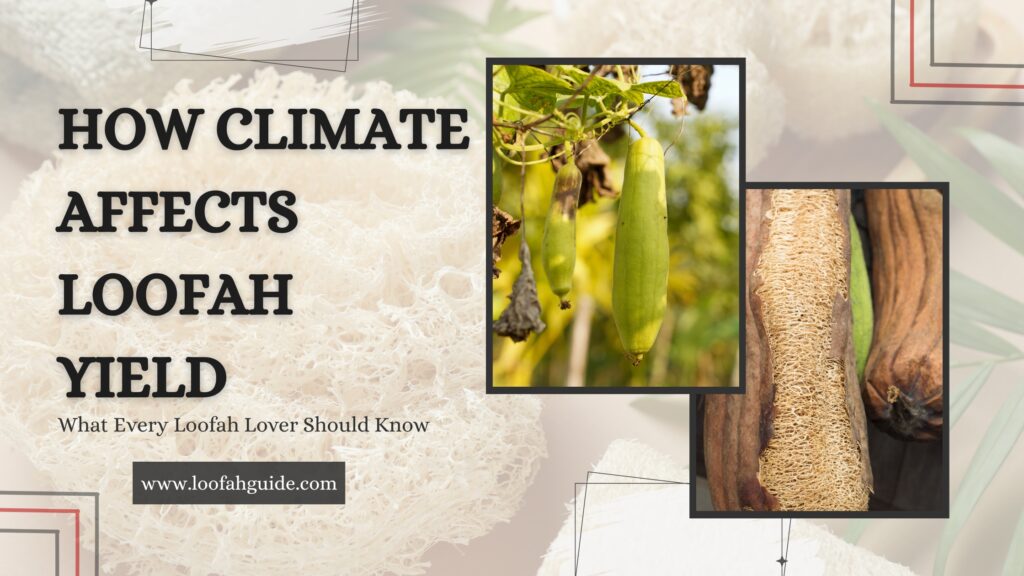
There is a persistent misconception that loofah is a sea creature, perhaps a type of sea sponge. In reality, loofah is the fibrous interior skeleton of a fully matured gourd. The plant, known scientifically as Luffa cylindrica or Luffa aegyptiaca, grows on a sprawling vine in the cucumber and squash family and produces large fruits whose interior, once the outer skin and seeds are removed, reveals a three-dimensional cellulose fiber network.
That fiber network is what you use in your shower. It is entirely botanical, entirely compostable, and entirely dependent on growing conditions for its quality.
Why Loofah Is More Like Wine Than Like Plastic
The fiber structure inside a loofah is not manufactured. It forms as the plant grows, and the density, regularity, and strength of that fiber network depend directly on how well the plant’s needs were met during each growth phase. Think of it the way wine enthusiasts discuss terroir, the combination of climate, soil, and geography that makes grapes from one region produce wines with characteristics no other region can replicate.
Egyptian loofah has its own terroir. The Nile Delta’s combination of warm and consistent temperatures, long sunlight hours, minimal rainfall during the growing season, and access to controlled Nile irrigation creates conditions that produce fiber networks of extraordinary regularity and density. This is not regional pride. It is measurable agricultural fact.
The loofahguide.com resource library exists specifically to translate these agricultural realities into practical guidance for consumers who want to make informed choices. This article is part of that mission.
The Four Climate Factors That Determine Your Loofah’s Quality
When agricultural researchers and experienced farmers discuss how climate affects loofah yield, they consistently point to four variables that matter above all others. Each one leaves a fingerprint on the final product that a knowledgeable buyer can detect.
Factor 1: Temperature Range and Consistency
Luffa vines are subtropical plants with a specific thermal comfort zone. They perform best when daytime temperatures stay between 25 and 35 degrees Celsius throughout the growing period and nighttime temperatures remain above 18 degrees Celsius.
Plants exposed to temperatures consistently above 38 degrees Celsius begin redirecting metabolic energy toward heat stress management. This means less energy goes into the fruit, and the fiber matrix that forms inside develops with lower density and more structural gaps. The resulting loofah feels less firm, compresses without recovering quickly, and shows more color variation.
Cold snaps tell a different story. Temperatures below 15 degrees Celsius at any point in the growing cycle can cause cellular damage to the developing fiber structures. Even brief cold exposure during fruit set, the phase when the fiber network is actively forming, can create irregular zones within the loofah that appear as soft patches or discolored areas.
Egypt’s Nile Delta consistently delivers temperatures within the ideal range throughout the loofah growing season from late February through October, with peak fruit development occurring in the consistently warm months of June and July.
Factor 2: Sunlight Duration and Intensity
Photosynthesis is the engine of loofah fiber production. The plant converts sunlight into the carbohydrates that build its cellulose fiber network, and longer daily sunlight exposure directly correlates with denser, more robust fiber structures.
Egypt’s growing season averages 10 to 11 hours of direct sunlight per day. This is not merely adequate. It is exceptional. Regions that grow loofah with 7.5 to 9 hours of daily sunlight produce vines with measurably lower fiber density per fruit, simply because less photosynthetic energy is available to build the internal structure.
Factor 3: Water Management and Rainfall Timing
This is the factor that surprises most people. Loofah does not need abundant rainfall. It needs precisely timed moisture. Heavy rain during early vine development helps establish root systems. But rain during the fruit maturation phase is actively harmful. Moisture absorbed by the developing fruit causes the fibers to expand unevenly, and when the fruit dries, those fibers contract at different rates, creating the structural irregularities that make a loofah feel lumpy or develop soft zones with use.
Egypt’s growing season is naturally dry, with the region receiving only 25 to 50 millimeters of rainfall annually. The Nile provides a controlled irrigation alternative that allows farmers to apply precise amounts of water at precisely the right moments. This control is arguably Egypt’s most important agricultural advantage for loofah cultivation, and it is not available to rain-dependent growing regions.
Factor 4: Humidity During Maturation and Drying
After harvest, loofah must be dried to stable moisture content before it can be stored or exported. High ambient humidity during this drying phase dramatically extends drying time, increases the risk of mold development within the fiber, and can create musty odors that are difficult to fully eliminate.
Egypt’s low humidity environment during the harvest and drying months of September through November allows loofah to dry naturally to optimal moisture content with minimal intervention. This results in a cleaner, lighter-colored finished product with a fresh natural scent rather than the earthy or musty smell that can characterize loofahs dried in high-humidity environments.
| Climate Factor | Egypt’s Advantage | Impact on Product Quality |
|---|---|---|
| Temperature consistency | 26 to 34 degrees C range | Dense, uniform fiber network |
| Daily sunlight hours | 10 to 11 hours | High cellulose production, firm texture |
| Rainfall during maturation | Near zero, controlled irrigation | Even fiber development, no expansion cracking |
| Post-harvest humidity | Low, 45 to 60 percent | Clean drying, light color, fresh scent |
| Growing season length | 7 to 8 months | Full fiber maturation before harvest |
A Season in the Life of an Egyptian Loofah: From Seed to Shelf
Understanding the growing cycle helps connect climate conditions to the specific product characteristics consumers experience. What follows is a grower’s-eye view of the Egyptian loofah season, including what each phase means for the quality of the final product.
February to March: Planting Decisions
Egyptian farmers begin the season by selecting planting dates with careful attention to soil temperature and weather forecasts. Seeds require soil temperatures above 20 degrees Celsius for reliable germination. Planting too early risks poor germination and vulnerable seedlings. Planting too late compresses the growing window and pushes fruit maturation into less favorable conditions.
Most Nile Delta farms plant between late February and mid-March. Upper Egyptian farms, which experience slightly warmer winters, sometimes plant as early as mid-February. This two-to-three-week window has enormous downstream consequences for yield quality.
April to May: Vine Development and Flower Formation
During this phase, the vine grows rapidly and begins setting flowers. Climate stress here affects yield volume more than fiber quality. Aphid pressure can be significant if late-season cool temperatures persisted in March, and experienced farmers monitor leaf health closely as an early indicator of vine vitality.
The flower pollination phase, which occurs primarily in May, determines how many fruits each vine will set. A healthy vine in good climate conditions can produce 8 to 15 fruits. Stressed vines often abort flowers or set fewer fruits that then compete for the vine’s limited resources.
June to July: Fiber Formation
This is the most critical phase for quality. The fruit swells, and inside it, the cellulose fiber matrix forms from the outer wall inward over approximately 30 to 45 days. Temperature during this phase is the single strongest predictor of final fiber density.
A fruit that develops through a June characterized by 28 to 32 degree temperatures and 10 to 11 daily sunlight hours will have a fundamentally different fiber structure than one that develops through a cooler or cloudier period. This is where Egyptian climate delivers its most decisive advantage.
August to September: Maturation and Preparation for Harvest
The fruit’s outer skin begins to yellow and dry, signaling that the interior fibers are reaching full maturity and hardening to their permanent structure. Farmers allow fruits to remain on the vine through this process, sometimes four to six weeks, to ensure complete fiber maturation.
Harvesting too early produces loofahs with softer, less durable fibers. Harvesting too late risks the outer skin cracking and allowing moisture or insects to affect the interior fibers. Experienced Egyptian farmers read visual signs with precision developed over decades.
October to November: Processing and Drying
After harvest, fresh loofahs are peeled, seeded, washed, and set to dry. Egypt’s autumn provides ideal natural drying conditions: warm days, low humidity, and consistent airflow. The farm-to-export process at Egexo includes quality sorting at this stage, where each piece is assessed for fiber density, color, and structural integrity before being graded and allocated to product categories.
Consumers who purchase body loofah products from Egexo’s range are getting the result of this entire chain, from planting decision through final grading, executed with more than 25 years of accumulated expertise.
How to Read a Loofah: Quality Indicators Any Consumer Can Use
You do not need agricultural training to assess loofah quality before you buy. The following checklist translates climate quality indicators into practical shopping guidance.
| Quality Indicator | What to Look For | What It Means |
|---|---|---|
| Color | Light tan to cream | Optimal growing and drying conditions |
| Color | Medium to dark brown | Climate stress or inadequate drying |
| Texture | Smooth and uniform | Regular fiber network, even development |
| Texture | Rough patches or dense zones | Uneven growth due to climate stress |
| Compression | Returns to shape in 1 to 2 seconds | High-density, well-developed fiber |
| Compression | Stays compressed or collapses | Low fiber density, likely climate stressed |
| Scent | Clean, neutral, or faintly earthy | Good drying conditions, low mold risk |
| Scent | Musty or heavy | High humidity during drying, potential mold |
| Weight | Firm and substantial for size | Dense fiber, full maturation |
| Weight | Surprisingly light for size | Thin fiber walls, under-matured |
These indicators are consistent across loofah products, whether you are choosing a bath loofah for personal use or evaluating samples as a wholesale buyer. Raw loofah scrubbers are particularly easy to assess using these criteria because they have not been processed into shaped products, making the fiber structure directly visible.
Natural Loofah Versus Synthetic: A Climate Story Hidden in Plain Sight
The natural versus synthetic loofah debate often focuses on environmental credentials, and for good reason. But the climate story adds another layer to this comparison that rarely gets discussed.
Pros and Cons: Natural Versus Synthetic Loofah
| Factor | Natural Loofah (Egyptian) | Synthetic Loofah (Plastic) |
|---|---|---|
| Fiber origin | Agricultural, plant-based | Petroleum-derived synthetic polymer |
| Exfoliation quality | Adapts to skin contour naturally | Uniform but less adaptive |
| Bacterial accumulation | Biodegrades naturally, self-drying | Plastic retains bacteria longer |
| Hygiene replacement cycle | 4 to 6 weeks recommended | 3 to 6 months commonly used |
| Environmental end of life | Fully compostable | Contributes to plastic waste |
| Durability | Climate-dependent, 30 to 60 days use | More consistent but less hygienic long-term |
| Skin sensitivity | Appropriate for most skin types | Synthetic texture can cause micro-irritation |
| Traceability | Origin verifiable with quality suppliers | Manufacturing origin often opaque |
The traceability point deserves particular attention. A natural loofah from a traceable Egyptian source has a complete agricultural story that can be told at every stage from field to shelf. Brands building clean-ingredient or natural-product positioning genuinely benefit from this story. Synthetic loofahs cannot offer an equivalent narrative because their origin is industrial rather than agricultural.
For consumers who care about what touches their skin and where it comes from, loofahguide.com offers extended guidance on selecting products by origin, grade, and intended use.
Climate and Loofah in Other Applications: Beyond the Bathroom
Most people think of loofah exclusively as a bath product, but the same agricultural characteristics that determine bath loofah quality also shape performance across several other applications. Climate-determined fiber quality affects every category.
Kitchen Loofah: Why Texture Matters Differently
For kitchen use, loofah needs greater structural durability than bath applications require. A kitchen loofah encounters grease, food particles, and cleaning products that demand a denser, more resilient fiber structure. The very same climate conditions that produce premium bath loofah, temperature consistency and low humidity during maturation, also produce the fiber density that kitchen loofah needs.
Kitchen loofah products from Egyptian-grown stock perform noticeably better than lower-grade alternatives because their fiber networks do not collapse or fray as quickly under mechanical stress from scrubbing.
Pet and Spa Grooming Loofah
The spa and grooming loofah market demands consistent softness combined with adequate structure. Climate-stressed loofah that has developed an irregular fiber matrix often creates abrasion variability that is unacceptable for grooming applications, particularly for pet use where skin sensitivity is a primary concern.
Egyptian premium-grade loofah, with its uniform fiber development from optimal growing conditions, provides the consistent gentle abrasion that pet and spa grooming products require. This is a non-negotiable quality standard in that market segment.
Sustainability and Climate: The Full Circle of Loofah Agriculture
Growing loofah in Egypt is not simply about producing a commercial product. It is, when done properly, an example of agriculture that works with rather than against its climate. The very characteristics that make Egyptian loofah climate advantageous, low rainfall requirement, long sunlight availability, and natural pest suppression from the dry growing season, also make it one of the least input-intensive fiber crops grown at commercial scale anywhere in the world.
Compared to cotton, which requires enormous water inputs and significant pesticide application, loofah production in Egypt uses irrigation water conservatively, requires minimal chemical intervention due to the climate’s natural pest suppression effect, returns organic matter to the soil through vine and leaf decomposition, and produces a product that is 100 percent compostable at end of use.
For eco-conscious consumers, this full-cycle sustainability picture is part of what makes Egyptian loofah not just a better product but a more responsible choice. And for brands that want to communicate genuine environmental credentials, the agricultural story that climate-aware Egyptian loofah cultivation provides is both authentic and compelling.
If you represent a brand exploring sustainable product lines, the custom loofah product design and private label manufacturing programs at Egexo are worth exploring. They allow you to bring the Egyptian agricultural story directly into your brand’s product narrative.
Expert Insight from Egexo
Loofah cultivation has been practiced in Egypt’s Nile Delta for well over a century, and within that history sits an enormous amount of knowledge about reading land and weather that does not appear in any textbook.
One of the most consistent things our most experienced growers say is that a good loofah season is not made in October at harvest time. It is made in February when planting decisions are made based on reading the previous winter’s soil moisture, the timing of the first warm days, and the long-range outlook for the summer months ahead.
At Egexo, we treat this agricultural intelligence as a quality input equal in importance to any piece of processing equipment. You cannot purchase the knowledge that comes from 25 years of watching the same fields, the same river, and the same sky. But when you source from us, you benefit from it directly.
Visit wholesaleloofah.com for wholesale procurement guidance informed by the same agricultural expertise.
FAQ Section
Q1: What climate does loofah grow best in?
A: Loofah grows best in subtropical climates with consistent daytime temperatures between 25 and 35 degrees Celsius, a minimum of 10 hours of direct sunlight per day during the growing season, low rainfall during fruit maturation, and low ambient humidity during the post-harvest drying phase. Egypt’s Nile Delta meets all four criteria more consistently than any other major loofah-producing region, which is why Egyptian loofah consistently achieves the highest export-grade yield rates and fiber density measurements in the global market.
Q2: Why does Egyptian loofah feel different from other natural loofahs?
A: The difference comes directly from climate. Egypt’s combination of stable growing temperatures, 10 to 11 daily sunlight hours during the season, and controlled Nile irrigation allows loofah fiber networks to develop with exceptional density and regularity. Consumers describe Egyptian loofah as feeling firmer, more resilient under compression, and more consistent in texture than loofah from high-humidity growing regions, where irregular fiber development is common. These differences are measurable and consistent across growing seasons.
Q3: Is natural loofah safe for sensitive skin?
A: Premium-grade natural loofah is generally appropriate for most skin types, including moderately sensitive skin. The key is selecting loofah with uniform fiber density, which produces consistent and predictable abrasion rather than random rough patches. Coarser or irregularly developed loofah, often the result of climate stress during cultivation, can cause micro-irritation on sensitive skin. Start with a lighter pressure when trying a new loofah, and replace it every four to six weeks to maintain hygiene and prevent bacterial buildup.
Q4: How do I know if my loofah is actually from Egypt?
A: Ask for origin documentation, which reputable suppliers provide. Physically, genuine Egyptian-grown premium loofah has a characteristically light tan to cream color, a smooth external texture, and firm compression recovery. Loofahs marketed as Egyptian but sourced from other regions often have a darker color, rougher texture, or inconsistent density. For individual consumers, purchasing from verifiable sources like Egexo’s shop guarantees Egyptian cultivation origin.
Q5: How often should I replace my natural loofah?
A: Every four to six weeks with regular daily use is the standard recommendation. This timeline reflects two realities: the natural degradation of the fiber structure under daily mechanical use and moisture exposure, and the accumulation of bacteria within the fiber network over time. Natural loofah begins to break down the outer fibers with regular use, and when you notice shedding, color change to gray or brown, or an unpleasant smell even after drying, it is time for replacement.
Q6: Can loofah be composted at home?
A: Yes, fully. Natural loofah is 100 percent plant-based cellulose fiber and composts completely in a standard home compost system within three to four weeks under active composting conditions. Remove any synthetic components such as rope handles or rubber bands before composting. The decomposed loofah fiber adds beneficial organic matter to compost. This full compostability at end of life makes natural loofah one of the most genuinely circular bathroom products available.
Q7: Does the time of year I buy loofah affect its quality?
A: To a degree, yes. Freshly processed Egyptian loofah arrives in export markets primarily between October and January following the autumn harvest. Loofah purchased during this window is typically from the most recent harvest, offering the freshest stock. Loofah purchased in spring or early summer may be from stored inventory. Proper storage maintains quality, but freshly harvested and processed loofah has the most vibrant color and most consistent texture. Look for suppliers who disclose harvest dates or production batches.
Q8: What is the difference between loofah grades, and does it matter for home use?
A: Loofah grading reflects fiber density, color uniformity, and structural regularity. Premium export grade delivers the most uniform texture and longest useful life. Standard export grade performs well for most bath applications. For home use, premium or standard grade is the appropriate choice. Commercial and processing grades are designed for industrial applications and are too rough and irregular for personal skin care. The visual shortcut: light tan and smooth is premium, darker brown and rough is lower grade.
Conclusion
The story of how climate affects loofah yield is ultimately a story about why some things cannot be faked or shortcut. The fiber network inside a premium Egyptian loofah took months to develop under conditions that took generations to understand. No processing technique can replicate what the right temperature range, the right sunlight duration, and the right moisture management during the right phases of growth will produce naturally.
For consumers, this means that the choice of origin matters more than packaging, brand names, or price alone. An authentic Egyptian loofah, grown in verified Nile Delta conditions by experienced farmers, is genuinely a different product from loofahs grown in climatically inferior conditions.
Key Takeaways:
- Loofah fiber quality is permanently determined during the growing season
- Egypt’s climate advantages include temperature stability, exceptional sunlight, controlled irrigation, and low harvest-phase humidity
- Light tan color and fast compression recovery are reliable consumer quality indicators
- Natural loofah outperforms synthetic on hygiene, sustainability, and skin compatibility
- Replacing loofah every four to six weeks maintains both quality and hygiene
Ready to experience the difference Egyptian climate makes?
- For Consumers: Shop Egexo’s loofah collection or read more guides at loofahguide.com
- For Wholesale Buyers: Request a quote or visit wholesaleloofah.com for procurement resources
- Want Samples First? Order loofah samples before committing to a bulk purchase