The Hidden Secret to a Long-Lasting Loofah
What separates a loofah that lasts six months from one that becomes unusable in three weeks? The answer is surprisingly simple: drying technique. Studies examining bathroom hygiene reveal that improperly dried loofahs develop bacterial colonies exceeding safe levels within just one day, while correctly dried loofahs maintain hygienic conditions throughout their entire usable lifespan.
Learning how to dry a loofah properly after each use represents the single most important care habit you can develop. This straightforward practice prevents the musty odors, slimy textures, and premature breakdown that cause most people to discard their loofahs far too early. Whether you use your loofah daily for gentle exfoliation or manage loofah inventory for a wellness business, mastering proper drying transforms product performance dramatically.
Natural loofahs, particularly premium varieties cultivated in Egypt’s Nile Delta region, offer exceptional durability when maintained correctly. Industry data from leading suppliers indicates that Egyptian loofahs receiving proper aftercare outlast alternatives by a factor of three to four times, making care knowledge as valuable as product selection itself.
This comprehensive manual walks you through everything from fundamental drying principles to advanced techniques used in professional spa environments. You will understand the science behind moisture management, discover common mistakes to avoid, and gain practical strategies suited to any bathroom configuration or climate condition.
For those seeking premium Egyptian loofahs worthy of proper care investment, Egexo’s bath and body collection offers quality products backed by over 25 years of cultivation expertise. Wholesale buyers can explore bulk options through dedicated wholesale resources.
Understanding Why Loofah Drying Demands Your Attention
Before diving into techniques, grasping why drying matters helps you commit to consistent practice. The science is straightforward but compelling, and applies equally to personal users and commercial operations managing multiple products.
The Moisture Problem Explained
Natural loofahs consist of interconnected plant fibers with remarkable water absorption capacity. A typical bath loofah absorbs water equivalent to twelve to fifteen times its dry weight during use. This absorption makes loofahs excellent for lathering and exfoliation but creates a moisture retention challenge afterward.
When a loofah remains damp, three problematic processes begin immediately. First, bacteria present on skin surfaces and in tap water begin reproducing in the warm, moist environment. Second, mold spores naturally present in bathroom air find ideal germination conditions. Third, the wet fibers themselves begin slow degradation through a process similar to composting.
Bacterial Growth Rates in Damp Conditions
Laboratory analysis of used loofahs reveals startling bacterial multiplication patterns. Within six hours of use, bacterial populations typically double. By twelve hours, counts have quadrupled. After twenty-four hours in damp conditions, bacterial levels reach concentrations that dermatologists consider problematic for skin health.
The bacteria types commonly found in improperly dried loofahs include Pseudomonas aeruginosa, various Staphylococcus species, and E. coli. While healthy immune systems typically handle incidental exposure, applying these bacteria directly to skin, particularly near small cuts or compromised areas, creates unnecessary infection risk.
Structural Degradation from Persistent Moisture
Beyond hygiene concerns, persistent moisture accelerates physical breakdown of loofah fibers. Natural plant material kept continuously wet undergoes cellular degradation that weakens the fiber matrix. This explains why poorly maintained loofahs become mushy, lose their pleasant texture, and fall apart prematurely.
Quality Egyptian loofahs possess denser fiber structures that resist degradation better than thinner varieties, but even premium products suffer when drying is neglected. Proper care maximizes the inherent quality advantages that justify investing in superior products.
The Complete Method: How to Dry a Loofah Properly After Each Use
Following a systematic approach ensures consistent results regardless of your bathroom setup or environmental conditions. These steps form the foundation of effective loofah maintenance.
Immediate Post-Use Rinsing
The drying process actually begins with thorough rinsing. Immediately after finishing with your loofah, hold it under clean running water for thirty to forty-five seconds. During this rinse, squeeze the loofah repeatedly to flush water through interior fibers, not just across the surface.
This rinsing step removes soap residue, dead skin cells, body oils, and surface bacteria. Skipping or rushing this phase leaves organic material trapped in fibers where it feeds bacterial growth and creates odors even if the loofah eventually dries completely.
For commercial settings like spas or hotels, establishing standardized rinsing protocols ensures every staff member treats products consistently. This consistency directly impacts hygiene outcomes and product replacement schedules.
Effective Water Removal Technique
After rinsing, remove excess water through gentle but thorough squeezing. Use a twisting motion that wrings water from the fiber network without applying excessive force that could damage the loofah structure.
Repeat the squeeze-and-twist motion three to four times, repositioning your grip to address different sections of the loofah. The goal is eliminating free water while preserving fiber integrity for long-term durability.
The Shake Step Most People Skip
Before positioning your loofah to dry, shake it vigorously eight to ten times. This underutilized step dislodges water trapped in the fiber matrix that squeezing alone cannot reach. The difference in drying time between shaken and unshaken loofahs can exceed two hours.
Professional facilities that process multiple loofahs daily consider this shake step essential to their efficiency. The few seconds invested yield meaningful returns in drying performance and hygiene outcomes.
Optimal Positioning for Air Exposure
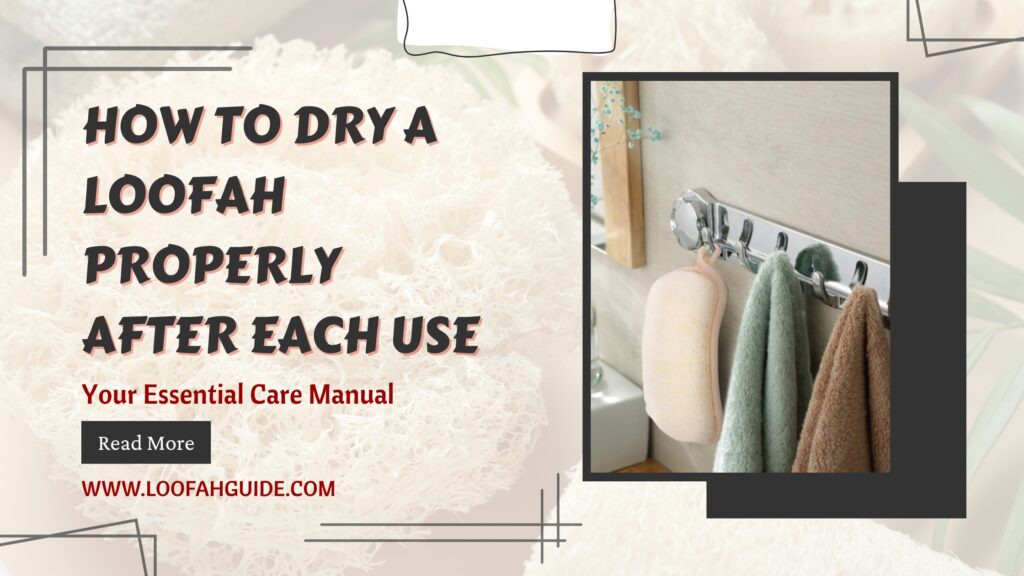
How you position your loofah determines drying speed and completeness. Hanging provides superior results compared to any flat placement because gravity assists drainage while air circulates around the entire surface area.
Install a dedicated hook for your loofah in a location meeting these criteria: good ambient airflow, distance from persistent moisture sources like showers, and moderate warmth. Near a bathroom window ranks among the best options for most homes. Outside the bathroom entirely often proves even better.
Environmental Enhancement Strategies
Simple environmental adjustments accelerate drying significantly. Running your bathroom exhaust fan for thirty minutes after showering removes humidity that would otherwise slow evaporation. Opening a window, when weather permits, introduces fresh air circulation that enhances drying conditions.
For bathrooms lacking adequate ventilation, consider a small USB-powered fan positioned to direct airflow toward your loofah drying location. This modest investment pays dividends through extended product lifespan and improved hygiene.
Drying Location Comparison: Finding Your Best Option
| Location | Drying Speed | Hygiene Rating | Convenience | Recommended For |
|---|---|---|---|---|
| Bathroom window area | Fast | Excellent | High | Most users |
| Bedroom or hallway hook | Fast | Excellent | Moderate | Humid climates |
| Shower caddy inside shower | Very Slow | Poor | Very High | Not recommended |
| Bathroom counter flat | Slow | Fair | High | Temporary only |
| Near bathroom exhaust fan | Moderate to Fast | Very Good | Moderate | Poorly ventilated baths |
| Outdoor covered area | Very Fast | Excellent | Low | Weekly deep dry |
| Inside cabinet or drawer | Extremely Slow | Very Poor | High | Never appropriate |
This comparison illustrates why drying location selection matters so significantly. The convenience of leaving a loofah in the shower comes at severe cost to hygiene and product lifespan. Investing minimal effort to establish a proper drying spot delivers returns that compound with every use.
Spa operators and retailers can reference this information when educating customers. Better-informed customers experience better results, leading to higher satisfaction and repeat purchases. Egexo offers private label options that can include customized care guidance materials.
Week by Week: Maintenance Schedule for Maximum Loofah Lifespan
Proper daily drying forms the foundation, but weekly maintenance tasks ensure your loofah remains in peak condition throughout its full potential lifespan.
Daily Requirements
Every day you use your loofah, complete the full rinse-squeeze-shake-hang sequence described above. Verify before each use that your loofah dried completely from the previous session. A properly dried loofah feels light and maintains its natural slight stiffness rather than feeling heavy or overly pliable.
Weekly Deep Cleaning Protocol
Once weekly, give your loofah a deep cleaning treatment. The most effective home method involves soaking the loofah in a diluted white vinegar solution, approximately one part vinegar to four parts water, for fifteen to twenty minutes. This acidic environment eliminates bacteria and mold that may have begun colonizing despite good daily drying habits.
After the vinegar soak, rinse thoroughly and apply your standard drying protocol. Some users prefer diluted hydrogen peroxide or a brief microwave treatment for wet loofahs, though vinegar remains the gentlest option for preserving fiber integrity.
Monthly Inspection Points
Monthly, examine your loofah carefully for signs of wear. Check for loosening fibers, persistent discoloration that cleaning does not resolve, lingering odors, or soft spots indicating internal breakdown. These signs suggest the loofah is approaching end of life regardless of how well you maintain drying practices.
Egyptian loofahs meeting high quality standards, such as those certified through Egexo’s quality control process, typically pass monthly inspections with flying colors for four to six months of daily use.
Maintenance Schedule Overview
| Timeframe | Task | Purpose | Time Required |
|---|---|---|---|
| After each use | Complete drying protocol | Prevent bacterial growth | 2 minutes |
| Weekly | Deep clean with vinegar | Eliminate established colonies | 20 minutes total |
| Weekly | Sunlight exposure when possible | Natural UV sanitization | 1 to 2 hours passive |
| Monthly | Thorough condition inspection | Identify replacement timing | 2 minutes |
| Every 4 to 6 months | Replace loofah | Maintain hygiene standards | Purchase time |
Climate Considerations: Adapting Your Approach to Local Conditions
Environmental conditions vary dramatically across regions and seasons, affecting how effectively standard drying techniques work. Understanding these variables allows you to adapt your approach for consistent results.
High Humidity Environments
Tropical and subtropical climates present the greatest drying challenges. Ambient humidity above sixty percent significantly slows evaporation rates, meaning bathroom humidity after showering may persist for hours rather than dissipating quickly.
In high humidity regions, relocating your loofah drying location outside the bathroom becomes particularly important. Air-conditioned bedrooms often provide ideal drying conditions year-round in humid climates. Consider this factor when establishing your permanent drying setup.
Dry Climate Advantages
Arid and semi-arid climates offer natural advantages for loofah drying. Low ambient humidity accelerates evaporation, and loofahs positioned in well-ventilated areas may dry completely within one to two hours. Residents of dry climates can leverage this advantage by timing loofah use earlier in their routines, allowing full drying before the next day.
Cold Weather Adjustments
Winter heating typically creates low-humidity indoor environments despite cold, possibly damp conditions outside. Positioning your loofah near heating vents takes advantage of warm, dry air flow. Avoid placing loofahs directly on heat sources, which can cause fiber damage, but proximity to heating works excellently.
Seasonal Transition Awareness
Spring and fall often bring variable humidity that catches people off guard. Pay attention to how quickly your loofah dries during transitional seasons and adjust your approach if you notice extended drying times. A loofah that dried in four hours during winter may require eight hours during a humid spring week.
Common Drying Mistakes and How to Avoid Them
Even well-intentioned loofah owners frequently make errors that undermine their drying efforts. Recognizing these mistakes helps you avoid them.
Mistake One: Shower Storage
The most damaging mistake involves storing loofahs within the shower enclosure. This location seems logical since you use the loofah there, but shower environments remain humid for extended periods. Steam from subsequent showers repeatedly re-moistens partially dried loofahs, creating conditions where complete drying never occurs.
Solution: Establish a dedicated drying location completely outside the shower area. The few seconds required to relocate your loofah after each use prevent the cycle of re-moistening that destroys products prematurely.
Mistake Two: Inadequate Rinsing
Rushing through rinsing or skipping it entirely leaves soap and organic residue in loofah fibers. This residue feeds bacterial growth and creates biofilm that retains moisture internally even when the exterior feels dry.
Solution: Commit to thorough rinsing every time. Thirty seconds of attentive rinsing with repeated squeezing eliminates residue that would otherwise compromise your loofah.
Mistake Three: Flat Placement
Laying wet loofahs flat on counters or shelves creates multiple problems. The bottom surface contacts pooled water and cannot dry properly. Air circulation around the loofah is minimized. Moisture distribution becomes uneven, causing asymmetric degradation.
Solution: Always hang loofahs for drying. If you lack a suitable hook, a simple suction cup hook costs minimal money and solves the problem permanently.
Mistake Four: Enclosed Storage
Some people store loofahs in closed containers, bags, or cabinets believing this keeps them clean. In reality, enclosed storage traps moisture and creates the worst possible drying conditions. Loofahs stored this way often develop mold within days.
Solution: Never enclose a damp loofah. Storage containers are only appropriate for fully dry loofahs being transported or stored long-term, never for routine daily care.
Mistake Five: Ignoring Ventilation
Poor bathroom ventilation affects everything you attempt to dry in that space. Failing to run exhaust fans or open windows keeps humidity elevated for hours after showering.
Solution: Run bathroom exhaust fans during showering and for at least thirty minutes afterward. If your bathroom lacks mechanical ventilation, opening a window or door significantly improves air exchange.
Professional Techniques Worth Adopting at Home
Commercial facilities that use loofahs extensively have developed refined protocols that home users can adapt for enhanced results.
The Rotation Approach
Spas and hotels rarely use the same loofah on consecutive days. Instead, they maintain rotation systems ensuring each loofah receives at least twenty-four hours of drying between uses. This guarantees complete moisture elimination regardless of environmental conditions.
Home users can adopt this approach by maintaining two loofahs and alternating between them. The modest additional investment doubles your assurance of always using a completely dry, hygienic product while potentially extending individual loofah lifespan through reduced use frequency.
Designated Drying Stations
Professional settings often feature dedicated loofah drying areas separate from general use spaces. These stations provide consistent airflow and temperature conditions optimized for rapid drying.
At home, designating a specific hook or area exclusively for loofah drying, rather than sharing space with towels or other items, ensures consistent conditions and reminds you to follow proper placement every time.
Periodic UV Exposure
Many professional facilities incorporate periodic ultraviolet light exposure to eliminate bacteria that survive standard drying. While dedicated UV equipment is unnecessary for home use, placing your loofah in direct sunlight for one to two hours weekly provides natural UV sanitization that supplements your regular care routine.
For wholesale buyers sourcing products for spa or hospitality use, Egexo’s custom product design services can help develop care protocols and materials suited to specific operational requirements.
Quality Factors That Affect Drying Performance
Not all loofahs dry equally well. Product quality significantly impacts how effectively moisture evacuates from the fiber structure.
Fiber Density Differences
Premium loofahs, particularly those from Egypt’s Nile Delta growing region, develop fiber networks approximately forty percent denser than loofahs from less optimal growing conditions. This density creates more efficient water drainage channels, allowing moisture to exit the fiber matrix faster during drying.
Lower-quality loofahs with sparse, irregular fiber patterns trap water in pockets that resist evaporation. These products may feel dry on the surface while remaining damp internally, creating hidden bacterial growth environments.
Processing Method Impact
How loofahs are processed after harvest affects drying performance. Properly cured and cleaned loofahs maintain open fiber channels that drain efficiently. Poorly processed products may have compressed or damaged fibers that impede water movement.
Egexo’s farm to export process documents the careful handling that preserves optimal fiber structure from field to finished product. This attention to processing quality contributes to the superior performance of Egyptian loofahs.
Quality Grade Comparison
| Quality Indicator | Premium Egyptian | Standard Import | Budget Grade |
|---|---|---|---|
| Fiber density | High, 40 plus per cm | Moderate | Low and uneven |
| Drainage efficiency | Excellent | Good | Poor |
| Average dry time | 2 to 4 hours | 4 to 6 hours | 6 to 10 hours |
| Structural integrity | Maintains through lifespan | Degrades moderately | Breaks down quickly |
| Expected lifespan with care | 4 to 6 months | 2 to 3 months | 3 to 6 weeks |
| Response to proper drying | Excellent results | Good results | Limited improvement |
This comparison explains why investing in quality loofahs makes sense from both performance and economic perspectives. A premium Egyptian loofah costing somewhat more initially delivers far greater total value through extended usable lifespan and better daily performance.
Browse Egexo’s complete product range to explore options across different applications and quality tiers.
Recognizing When Drying Alone Cannot Save Your Loofah
Even perfect drying technique cannot extend loofah life indefinitely. Recognizing end-of-life signs ensures you replace products before they become hygiene liabilities.
Persistent Odor Despite Cleaning
If your loofah retains musty or unpleasant odors even after deep cleaning and thorough drying, bacterial colonization has progressed beyond recoverable levels. The odor indicates established biofilm communities that resist removal.
Visible Mold or Discoloration
Dark spots, fuzzy growth, or persistent discoloration that cleaning does not resolve indicate mold establishment. Once visible mold appears, the loofah should be replaced immediately regardless of how recently you purchased it.
Fiber Breakdown and Shedding
Healthy loofahs maintain their fiber integrity with minimal shedding. When fibers begin separating, leaving residue on skin or in the tub, structural degradation has advanced significantly. Continued use spreads loose fibers and provides no exfoliation benefit.
Loss of Texture and Firmness
A loofah approaching end of life loses its characteristic pleasant texture. The fibers become mushy, overly soft, or slimy even when technically dry. This texture change indicates cellular breakdown incompatible with continued effective use.
Performance Degradation
When your loofah no longer lathers soap effectively or provides satisfying exfoliation, it has reached functional end of life. Quality degradation accumulates gradually, so comparing current performance against memories of initial use helps identify this decline.
Special Applications: Drying Different Loofah Types
While core drying principles remain consistent, certain loofah types merit specific attention.
Kitchen and Cleaning Loofahs
Loofahs used for kitchen cleaning face additional challenges from food residue. Rinse kitchen loofahs under hot water to dissolve food particles before proceeding with standard drying protocols. Consider maintaining separate kitchen drying locations away from body care products.
Pet Grooming Loofahs
Pet grooming loofahs accumulate animal hair that creates additional bacterial food sources within the fiber matrix. Extra-thorough rinsing removes hair before drying. Weekly deep cleaning is particularly important for pet care products.
Raw and Unprocessed Loofahs
Raw loofah scrubbers with minimal processing may require slightly longer drying times due to denser seed cavity structures. Ensure these products receive adequate drying time before reuse, particularly after initial wetting when fibers are adjusting to moisture exposure.
Decorative and Craft Loofahs
Loofahs used for crafts or decoration should be kept dry during storage and display. If they become wet during use, apply standard drying protocols to prevent degradation that would compromise their appearance and structural integrity.
Expert Insight from Egexo
Drawing on more than twenty-five years of Egyptian loofah cultivation and export experience, Egexo has observed consistent patterns among customers who achieve maximum product satisfaction. The single factor separating delighted long-term users from disappointed short-term users is almost always drying practice, not product selection.
We recommend treating loofah drying as non-negotiable routine rather than optional aftercare. The thirty seconds required to properly rinse, wring, shake, and hang your loofah represents the highest-return investment you can make in personal care product value. Skip this step regularly and even our finest premium loofahs will disappoint. Follow it consistently and you will understand why quality Egyptian loofahs have earned their global reputation.
For businesses purchasing loofahs for resale or service use, customer education about proper drying represents one of your most effective tools for reducing complaints and building loyalty. Our wholesale team can assist with developing appropriate care guidance for your specific customer base. Request information about wholesale partnerships to learn more about how we support business customer success.
FAQ Section
Q1: What is the fastest way to dry a loofah properly after each use?
A: The fastest effective method combines thorough wringing, vigorous shaking to dislodge trapped water, and hanging near a source of airflow such as a fan or open window. Using a small fan directed at your drying loofah can reduce drying time to under two hours in most conditions. However, prioritize complete drying over speed, as incompletely dried loofahs develop bacteria regardless of how quickly the exterior dried.
Q2: How can I tell if my loofah is completely dry before using it again?
A: A fully dry loofah feels noticeably lighter than a damp one and maintains slight natural stiffness rather than feeling pliable or heavy. Touch the loofah in multiple areas including the interior if accessible since surfaces dry faster than cores. If any area feels cool to the touch, moisture remains. When uncertain, allow additional drying time rather than risking use of a damp product.
Q3: Should businesses train staff on loofah drying procedures?
A: Absolutely. Commercial establishments using loofahs benefit significantly from standardized drying protocols. Consistent staff training ensures every loofah receives proper care regardless of which team member handles it. This consistency extends product lifespan, maintains hygiene standards, and reduces replacement costs. Many wholesale suppliers including Egexo can provide training materials as part of business partnerships.
Q4: Can I dry my loofah in the microwave or dryer?
A: Microwave treatment of wet loofahs can provide sanitization benefits but does not effectively dry the product and risks fiber damage if overdone. Tumble dryers are not recommended as mechanical agitation and heat can damage natural loofah fibers significantly. Air drying through hanging remains the safest and most effective approach for preserving loofah quality and lifespan.
Q5: Why does my loofah stay damp even when I hang it to dry?
A: Persistent dampness despite hanging usually indicates inadequate air circulation, high ambient humidity, or insufficient water removal before hanging. Evaluate your drying location for airflow and consider relocating outside the bathroom. Ensure you are wringing and shaking thoroughly before hanging. In humid climates, using a fan or relocating to an air-conditioned space may be necessary for complete drying.
Q6: How do wholesale buyers evaluate loofah quality related to drying performance?
A: Wholesale buyers should request fiber density specifications from suppliers, as denser fibers correlate with faster drying and longer lifespan. Request samples and test drying performance under controlled conditions. Examine fiber uniformity and structural integrity. Reputable suppliers like Egexo provide detailed quality documentation and welcome sample requests for evaluation before bulk purchasing.
Q7: Is it safe to use a loofah that did not fully dry between uses?
A: Using a loofah that remained damp for extended periods is not recommended due to bacterial accumulation. Occasional use of a slightly damp loofah presents minimal risk to healthy individuals, but making this a habit compromises hygiene. If your loofah did not dry completely, consider using an alternative or allowing additional drying time before your next shower.
Q8: How does proper drying affect loofah replacement frequency?
A: Proper drying is the single largest factor affecting replacement frequency. Loofahs dried correctly after each use typically last four to six months compared to three to six weeks for improperly maintained products. This represents potential lifespan extension of four to eight times, making proper drying technique the most cost-effective loofah care investment possible.
Conclusion
Mastering how to dry a loofah properly after each use transforms your relationship with this natural bath essential. The straightforward routine of rinsing thoroughly, wringing gently, shaking vigorously, and hanging in a well-ventilated location takes under a minute yet delivers months of additional product life and consistently hygienic performance.
The science behind proper drying is clear: moisture enables bacterial growth and fiber degradation while dryness preserves loofah integrity and cleanliness. By understanding this relationship and applying appropriate techniques, you maximize the value of quality loofah products whether for personal use or commercial applications.
Environmental factors from humidity to temperature affect drying performance, making location selection and seasonal adaptation important considerations. Professional techniques like rotation systems and dedicated drying stations offer advanced options for those seeking optimal results.
Quality matters significantly in drying performance. Premium Egyptian loofahs with dense, uniform fiber structures dry faster and last longer than inferior alternatives, making product selection and proper care complementary investments in bath care excellence.
Key Takeaways:
- Complete the full rinse, wring, shake, and hang sequence after every use
- Position loofahs outside shower areas in locations with good airflow
- Allow four to eight hours minimum drying time between uses
- Perform weekly deep cleaning to eliminate established bacterial colonies
- Replace loofahs every four to six months regardless of apparent condition
Ready to experience the difference quality makes?
For Wholesale Buyers: Request a wholesale quote from Egexo or download the complete product catalog to explore bulk purchasing options backed by 25 years of Egyptian loofah expertise.
For Individual Shoppers: Browse the Egexo collection or request samples to discover why Egyptian loofahs represent the gold standard in natural exfoliation. Learn more care tips at WholesaleLoofah.com.