
There is a specific moment when a well-made loofah earns your trust. It is the first time you use it and realize the exfoliation is even, the fiber holds its shape, and your skin feels genuinely clean rather than just scrubbed. That experience does not happen by accident. It traces directly back to the quality of the raw loofah that went into making the product — and that quality starts long before the product reaches a shelf.
What makes a good raw loofah is a question that matters equally to two very different people: a manufacturing plant manager in Germany sourcing units for a spa product line, and a consumer in California deciding between a natural bath sponge and a synthetic alternative. Both of them are asking the same underlying question, even if the language around it sounds different.
This guide answers that question completely.
The Science Behind Raw Loofah Fiber Quality
Most people know that loofah comes from a plant, not the sea. Fewer people understand what happens inside that plant during its growing cycle that determines whether the final product is excellent or ordinary.
What Loofah Actually Is
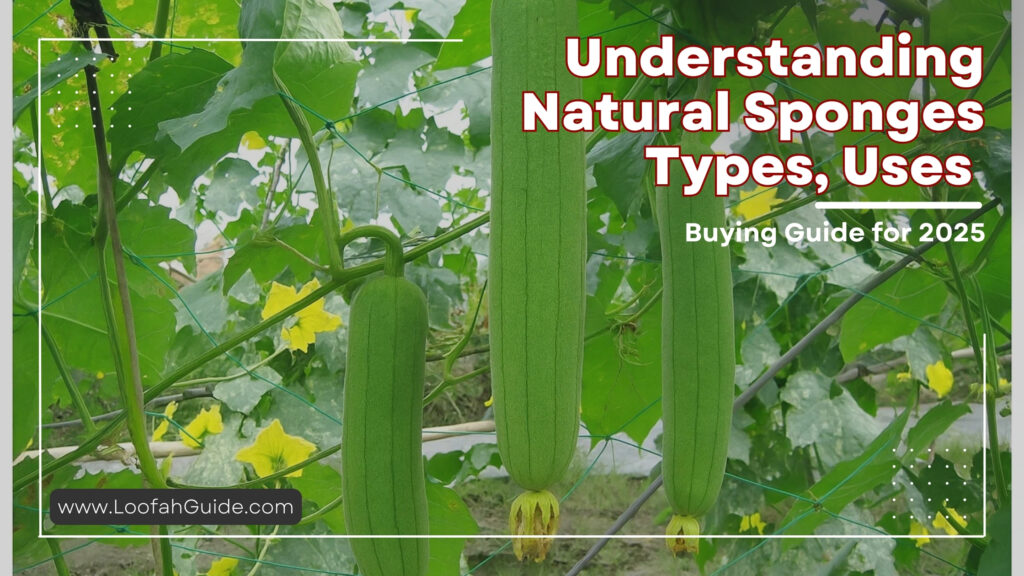
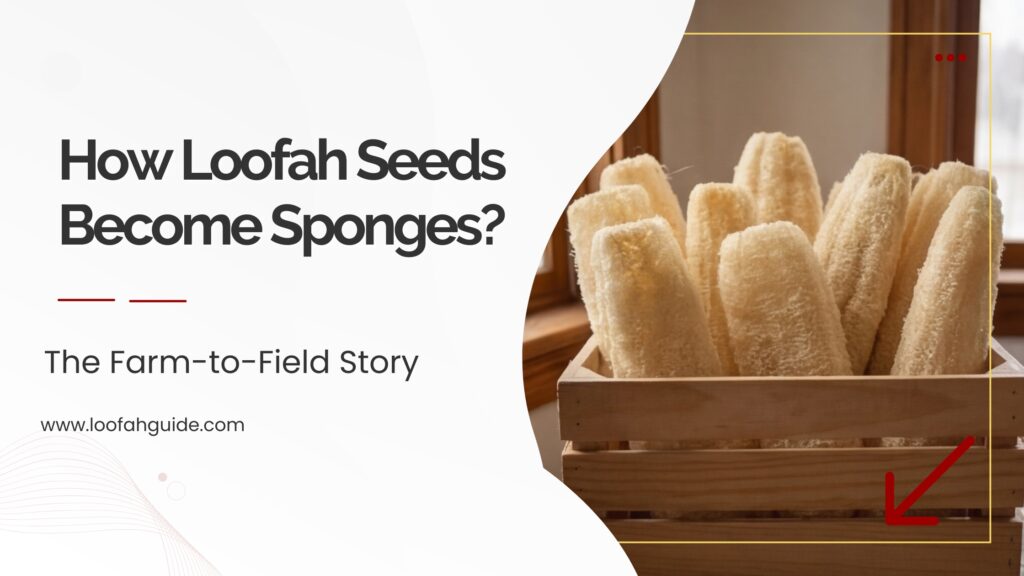
The loofah is the dried fibrous interior of the Luffa aegyptiaca gourd, a member of the cucumber family. During the growing process, the plant develops a three-dimensional network of interconnected cellulose fibers that form a sponge-like structure. When the gourd is harvested, dried, and peeled, this fiber network becomes the loofah product.
The density, uniformity, and structural integrity of that fiber network depend almost entirely on growing conditions — soil composition, water quality, temperature, and growing duration. This is why origin matters so fundamentally in raw loofah quality.
Why Fiber Density Is the Critical Variable
Fiber density determines everything a manufacturer or consumer cares about in a loofah product. Higher density means:
- Better structural hold during use (the loofah does not flatten under pressure)
- More consistent exfoliation across the surface area
- Higher absorption capacity for soaps, oils, or product infusions
- Longer functional lifespan before fiber breakdown
- Greater resistance to bacterial accumulation because the denser structure dries faster
Egyptian loofah grown in the Nile Delta region consistently produces higher fiber density than loofah from competing growing regions. The specific mineral content of Nile Delta agricultural soil — particularly calcium, magnesium, and trace iron deposits — feeds the cellulose fiber development during the plant’s 150 to 180 day growing cycle in a way that other soils simply do not replicate.
EGEXO has been exporting Egyptian loofah since 2015, with loofah from its own farms and partner farms in the Nile Delta.
You can learn more about this process on the Egexo farm to export overview page.
How Growing Origin Determines Loofah Performance
The global loofah market draws from several major growing regions. Each region produces a product with distinct characteristics that affect manufacturer output and consumer experience.
Regional Loofah Quality Comparison
Dryness matters to manufacturers. Raw loofah that is not fully dry can develop mold in transit and process unevenly. EGEXO dries its loofah by sun and by machine, and every order is checked by hand for dryness.
For a consumer, this translates practically: a loofah made from high-moisture raw material tends to feel slightly heavier, breaks down faster in the bathroom environment, and has a shorter usable lifespan.
Choosing Raw Loofah: A Guide for Buyers at Every Scale
Whether you are purchasing one loofah for personal use or a large quantity for a manufacturing run, knowing what to look for makes the decision easier and reduces the risk of disappointment.
For manufacturers who want to verify these specifications with a hands-on evaluation, ordering loofah samples from Egexo is available before any bulk commitment is required.
The Case for Natural Over Synthetic: Data and Reality
The personal care industry has spent significant marketing budget trying to make synthetic alternatives to natural loofah seem equivalent. The data does not support that equivalence for the applications where loofah genuinely excels.
Honest Pros and Cons: Natural Loofah vs Synthetic Options
| Factor | Natural Egyptian Loofah | Synthetic Mesh Scrubber | Synthetic Foam Sponge |
|---|---|---|---|
| Exfoliation | Natural texture works well on skin | Uniform texture, less control | Surface-level only |
| Material | Plant-based | Plastic-based | Petroleum-derived |
| Environmental end-of-life | Biodegradable | Persists in landfill | Persists in landfill |
| Drying speed | Fast (open fiber structure) | Slow (retains moisture in mesh) | Very slow (dense structure) |
| Skin sensory experience | Textured, invigorating | Scratchy, less control | Soft but less effective |
From a consumer cost perspective, a natural loofah may cost slightly more upfront than a synthetic alternative, but rinsing and drying it after each use helps it last.
The full bath and body loofah product range at Egexo includes finished options that demonstrate how raw material quality translates into consumer-ready product performance. For additional consumer-focused guidance on selecting and using natural loofah products, Loofah Guide provides comprehensive educational resources across product categories.
How to Use and Care for Raw Loofah Products Correctly
This section is aimed at individual consumers and at manufacturers who include care instructions with their finished products. Getting the most out of a premium raw loofah requires straightforward habits that most users skip simply because no one explained them.
Before First Use
New raw or finished loofah should be rinsed thoroughly under warm running water for 60 seconds before first use. This removes surface dust from the drying and processing stages and softens the fiber for initial contact with skin. Some users find that soaking the loofah in warm water for 2 to 3 minutes before the first use produces an even softer first experience.
During Use
Apply soap or body wash directly to the loofah or to wet skin before contact. Use moderate pressure — the fiber structure does the exfoliation work without requiring force. Scrubbing harder than necessary does not improve exfoliation results and accelerates fiber breakdown. Use circular or light back-and-forth motions. Avoid using the same loofah on the face as on the body — facial skin requires gentler materials.
After Use Maintenance Schedule
| Frequency | Action | Time Required |
|---|---|---|
| After every use | Rinse thoroughly, squeeze out excess water, hang vertically to dry | 60 seconds |
| Every week or so | Soak for 5 minutes in equal parts water and white vinegar | 5 to 8 minutes |
| Weekly | Inspect for color change, odor, or fiber breakdown | 30 seconds |
| Every few weeks, or when it smells or breaks down | Replace with fresh loofah | As needed |
The single biggest factor in loofah longevity is drying speed after use. A loofah that dries completely between uses maintains its fiber integrity and resists bacterial growth. A loofah left sitting in pooled water or a sealed shower caddy begins fiber breakdown within days regardless of its initial quality.
For manufacturers, incorporating a simple care card with finished loofah products dramatically reduces customer complaints about premature product degradation and increases repurchase rates. The quality of the raw material you start with — and the care guidance you provide — together determine the customer experience your brand delivers.
Choosing a Raw Loofah Supplier: The Questions That Matter
For manufacturers at any purchase scale, supplier selection for raw loofah has long-term consequences for product quality and supply chain stability. These are the questions that distinguish reliable suppliers from problematic ones.
Supplier Selection Evaluation Guide
| Question | Why It Matters | Egexo’s Answer |
|---|---|---|
| Where is the loofah actually grown? | Origin determines fiber quality fundamentals | Nile Delta, Egypt, own farms and partner farms |
| Is the supply chain direct or through brokers? | Brokers can add delays | Farm to export, processed in EGEXO’s own factory |
| How is quality checked? | Checks show how careful a supplier is | Every order is checked by hand for colour, holes, size and dryness |
| What documentation is provided? | Required for import compliance | Certificate of Origin or EUR.1, phytosanitary certificate, export license |
| Is a sample program available? | Essential for quality verification | Yes, paid samples through the sample request page |
| How are custom requirements handled? | Indicates manufacturing flexibility | Custom design and private label services available |
| What is the lead time? | Affects production planning | 7 to 25 days from payment |
Egexo’s private label manufacturing service and custom loofah product design capabilities address the needs of buyers who require more than commodity raw material. For buyers who want to understand the full sourcing picture, Egexo’s quality standards page and the reasons to choose Egexo as a supplier both provide detailed verification information.
FAQ Section
Q1: What is raw loofah and how is it different from finished loofah products?
Raw loofah refers to the dried and cleaned fibrous interior of the Luffa aegyptiaca gourd before it undergoes any manufacturing processing such as cutting, bleaching, pressing, or product assembly. Finished loofah products are made from raw loofah that has been processed into a specific shape, size, or product format. The quality of the raw loofah determines the ceiling of quality for any finished product — manufacturers cannot improve on the fiber characteristics they start with.
Q3: How do I know if a loofah product is made from quality raw material?
Physical indicators of quality in a finished product include even fiber density throughout the product, a clean natural color without obvious bleaching, and a firm but not brittle feel before first use.
Q4: Is natural loofah better for the environment than synthetic scrubbers?
See our wholesale prices on egexo.com under Products. Natural loofah is fully biodegradable and breaks down in a composting environment. Synthetic scrubbers and mesh sponges are made from petroleum-derived polymers that persist in landfill for hundreds of years and shed microplastics into water systems during every use. For consumers making purchasing decisions based on environmental impact, natural loofah is a good choice.
Q5: Can raw loofah be customized for specific manufacturing applications?
Yes. Egexo provides custom loofah specifications including size ranges, cutting shapes, and processed formats for manufacturers with specific production requirements. The custom product design service handles non-standard specifications, while the private label manufacturing service manages complete branded product development from raw material to finished packaged goods.
Q6: How should I store raw loofah to maintain its quality?
Raw loofah should be stored in a cool, dry location with good air circulation. Avoid sealed containers or humid storage areas. Under these conditions, raw loofah keeps its quality for a long time.
Q7: What loofah products are best for kitchen use versus bathroom use?
For kitchen use, a loofah with firmer fiber is ideal: the material handles dish soap, food residue, and hot water effectively without breaking down quickly.
A Note from EGEXO
One of the most common misconceptions we encounter from both manufacturers and consumers is that all natural loofah is essentially the same product with different branding. This misunderstanding costs buyers real money and real product quality. You can feel it in your hands. Every order is checked by hand for colour, holes, size and dryness. For consumers, the practical outcome is a bath product that is soft and gentle from the first use. Request a quote or request samples from EGEXO.
Conclusion
The difference between a good loofah product and an ordinary one is not made at the packaging design stage or in the marketing copy. It is made in the soil, during the growing cycle, and in the hands of the people who harvest and check the fiber. Understanding what makes a good raw loofah means understanding this chain from origin to end use, and recognizing where quality decisions actually get made.
Egyptian raw loofah from Egexo’s Nile Delta farms gives manufacturers a raw material foundation that produces consistently superior finished products. It gives consumers access to products built on the highest-quality natural fiber available. And it gives both audiences the transparency they need to make informed decisions.
Key Takeaways:
- Fiber density is the primary quality determinant in raw loofah, and Egyptian origin produces the highest density
- Natural loofah is biodegradable, while synthetic alternatives persist in landfill for a very long time
- Rinsing and drying a loofah after each use helps it last longer
- Supplier transparency (origin documentation, hand checks, sample programs) is the most reliable quality signal
Ready to experience Egyptian loofah quality?
- For Wholesale Buyers: Request a quote or download our catalog
- For Individual Orders: Request a quote or request samples