Everything You Need to Know About Loofah Bath Mitts
Nine out of ten dermatologists recommend mechanical exfoliation as part of a complete skincare routine, yet most people struggle to find tools that deliver consistent results without irritation. Loofah bath mitts have emerged as the solution that bridges this gap, offering controlled exfoliation through natural plant fibers secured in a convenient wearable design. Understanding these versatile tools helps both everyday users achieve healthier skin and business professionals stock products their customers genuinely appreciate.
The bath accessory sector generates over 12 billion USD annually worldwide, with natural alternatives capturing an increasingly dominant share as consumers reject plastic-based products. This shift creates opportunities for informed buyers at every level. Individual shoppers benefit from knowing exactly what makes one loofah mitt superior to another, while retailers and spa operators gain competitive advantages through product expertise that translates into better customer recommendations.
This comprehensive resource examines loofah bath mitts from every angle including their genuine benefits, honest limitations, ideal applications across different scenarios, and the quality factors that determine whether a product delivers value or disappointment. The information draws from decades of industry knowledge, helping readers navigate choices with confidence regardless of whether they seek a single mitt for personal use or evaluate suppliers for commercial inventory needs.
Those seeking detailed information about sourcing quality loofahs can explore the wholesale loofah resource center for business-focused guidance.
Understanding Loofah Bath Mitts: Construction and Materials
The Natural Fiber Foundation
Every authentic loofah bath mitt begins with the Luffa cylindrica or Luffa aegyptiaca plant, a climbing vine cultivated primarily in tropical and subtropical regions. The fruit of this plant, when mature, contains an intricate network of cellulose fibers that form naturally into a sponge-like structure. These fibers create the textured surface responsible for effective dead skin cell removal during bathing.
Egyptian cultivation produces the highest regarded loofah fibers in the global market. The unique combination of Nile Delta soil composition, Mediterranean climate influence, and established agricultural practices yields loofahs with fiber counts measuring 20 to 35 percent higher than comparable products from Southeast Asian or South American sources. This density difference directly impacts exfoliation effectiveness and product longevity.
The processing journey from harvested gourd to finished bath mitt involves several stages including drying, fiber separation, cleaning, and cutting. Quality manufacturers maintain strict standards throughout this process, rejecting loofahs that show inconsistencies in texture or signs of premature degradation. Learn more about professional processing methods through the farm to export documentation that reveals what separates premium suppliers from basic commodity traders.
Mitt Construction Methods
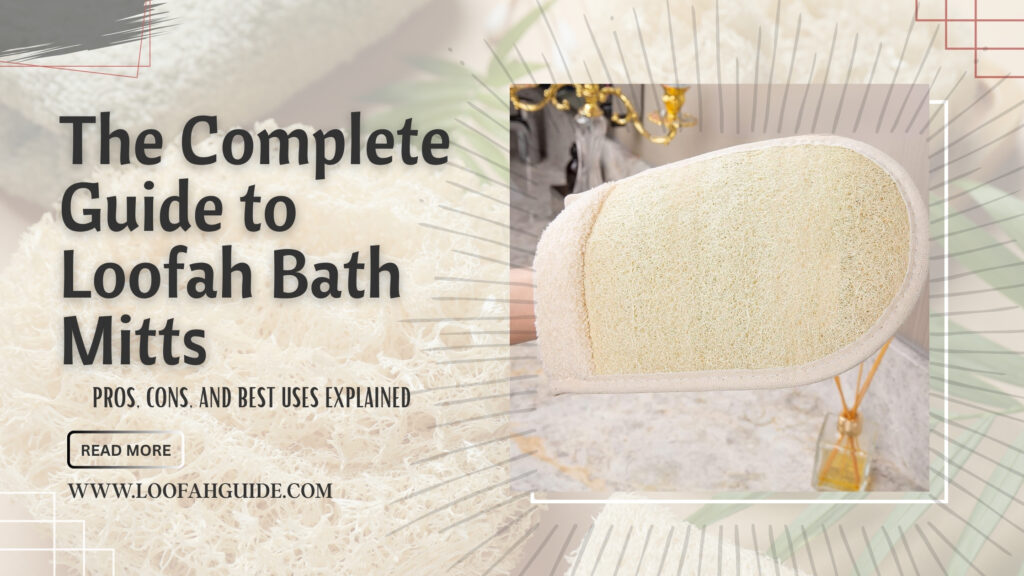
Loofah bath mitts incorporate natural fibers into wearable formats through various construction approaches. The most common method attaches loofah material to a fabric backing with an elastic cuff that slides over the hand. This design places the exfoliating surface on the palm side while providing secure attachment during use.
Alternative constructions include full loofah mitts where the entire exterior consists of natural fiber, offering exfoliation capability on all surfaces. Some designs incorporate loops for hanging, reinforced stitching at stress points, or combination materials that pair loofah with terry cloth or cotton sections.
Construction quality significantly impacts durability and user satisfaction. Examine stitching patterns, attachment security, and cuff elasticity when evaluating products. Business buyers should request construction specifications from suppliers and test samples under realistic conditions before committing to inventory purchases.
Summary Point: Quality loofah bath mitts combine premium natural fibers with durable construction methods, creating products that deliver effective exfoliation over extended use periods.
Comprehensive Advantages of Loofah Bath Mitts
Physical Benefits for Skin Health
The mechanical action of loofah fibers against skin produces measurable improvements in several dermatological markers. Regular use increases epidermal turnover rates, meaning fresh skin cells reach the surface more quickly. This accelerated renewal contributes to brighter, more even-toned skin appearance that many users notice within two to three weeks of consistent use.
Circulation enhancement represents another documented benefit. The gentle friction created during loofah mitt use stimulates blood flow to treated areas, delivering increased oxygen and nutrients to skin tissue. Improved circulation supports collagen production and may contribute to firmer skin texture over time, though individual results vary based on age, overall health, and usage consistency.
Pore cleansing occurs more effectively with loofah mitts than with hands alone or smooth washcloths. The textured fiber surface reaches into pore openings, dislodging accumulated sebum, dead cells, and environmental debris that contribute to dullness and congestion. Users with oily or combination skin often report visibly clearer skin after incorporating loofah mitts into regular bathing routines.
Practical Usage Advantages
Beyond skin health benefits, loofah bath mitts offer practical advantages that explain their popularity among diverse user groups. The mitt format provides superior grip compared to loose loofah pieces or traditional sponges. Users maintain full control over pressure and movement patterns, enabling targeted treatment of specific body areas without awkward repositioning.
Product efficiency improves substantially when using loofah mitts. The fiber network creates abundant lather from minimal soap or body wash quantities. Testing indicates users achieve equivalent lather production using approximately 25 to 35 percent less product compared to direct hand application. For individual consumers, this translates to extended product lifespan and reduced purchasing frequency. For businesses like hotels and spas, the savings compound significantly across high-volume usage.
Reach and coverage expand with mitt-style tools. Users can effectively exfoliate back areas, shoulder blades, and other typically difficult zones without assistance. The ergonomic design reduces hand fatigue during extended bathing sessions, a consideration that matters particularly for spa professionals performing multiple treatments daily.
Environmental and Economic Benefits
Natural loofah bath mitts align with growing environmental consciousness among consumers and businesses alike. Unlike synthetic poufs manufactured from petroleum-derived plastics, loofah mitts return to the earth through natural decomposition. Complete biodegradation occurs within approximately 30 to 45 days under normal composting conditions, leaving zero persistent waste.
The cultivation process itself carries relatively low environmental impact. Loofah plants require modest water inputs compared to many agricultural crops and grow without extensive chemical treatments when properly managed. Egyptian growers, particularly those supplying premium loofah exporters, often employ traditional farming methods that minimize ecological disruption.
Economic benefits extend across the supply chain. Consumers receive products lasting three to five months under proper care, comparing favorably against synthetic alternatives requiring monthly replacement. Retailers benefit from products that generate repeat purchases on predictable cycles while commanding premium pricing supported by genuine quality differentiation.
Benefits Overview Table
| Benefit Category | Specific Outcome | Measurement or Indicator |
|---|---|---|
| Skin Cell Renewal | Accelerated epidermal turnover | Visible brightness improvement in 14 to 21 days |
| Blood Circulation | Enhanced surface blood flow | Mild warming sensation during use |
| Pore Cleansing | Deeper debris removal | Reduced congestion and blackhead formation |
| Grip Control | Secure hand attachment | Near elimination of slipping incidents |
| Product Efficiency | Reduced soap and wash consumption | 25 to 35 percent less product required |
| Body Coverage | Extended reach capability | Independent back and shoulder treatment |
| Environmental Impact | Complete biodegradability | 30 to 45 day decomposition period |
| Economic Value | Extended product lifespan | 3 to 5 months average durability |
Honest Limitations and Potential Drawbacks
Care and Maintenance Requirements
Loofah bath mitts demand more attentive care than some alternative bathing tools. The natural fiber structure retains moisture after use, creating conditions where bacteria and mold can develop if drying does not occur promptly and thoroughly. Users must commit to proper post-use handling including rinsing, squeezing excess water, and hanging in ventilated locations away from persistent humidity.
Weekly sanitization adds another maintenance step that busy users may neglect. Without periodic deep cleaning through vinegar soaks, hydrogen peroxide treatments, or microwave sanitization, even well-dried loofahs accumulate bacterial populations that eventually produce odors and potentially compromise hygiene. This maintenance requirement exceeds what synthetic alternatives demand, representing a genuine consideration for time-constrained individuals.
Storage needs also exceed simpler bath accessories. Loofah mitts require dedicated hanging space with adequate airflow. Bathroom configurations lacking appropriate ventilation or hook placement may prove incompatible with optimal loofah care, leading to premature product failure regardless of initial quality.
Suitability Limitations
Not every skin type tolerates loofah exfoliation equally well. Individuals with highly sensitive skin, active inflammatory conditions, or compromised skin barriers may experience irritation even from gentle-grade loofah fibers. The mechanical nature of exfoliation cannot be eliminated entirely, setting a floor on how gentle these products can become.
Certain body areas require caution or avoidance. Facial skin, with its thinner structure and higher sensitivity, generally proves too delicate for standard loofah treatment. Similarly, areas with active wounds, sunburn, rashes, or irritation should never receive loofah exfoliation until fully healed. Users must exercise judgment about appropriate application zones.
Frequency limitations apply across all skin types. Even resilient skin suffers damage from excessive exfoliation, leading to irritation, dryness, and potential barrier compromise. Most dermatological guidance suggests maximum frequencies of three to five sessions weekly depending on individual tolerance, meaning loofah mitts cannot serve as everyday primary cleansing tools for most users.
Quality Variability Challenges
Perhaps the most significant drawback involves quality inconsistency across the loofah market. Products labeled identically may deliver vastly different experiences based on fiber source, processing methods, and construction quality. Consumers face difficulty distinguishing premium products from inferior alternatives without hands-on evaluation.
This variability creates particular challenges for business buyers who cannot personally inspect every unit in large orders. Establishing relationships with verified suppliers who maintain documented quality standards becomes essential for consistent inventory quality. Without such relationships, businesses risk customer complaints and returns that damage reputation and profitability.
Limitations Summary Table
| Limitation Type | Specific Challenge | Mitigation Approach |
|---|---|---|
| Drying Requirements | Bacterial and mold risk without proper drying | Install dedicated hook, ensure ventilation |
| Maintenance Demands | Weekly sanitization needed | Establish routine schedule, set reminders |
| Skin Sensitivity | Potential irritation for sensitive individuals | Start with soft grades, limit frequency |
| Application Restrictions | Unsuitable for face and damaged skin | Designate appropriate body zones only |
| Frequency Caps | Overuse causes barrier damage | Follow recommended maximum frequencies |
| Quality Inconsistency | Variable product performance | Source from verified quality suppliers |
| Initial Texture | New products may feel rough | Pre-soak before first use |
Optimal Uses Across Different Contexts
Personal Home Bathing Applications
The primary application for loofah bath mitts involves routine home bathing where they serve as exfoliation tools integrated into shower or bath routines. Optimal personal use involves identifying the correct frequency based on individual skin characteristics and establishing consistent technique patterns that maximize benefit while avoiding overtreatment.
Begin each session by wetting the loofah mitt thoroughly under warm water for 30 to 60 seconds. This saturation softens fibers and activates the texture that enables effective exfoliation. Apply preferred cleansing product directly to the mitt surface rather than skin, allowing the fiber network to generate lather before contact.
Use circular motions with moderate pressure, working systematically from extremities toward the torso. This movement pattern supports lymphatic drainage while ensuring thorough coverage. Avoid scrubbing motions that create excessive friction, instead allowing the textured surface to work through consistent contact rather than aggressive action.
Professional Spa and Treatment Settings
Spa professionals incorporate loofah bath mitts into various treatment protocols where controlled exfoliation precedes other services. Body wraps, moisturizing treatments, and tanning preparation all benefit from prior dead cell removal that enables better product penetration and more even results.
Professional settings demand higher quality standards than personal use applications. Clients paying premium prices expect exceptional experiences, making fiber quality and construction durability essential purchasing criteria. Spa operators should evaluate potential suppliers through sample request programs before committing to regular ordering relationships.
Single-use protocols in spa settings ensure hygiene compliance but require inventory management systems that maintain adequate stock without excessive storage burdens. Calculate usage rates based on treatment schedules and build appropriate reorder triggers that prevent stockouts while managing cash flow efficiently.
Retail and Hospitality Distribution
Retailers selling loofah bath mitts directly to consumers must balance product quality against price point expectations within their target markets. Understanding the quality spectrum enables appropriate product selection that matches customer expectations and supports desired margin structures.
Premium positioning requires sourcing from established suppliers capable of providing consistent grade-A products with reliable availability. The Egexo product catalog illustrates the range of options available for different market positions and quality requirements.
Hotels and hospitality venues increasingly feature natural bath amenities as sustainability differentiators. Guest room loofah provisions communicate environmental consciousness while providing functional value that enhances guest experiences. Evaluate suppliers based on ability to meet hospitality-specific requirements including custom packaging, consistent sizing, and reliable delivery schedules.
Application Context Comparison
| Usage Context | Primary Objective | Quality Priority | Key Selection Criteria |
|---|---|---|---|
| Personal Home Use | Skin health maintenance | Medium to High | Appropriate grade for skin type |
| Spa Treatments | Service enhancement | High to Premium | Consistent quality, professional appearance |
| Retail Sales | Customer satisfaction and margins | Varies by positioning | Price point alignment, brand fit |
| Hotel Amenities | Guest experience differentiation | Medium to High | Packaging options, supply reliability |
| Fitness Facilities | Member amenity provision | Medium | Durability, cost efficiency |
| Gift Assembly | Presentation and perceived value | High | Visual appeal, premium appearance |
Selecting the Right Loofah Bath Mitt
Understanding Grade Classifications
Loofah grading systems categorize products based on fiber characteristics including density, uniformity, color consistency, and structural integrity. While no universal grading standard exists across all suppliers, most quality-focused exporters maintain internal classification systems that enable consistent product matching to appropriate applications.
Premium or Grade A loofahs exhibit the highest fiber density, typically measuring 85 or more fibers per square centimeter. These products display uniform coloring without significant variation across the surface and maintain structural integrity throughout expected lifespan. Premium grades suit luxury retail, high-end spa applications, and discerning personal users willing to invest in superior products.
Standard or Grade B loofahs offer reliable performance at moderate price points. Fiber density ranges from approximately 70 to 84 per square centimeter with acceptable color consistency allowing minor variations. These products serve mainstream retail, mid-tier hospitality, and cost-conscious personal buyers seeking reasonable quality without premium pricing.
Economy or Grade C products prioritize affordability over optimization. Lower fiber density, greater color variation, and shorter expected lifespan characterize this tier. Appropriate applications include promotional giveaways, budget retail channels, and supplementary inventory for price-sensitive market segments.
Matching Products to Skin Types
Beyond grade selection, matching loofah characteristics to individual skin types optimizes outcomes and minimizes irritation risk. The following guidance helps buyers select appropriate products for themselves or their target customers.
Oily and resilient skin tolerates firmer fiber textures that deliver more aggressive exfoliation. Standard to premium grades work effectively, and users can typically employ loofah mitts four to five times weekly without adverse effects. Focus on thorough cleansing of congestion-prone zones like back and shoulders.
Normal skin accommodates medium-textured loofahs across the standard grade range. Three to four weekly sessions maintain healthy cell turnover without overstressing the skin barrier. Adjust frequency seasonally, reducing slightly during dry winter months when skin requires gentler treatment.
Dry skin benefits from softer loofah grades that provide mild exfoliation without stripping natural oils. Limit sessions to twice weekly and always follow with moisturizer application within minutes of bathing. Consider loofahs marketed specifically for sensitive applications.
Sensitive skin requires the gentlest available grades with careful introduction protocols. Begin with weekly use on limited test areas, expanding gradually only if no irritation develops. Some sensitive individuals may find even soft loofahs unsuitable, necessitating alternative exfoliation methods.
Selection Decision Matrix
| Buyer Type | Recommended Grade | Key Considerations | Suggested Starting Point |
|---|---|---|---|
| Luxury Spa Operator | Premium only | Consistency, guest experience | Request premium samples |
| Boutique Retailer | Premium to Standard | Margin requirements, brand positioning | Evaluate multiple grades |
| Budget Retailer | Standard to Economy | Price sensitivity, volume needs | Focus on value optimization |
| Oily Skin Consumer | Standard to Premium | Exfoliation effectiveness | Medium texture products |
| Normal Skin Consumer | Standard | Balance and versatility | Mid-range options |
| Dry Skin Consumer | Soft grades | Gentle treatment | Specifically marketed soft products |
| Sensitive Skin Consumer | Extra soft only | Irritation avoidance | Patch test before full use |
Wholesale buyers evaluating supplier options should request quotations that specify grade availability and pricing across different quality tiers.
Care Instructions for Maximum Product Life
Daily Post-Use Protocol
Proper care begins immediately after each use session. Rinse the loofah mitt thoroughly under clean running water, working fingers through the fiber structure to dislodge trapped soap residue and skin debris. This rinsing should continue until water runs clear and no foam remains within the material.
Squeeze excess water from the mitt using firm but not wringing pressure. Excessive twisting stresses fiber connections and accelerates structural breakdown. Multiple firm squeezes achieve adequate water removal while preserving material integrity.
Hang the mitt immediately in a location meeting specific criteria. The area should offer good airflow, remain outside direct shower spray zones, and maintain lower humidity than enclosed bathroom spaces. Near windows, ventilation fans, or outside bathroom doors entirely provides optimal drying conditions.
Weekly Maintenance Procedures
Implement weekly sanitization to eliminate bacterial accumulation that daily rinsing cannot address. The vinegar soak method involves submerging the mitt in a solution of one part white vinegar to three parts warm water for 15 to 20 minutes. Vinegar acidity neutralizes odor-causing bacteria while remaining gentle on natural fibers.
Alternative sanitization approaches include brief microwave treatment for mitts without metal components and hydrogen peroxide soaks using diluted three percent solutions. Each method offers effective bacterial reduction when performed consistently on weekly schedules.
Following any sanitization treatment, rinse thoroughly with clean water and dry completely before next use. Residual sanitizing agents can irritate skin if not fully removed.
Replacement Timing Guidelines
Even perfectly maintained loofah bath mitts require eventual replacement. Recognizing the indicators that signal replacement time helps users maintain optimal hygiene and effectiveness.
Visual fiber separation indicates structural degradation where individual strands begin pulling away from the main network. This breakdown reduces exfoliation effectiveness and signals material reaching end of useful life. Persistent odors despite proper cleaning suggest bacterial colonization too deep within fiber structure for surface treatments to address. Color shifts from natural tan toward gray, brown, or greenish tones indicate material degradation or mold presence.
Under typical use patterns with proper care, expect replacement intervals of three to four months. Heavy users may require more frequent replacement while occasional users might extend intervals to five months. When uncertain, err toward earlier replacement since the cost of new mitts remains modest compared to potential hygiene concerns from overextended use.
Care Protocol Summary
| Care Stage | Action Required | Frequency | Purpose |
|---|---|---|---|
| Post-Use Rinse | Thorough water rinse | After every use | Remove debris and soap |
| Water Removal | Firm squeeze without wringing | After every use | Reduce drying time |
| Proper Hanging | Ventilated location outside shower | After every use | Enable complete drying |
| Deep Sanitization | Vinegar soak or alternative method | Weekly | Eliminate bacterial buildup |
| Condition Assessment | Check for wear indicators | Monthly | Identify replacement needs |
| Full Replacement | Dispose and replace mitt | Every 3 to 4 months | Maintain hygiene standards |
Sourcing Quality Loofah Bath Mitts
Evaluating Potential Suppliers
Whether purchasing for personal use or business inventory, supplier selection significantly impacts product quality and satisfaction outcomes. Established suppliers with documented history in loofah cultivation and export demonstrate the expertise necessary for consistent quality delivery.
Experience duration provides one evaluation metric. Suppliers operating for 15 or more years have navigated market cycles, refined quality processes, and established reliable supply chains. Newer entrants may offer competitive pricing but lack the operational maturity that ensures consistency across orders and seasons.
Origin transparency matters increasingly as consumers and businesses prioritize authentic products. Reputable suppliers document their sourcing processes clearly, enabling buyers to verify Egyptian origin claims and understand cultivation and processing methods employed.
Communication responsiveness indicates operational professionalism. Quality suppliers respond to inquiries within 24 to 48 hours with substantive information addressing specific questions. Delayed or vague responses often predict similar issues with order fulfillment and quality resolution.
Business Buyer Considerations
Commercial buyers face additional evaluation criteria beyond individual consumer concerns. Minimum order quantities must align with storage capacity, cash flow constraints, and realistic sales projections. Suppliers offering tiered minimums across different product grades provide flexibility that rigid single-threshold requirements cannot match.
Customization capabilities enable brand differentiation in competitive markets. Private label manufacturing transforms generic products into proprietary offerings that build customer loyalty and support premium positioning. Evaluate supplier capabilities for logo application, custom packaging, and product design modifications that create unique market offerings.
Sample programs allow hands-on evaluation before inventory commitment. Request samples representing different grades and constructions to assess quality firsthand and test products with target customers. This evaluation prevents costly mismatches between expectations and delivered inventory.
Supplier Evaluation Criteria
| Evaluation Area | Quality Indicators | Warning Signs |
|---|---|---|
| Company History | 15 plus years operation, documented track record | Recent market entry, vague history |
| Origin Documentation | Clear Egyptian sourcing verification | Unclear or unverifiable origins |
| Quality Systems | Published standards, testing documentation | No quality documentation available |
| Communication | Responsive within 48 hours, substantive answers | Slow responses, evasive answers |
| Order Flexibility | Multiple MOQ options, grade availability | Rigid requirements only |
| Customization | Private labeling, packaging options | Standard products exclusively |
| Sample Availability | Free or nominal cost samples offered | No sampling program |
| References | Willing to provide customer references | Unable to provide references |
Explore the comprehensive bath and body loofah collection to review available product options from an established Egyptian supplier.
Expert Insight from Egexo
Industry Perspective from Egyptian Loofah Cultivation Specialists
The distinction between adequate and exceptional loofah bath mitts begins long before manufacturing. During 25 years of Egyptian loofah cultivation and export, we have observed that harvest timing creates the single largest quality variable that buyers cannot assess visually. Loofahs harvested even one week before or after optimal maturity show measurably different fiber characteristics that affect exfoliation performance and product lifespan.
Optimal harvest occurs when fruit color transitions from green to yellow-brown while fibers remain firmly attached to the outer shell. Harvesting early yields underdeveloped fibers lacking density. Harvesting late produces overly woody fibers with diminished flexibility. Experienced farmers develop intuitive recognition of this precise window through years of observation.
Buyers seeking consistent quality should prioritize suppliers who maintain direct relationships with cultivation operations rather than purchasing through commodity brokers. This connection enables quality control from field through finished product, ensuring the mitts reaching end users represent genuine Egyptian quality rather than mixed-origin products of uncertain provenance.
Frequently Asked Questions About Loofah Bath Mitts
Q1: What makes loofah bath mitts better than regular washcloths for exfoliation?
A: Loofah bath mitts provide superior exfoliation compared to washcloths because their three-dimensional fiber network creates textured contact that lifts and removes dead skin cells. Flat washcloth weaves simply glide over skin surface without the mechanical action needed for effective cell removal. Studies indicate loofah textures remove approximately 40 percent more dead cells per session than equivalent washcloth use.
Q2: How do wholesale buyers verify authentic Egyptian loofah sourcing?
A: Verify Egyptian loofah authenticity by requesting origin documentation including cultivation location details, export certificates, and supply chain documentation from potential suppliers. Established Egyptian exporters maintain transparent processes and willingly provide this verification. Additionally, request physical samples to assess fiber density and quality characteristics that distinguish Egyptian loofahs from alternatives grown in other regions.
Q3: Can loofah bath mitts cause skin damage if used incorrectly?
A: Yes, improper loofah bath mitt use can damage skin through over-exfoliation or excessive pressure application. Limit use to recommended frequencies based on skin type, typically two to five sessions weekly maximum. Use moderate pressure allowing the textured fibers to work naturally rather than aggressive scrubbing. Avoid use on irritated, sunburned, or broken skin areas entirely until fully healed.
Q4: What is the expected lifespan of a quality loofah bath mitt?
A: Quality loofah bath mitts properly maintained last three to four months under typical use patterns. Premium grade products may extend to five months while economy grades may require replacement after two to three months. Factors affecting lifespan include use frequency, care consistency, initial product quality, and storage conditions between uses.
Q5: Are loofah bath mitts sanitary for shared household use?
A: Loofah bath mitts should not be shared between household members due to hygiene concerns. Each user transfers skin cells, bacteria, and personal microbiome elements to the loofah surface during use. Even with proper cleaning, complete elimination of transferred biological material cannot be guaranteed. Each household member should maintain their own dedicated mitt stored separately.
Q6: What minimum order quantities should small retailers expect when sourcing loofah mitts?
A: Small retailers typically encounter minimum order quantities ranging from 200 to 500 units for standard grade loofah bath mitts from quality suppliers. Premium grades may have lower minimums around 100 to 300 units while economy products often require larger commitments of 500 to 1000 units. Discuss specific requirements with potential suppliers as many offer flexibility for new accounts.
Q7: How do loofah bath mitts compare environmentally to synthetic exfoliating tools?
A: Loofah bath mitts demonstrate substantially lower environmental impact than synthetic alternatives. Natural loofahs biodegrade within 30 to 45 days after disposal while plastic-based tools persist in landfills for centuries and contribute microplastic pollution during use. Loofah cultivation requires minimal chemical inputs and the plants actually improve soil quality in rotation farming systems.
Q8: Should loofah bath mitts be replaced more frequently in humid climates?
A: Yes, humid climate conditions accelerate loofah degradation and increase bacterial growth risk, potentially requiring replacement every two to three months rather than three to four. Enhanced care protocols including more frequent sanitization and ensuring complete drying through mechanical means or air circulation can help extend product life in challenging humidity conditions.
Conclusion
Loofah bath mitts deliver genuine benefits for skin health and bathing efficiency when selected appropriately and maintained properly. The natural fiber construction offers advantages that synthetic alternatives cannot replicate, from effective exfoliation to environmental responsibility. Understanding both the strengths and limitations of these products enables informed decisions that lead to satisfying outcomes.
Quality variation across the market makes supplier selection a critical success factor for both individual consumers and business buyers. Prioritizing established suppliers with documented quality processes and Egyptian sourcing credentials protects against disappointing products that fail to deliver expected performance.
Key Takeaways:
- Loofah bath mitts enhance exfoliation effectiveness by approximately 40 percent compared to smooth alternatives
- Proper care including thorough drying and weekly sanitization extends product life to three to four months
- Grade selection should match skin type with softer options for sensitive skin and firmer grades for oily skin
- Egyptian loofahs demonstrate 20 to 35 percent higher fiber density than alternatives from other regions
- Supplier verification protects against quality inconsistency that undermines user satisfaction
Ready to explore quality loofah bath mitts?
- For Wholesale Inquiries: Request a quotation or download the product catalog
- For Personal Use: Browse the collection or order samples to experience the quality difference