When Your Pet Deserves a More Natural Grooming Experience
There is a growing awareness among pet owners that the products touching their animals every week matter as much as what their pets eat. The shift toward natural, traceable, plant-based products in human personal care has extended directly into pet grooming, and for good reason. Animals cannot tell you when a synthetic grooming tool is causing skin irritation. They can only show you, through restlessness during grooming, increased scratching afterward, or changes in coat condition over time.
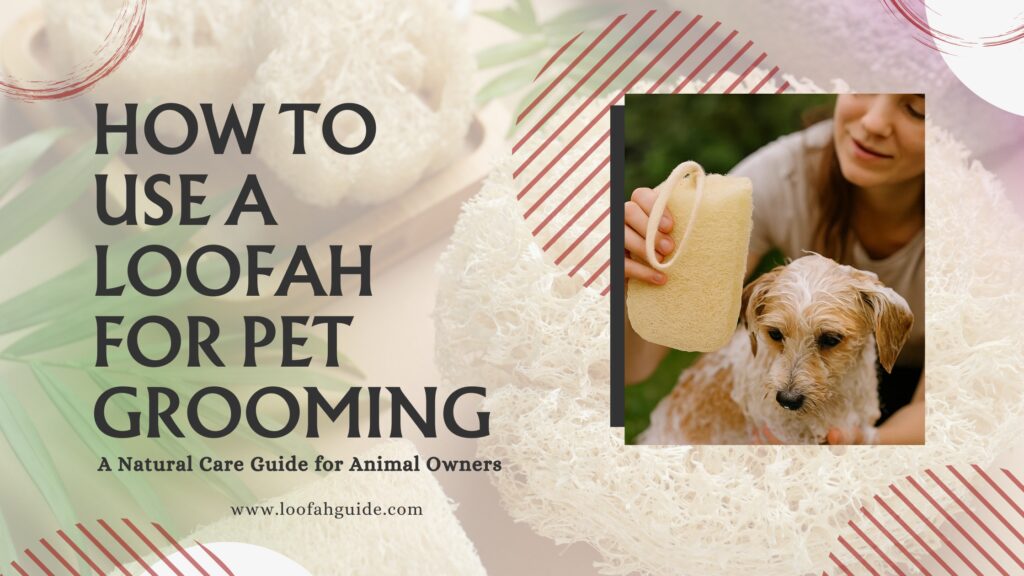
Learning how to use a loofah for pet grooming is one of the most impactful natural care decisions a pet owner can make. Natural loofah, grown from the Luffa plant and processed without synthetic additives, provides gentle yet effective grooming that works with an animal’s natural skin chemistry rather than against it.
This guide at loofahguide.com is dedicated to giving pet owners and natural product enthusiasts the information they need to make confident, informed grooming choices. We will cover how loofah interacts with different animal coat and skin types, detailed grooming techniques for dogs, cats, and small animals, how to select the right product, and how to maintain it safely between uses.
Egyptian loofah, particularly the premium grades cultivated by suppliers like Egexo with over 25 years of Nile Delta cultivation experience, consistently delivers the fiber quality that natural pet grooming requires. By the end of this guide, you will understand exactly why that matters and how to get the most from it.
Understanding Loofah Fiber and Why It Works on Animal Skin
Before learning the technique, it helps to understand what you are working with. Loofah is not a sea product. It is the dried, processed interior of a mature Luffa gourd, a vine-grown botanical in the cucumber family. When the outer skin and seeds are removed from a fully mature gourd, the internal cellulose fiber network is what remains.
That fiber network is three-dimensional, irregular at a microscopic level, and naturally flexible. These characteristics create a grooming tool that distributes pressure across its contact surface rather than concentrating it at specific points. For animal skin, which is notably thinner and more sensitive than human skin, this pressure distribution quality is significant.
Pet dermatologists generally note that point-pressure grooming tools like plastic-bristle brushes create localized friction that can cause micro-abrasions on sensitive skin. Natural loofah, by contrast, creates a distributed friction that moves fur and removes surface debris without the same risk of localized skin irritation.
Why Fiber Origin Matters for Pets
Not all natural loofahs are equal, and the difference matters particularly for pet grooming where skin sensitivity is a primary concern. Egyptian loofah from the Nile Delta region develops under growing conditions that produce exceptionally regular and dense fiber networks. The combination of consistent warm temperatures, 10 to 11 hours of daily sunlight during the growing season, and controlled irrigation from the Nile creates a fiber quality that competitors in high-humidity regions consistently fail to match.
For pet owners, what this means in practice is that Egyptian premium loofah has a more predictable and consistent texture from piece to piece. When you buy a second loofah to replace your first, it will behave the same way during grooming. This consistency is harder to achieve with loofahs from less climate-controlled growing regions.
You can explore natural loofah options suitable for pet grooming through Egexo’s pet and spa grooming range to see how this quality translates into actual products designed for animal care.
Preparing for a Loofah Grooming Session: What You Need
A successful loofah grooming session for your pet requires a small amount of preparation. The list of what you need is intentionally simple, which is part of what makes this grooming method appealing to natural-minded pet owners.
What you need:
- One natural loofah sized appropriately for your animal (see sizing guide below)
- A pet-formulated shampoo appropriate for your animal’s species and skin type
- Warm water access
- A clean towel for post-bath drying
- A well-ventilated drying spot for the loofah after use
What you do not need is a long list of synthetic grooming products, medicated rinses for tool-caused irritation, or special cleaning agents for the grooming tool itself. Natural loofah maintenance is as simple as thorough rinsing and air drying.
Selecting the Right Loofah Size
| Animal | Recommended Size | Notes |
|---|---|---|
| Large dog over 25 kg | 20 to 30 cm full loofah | Full strokes along back and sides |
| Medium dog 10 to 25 kg | 15 to 20 cm loofah | Manageable for single-hand use |
| Small dog under 10 kg | 10 to 15 cm piece | Cut from larger loofah if needed |
| Cat | 10 to 12 cm piece | Very light pressure, brief sessions |
| Rabbit | 6 to 8 cm piece | Spot cleaning only, no full baths |
| Guinea pig | 5 to 7 cm piece | Spot cleaning, minimal moisture |
Sizing your loofah to your animal is not just about convenience. A loofah that is too large for the animal you are grooming is difficult to control, which increases the risk of applying unintended pressure to sensitive areas. A loofah that is too small for a large dog makes the session unnecessarily long and tiring.
Raw loofah scrubbers are an ideal starting point for pet owners who want to cut custom sizes because they are unprocessed and can be trimmed cleanly without losing structural integrity.
Step-by-Step: How to Use a Loofah for Pet Grooming
Here is the complete technique for safe and effective loofah grooming, organized from preparation through post-session care.
Before the Session: Loofah Preparation
Soak your loofah in warm water for three to five minutes if it is new or has been stored dry for more than a week. This process is called hydrating the loofah, and it allows the cellulose fibers to soften from their dry, slightly rigid state to the more flexible texture appropriate for animal skin.
For an already-conditioned loofah that has been used recently, a brief 30-second soak under warm running water is sufficient. The goal is a loofah that is damp and flexible but not dripping. A waterlogged loofah is heavy and difficult to control, and it distributes too much water too quickly, which can startle some animals.
The Grooming Session: Technique by Body Area
Trunk and back: Hold the loofah flat against the animal’s body and use long, smooth strokes from neck to tail, following the natural direction of fur growth. Apply moderate pressure that indents the loofah slightly against the coat but does not push through to bone. This pressure level is appropriate for most animals of normal weight.
Legs and paws: Switch to circular motions with light pressure on the legs. The circular motion dislodges debris and stimulates circulation more effectively on curved, narrow body parts than straight strokes can. On the paws, be very gentle. Many animals are paw-sensitive, and a rough first experience with loofah on the paws can make future grooming sessions more difficult.
Belly and chest: The ventral surface (underside) of most animals is more sensitive than the back. Use light pressure with the flat of the loofah rather than its edge, and watch the animal’s body language. Muscle tension, ear position, and tail behavior will tell you whether the pressure feels comfortable.
Face: Use a small, separate piece of loofah with no shampoo for the face. Damp loofah applied with very light circular motions can remove surface dirt and eye secretions from around the muzzle and cheeks. Never bring the loofah near the eye itself. For cats and small animals, some individuals prefer a damp cloth to loofah on the face entirely.
Shampoo Application with Loofah
One of the most practical advantages of grooming with loofah is shampoo efficiency. Work a small amount of pet shampoo into the damp loofah before applying it to the animal. The fiber network distributes the shampoo into a consistent foam that spreads evenly through the coat with less product than direct skin application requires.
After lathering, rinse the animal thoroughly until the water runs completely clear. Then rinse the loofah itself by squeezing it repeatedly under running water. Residual shampoo in the fiber network shortens the loofah’s useful life and creates a medium for bacterial growth between uses.
After the Session: Loofah Care
Squeeze the loofah firmly to remove as much water as possible, then hang it in a well-ventilated area away from other grooming tools. Loofah dries faster than synthetic sponges in most environments because cellulose does not trap water the way polymer materials do. In a typical bathroom with reasonable airflow, a squeezed loofah dries in four to six hours.
Never store a pet grooming loofah in a closed container, a grooming bag, or against other damp materials. These conditions create the dark, humid environment that promotes mold within the fiber network.
Natural Loofah Versus Synthetic Grooming Tools: An Honest Comparison
Pet owners frequently ask whether natural loofah is genuinely better than synthetic grooming tools or whether it is simply a more sustainable choice. The honest answer is that it is both, and the specific advantages depend on the grooming task.
Side-by-Side Comparison for Pet Grooming
| Factor | Natural Egyptian Loofah | Plastic Mesh Sponge | Silicone Grooming Glove | Synthetic Sponge |
|---|---|---|---|---|
| Skin contact quality | Distributed, gentle friction | Variable, can be scratchy | Even pressure distribution | Soft but minimal exfoliation |
| Shampoo distribution | Excellent, even lather | Good | Minimal | Good |
| Suitability for sensitive skin | Very high | Moderate | High | High |
| Bacterial accumulation risk | Biodegrades naturally | High, plastic traps bacteria | Moderate | High |
| Environmental end of life | Fully compostable | Non-biodegradable | Non-biodegradable | Non-biodegradable |
| Replacement frequency | Every 3 to 4 weeks | Every 4 to 8 weeks | Every 6 to 12 months | Every 4 to 6 weeks |
| Drying time after use | 4 to 6 hours | 2 to 4 hours | 1 to 2 hours | 3 to 5 hours |
| Cost over 12 months (per animal) | Moderate | Moderate | Low | Low to moderate |
The bacterial accumulation column deserves particular attention for pet owners. Synthetic plastic and foam materials create surface environments where bacteria adhere and multiply relatively easily. Natural cellulose fiber from loofah is a different substrate: it biodegrades over time rather than permanently hosting bacterial colonies, and when maintained with proper drying between uses, it presents a lower sustained bacterial risk than plastic alternatives used over the same period.
For eco-conscious pet owners, the fully compostable end-of-life characteristic of natural loofah means there is no plastic waste associated with regular grooming tool replacement. A loofah used for three to four weeks and then composted is a genuinely circular product use cycle.
Read more about sustainable natural loofah options at loofahguide.com for a broader perspective on how natural grooming fits into a low-impact lifestyle.
Special Considerations: Animals with Skin Conditions
Pet owners whose animals have diagnosed skin conditions need to approach any new grooming tool with particular care. The following guidance is general in nature and does not substitute for veterinary advice specific to your animal’s condition.
Allergic Skin Disease
Dogs and cats with environmental or food-related allergic skin disease often have a compromised skin barrier that makes them more reactive to physical grooming stimulation. For these animals, introducing loofah grooming very gradually is important. Begin with a brief, two-minute session using a freshly hydrated loofah with no product, on a low-sensitivity area like the mid-back, and observe the skin over 24 to 48 hours before proceeding.
Many animals with allergic skin disease actually benefit from gentle loofah grooming because the stimulation helps remove allergenic particles like pollen and dust from the coat surface. But the introduction must be careful.
Seborrheic Conditions
Animals with seborrhea, a condition involving excessive scaling or oiliness of the skin, can benefit significantly from regular loofah grooming. The gentle exfoliating action helps remove accumulated scale and distribute natural skin oils more evenly through the coat. Use a medium-density loofah with a veterinarian-recommended medicated shampoo.
Post-Surgical or Wound Recovery
Never use any grooming tool, including loofah, directly on healing surgical sites or wounds. Allow complete healing before resuming grooming in the affected area. For animals in recovery, confine loofah grooming to areas of the body well away from healing tissue.
Caring for Your Pet’s Grooming Loofah: A Practical Maintenance Guide
| Maintenance Task | Frequency | Method |
|---|---|---|
| Post-session rinse | Every use | Squeeze repeatedly under warm running water |
| Full inspection | Every use | Check color, scent, fiber integrity |
| Drying | Every use | Hang in ventilated area, not enclosed |
| Replacement assessment | Weekly | Check against replacement indicators |
| Scheduled replacement | Every 3 to 4 weeks | Regardless of apparent condition |
The scheduled replacement column is perhaps the most important. Pet owners who wait until a loofah shows obvious signs of degradation before replacing it are typically using the tool past its safe window. A loofah that looks acceptable on the outside may have bacterial colonization within its fiber network that is not visible externally. Scheduled replacement every three to four weeks, regardless of apparent condition, is the correct hygiene practice.
Shop Egexo’s full loofah collection to find pet-appropriate sizes and grades that align with your grooming needs and replacement schedule.
Expert Insight from Egexo
The pet grooming application for natural loofah is one we take seriously at Egexo, and the product development approach for our pet line reflects that.
The key difference between our bath loofah and pet grooming loofah specifications is the fiber density parameter. Human bath applications benefit from our highest-density, most robust fiber structures. Pet grooming applications, particularly for small animals and cats, require a slightly lower density that delivers gentler contact without sacrificing the structural integrity needed for effective grooming.
Our cultivation team at the Nile Delta farms produces several density grades within our annual harvest specifically because different applications genuinely require different specifications. Over 25 years, we have refined these parameters through direct feedback from professional groomers and wholesale buyers in the pet care industry.
For wholesale buyers building a natural pet grooming product line, our quality standards documentation provides the specific parameters that distinguish our pet-grade products from our bath-grade products. Reach out through wholesaleloofah.com for wholesale-specific guidance.
FAQ Section
Q1: Is loofah safe for grooming cats?
A: Yes, natural loofah is safe for cat grooming when used correctly. Cats require smaller loofah pieces of 10 to 12 centimeters and very light pressure. Most cats are more grooming-sensitive than dogs and benefit from very brief, gentle sessions of three to five minutes maximum. Always hydrate the loofah fully before use on cats, as a dry or semi-dry loofah can feel scratchy on cat skin. Avoid using any loofah near the face, and never force a grooming session if the cat shows clear distress signals.
Q2: How do I introduce my dog to loofah grooming for the first time?
A: Introduction should be gradual. On the first session, simply hold the damp loofah against your dog’s back without movement for 30 to 60 seconds while offering calm verbal reassurance. If the dog stays relaxed, proceed with a few gentle strokes. Build up to a full grooming session over two to three introductory sessions. Dogs that have had negative experiences with other grooming tools may need more sessions to build trust with a new tool, even one that feels more comfortable than what they experienced before.
Q3: Can loofah grooming replace regular brushing for my dog?
A: Loofah grooming serves a different function than brushing and is not intended to replace it. Brushing removes loose fur and detangles the coat on a mechanical level. Loofah grooming, used during bath time, distributes shampoo, stimulates the skin, removes surface dander and debris, and provides gentle exfoliation. They complement each other rather than substitute for one another. For most dogs, regular dry brushing combined with loofah grooming during baths produces the best overall coat and skin health outcomes.
Q4: What shampoo works best with loofah for pet grooming?
A: Any pet-formulated shampoo appropriate for your animal’s species and skin type works with natural loofah. The loofah’s fiber network creates excellent lather and distributes product very efficiently, which means you can often use slightly less shampoo than the bottle directions suggest. For animals with sensitive skin, a fragrance-free, oatmeal-based, or veterinarian-prescribed shampoo is the preferred pairing. Avoid using human shampoos on animals regardless of the grooming tool, as the pH differences can disrupt animal skin chemistry.
Q5: How does natural loofah handle different types of dog fur?
A: Natural loofah performs well across most coat types during bath grooming. Short, smooth coats allow the loofah to contact the skin more directly, which makes skin stimulation and dander removal very effective. Double coats benefit from pre-brushing before loofah use in the bath. Curly coats accept loofah shampoo distribution very well and experience less post-bath tangling than they might from vigorous towel rubbing. Dense, rough coats like those on terrier breeds may require slightly firmer loofah pressure to distribute product through to the skin layer.
Q6: Can I use loofah to groom my pet between baths?
A: A dry loofah can be used for very light dry brushing between baths to remove surface dust and debris from short-coated animals. However, the primary use case for loofah in pet grooming is during bath sessions when the loofah is damp and being used with shampoo. Dry loofah on some coat types can cause static and minor tangling. For between-bath grooming on most animals, a standard soft-bristle brush or grooming mitt is more appropriate than loofah.
Q7: Where does the best quality pet grooming loofah come from?
A: The highest-quality natural loofah for pet grooming applications comes from Egyptian cultivation, specifically from the Nile Delta region. Egypt’s climate produces loofah fiber with exceptional density and consistency that outperforms loofah from high-humidity growing regions like Vietnam or Indonesia. For individual consumers, sourcing from verified Egyptian loofah suppliers like Egexo ensures you receive authentic premium-grade product rather than inconsistently graded alternatives. Visit Egexo’s shop to explore the available range.
Conclusion
Natural loofah grooming is one of the most practical and genuinely animal-friendly choices a pet owner can make. The technique is straightforward, the material is safe and sustainably sourced, and the results across coat types and animal sizes are consistently good when the method is applied correctly.
The key to success is matching your loofah to your animal, introducing it gradually, maintaining it with proper rinsing and drying between uses, and replacing it on schedule rather than waiting for visible signs of degradation.
Key Takeaways:
- Egyptian premium loofah provides the most consistent fiber quality for pet grooming applications
- Always hydrate the loofah before use and groom with the direction of fur growth
- Match loofah size to animal size for best technique control and animal comfort
- Replace pet grooming loofahs every three to four weeks regardless of apparent condition
- Natural loofah is fully compostable, making it the most sustainable grooming tool choice
Ready to start natural loofah pet grooming?
- For Individual Pet Owners: Shop the Egexo pet grooming range or read more natural care guides at loofahguide.com
- For Wholesale Buyers: Request a quote or visit wholesaleloofah.com for bulk sourcing resources