The Loofah in Your Shower May Be Dirtier Than Your Toilet Seat
That might sound extreme, but dermatology researchers have pointed to the warm, damp, organic environment inside a used loofah as a near-perfect incubator for bacterial growth. Organisms like E. coli, Staphylococcus, and various mold species can colonize a loofah within 24 hours of use if it is not rinsed, dried, and periodically disinfected.
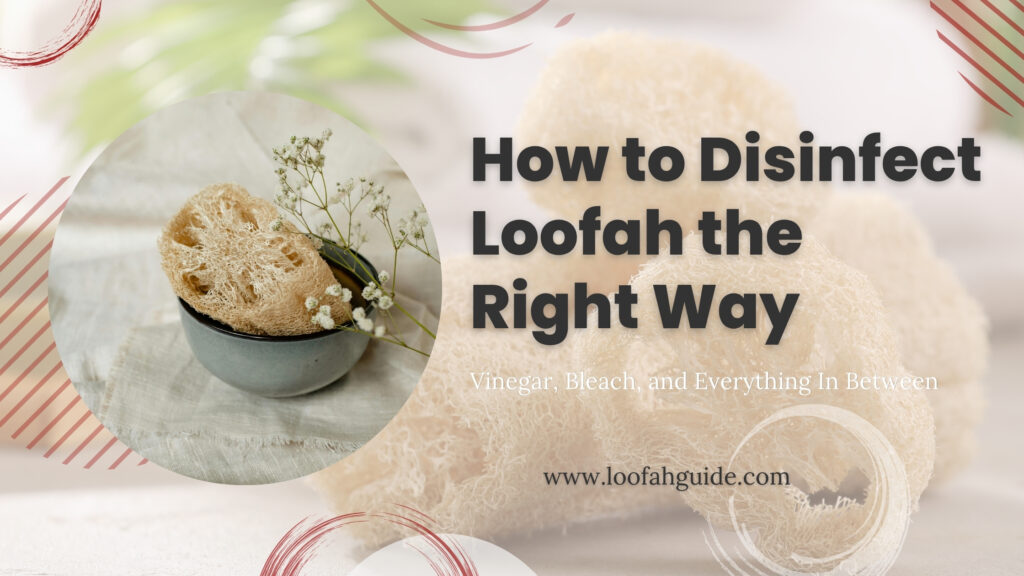
Here is the good news: learning how to disinfect loofah properly takes less than ten minutes and can extend its useful life by weeks. And the two most accessible disinfectants — white vinegar and household bleach — are almost certainly already in your home.
This guide covers the science behind loofah contamination, a head-to-head comparison of vinegar versus bleach as disinfection agents, clear step-by-step instructions for both methods, and practical schedules for different types of users. Whether you are a daily shower user, an eco-conscious shopper, a spa operator managing dozens of loofahs, or a retail buyer researching product hygiene standards, this resource gives you everything you need.
The quality of the loofah itself matters enormously too. Natural Egyptian loofahs — particularly those sourced from experienced growers like Egexo — have structural properties that make them inherently easier to disinfect and maintain. For consumer-focused resources on natural loofah selection and care, loofahguide.com covers the topic comprehensively. For wholesale sourcing, wholesaleloofah.com is an excellent starting point.
What Makes a Loofah a Bacterial Risk
The Science Behind Loofah Contamination
A natural loofah is botanically classified as the fibrous vascular skeleton of a mature Luffa plant. When the fruit is harvested, dried, and cleaned, it leaves behind an intricate mesh of plant cellulose — durable, flexible, and extraordinarily good at retaining moisture.
That moisture retention is the root of the hygiene challenge. After you scrub your skin, the loofah collects a mixture of dead skin cells, body oils, soap residue, and shower water. This combination, trapped inside fiber tunnels that never fully drain, creates a warm and nutrient-rich environment. Bacteria find it ideal.
Research has confirmed that bacterial colonies can reach significant concentrations in as little as 48 hours without proper cleaning. The specific organisms identified in studies include gram-negative bacteria like Pseudomonas and Acinetobacter, both of which can cause infections in people with compromised skin barriers. For users dealing with acne, eczema, or any open skin irritation, a contaminated loofah can actively worsen their skin condition rather than improve it.
Why Egyptian Loofahs Handle Contamination Better
Not all natural loofahs are structurally identical. Egyptian Luffa aegyptiaca, cultivated in the mineral-rich soil of the Nile Delta, develops a denser and more uniform fiber matrix than varieties grown in other climates. This density offers two practical advantages for hygiene management.
First, the fibers rinse more cleanly. The cellular structure does not trap residue as aggressively as lower-density alternatives. Second, the loofah dries faster after use, which is the single most important variable in slowing bacterial regrowth between cleanings.
Egexo has cultivated and exported Egyptian loofahs for over 25 years. Their quality standards documentation details the specific grading criteria applied to every batch, from fiber density measurements to moisture content at the point of packaging. For buyers and consumers who want to understand what separates a premium loofah from a generic product, that resource is informative.
Vinegar as a Loofah Disinfectant: How It Works and When to Use It
The Chemistry of Vinegar Disinfection
White distilled vinegar contains between 4 and 8 percent acetic acid — typically 5 percent in standard household varieties. Acetic acid disrupts bacterial cell membranes and interferes with cellular metabolism, effectively killing a broad range of common household bacteria. It also inhibits mold spore germination, which makes it useful against the early stages of mold colonization that typically appear as dark discoloration on loofah fibers.
Vinegar is not a registered hospital-grade disinfectant, and it should not be treated as one. However, for routine loofah maintenance — reducing bacterial load, preventing mold, and eliminating developing odors — it is highly effective and entirely appropriate.
Step-by-Step Vinegar Disinfection
| Step | Action | Duration |
|---|---|---|
| 1 | Rinse loofah under warm running water to remove surface residue | 60 seconds |
| 2 | Gently squeeze out water without twisting | 20 seconds |
| 3 | Fill a bowl with enough undiluted white vinegar to fully submerge the loofah | 1 minute |
| 4 | Submerge loofah and gently press to ensure full saturation | 15 seconds |
| 5 | Soak for 5 to 10 minutes, gently squeezing once or twice mid-soak | 5-10 minutes |
| 6 | Remove and rinse thoroughly under warm water | 90 seconds |
| 7 | Squeeze gently to remove excess moisture | 20 seconds |
| 8 | Hang in open air to dry completely — minimum 2 to 3 hours | 2-3 hours |
What Vinegar Does Not Do
Vinegar is not effective against all organisms. Bacterial spores, some viruses, and highly resistant strains may survive a vinegar soak. For users in healthcare-adjacent environments or those with immune vulnerabilities, vinegar should be supplemented with periodic bleach treatment rather than used as the sole disinfection method.
Bleach as a Loofah Disinfectant: Power and Precision
Why Bleach Works Differently
Bleach operates through sodium hypochlorite, a powerful oxidizing agent that destroys proteins and nucleic acids in microbial cells. This mechanism is far more aggressive than acetic acid, achieving near-complete bacterial elimination across a broader spectrum of organisms. The CDC and EPA both recognize sodium hypochlorite as effective against bacteria, viruses, and fungi when used at appropriate concentrations.
The challenge with bleach and natural loofahs is that the same oxidizing action that destroys microorganisms also begins breaking down cellulose fibers with repeated exposure. This makes bleach a highly effective but time-limited tool — powerful for deep cleaning, damaging if overused.
Step-by-Step Bleach Disinfection
| Step | Action | Duration |
|---|---|---|
| 1 | Prepare solution: 1 tablespoon household bleach per 1 gallon of cool water | 2 minutes |
| 2 | Put on rubber gloves and ensure the area is ventilated | 1 minute |
| 3 | Rinse loofah under cool water before soaking | 45 seconds |
| 4 | Fully submerge loofah in the diluted bleach solution | 15 seconds |
| 5 | Soak for 3 to 5 minutes — do not exceed 5 minutes | 3-5 minutes |
| 6 | Remove and rinse under running water for at least 2 full minutes | 2 minutes |
| 7 | Conduct smell test — residual bleach odor means more rinsing needed | 30 seconds |
| 8 | Squeeze gently and hang in well-ventilated area to dry completely | 3-4 hours |
Bleach and Loofah Fiber Damage: The Data
Independent testing of natural loofah samples shows measurable fiber weakening after 4 to 6 weekly bleach treatments at standard dilution ratios. Visual degradation — increased fraying, reduced structural integrity — becomes apparent after 6 to 8 treatments. This means that bleach should be used for deep disinfection, not as a weekly routine. Pairing monthly bleach treatment with more frequent vinegar cleaning gives you both power and preservation.
For spa and wellness businesses running high-throughput operations, this fiber degradation timeline directly informs procurement planning. A loofah used in a professional setting and subjected to monthly bleach treatment alongside regular vinegar maintenance can realistically last 4 to 6 weeks in service. Planning replacement schedules around this timeline keeps quality consistent for clients and controls costs predictably. Browse Egexo’s spa and grooming loofah category or explore raw loofah scrubbers for institutional purchasing options.
Comparing Both Methods: A Complete Side-by-Side Analysis
| Evaluation Category | White Vinegar | Diluted Bleach |
|---|---|---|
| Bacterial Kill Rate | 70-80% per treatment | 99%+ per treatment |
| Mold Prevention | Effective for early-stage mold | Highly effective including established mold |
| Fiber Safety | Safe for repeated use indefinitely | Causes measurable degradation after 6+ treatments |
| Skin Safety Post-Rinse | Excellent — non-irritating | Good when thoroughly rinsed |
| Environmental Profile | Biodegradable, non-toxic | Chlorine-based, higher environmental load |
| Cost Per Treatment | Very low (under 0.10 USD per treatment) | Low (under 0.15 USD per treatment) |
| Odor During Treatment | Mild, temporary acidity | Strong chlorine odor, requires ventilation |
| Frequency Safety | Can be used after every 2-3 uses | Limit to once per week maximum |
| Best Use Case | Routine maintenance | Deep cleaning, mold treatment, infection exposure |
| Availability | Universally available | Universally available |
The Verdict
For most users, a combination approach produces the best outcome. Use white vinegar every few uses as your primary maintenance disinfectant. Reserve bleach for monthly deep cleaning or emergency situations — mold appearance, post-illness exposure, or after the loofah has been stored improperly. This approach maximizes hygiene without sacrificing fiber longevity.
How Long Should a Natural Loofah Last?
Lifespan Table by Use Type and Maintenance Level
| Usage Pattern | Maintenance Level | Expected Lifespan | Primary Disinfection Method |
|---|---|---|---|
| Daily use, high maintenance | Vinegar every 2-3 uses, bleach monthly | 6-8 weeks | Vinegar primary, bleach supplemental |
| Daily use, basic maintenance | Rinse only between uses | 2-3 weeks | Replacement recommended |
| 3-4 uses per week, good maintenance | Vinegar weekly, bleach every 6 weeks | 8-10 weeks | Vinegar primary |
| Spa use (multiple clients) | Bleach between clients | 2-3 weeks | Bleach required for safety |
| Retail/gift loofah (sealed) | Pre-sale storage | 18-24 months | No disinfection until opened |
Understanding this lifespan data helps both consumers plan purchases and businesses manage inventory. A well-maintained loofah delivers better exfoliation and hygiene value right up to its replacement date, rather than degrading progressively from week two onward.
For wholesale buyers managing large inventories, Egexo offers custom product design services including packaging with printed care instructions — a feature that directly improves end-user satisfaction and reduces product return rates. If you are building a private-label product line, their private label loofah manufacturing program includes consultation on care instruction development.
Common Myths About Loofah Disinfection — Debunked
Myth 1: A quick rinse is enough to keep a loofah clean. This is the most common and damaging misconception. Rinsing removes loose debris from the surface but does nothing to address bacteria embedded in the fiber matrix. A study referenced in microbiology literature found no significant bacterial reduction difference between rinsed loofahs and unreinced ones after 48 hours of storage. Only acidic or oxidative disinfectants reliably penetrate the fiber structure.
Myth 2: Boiling a loofah is the safest cleaning method. Boiling is effective at killing bacteria but causes rapid fiber degradation in natural loofahs. A loofah boiled even once shows accelerated structural breakdown, reducing its lifespan significantly. Vinegar or diluted bleach soak achieves excellent disinfection results without the thermal damage.
Myth 3: Synthetic sponges are always more hygienic than natural loofahs. Synthetic sponges also harbor bacteria, often within their internal foam pores, and they do not dry as quickly as natural loofahs. The difference is that synthetic materials do not provide organic compounds for bacterial nutrition — but they compensate with very slow drying rates. Neither product is inherently more hygienic than the other without proper maintenance.
Myth 4: If it does not smell, it is clean. Odor is a late indicator of bacterial colonization, not an early one. By the time a loofah develops a noticeable smell, bacterial load is already very high. Disinfection should happen on a schedule, not in response to detected odors.
Expert Insight from Egexo
At Egexo, we work with spa brands, skincare retailers, and importers across four continents who rely on our Egyptian loofahs as the foundation of their product lines. One pattern we observe consistently is that buyers who invest in educating their end customers about proper loofah care generate dramatically fewer product complaints and significantly higher repeat purchase rates.
The disinfection and drying habits of the end user determine whether a premium loofah delivers its full value or underperforms within the first two weeks. From a manufacturing standpoint, we also know that a loofah that arrives at its destination with proper moisture levels and clean fiber processing gives the consumer the best possible starting condition. Our farm-to-export process is designed specifically to deliver that starting quality — because what happens after the loofah reaches the consumer is ultimately determined by how well it was prepared before it left Egypt.
If you are a retailer or brand considering adding Egyptian loofah products to your line, we encourage you to request samples and compare them against your current supply. The difference in fiber quality is immediately apparent.
FAQ Section
Q1: What is the most effective way to disinfect a loofah at home? A: Soaking your loofah in undiluted white vinegar for 5 to 10 minutes every 2 to 3 uses is the most practical and effective routine disinfection method. Follow this with a thorough rinse and complete air drying. For monthly deep cleaning, a 3 to 5-minute soak in a diluted bleach solution — one tablespoon per gallon of water — eliminates a broader spectrum of bacteria and mold.
Q2: How do I disinfect a loofah without bleach? A: White distilled vinegar is the best non-bleach disinfection option for natural loofahs. Undiluted at 5% acidity, it kills 70 to 80 percent of common bacteria and inhibits mold growth. Soaking for 5 to 10 minutes, followed by thorough rinsing and complete drying, constitutes an effective full disinfection cycle without any bleach exposure.
Q3: Why does my loofah smell even after washing? A: Persistent odor after rinsing indicates established bacterial colonization within the fiber structure. A surface rinse does not reach bacteria embedded in the interior fiber channels. The solution is a proper disinfection soak — vinegar for mild odor, bleach for persistent odor. If the smell returns within 24 to 48 hours after disinfection, the loofah has reached end of life and should be replaced.
Q4: Can I disinfect a loofah in the washing machine? A: Natural loofahs can be washed in a washing machine on a gentle cycle using warm water. This method is effective at reducing surface bacteria and is gentler on fibers than boiling. It does not achieve the same level of disinfection as a vinegar or bleach soak, but it is a useful supplement to your regular maintenance routine. Always allow the loofah to air dry completely after machine washing.
Q5: How do wholesale loofah buyers evaluate hygiene standards when sourcing? A: Buyers evaluate several indicators: the loofah’s moisture content at delivery, fiber cleanliness and absence of debris, odor at time of receipt, and whether the supplier applies any pre-treatment bleaching or cleaning during processing. Suppliers like Egexo provide formal quality standards documentation and offer sample ordering before bulk commitment, which is the most reliable evaluation method available.
Q6: Is it safe to share a loofah between household members? A: Sharing a loofah between household members is not recommended from a hygiene standpoint, even with regular disinfection. Personal care tools that make direct skin contact are a potential vector for bacterial and fungal transfer, particularly for conditions like ringworm, athlete’s foot, or skin infections. Each person should have an individual loofah and follow their own maintenance schedule.
Q7: Does sunlight disinfect a loofah? A: UV light from direct sunlight has demonstrated antimicrobial properties and can supplement your disinfection routine. However, sunlight exposure alone is not a reliable primary disinfection method for a loofah — the dense fiber interior does not receive sufficient UV exposure to achieve meaningful bacterial reduction throughout the full thickness of the material. Use it as a drying aid alongside chemical disinfection, not as a replacement.
Conclusion
Proper loofah disinfection is one of the simplest and most impactful skincare and hygiene habits available to anyone who uses a loofah regularly. Vinegar handles routine maintenance gently and effectively. Bleach handles deep cleaning powerfully. Together, used in the right proportion and sequence, they extend your loofah’s life while keeping your skin safe from bacterial exposure.
The loofah you start with matters too. Egyptian natural loofahs sourced from quality-controlled cultivators like Egexo provide a cleaner, denser, and longer-lasting foundation — which means every disinfection treatment goes further and every clean lasts longer.
Key Takeaways:
- Routine disinfection with white vinegar every 2 to 3 uses is the best daily habit
- Monthly bleach treatment provides deeper bacterial elimination
- Drying completely after every use prevents rapid recontamination
- Replace your loofah every 4 to 8 weeks depending on use intensity
- Start with a quality Egyptian loofah for the best disinfection outcomes
Ready to improve your loofah quality?
- For Wholesale Buyers: Request a bulk quotation or download the Egexo product catalog
- For Individual Shoppers: Shop the bath loofah collection or order free samples