The Bathroom Swap That Starts With a Plant
There is a slow but steady movement happening inside bathrooms around the world. Synthetic sponges and plastic-wrapped exfoliating poufs, products most people never question, are being replaced by something that grew in a field, requires no petroleum to produce, and can be composted when it reaches the end of its life.
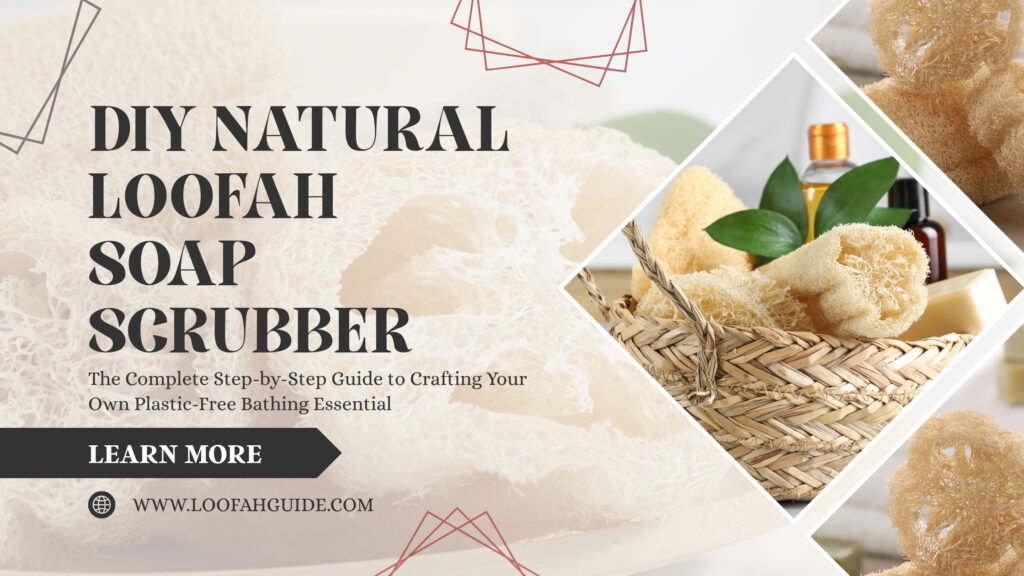
At the center of this movement is the loofah, specifically the fibrous skeleton of the Luffa aegyptiaca plant, and the growing practice of turning it into a DIY natural loofah soap scrubber that combines cleansing and exfoliation in one completely natural, entirely plastic-free tool.
This guide is built for readers who want to understand not just the how, but the why. Why loofah works better than plastic for most skin types. Why the origin of your loofah matters more than most guides admit. How to make a quality scrubber at home that holds together and delivers consistent results. And for those considering a move into selling or sourcing loofah products professionally, how to read quality and source reliably.
Loofahguide.com exists to be the most thorough, honest resource on loofah for both consumers and trade buyers. By the end of this article, you will know how to make a DIY natural loofah soap scrubber, how to evaluate the raw material you use, and how to extend its life far beyond what most people manage. More consumer guides and loofah usage resources are available throughout Loofah Guide, and wholesale-specific information for buyers is consolidated at Wholesale Loofah.
Understanding What Loofah Actually Is
The Biology of the Luffa Plant
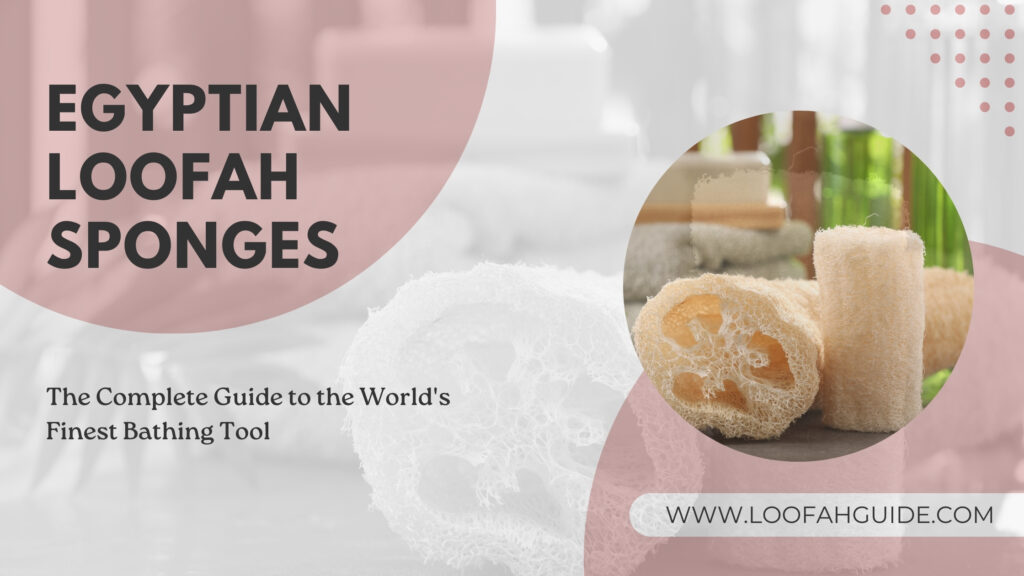
Loofah comes from the mature, dried fruit of Luffa aegyptiaca, a fast-climbing vine that thrives in tropical and subtropical climates. Inside the gourd, as it matures past its edible stage and begins to dry on the vine, the soft flesh breaks down and leaves behind an intricate three-dimensional network of cellulose fibers.
That fiber network is what you are using when you scrub with a loofah. It is not a sponge in the marine sense. It is closer in structure to a very fine, springy scaffold, with thousands of interlocking fibers running in multiple directions. This geometry is what makes loofah so effective at lifting dead skin cells without scratching live tissue.
Why Loofah Origin Changes Everything
Not all loofah is equal, and the difference is not trivial. Growing region, soil composition, harvest timing, and drying method each affect the final fiber density, elasticity, and cleanliness of the product you end up with.
Egypt’s Nile Delta has produced export-quality loofah for over a century. The alluvial soil there is uniquely mineral-rich, and the combination of long sun exposure and seasonal water patterns creates a growing environment where luffa vines develop unusually dense fiber matrices. Research into agricultural loofah production consistently identifies Egyptian luffa as producing fibers with tensile strength 15-20% higher than samples from comparable equatorial growing regions.
Egexo, a vertically integrated Egyptian loofah producer and exporter with more than 25 years of direct cultivation experience, is one of the primary sources for premium Egyptian loofah reaching spa brands, retailers, and independent soap makers internationally. Understanding where your raw material comes from is the first quality decision you make, before you ever pick up a soap mold.
Choosing the Right Loofah for Your DIY Soap Scrubber
Forms of Loofah Available and When to Use Each
| Loofah Form | Best Used For | DIY Soap Compatibility |
|---|---|---|
| Full loofah cylinder (whole, uncut) | Body scrubbers, large soap bars | Excellent when sliced to size before use |
| Pre-cut loofah discs (sliced) | Facial rounds, compact scrubber bars | Very high, ready to embed |
| Loofah strips | Soap inserts, multi-soap projects | High, flexible and moldable |
| Loofah powder or fiber | Scrub blends, exfoliating pastes | Not suitable for solid soap embedding |
| Compressed loofah pads | Commercial spa use, gift sets | Moderate, expands in molds |
For most DIY natural loofah soap scrubber projects, pre-cut loofah discs or short cylinders between 3-10 cm in length are the most practical starting point. They are easier to handle, produce consistent results across batches, and are available in sorted grades from suppliers like Egexo’s raw loofah scrubbers collection.
Reading Loofah Quality Before You Buy
If you purchase loofah from a market stall, a craft supply shop, or an online vendor, these are the quality checks to run before using it in a soap project:
Visual Check: Hold the loofah piece up to a light source. High-quality loofah shows an even, consistent fiber web with no gaps, collapsed sections, or visible debris. The color should be a natural golden tan. Bright white coloring almost always indicates bleaching, which weakens fibers significantly.
Compression Test: Squeeze the loofah and release. Quality fibers spring back to their original shape within 2-3 seconds. If the piece stays compressed or crumbles, the fibers are brittle, likely from over-processing or age.
Smell Check: Fresh, properly dried loofah has a very mild, neutral, slightly earthy scent. Any chemical smell suggests bleaching agents. Any musty or sour smell indicates improper drying and possible mold within the fiber matrix, which can cause skin irritation.
How to Make a DIY Natural Loofah Soap Scrubber: Full Method
Ingredients and Equipment
| Item | Specification | Notes |
|---|---|---|
| Loofah piece | 10-15 cm cylinder or 2-3 cm disc | Pre-dried, Grade A for best results |
| Melt-and-pour soap base | 100-150 grams per scrubber | Glycerin or shea butter recommended |
| Silicone mold | Slightly larger than loofah piece | Loaf molds work well for cylinders |
| Double boiler or microwave | For safe, even soap melting | Low, consistent heat is key |
| Essential oils (optional) | 10-15 drops per 100g soap | Tea tree, lavender, eucalyptus work well |
| Dried botanicals (optional) | Small quantity for decoration | Calendula, chamomile, or oat flour |
| Rubbing alcohol in spray bottle | For removing surface bubbles | Produces a clean finished surface |
The Complete Making Process
Stage 1: Loofah Preparation (10-15 minutes)
Take your dried loofah piece and soak it in warm water for 8 minutes. This makes the fibers slightly more pliable and allows the soap to penetrate the matrix more effectively. After soaking, squeeze out the majority of the water and let it rest on a clean towel for 20-30 minutes. The loofah should be damp but not dripping when you use it.
Stage 2: Soap Preparation (10-15 minutes)
Cut your soap base into roughly 2 cm cubes to ensure even melting. Use a double boiler for best temperature control, keeping heat below 65 degrees Celsius. Stir the melting soap gently with a silicone spatula. Avoid whipping or stirring vigorously, as this introduces air bubbles. Once fully liquid, remove from heat and let it cool slightly until the surface shows the faintest sign of skinning over, roughly 55 degrees Celsius. This is when to add essential oils or colorants.
Stage 3: Assembly (5-10 minutes)
Place your prepared loofah piece at the base of your mold. If using a loaf mold, you can embed a row of loofah cylinders side by side. Pour the soap slowly from one end of the mold, allowing it to flow through and around the loofah fibers rather than dropping directly onto them. Once the soap covers the loofah, spray the surface lightly with rubbing alcohol to burst any surface bubbles.
Stage 4: Setting and Unmolding (3-4 hours)
Allow the soap to cool and firm at room temperature for at least 2 hours. Do not move or disturb it during this period. Finish the set in a refrigerator for 30 minutes before unmolding. The cold makes unmolding significantly easier and produces a cleaner release from silicone molds.
Stage 5: Curing (Optional but Recommended)
For a harder, longer-lasting bar, allow your finished DIY natural loofah soap scrubber to cure on a wooden board in a dry, ventilated area for 3-5 days. This is not required for melt-and-pour bases, but it produces a denser, slower-wearing bar.
Skin Benefits of Using a Natural Loofah Soap Scrubber
What Happens to Your Skin During Exfoliation
The skin’s outermost layer, the stratum corneum, naturally sheds dead cells in a process called desquamation. This process slows with age, stress, and environmental exposure. Manual exfoliation with a tool like a loofah soap scrubber speeds up cell turnover, revealing younger skin underneath, improving texture, and allowing moisturizers to absorb more effectively.
The loofah’s three-dimensional fiber structure provides what dermatologists describe as a non-abrasive mechanical exfoliant. Unlike grainy scrubs that can cause microscopic tears, loofah fibers flex and give under pressure, providing friction without damage when used correctly.
Comparison: Loofah vs Other Exfoliating Methods
| Method | Exfoliation Level | Skin Safety | Environmental Impact | Cost Over 6 Months |
|---|---|---|---|---|
| Natural loofah soap scrubber | Medium-High | High when used correctly | Fully biodegradable | Low |
| Synthetic bath pouf | Medium | Moderate, harbors bacteria | Very high, plastic waste | Low to Medium |
| Chemical exfoliant (AHA/BHA) | High | Requires careful use | Low packaging waste | High |
| Sugar or salt scrub | Low to Medium | Generally safe | Low to moderate | Medium |
| Dry brushing | Medium | Moderate | Low | Medium |
| Exfoliating mitt (silicone) | Medium | High | Moderate, recyclable | Medium |
The DIY natural loofah soap scrubber sits at a strong intersection of effectiveness, safety, and sustainability, which is exactly why it is gaining visibility in both consumer wellness culture and professional spa settings.
From Home Craft to Business Product: Scaling Loofah Soap Scrubbers
When Your DIY Process Becomes a Product
Many small-batch soap businesses begin in home kitchens, and loofah soap scrubbers are among the most commercially appealing products in this space. They are visually distinctive, easy to explain, have a strong sustainability narrative, and command a retail price well above equivalent plain soap bars.
If you are producing loofah soap scrubbers at a scale beyond personal use, raw material consistency becomes critical. A single batch of loofah from a home garden or uncertified vendor may produce beautiful scrubbers. The second batch might look completely different. For sustainable small business production, consistent raw material sourcing is non-negotiable.
This is where working with a graded, professional supplier changes the trajectory of a small business. Egexo’s bath and body loofah range includes pre-processed, graded product suited to soap embedding, and the team at Egexo can advise on the best fiber grade for your specific soap formulation. For businesses ready to move toward a branded line without managing raw material themselves, the private label loofah manufacturing service produces finished loofah soap scrubbers to your brand specification, ready for retail packaging.
Quality Standards That Matter in Commercial Loofah Sourcing
| Standard | What It Covers | Why It Matters for Buyers |
|---|---|---|
| Fiber density grade | Number of fiber intersections per cm2 | Determines exfoliation effectiveness and durability |
| Moisture content at export | Maximum 12% | Prevents mold during shipping and storage |
| Chemical treatment status | Bleaching or chemical softening disclosure | Affects skin safety and fiber longevity |
| Diameter tolerance | Plus or minus 5mm per grade | Critical for consistent mold sizing in production |
| Harvest timing certification | Gourd age at harvest, minimum 120 days | Ensures full fiber maturity |
Egexo publishes its full quality standards and testing protocols on its loofah quality standards page, giving buyers full transparency before they commit to an order. The farm to export process page documents every stage of the supply chain from field to shipping container.
For buyers ready to explore the full range, the Egexo product catalog is available for download, and a wholesale quotation request can be submitted directly through the website.
Sustainable Living and the Loofah Economy
The Bigger Picture: Why This Swap Matters
A single synthetic bath pouf weighs approximately 40 grams of polyethylene and polypropylene plastic. In the United States alone, an estimated 120 million bath poufs are purchased annually. If even 10 percent of those purchases shifted to natural loofah, it would represent a reduction of approximately 480 metric tons of plastic waste entering waste streams each year.
The natural loofah market is part of a broader structural shift in personal care. The global zero-waste personal care segment is projected to exceed USD 5.6 billion by 2027, driven primarily by consumers aged 25-45 who are actively replacing synthetic products with plant-based alternatives.
Loofah as Part of a Zero-Waste Bathroom Routine
A complete plastic-free bathroom does not happen overnight, but incorporating a DIY natural loofah soap scrubber is one of the highest-impact single changes you can make. Combined with a shampoo bar, package-free conditioner, and compostable cotton rounds, a loofah soap scrubber eliminates the majority of plastic packaging from your most-used personal care routine.
End-of-Life Considerations
When your loofah soap scrubber reaches the end of its useful life, which typically occurs when fibers begin to break down or when a persistent odor develops despite cleaning, dispose of it in a compost pile or garden bed. Natural loofah fibers break down within 30-60 days in aerobic composting conditions and contribute to soil aeration and organic matter.
Expert Insight from Egexo
At Egexo, we have spent more than 25 years watching how small differences in raw material quality translate into dramatically different consumer experiences.
The most important thing we tell first-time loofah soap makers is this: the loofah does the scrubbing, but the soap does the conditioning. Choose your soap base to complement your skin type, not just for aesthetics. A loofah embedded in a soap heavy in shea butter or cocoa butter will moisturize even as it exfoliates. A loofah embedded in a pure glycerin base will rinse clean and feel lighter.
For anyone moving toward commercial production, we strongly recommend requesting samples before purchasing bulk quantities. The texture difference between Grade A and Grade B loofah is noticeable with your hands within seconds, and that difference translates directly to customer reviews. You can order loofah samples from Egexo and test them in your specific production process before making any volume commitments.
FAQ Section
Q1: What is the best soap base for a DIY natural loofah soap scrubber?
A: The best soap base for a DIY natural loofah soap scrubber depends on your skin type and experience level. For beginners, glycerin melt-and-pour soap is the most forgiving, melts at a manageable temperature, and sets clearly to show the loofah fibers. For dry skin, a shea butter or goat milk base adds conditioning properties. For oily or acne-prone skin, a tea tree infused castile base offers mild antibacterial benefits alongside the exfoliation. All of these work well with natural loofah fiber without compromising structural integrity.
Q2: How often should I replace my loofah soap scrubber?
A: A well-maintained natural loofah soap scrubber should be replaced every 4-6 weeks. The clearest signs that replacement is needed are persistent odor despite cleaning, visible discoloration of the fibers, or noticeable fiber breakdown where chunks begin to detach. Trying to extend loofah use beyond this point increases the risk of bacterial contamination. At end of life, place the loofah in a compost bin. Natural loofah is fully biodegradable and breaks down within 30-60 days.
Q3: Can a loofah soap scrubber be used on the face?
A: Yes, but only with the right loofah type and technique. Facial skin is significantly thinner and more reactive than body skin. For facial use, choose a very thin loofah disc of no more than 1-2 cm in thickness, embedded in a gentle glycerin or oat-based soap. Use once or twice per week maximum, applying only the lightest pressure with circular motions. Avoid the eye area and any skin with active breakouts or irritation. Those with rosacea, eczema, or psoriasis should avoid loofah exfoliation on affected areas entirely.
Q4: What is the difference between Grade A and Grade B loofah for wholesale purchasing?
A: Grade A loofah features uniform fiber density, consistent diameter, minimal surface blemishes, and a natural golden color indicating no chemical processing. It is suited for premium retail, spa product lines, and branded soap scrubber manufacturing. Grade B loofah may have slight color variations, minor blemishes, or small inconsistencies in fiber density, but remains fully functional and is appropriate for value-tier products, bulk resale, or production where minor visual variation is acceptable. Grade B pricing is typically lower, making it a strong choice for high-volume production with a value positioning.
Q5: Where can I buy high-quality raw loofah for DIY projects?
A: High-quality raw loofah for DIY projects is available through specialty craft suppliers, natural soap making retailers, and direct from loofah exporters. For the most consistent quality, particularly if you are making multiple batches, sourcing from a graded exporter rather than a general marketplace is advisable. Egexo supplies sorted, dried loofah cylinders and pre-cut slices in both small and large quantities, with grade documentation. The raw loofah scrubbers range and a full shop are accessible through the Egexo website, and sample orders are supported for buyers evaluating quality before committing to volume.
Q6: Is homemade loofah soap safe to sell?
A: Homemade loofah soap products intended for sale are subject to cosmetic regulations in most markets. In the European Union, products must comply with EU Cosmetics Regulation 1223/2009. In the United States, they fall under FDA oversight as cosmetics. In both cases, you need to ensure your ingredients are approved for skin contact, your manufacturing environment meets hygiene standards, and your labeling includes required information such as ingredient lists and net weight. Working with a certified soap base from a reputable supplier simplifies compliance significantly. For businesses ready to scale into finished, export-compliant products, Egexo’s private label service manages regulatory requirements as part of the production process.
Q7: Does the loofah fiber affect how the soap lathers?
A: Yes, embedding loofah in a soap bar changes how lather is generated and distributed. The fiber matrix acts as a lather amplifier, trapping air and water between fibers as the bar is moved across skin. Most users find that a loofah soap scrubber produces noticeably richer lather than the same soap bar used without loofah. The trade-off is that the loofah section near the end of the bar’s life can feel slightly rough once soap coverage is reduced. This is a natural result of fiber exposure and is the signal that the scrubber should be replaced.
Expert Insight from the Loofahguide.com Team
One of the most common misconceptions we encounter is that all loofah is interchangeable. It is not. The loofah you buy in a dollar store and the loofah sourced from a certified Egyptian exporter are not the same product, even if they look similar in the package.
The difference becomes obvious the first time you use high-fiber-density Egyptian loofah in a DIY project. The scrubber holds its shape longer, integrates with the soap more securely, and delivers more consistent exfoliation across the full life of the bar.
For anyone serious about their DIY natural loofah soap scrubber results, investing in quality raw material from a reliable source is the single most impactful decision you can make. Explore the full range of loofah products at Egexo’s shop, and see the wholesale options at Wholesale Loofah if you are considering commercial sourcing.
Conclusion
Making your own DIY natural loofah soap scrubber is one of the most direct, satisfying actions a person can take toward a genuinely plastic-free bathroom. The process is simple, the materials are accessible, and the result is a product that works better than what it replaces. For those building businesses around natural personal care, the same loofah that starts as a home craft project becomes the foundation of a compelling, commercially viable product line.
The quality of your raw loofah determines the quality of everything you make with it. Egyptian loofah, grown in Nile Delta conditions and sourced through an integrated supplier like Egexo, gives you the consistency and performance that both home crafters and commercial producers need.
Key Takeaways:
- Luffa aegyptiaca is a plant-derived fiber, not a sea sponge, and Egypt produces the world’s densest, most durable loofah fiber
- A DIY natural loofah soap scrubber takes under an hour to make and lasts 4-6 weeks with proper maintenance
- Loofah provides mechanical exfoliation without microplastic shedding, making it superior to all synthetic alternatives
- Sourcing graded raw loofah from a certified supplier like Egexo ensures batch-to-batch consistency for commercial use
- Natural loofah is fully compostable within 30-60 days, completing a genuinely zero-waste product cycle
Ready to experience Egyptian loofah quality?
- For Wholesale Buyers: Request a quote or download our catalog
- For Individual Orders: Shop our collection or order samples