
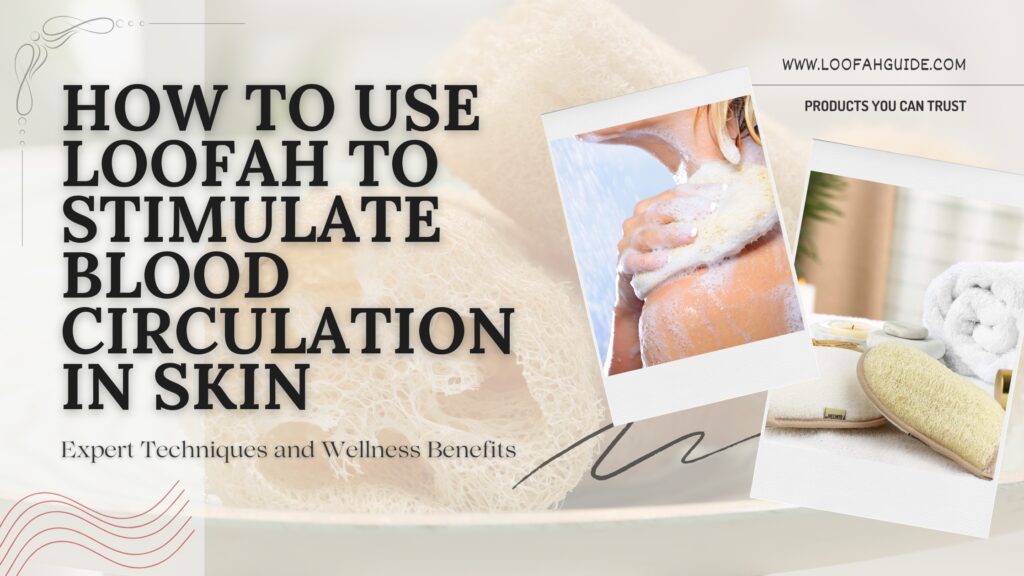
Short answer: Wet the loofah first, add body wash and rub gently in small circles with light pressure. Rinse your skin and the loofah, squeeze out the water and hang the loofah up to dry.
A simple routine for the shower
Using a loofah is easy, but a few small habits make it more pleasant and help the sponge last. This page walks through one shower from start to finish: wetting the loofah, washing, how much pressure to use, rinsing, drying, how often, and when to replace it.
If you are still choosing a loofah, our separate page on choosing and caring for a body loofah covers shapes, softness and storage. This page is only about using it.
If you have a skin or health condition, ask your doctor before using any exfoliating tool.
Selling loofah in your shop? Get the EGEXO catalog and see the full range.
Before you start
Take the loofah out of its place and look at it. It should be clean, without a musty smell, and without dark spots. If it smells stale or looks worn, put it aside and use a new one.
If the loofah is new, it will be stiff and dry. Do not use it dry on your skin in the shower. Soak it in warm water for a few minutes first. It will soften and become easier to hold.
Have your soap or shower gel ready. A loofah works with soap. It is not a tool to use on bare, dry skin.
Step by step
Step 1: Wet the loofah
Hold the loofah under the warm shower until it is soaked through. Squeeze it once or twice. A wet loofah is soft. A damp-only loofah is still firm and feels rougher.
Step 2: Add soap
Put a little shower gel on the loofah, or rub a bar of soap over it. Squeeze the loofah in your hand to make lather. Because the fibre has many small gaps, a small amount of soap goes a long way.
Step 3: Wash with gentle pressure
Start at your feet or your arms. Move the loofah in slow, small circles or in long strokes. Press lightly, as if you were stroking, and let the loofah do the work.
You should feel a light scrubbing, not a sting. If your skin turns very red or feels sore, you are pressing too hard. Stop, rinse and use less pressure next time, or use a softer piece.
Take extra care on thin or sensitive areas, such as the neck, the inner arms and the chest. On the thicker skin of the heels, elbows and knees you can use a little more pressure, but still keep it gentle.
Step 4: Cover the body in order
A simple order keeps you from missing parts or repeating them.
- Arms and shoulders
- Chest and stomach
- Legs and feet
- Back, with a longer piece such as a back scrubber if you have one
The form changes how you hold it, but the steps stay the same.
Step 5: Rinse your skin
Rinse off the soap and the loose skin you took off. Warm water is fine. Pat yourself dry with a clean towel.
Step 6: Rinse the loofah
This step is the one people skip. Hold the loofah under the water and squeeze it again and again until the water runs clear and there is no soap left. Soap that stays in the loofah can make it feel sticky and smell stale.
Step 7: Squeeze and hang it up
Squeeze out as much water as you can. Do not wring it so hard that you tear the fibre. If your loofah has a rope or a loop, use it. A dry loofah is ready for next time.
How often to use it
A loofah is not meant for every part of the body every day. A good start is a few times a week. See how your skin feels. If it feels dry, tight or sore, use the loofah less often or use a softer piece.
Some people use a loofah every day on the arms and legs and less often on other areas. That is a personal choice. We give no fixed rule, because every skin is different. If your skin is sensitive, or you have any skin condition, ask your doctor what is right for you.
What not to do
- Do not use a loofah on broken, cut or sore skin.
- Do not use a loofah on a sunburn.
- Do not scrub hard to get a quick result. A gentle routine is better than a hard one.
- Do not share your loofah with other people.
- Do not leave a wet loofah in a closed box or bag.
- Do not use your body loofah for the kitchen. Our kitchen pads are for dishes. Keep them apart.
Keeping the loofah in good shape
Rinse it well after each use and let it dry fully before the next one. Keep it in the open, away from standing water. A dry loofah stays fresh. A loofah that is always wet can go musty.
For a deeper clean, read our page on how to choose and care for a body loofah. It covers cleaning and storage in more detail.
When to replace it
Replace a loofah every 3 to 4 weeks. How well it stays fresh depends on how often you use it and how well it dries. Replace it sooner when:
- it smells musty even after you rinse it
- it has dark, slimy or spotted areas
- the fibre is breaking apart
- it no longer holds soap or feels flat
When you replace it, you can put the old loofah in a compost heap. It is plant fibre and 100% biodegradable. Take off any cotton rope or fabric parts first if your compost does not take them.
Tips for different parts of the body
- Arms and legs: use long, slow strokes. A pad or a mitt works well here.
- Back: a back scrubber with straps or a stick makes this easy. Move it up and down in a slow, light stroke.
- Feet and heels: the skin is thicker here. A small heel scrubber helps. Pay attention to the spaces between the toes and rinse them well.
- Elbows and knees: use a little more pressure than usual, but keep it gentle.
- Stomach and chest: use a soft touch.
Whatever the area, start light. You can always press a little more, but you cannot undo a scrub that was too hard.
After the shower
Pat your skin dry with a clean towel. Many people put on a body lotion after exfoliating, because washing can leave the skin feeling dry. Use whatever you normally use. If your skin feels tight or sore, skip the loofah next time and ask your doctor if it keeps happening.
Short answers to common questions
Do I use the loofah on my face?
The skin on your face is thinner. If you use a loofah there, choose a soft piece, wet it well, and press very lightly. If your skin is sensitive or you have a skin condition, ask your doctor first.
Should I use soap?
Yes. A loofah works best with soap or shower gel and plenty of warm water.
Can I use it dry?
This page covers wet use only. Dry use is a different method and is not covered here.
Is a new loofah scratchy?
It may feel firm at first, but a wet loofah softens quickly. Egyptian loofah is soft and gentle from the first use. If you want a gentler feel, soak it a little longer.
About EGEXO
EGEXO For Export is a family-run manufacturer and exporter of natural Egyptian loofah in Damanhour, Egypt. The loofah comes from our own farms and partner farms in the Nile Delta, and we process it in our own factory. We have been exporting since 2015. Every order is checked by hand for quality, size and dryness before it is packed.
If you want to stock loofah in a shop, a spa or a hotel, you can ask us for a quote or for samples with the links below.
Ready to ask about Egyptian loofah?
- For wholesale buyers: Request a quote or download our catalog
- For individual orders: Request a quote or request samples
Keep reading: how to dry a loofah after use and how to pick a loofah for your skin type.