Picture this: you are standing in the personal care aisle, holding a mesh plastic shower pouf in one hand and a natural loofah in the other. Both cost roughly the same. Both promise smooth skin and a satisfying lather. But one of them will take nearly five centuries to disappear from the planet after you throw it away. The other will vanish into compost within a couple of months.
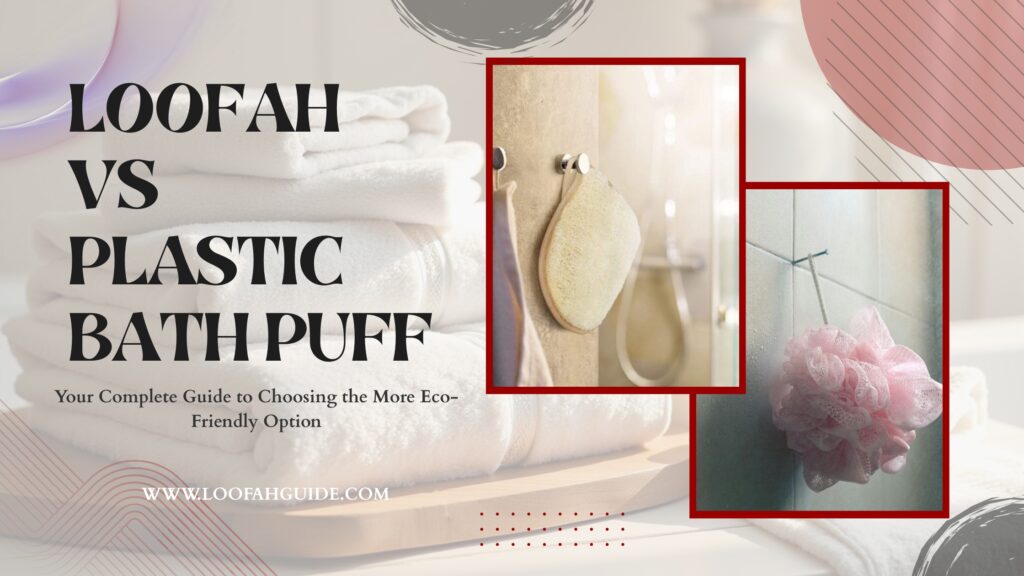
The loofah vs plastic bath puff question is one of the most commonly searched personal care comparisons in the sustainability space, and for good reason. It sits at the intersection of everyday habit and real environmental consequence. This guide was written to give you the most honest, complete, and practically useful answer available.
We cover the science of both products, real data on environmental impact, skin benefit comparisons, hygiene realities, shopping guidance for individuals, and sourcing information for businesses and buyers. By the end, you will have everything you need to make a genuinely informed choice.
And if you are a retailer, spa owner, or importer looking for a trusted Egyptian loofah wholesale source, we point you toward Egexo, whose farms in the Nile Delta produce what is widely considered the finest loofah fiber in the world. You can explore their consumer resources at loofahguide.com and their wholesale resources at wholesaleloofah.com.
Understanding Both Products From the Ground Up
What Is a Natural Loofah, Really?
Most people who have used a natural loofah assume it is some kind of sea sponge. It is not. The natural loofah is entirely land-grown, a member of the Cucurbitaceae family, the same botanical family that includes cucumbers, zucchini, and squash. The plant produces a large fruit, and inside that fruit, as it matures and dries on the vine, a dense internal fiber network develops.
That internal skeleton, once the outer skin and seeds are removed, is the loofah you use in the shower. It is 100 percent plant cellulose. No synthetic processing, no petroleum, no polymer chemistry. Just fiber from a vine that has been cultivated for personal hygiene, food, and craft use across Asia, Africa, and the Middle East for hundreds of years.
The quality of the fiber varies significantly depending on where it is grown. Egypt’s Nile Delta is acknowledged internationally as producing the highest quality loofah, with optimal soil composition, growing conditions, and post-harvest processing that result in fiber that is denser, more durable, and more consistent than loofah grown elsewhere.
What Is a Plastic Bath Puff Made Of?
The fluffy, ball-shaped shower pouf most households are familiar with is manufactured from polyethylene or nylon mesh, gathered into layers and tied at the center with a loop cord. The material is derived from petroleum through a multi-step chemical refining and extrusion process.
It was introduced to the mass consumer market as an inexpensive, colorful alternative to natural sponges, and for decades it dominated bathroom shelves due to its lathering efficiency and low price point. But the environmental cost embedded in its manufacture and disposal was not well understood by consumers for most of that time.
Today, the picture is much clearer. Plastic bath puffs are:
- Made from non-renewable petroleum resources
- Not accepted in standard household recycling streams
- Persistent in landfill and ocean environments for 400 to 500 years
- Actively shedding microplastic fibers into wastewater during every single use
Understanding these facts changes how the product looks in that store aisle.
The Environmental Case: Where the Numbers Tell the Story
Side-by-Side Environmental Comparison
| Factor | Natural Loofah | Plastic Bath Puff |
|---|---|---|
| Raw material source | Renewable plant crop | Petroleum (non-renewable) |
| Manufacturing energy | Low (agricultural) | High (chemical/industrial) |
| Microplastic shedding | None | Yes, every use |
| Recyclability | Compostable, fully biodegradable | Not recyclable, landfill only |
| Ocean pollution risk | None | High (microfibers and whole-product) |
| Time to decompose | 30 to 60 days | 400 to 500 years |
| End-of-life options | Home compost, green waste bin | General landfill waste |
| Carbon footprint | Low | High |
Microplastics: The Hidden Environmental Harm
The microplastic issue deserves special attention because most consumers are not aware it happens at all. Every time a plastic bath puff is used under running water and pressed against the skin, the mechanical action and water flow cause tiny plastic fibers to break free from the mesh. These fibers are typically less than five millimeters in size.
They flow down the shower drain, pass largely unfiltered through wastewater treatment plants, and enter rivers and oceans. Once in the water system, they are ingested by marine life, accumulate up the food chain, and have been detected in human tissue, drinking water, and even rainfall samples by researchers worldwide.
A natural loofah sheds nothing of the kind. Its fibers are plant cellulose, which breaks down biologically and harmlessly in aquatic environments.
This single fact, the microplastic issue, is often enough to prompt consumers to make the switch permanently.
Skin Performance: Which One Is Actually Better for You?
How Each Product Exfoliates
Exfoliation works by mechanically removing dead skin cells from the outermost layer of the epidermis, the stratum corneum. Both natural loofah and plastic bath puffs accomplish this, but through slightly different physical mechanisms.
Natural loofah fiber has an irregular, interlocking structure at the microscopic level. This creates variable contact pressure across the skin surface, which tends to provide effective but controlled exfoliation. The fiber also softens considerably when wet, which further moderates the exfoliating intensity.
Plastic mesh provides a more uniform, consistent surface. It does not soften with water. This makes it efficient at generating lather but means the abrasive action remains constant regardless of the pressure applied, which can lead to over-exfoliation in users with thin or sensitive skin.
Skin Type Suitability Guide
| Skin Type | Natural Loofah | Plastic Bath Puff |
|---|---|---|
| Normal skin | Excellent | Good |
| Sensitive skin | Good (fine grade) | Use with caution |
| Oily skin | Excellent | Good |
| Dry skin | Good (gentle use) | Moderate |
| Eczema or rosacea | Gentle grades recommended | Generally not recommended |
| Mature skin | Fine grade recommended | Not ideal |
For consumers exploring which loofah grade suits their skin, loofahguide.com provides detailed consumer guides organized by skin type and use case.
The Lather Question
One area where plastic puffs have a genuine advantage is soap lathering. The volumetric structure of a plastic bath puff traps air exceptionally well, producing a rich, voluminous lather even with a small amount of liquid soap. Natural loofah produces solid lather, especially with bar soap, but typically not the same volume as a plastic puff.
For consumers who prefer liquid body wash and prioritize foam, this is a meaningful consideration. However, many users who switch to natural loofah also find they shift toward bar soaps, which are themselves more sustainable and often gentler on skin, making the transition part of a broader sustainable personal care shift.
Hygiene Reality Check: Separating Fact from Marketing Myth
The idea that plastic bath puffs are more hygienic than natural loofahs is one of the most persistent myths in the personal care category. It is largely incorrect.
What Research Shows
A landmark 2017 study published in the Journal of Clinical Microbiology specifically compared bacterial colonization in natural and synthetic bath cleaning tools. The findings were counterintuitive for many consumers: dense synthetic bath puffs, due to their layered mesh structure that traps moisture and organic material, supported higher concentrations of bacteria than their natural counterparts when both were stored in typical shower conditions.
The key variable is not whether the product is natural or synthetic. It is drying. A loofah that is hung outside the shower and allowed to fully air dry between uses will maintain significantly lower bacterial counts than one left wet in the shower floor or soap dish.
Maintenance Schedule That Works
| Maintenance Action | Frequency | Natural Loofah | Plastic Bath Puff |
|---|---|---|---|
| Post-use rinse | Every use | Rinse under hot water and wring | Rinse and shake |
| Air dry | Every use | Hang outside shower | Hang to dry |
| Deep clean | Weekly | 5-minute soak in 1 part vinegar to 10 parts water | Machine wash, gentle cycle |
| UV exposure | Monthly | Leave in direct sunlight for 30 minutes | Not effective |
| Full replacement | Every 3 to 4 weeks | Yes | Every 4 to 6 weeks |
Following this schedule with a natural loofah eliminates most hygiene concerns and extends useful product life to its natural maximum. For reference, three to four weeks is the recommended replacement interval recommended by most dermatology sources for any mechanical exfoliating tool, regardless of material.
Shopping Guide: What to Look for When Buying a Natural Loofah
Not all natural loofahs available on the market are created equal. The quality differences between premium Egyptian loofah and low-grade commodity loofah from other regions are substantial enough to affect both the experience and the longevity of the product.
Quality Indicators Checklist
| Indicator | What Good Quality Looks Like | Red Flags |
|---|---|---|
| Color | Natural tan to golden brown | Brilliant white (heavy bleaching) |
| Fiber density | Firm and consistent when dry | Sparse, uneven, compressed areas |
| Wet behavior | Softens noticeably, maintains structure | Stays rigid, falls apart |
| Smell | Neutral, slight natural plant scent | Chemical or musty odor |
| Fiber shedding | Minimal after first rinse | Excessive shedding throughout use |
| Origin labeling | Egyptian or clearly stated origin | No origin information |
How to Prepare Your Loofah Before First Use
- Rinse the loofah thoroughly under warm running water for one to two minutes
- Allow it to fully saturate and observe whether it softens uniformly
- Squeeze out excess water and inspect for any dry or rigid spots
- Let it air dry completely before first use
- On first use, apply soap before pressing firmly against skin to assess exfoliation intensity
Starting with this process helps you identify quality issues immediately and ensures the loofah is clean and ready for optimal performance.
The Business Opportunity: Why Natural Loofah Is the Smart Wholesale Choice in 2026
The consumer shift toward sustainable personal care is now a mainstream market movement, not a niche trend. Retail buyers, spa operators, and importers across North America, Europe, and Australia are actively expanding their natural product offerings in response to both consumer demand and emerging regulatory requirements targeting single-use plastic in personal care.
Market Growth Data
| Market Segment | 2024 Valuation | Projected 2028 Valuation | Growth Rate |
|---|---|---|---|
| Natural personal care tools | USD 1.4 billion | USD 1.9 billion | 6.8 percent CAGR |
| Eco-friendly bath products | USD 3.1 billion | USD 4.8 billion | 7.4 percent CAGR |
| Natural loofah global export | USD 210 million | USD 305 million | 7.8 percent CAGR |
For retailers and spa businesses, this growth trajectory represents a durable opportunity. Natural loofah products are not being adopted because they are trendy. They are being adopted because consumers are making increasingly permanent changes to their purchasing behavior in response to environmental awareness.
Wholesale buyers looking to source premium Egyptian loofah for retail or private label programs can explore Egexo’s full offering at wholesaleloofah.com or review the full product catalog directly. Egexo has supplied wholesale clients across four continents for 25 years and offers MOQs accessible to smaller buyers alongside bulk pricing for larger importers.
DIY and Creative Uses for Natural Loofah
One of the most appealing characteristics of natural loofah for the DIY and crafting community is its versatility beyond the shower.
Loofah in Natural Soap Making Many artisan soap makers embed sliced loofah rounds or strips into handmade soap bars, creating a built-in exfoliating scrub that is activated as the soap is used. The loofah fiber integrates beautifully with cold-process and hot-process soap formulas.
Loofah as a Garden Mulch Tool At end-of-life, whole or shredded loofah pieces make excellent mulch or compost additions. The cellulose fiber breaks down quickly and adds organic material to garden soil.
Loofah for Kitchen Cleaning Natural loofah makes an effective, biodegradable dish scrubber, particularly for pots, pans, and surfaces that benefit from gentle abrasive action. Unlike synthetic scrubbers, kitchen loofah can be composted when worn out rather than sent to landfill.
Loofah as a Pet Grooming Tool Natural loofah is gentle enough for pet grooming, particularly for dogs with sensitive coats. Its fiber texture removes loose hair and surface debris without irritating skin.
Expert Insight from Egexo
Our growers in the Nile Delta have observed something over decades of loofah cultivation that most consumers never consider: the relationship between harvest timing and fiber quality is one of the most important and least understood factors in the loofah market.
Loofah that is harvested too early yields dense, green fiber that has not fully developed its structural integrity. When dried and processed, it produces a product that feels initially firm but breaks down rapidly with use. Loofah harvested at full maturity, after the outer skin has begun to brown and dry naturally on the vine, yields a fiber network that is fully developed, resilient, and capable of performing consistently for the full recommended use period.
When evaluating any natural loofah product, whether for personal purchase or wholesale sourcing, always wet a sample piece before judging quality. A mature, well-processed Egyptian loofah will transform remarkably when wet, becoming flexible and conforming to shape, while retaining full structural integrity. That transformation is the quality signal that matters most.
For wholesale sourcing information, visit wholesaleloofah.com or request free samples from Egexo.
FAQ Section
Q1: Which is more eco-friendly, loofah or plastic bath puff? A: Natural loofah is significantly more eco-friendly than a plastic bath puff. Loofah is grown from a renewable plant crop, produces no microplastic pollution during use, and biodegrades completely within 30 to 60 days. Plastic bath puffs are manufactured from petroleum, shed microplastic fibers into waterways every time they are used, and persist in the environment for 400 to 500 years. The loofah vs plastic bath puff comparison favors natural loofah on every environmental measure.
Q2: Will switching to natural loofah change my shower routine significantly? A: The adjustment is minimal for most users. The main difference is that natural loofah generates slightly less foam with liquid body wash compared to a plastic puff. Many users find switching to a bar soap actually enhances the loofah experience and adds another sustainability benefit. The skin feel after use is typically described as smoother and more polished, and most users adapt within one to two weeks.
Q3: How should I store my natural loofah to keep it hygienic? A: The single most important storage habit is hanging your loofah outside the shower or in a well-ventilated area between uses, never leaving it on the shower floor or in the soap dish where it stays wet. Full air drying between uses dramatically reduces bacterial growth. A weekly rinse in diluted white vinegar adds an additional layer of hygiene maintenance. Replace your loofah every three to four weeks regardless of its visual condition.
Q4: Is Egyptian loofah actually better than other varieties? A: Yes, demonstrably. Egyptian loofah grown in the Nile Delta consistently outperforms loofah from other regions on fiber density, durability, flexibility when wet, and consistency across batches. The combination of rich alluvial soil, optimal growing conditions, and established post-harvest expertise results in a product that lasts longer, performs better, and offers more consistent quality. For wholesale buyers, this means fewer customer complaints and stronger product reputation.
Q5: Can I use a natural loofah on my face? A: Whole natural loofah is generally too coarse for facial use. However, fine-grade loofah slices or specially processed face-grade loofah products are suitable for gentle facial exfoliation in most skin types. Those with sensitive facial skin should patch test before regular use and limit facial loofah exfoliation to once or twice per week. For consumers with active acne, rosacea, or eczema, consult a dermatologist before introducing any mechanical facial exfoliation.
Q6: What is the environmental impact of producing natural loofah? A: Loofah cultivation has a very low environmental footprint relative to synthetic alternatives. The plant requires modest water inputs, grows without synthetic fertilizers in nutrient-rich agricultural regions like Egypt’s Nile Delta, and the post-harvest processing is minimal compared to synthetic fiber manufacturing. The entire product is biodegradable, producing no persistent waste at end-of-life. This stands in sharp contrast to the energy-intensive petroleum refining and polymer processing required to manufacture plastic bath puffs.
Q7: Where can I buy genuine Egyptian loofah in bulk? A: Egexo is Egypt’s leading loofah wholesale supplier, with 25 years of cultivation and export experience serving buyers across Europe, North America, Asia, and the Gulf. Wholesale buyers can browse products, request samples, and get bulk quotations through wholesaleloofah.com or directly through the Egexo wholesale portal.
Conclusion
The loofah vs plastic bath puff decision comes down to a simple truth: one product belongs in a sustainable future, and the other does not. Natural loofah is grown from the earth, returns to the earth, and does nothing harmful between those two events. Plastic bath puffs are manufactured from fossil fuels, poison waterways with microplastics throughout their use, and leave a permanent material legacy in the environment.
For individual consumers, the switch to natural loofah is one of the most effortless sustainable upgrades available in your daily routine. It costs roughly the same, performs comparably or better on most skin types, and eliminates a meaningful source of microplastic pollution from your household’s environmental footprint.
For businesses, the market case is equally compelling. Consumer demand for natural personal care products is growing at close to 7 percent annually. Regulatory pressure on single-use plastic in personal care is accelerating. Premium natural loofah from a verified Egyptian source offers better margins, a stronger product story, and a competitive position that will only improve as sustainability becomes non-negotiable in the category.
Key Takeaways:
- Natural loofah biodegrades in 30 to 60 days versus 400 to 500 years for plastic puffs
- Plastic bath puffs shed microplastics into waterways during every use
- Natural loofah is gentler on sensitive skin and equally effective at exfoliation
- Proper drying eliminates most hygiene differences between the two products
- Egyptian loofah from Egexo sets the global standard for fiber quality and consistency
Ready to make the switch or build your natural product line?
- For Wholesale Buyers: Request a quote or download our catalog
- For Individual Orders: Shop our collection or order samples