Short answer: A natural loofah is a dried plant fibre, while a plastic pouf is a net of plastic mesh. Both lather, but only the loofah is 100% biodegradable. Rinse and dry either one after each use.
Two things that look alike and behave very differently
A natural loofah and a plastic pouf both sit in the shower and both make lather. That is where the likeness ends. One is a dried plant. The other is a net of plastic mesh. This page compares them the way you meet them every day: how they feel in your hand, how you look after them, how fast they dry, when to throw them away, and what happens to them after that.
It is written for the person who uses the sponge. If you buy loofah for a shop or a spa, our wholesale pages cover that side.
If you have a skin or health condition, ask your doctor before using any exfoliating tool.
Run a shop or a brand? See the EGEXO catalog for natural loofah products made in Egypt.
What each one is made of
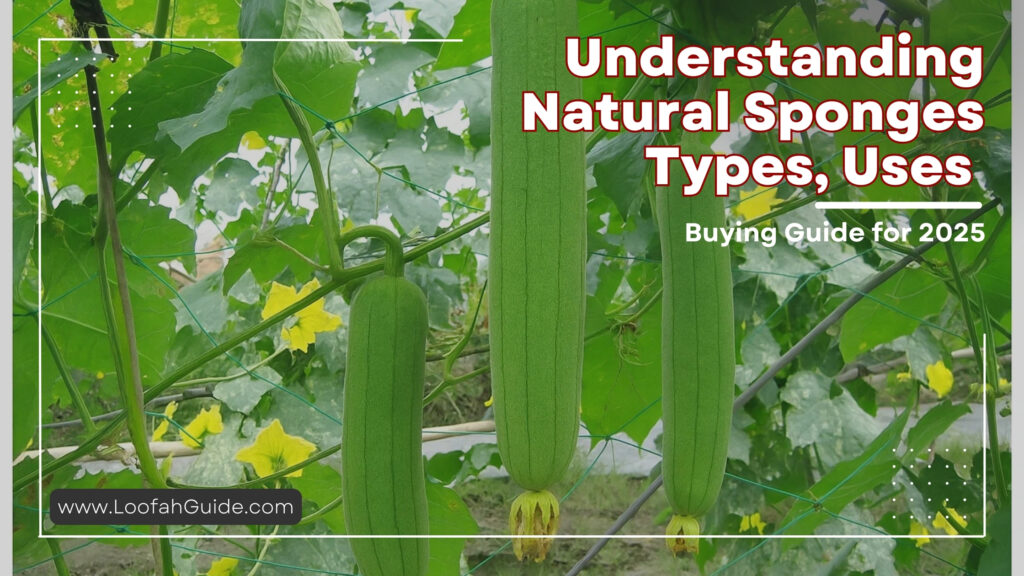
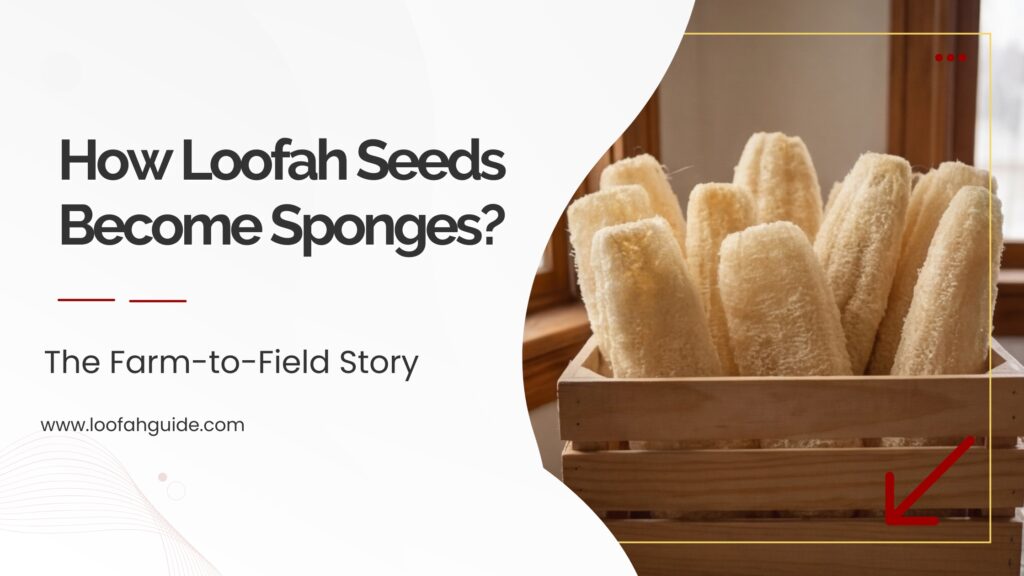
A natural loofah is the dried fibre of the loofah plant (Luffa aegyptiaca). The fibre forms a network inside the fruit. After the fruit is picked, it is dried and cleaned, then cut and shaped. Because it is plant fibre, a loofah is 100% biodegradable.
A plastic pouf is a long strip of plastic netting, gathered into a ball. It is made in a factory, in one colour and one shape. It does not come from a plant and it does not break down the way plant fibre does.
EGEXO exports natural Egyptian loofah. The loofah comes from our own farms and partner farms in the Nile Delta and is processed in our own factory. Egyptian loofah is soft and gentle from the first use. The cotton parts on our finished products, such as the towel backing, the edges, the ropes and the straps, are 100% cotton.
How they feel in the shower
The first touch
A dry loofah is stiff. It feels like a piece of firm sponge with a rough surface. That is normal. Once you wet it, the fibre softens and the sponge gives under your hand. A plastic pouf feels the same dry or wet: light, springy and slippery.
The lather
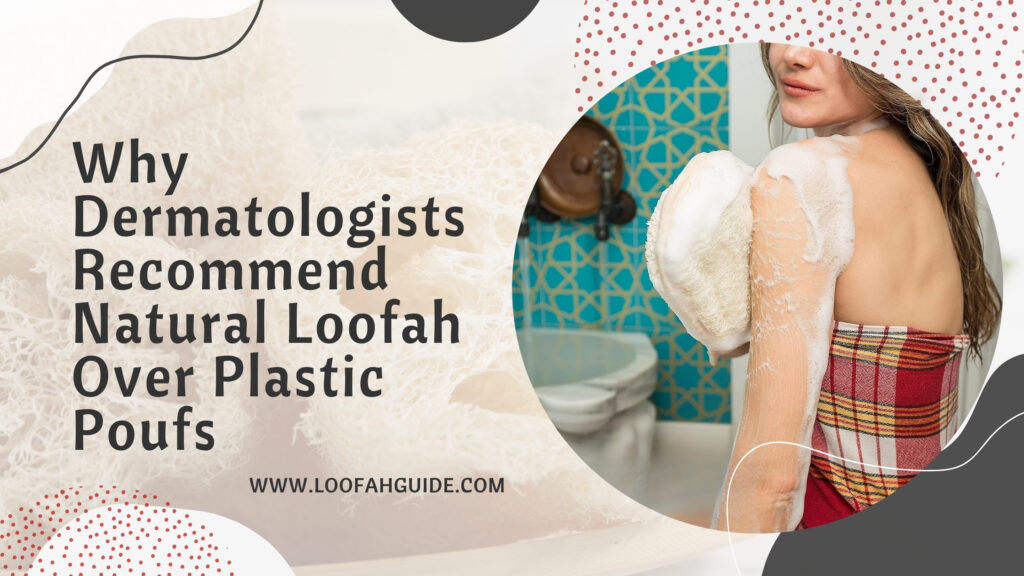
Both hold soap well. A loofah has many small gaps in its fibre, so it holds water and soap and lets you spread a lather over your skin. A pouf is mostly air between thin strands, so it lathers fast, often more than you need.
The scrubbing feel
A loofah has a slightly grippy surface. When you rub it over your skin, it takes off dead skin. A pouf is smoother and softer to the touch. Some people like that, and some find it does very little. If you want a gentle wash and no exfoliation, a pouf may be enough. If you want a light scrub, a loofah is the better tool.
Loofah is not all one strength. A thin soft piece feels gentler than a thick rough one. Choose by what your skin likes. If your skin is sensitive, start with a soft piece and light pressure.
Looking after each one
Natural loofah
Rinse the loofah well after every use. Squeeze out the soap and the water. Do not leave it sitting on the floor of the shower or in a closed bag. Hang it somewhere with air around it. A loofah that dries between uses stays fresh. A loofah that stays wet can start to smell musty.
Some of our products come with a cotton hanging rope or loop for this reason. A rope lets the sponge hang in the open and dry on its own.
Plastic pouf
A pouf also needs rinsing and hanging. Its netting dries quickly because it holds little water. The same rule applies: do not leave it wet and balled up in a corner.
The difference in drying
The plastic mesh of a pouf sheds water fast. A loofah holds more water inside its fibre and takes longer to dry. This is the main care point for loofah. Give it a place with air and it will be ready for the next day.
When to replace it
Neither tool lasts forever. We do not give a fixed number of weeks, because it depends on how often you use it and how well it dries. Use your eyes and your nose instead.
Replace a loofah when:
- it smells musty even after rinsing and drying
- it has gone dark, slimy or spotted
- the fibre is breaking apart or coming off in pieces
- it has gone flat and no longer holds soap
Replace a pouf when:
- the mesh is torn or the strands are coming loose
- it smells bad after rinsing
- it no longer holds its shape
What happens when you throw it away
This is where the two differ most.
A plastic pouf goes in the rubbish. It is plastic, and it stays plastic.
A loofah is plant fibre and 100% biodegradable. You can cut it into pieces and put it in a compost heap. Some people use an old loofah piece to scrub the sink or a pot before it goes. Take off any cotton rope, towel or other fabric part first if your compost does not take them.
Using them on different parts of the body
Where you use the sponge changes which one suits you. On the back, a long loofah piece with straps or a stick reaches far, while a pouf is hard to hold and slips. On the arms and legs, a pad or a mitt works well. On thin skin, use a soft piece and a light touch, or skip the loofah and wash with your hand.
A loofah also holds its shape. A pad stays a pad. A pouf can turn into a loose tangle after a few weeks of rough use, and it is hard to wash a pouf that has come apart.
Travel and storage
A dry loofah is light and flat. It fits in a washbag without trouble, as long as it is dry when you pack it. A wet loofah in a closed bag will smell musty. A pouf is light too, but it takes up more room because it keeps its round shape.
Which one should you pick
Pick a natural loofah if:
- you want a light scrub for dead skin
- you like a plant-based tool that breaks down after use
- you have a place to hang it so that it can dry
Pick a plastic pouf if:
- you want a very soft wash with no scrub
- you do not mind replacing it more often
- you have no place to hang a sponge that holds water
There is no wrong answer. The point of this page is to let you choose with clear facts.
A few common questions
Can I use both?
Yes. Some people keep a loofah for the body and a soft cloth for the face. Use what suits each part of your skin.
Do I need a different loofah for the face?
The skin on the face is thinner than on the back or legs. If you use a loofah there, choose a soft piece and press lightly. If your skin is sensitive, ask your doctor first.
Can I wash a loofah in the machine?
We do not give a machine-wash guide. The simple way is to rinse it well after every use and let it dry fully. Check the care label on any product you buy.
Can I use a loofah in the kitchen?
Our range includes kitchen pads made from loofah, so loofah is also used for washing dishes and vegetables. Keep the kitchen piece apart from the one you use on your body.
About the loofah we make
EGEXO For Export is a family-run manufacturer and exporter in Damanhour, Egypt. We have been exporting since 2015. Every order is checked by hand for quality, size and dryness before it is packed. Our products include oval and rectangle body sponges, round scrubbers, exfoliating gloves, back scrubbers and whole raw loofah.
If you sell loofah or want to stock it, you can ask us for a quote or samples with the links below.
Ready to ask about Egyptian loofah?
- For wholesale buyers: Request a quote or download our catalog
- For individual orders: Request a quote or request samples
Keep reading: loofah vs plastic bath puff and replacing plastic in a zero-waste bathroom.